
Breaking the Mold: Why Your AI Images Look Generic—and How Master Prompting Can Transform Your Brand

Executive Overview
In the rapidly evolving landscape of digital marketing, artificial intelligence has transitioned from a novel technological toy into an essential operational utility. Yet, a pervasive frustration plagues creators, brand managers, and enterprises alike: the ubiquity of generic, uninspired visual outputs. Often dismissed pejoratively as "AI slop," these homogeneous images—characterized by safe layouts, predictable color grading, and flat artistic direction—flood social media channels and corporate websites, failing to differentiate brands in a crowded marketplace.
According to AI expert Lauren deVane, co-creator of this methodology alongside Michael Stelzner, the root of the problem does not lie within the underlying technology. Modern generative models are entirely capable of producing hyper-realistic photography, striking vector art, and nuanced 3D environments that rival traditional studio production. Rather, the fault rests with user execution. Without advanced structural frameworks, precise brand referencing, and sophisticated multi-model workflows, users default to superficial prompting, forcing AI to rely on its lowest-common-denominator statistical baselines.
This comprehensive guide explores a paradigm shift in how marketers approach visual generation. By implementing a rigorous Seven-Pillar Prompt Framework, mastering reference-based prompting, and leveraging multi-model control centers like Magnific, organizations can break free from generic outputs. The result is a cohesive, highly tailored visual identity that scales effortlessly across hundreds of products, ad variants, and campaign touchpoints.
Detailed Chronology: The Evolution of Generative Visuals
To understand how to harness modern AI image generation effectively, it is vital to trace the technological trajectory that brought the industry to its current state. The capability of generative models has advanced at a breakneck speed, fundamentally altering the mechanics of digital creation.
The Era of Diffusion and the Uncanny Valley
When early iterations of text-to-image engines—such as initial versions of DALL-E—first emerged, reactions were mixed. For many early adopters, the results were so underwhelming and plagued by artifacts that they dismissed the technology entirely. These older architectures relied heavily on diffusion processes. Operating much like a sculptor chipping away at a block of marble, the algorithm started with a field of randomized digital noise and iteratively refined it until a recognizable form emerged.
While revolutionary for their time, these diffusion models suffered from severe limitations. They frequently produced telltale architectural flaws: six-fingered hands, glossy, plastic-like skin textures, asymmetrical eyes, and a distinct lack of spatial logic. Users were forced to over-compensate with lengthy, convoluted prompts, meticulously describing every micro-detail to prevent structural breakdown.
The Pixel-Pattern Revolution: GPT Image
The current generation of image models—spearheaded by OpenAI’s GPT Image and allied architectures—represents a fundamental architectural shift. Instead of merely manipulating noise fields, these modern systems have been trained on the complex statistical relationships between billions of pixels and their corresponding descriptive metadata.
When a user submits a prompt, the model does not search a static library of stock photos; it synthesizes a completely original asset informed by deeply ingrained patterns of visual composition, light physics, and texture mapping. Crucially, these new systems are backed by advanced Large Language Models (LLMs). This integration endows the generation engine with cognitive capabilities:
- Contextual Reasoning: The model can parse complex textual instructions, draw parallels from current events, and logically deduce spatial relationships.
- Multimodal Analysis: Users can upload reference imagery, and the system can accurately interpret the contents—identifying specific product components, color palettes, and stylistic nuances.
- Advanced Text Rendering: Unlike older models that produced garbled alphanumeric gibberish, modern engines can accurately render paragraphs of typography, manage specific font directives, and integrate text cleanly into compositional layouts.
Despite these breakthroughs, the human element remains the primary bottleneck. Because the technology can generate acceptable results with minimal user input, casual users write basic commands like "Make me a flyer with this text." Faced with vague instructions, the model defaults to safe, predictable design tropes, spawning the very generic outputs that plague modern marketing.
Supporting Context & Metrics: Practical Applications for Enterprise and SMBs
Moving past the hurdle of generic generation opens up transformative use cases for both product-based (CPG) and service-oriented (B2B) organizations. Traditional commercial photography is expensive, time-consuming, and notoriously difficult to scale. Modern generative AI dismantles these operational constraints.

Scaling Product Photography Across SKUs
Consider a consumer packaged goods (CPG) brand that manufactures a single sparkling water product available in ten distinct flavor profiles. Traditionally, executing a comprehensive product shoot for every flavor, complete with bespoke environmental styling, lighting adjustments, and post-production, requires substantial capital and weeks of lead time.
With a structured AI workflow, this logistical challenge vanishes. A marketer can design a single "core prompt template" and upload a reference photo for each flavor variant. The AI model reads the reference object, identifies the distinct fruit notes (e.g., peach, pineapple, and mango), and dynamically builds a matching, hyper-realistic environment around that specific product.
Lauren deVane highlights her family’s company, Club Critterz, which produces 3D-printed animal products spanning over 800 distinct SKUs. By utilizing reference-based prompt templates, the enterprise generates hundreds of unique product images that maintain strict visual consistency. Every asset feels uniform because each iteration inherits the structural DNA of the master template.
Agility in Ad Creative Refresh Cycles
In modern digital advertising, creative fatigue sets in rapidly. Brands are frequently required to refresh ad assets every four to six weeks to maintain click-through rates. Relying on quarterly studio shoots makes this level of agility financially prohibitive.
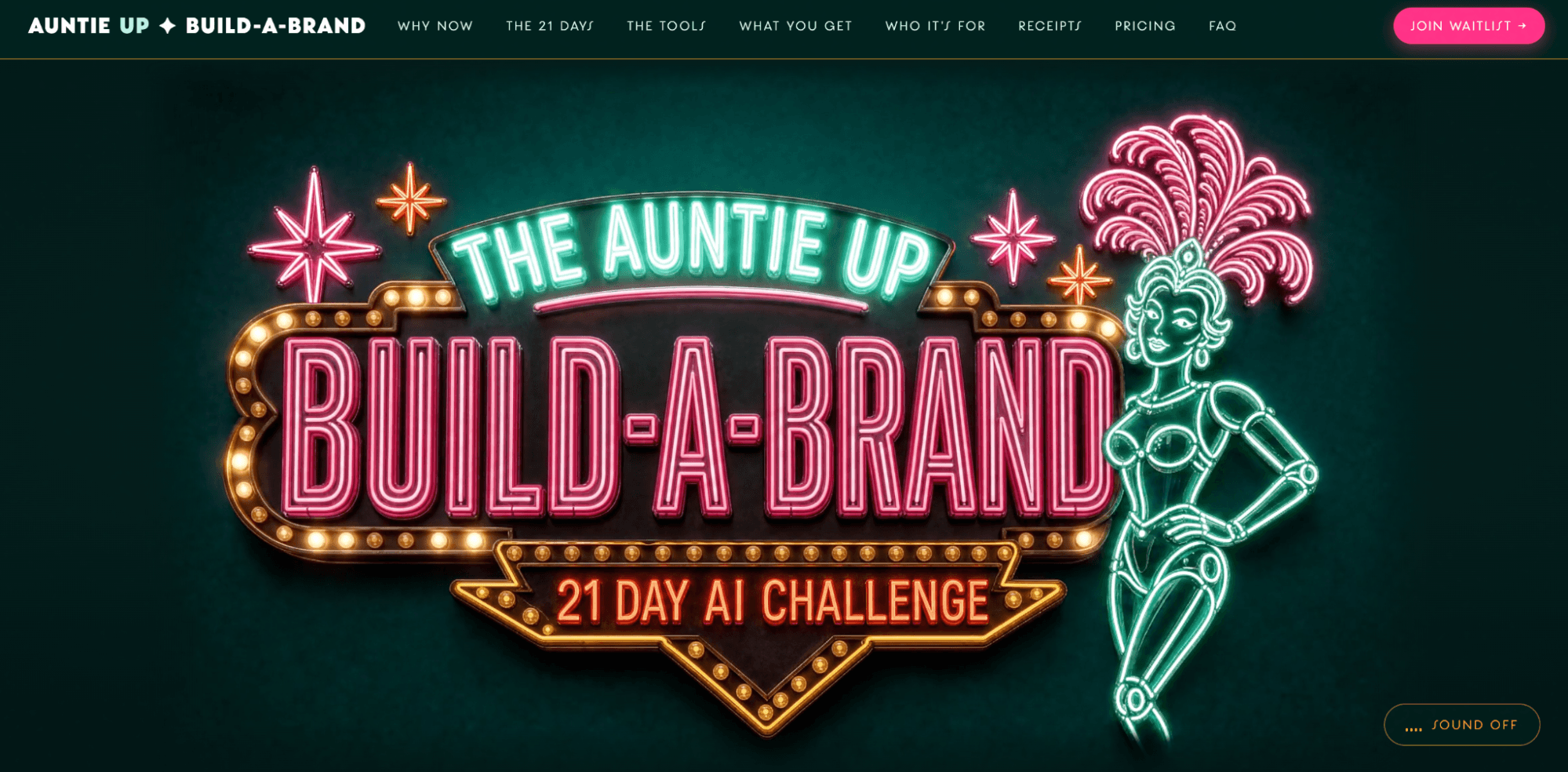
AI-driven asset generation allows marketing teams to iterate weekly. Seasonal campaigns, colorway updates, and localized product variations can be deployed instantaneously. For B2B organizations lacking physical inventory, the same principles apply. Entire digital storefronts, sales landing pages, and educational portals can be constructed with unified thematic identities—such as a cohesive futuristic casino aesthetic utilized by sub-brands like Auntie Up—ensuring that hero banners, section illustrations, and UI graphics share an identical color space and artistic tone.

The Seven-Pillar Prompt Framework
Mastering AI image generation requires shifting from casual text entry to deliberate, architectural prompting. To accomplish this, Lauren deVane developed the Seven-Pillar Prompt Framework. This methodology acts as a control panel for creative direction. Users do not necessarily need to populate all seven pillars for every generation, but the more rigorous the input across these dimensions, the less the AI is forced to rely on generic default settings.
+-----------------------------------------------------------------------+
|                   THE SEVEN-PILLAR PROMPT FRAMEWORK                   |
+-------------------+---------------------------------------------------+
| 1. Medium         | Defines the technical format (photo, 3D, vector)  |
| 2. Subject & Action| Specifies the focal point and narrative movement|
| 3. Setting & Scene| Details the immediate environment and background  |
| 4. Composition    | Establishes framing, camera angles, and layout    |
| 5. Lighting       | Controls temperature, source, and mood            |
| 6. Aesthetic      | Translates stylistic taste into descriptive terms |
| 7. Intent         | Guides emotional response and conversion goals    |
+-------------------+---------------------------------------------------+
1. Medium
What precise artistic or technical medium is being deployed? Broad terms like "art" or "image" yield poor results. Specify whether the output is a commercial photograph shot on medium format film, a clean vector illustration, a hyper-detailed 3D render, or specialized line art.
2. Subject and Action
What is the primary focal point of the asset, and what dynamic narrative is it engaged in? Avoid static nouns. Instead of prompting for "a person," specify "a confident artisan looking intently into a polished copper mixing bowl with a focused expression." Instead of "a can of soda," direct the model toward "a carbonated beverage can, dripping with condensation, perfectly balanced on its beveled edge."
3. Setting and Scene
What immediate and ambient environment surrounds the subject? Generic inputs like "a restaurant" will produce cliché, predictable results. Detailed descriptions—such as "a mid-century modern diner interior featuring dark walnut wood paneling, mustard-yellow leather booths, and the soft ambient glow of vintage neon signage"—displace the model’s lazy defaults.
4. Composition
How is the visual space organized? Define framing specifications such as extreme close-up, wide-angle environmental shot, overhead flat-lay, or low-angle cinematic perspective. In graphic design contexts, explicitly state whether the layout favors minimalist whitespace, strict symmetry, or maximalist layering.
5. Lighting
Lighting dictates emotional resonance. Specify color temperature (warm golden hour versus cool clinical blue), light sources (diffused natural light filtering through sheer linen curtains versus a single harsh overhead tungsten bulb), and shadow falloff. Controlling light is the fastest path to cinematic originality.
6. Aesthetic and Vibe
Rather than lazily instructing the AI to copy a specific human artist—a practice fraught with ethical and stylistic limitations—break down the underlying mechanics of the desired style. If drawn to a particular cinematic aesthetic, articulate the structural hallmarks that define it: high-saturation color palettes, symmetrical centering, and shallow depth of field.
7. Intent
What psychological reaction or behavioral action must the image evoke in the viewer? Because modern models process cognitive intent, specifying that a skincare advertisement should evoke "a profound sense of clinical efficacy and tranquil luxury" will directly influence subtle details like facial relaxation, color temperature, and surface textures.
Preparing Before Prompting: Taste, Reference, and Technical Hygiene
Before opening an AI interface, effective marketers perform foundational preparation. This preparation centers on two core requirements: possessing cultivated aesthetic taste and possessing the vocabulary to articulate that taste.
Cultivating and Articulating Design Taste
Recognizing good design intuitively is very different from describing its operational mechanics to an AI. Building this competency requires active observation. Creators should routinely analyze imagery, asking critical questions: Why does this composition work? What role does the negative space play?

For those lacking years of formal design training, specialized custom GPTs and AI skills can serve as "taste accelerators." By uploading reference images into an analysis tool, users can extract detailed breakdowns of lighting ratios, color theory, and perspective rules. Once the underlying aesthetic is deciphered, that analysis forms the bedrock of repeatable prompt templates.
Strategic Reference Management
Reference imagery is essential for brand consistency, but it must be managed with surgical precision:
- Human Subjects: When generating specific individuals, upload exactly one clear, well-lit facial portrait and one full-body shot (if applicable). Avoid uploading dozens of superfluous photos, which only confuse the model’s spatial synthesis.
- Corporate Branding: Major global brands (such as Nike or Apple) are deeply ingrained in foundational training weights. Smaller enterprises, however, must upload high-resolution vector logos or clean PNGs, explicitly commanding the model to preserve exact colorimetry and geometry.
- Color Specifying: Never rely on generic color terms like "navy blue" or "sunset orange." Always provide precise hexadecimal (HEX) values to ensure strict brand compliance.
- Character Consistency: To maintain character continuity across multiple scenes, instruct the model to generate a "character contact sheet"—displaying front, side, and full-body profiles within a single master grid—which can then be fed into future prompts.
Multi-Model Workflows: Leveraging Magnific and Advanced Connectors
While standalone interfaces like ChatGPT offer powerful conversational image generation, advanced marketers frequently utilize specialized production hubs like Magnific to achieve professional scale, control, and multi-model execution.
The Power of Volume and Variation
A primary operational challenge in generative AI is imperfection. Prompting rarely yields a flawless asset on the first execution. Lighting anomalies, textural glitches, or compositional missteps require iteration. While ChatGPT typically returns a single image per prompt, platforms like Magnific generate up to eight parallel variations simultaneously. This volume dramatically increases the probability of discovering a usable asset—or a strong foundation for immediate refinement.
Cross-Model Comparison and Ecosystem Integration
Magnific allows creators to route identical prompts through competing foundational models, such as OpenAI’s GPT Image and Google’s Imagen, side by side. Different engines excel at distinct creative tasks; comparing outputs empowers creators to select the optimal model for specific campaign requirements.
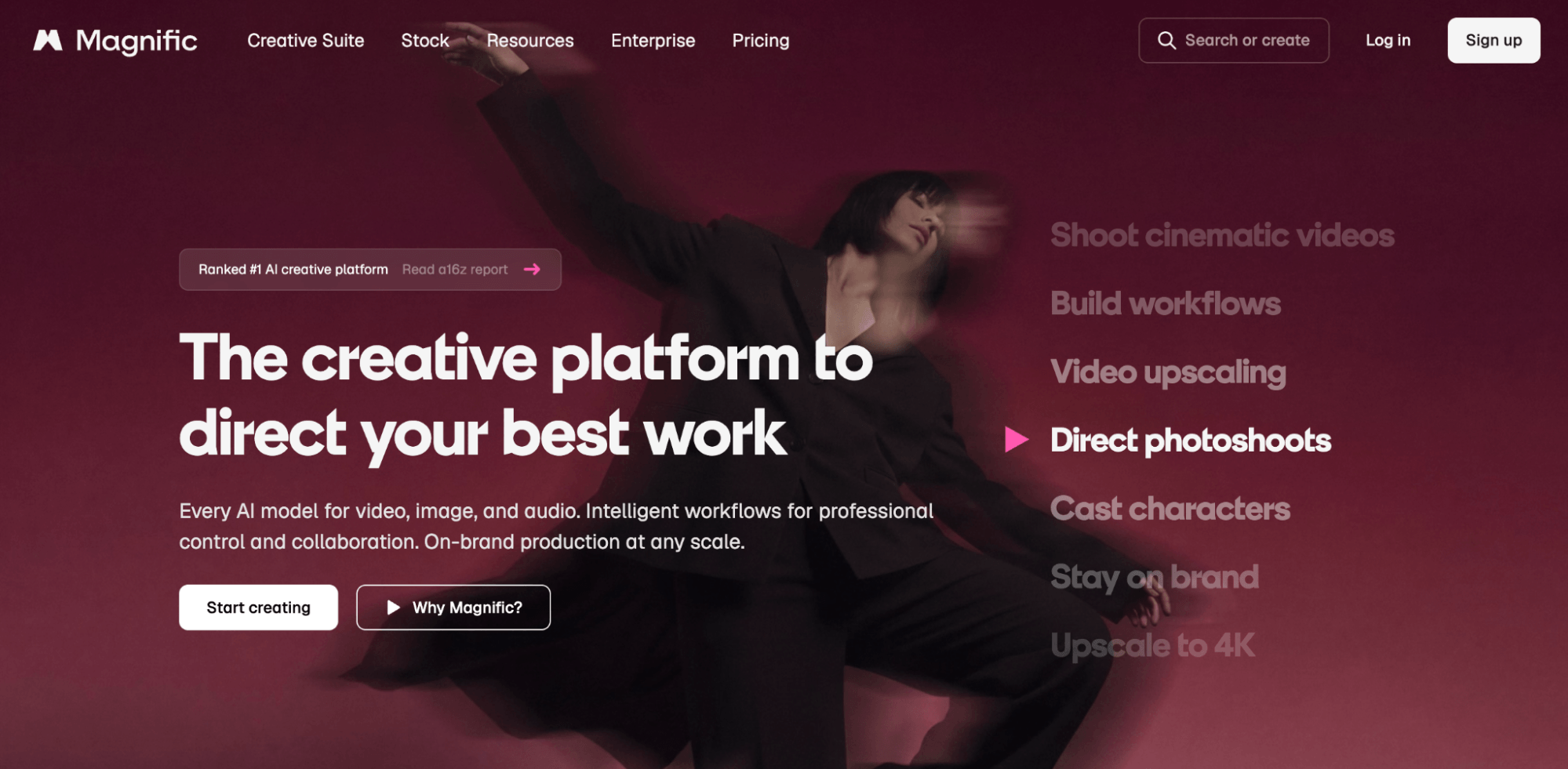
Furthermore, modern platforms incorporate Model Context Protocol (MCP) connectors, integrating seamlessly with environments like Claude. Utilizing advanced specialized skills—such as Lauren deVane’s Prompty Poppins—transforms Claude into an active creative director, director of photography, and lighting stylist.
Through this integrated workflow, a marketer can:
- Generate website code within Claude.
- Request a hyper-specific hero image asset.
- Automatically execute the prompt through Magnific’s engine in the background.
- Seamlessly integrate the generated visual asset directly into the digital layout.
- Extend the workflow into motion generation, producing video assets via advanced models like Seedance or Google Omni without ever leaving the conversation thread.
Additionally, native plugins for industry-standard software suites like Adobe Photoshop and Adobe Illustrator allow creative professionals to pull AI-generated assets directly into traditional design workflows, bridging the gap between algorithmic generation and manual polish.
Future Outlook: The Next Frontier of Generative Visuals
As generative AI models continue to mature, the boundary between traditional studio production and algorithmic synthesis will dissolve entirely. Several key developments are poised to redefine the digital marketing landscape over the coming years:
- Real-Time Interactive Generation: Latency in image and video generation will plummet, enabling real-time rendering adjustments during live client presentations and collaborative brainstorming sessions.
- Deep Brand Governance Integration: Enterprise AI tools will ingest comprehensive brand style guides as immutable system prompts, automatically enforcing typography, color theory, and compositional standards across all generated assets without manual oversight.
- Seamless Omnichannel Personalization: Brands will soon dynamically generate personalized visual ad variations tailored in real-time to individual user preferences, browsing histories, and psychological profiles, vastly increasing engagement and conversion rates.
- The Rise of the AI Creative Director: Rather than functioning as prompt technicians, human marketers will elevate into true creative directors—focusing exclusively on strategic intent, narrative architecture, and emotional resonance while autonomous multi-model systems handle execution.
Ultimately, the future belongs not to those who reject artificial intelligence as generic "slop," but to those who master the structural frameworks, precise vocabularies, and advanced workflows necessary to bend the technology to their unique brand vision.
What do you feel about this post?

Like

Love

Happy

Haha

Sad

Angry