
OpenAI’s Executive Exodus: Leadership Churn Deepens Amid Infrastructure Shifts and Delayed IPO

By Lucas Ropek
Enriched & Expanded Report
Executive Overview
OpenAI, the vanguard of the generative artificial intelligence boom, is facing a tumultuous period marked by a relentless wave of high-level departures. The latest blow to the company’s organizational stability is the exit of Chris Malone, its former head of data centers. Malone’s departure arrives at a critically sensitive juncture for the artificial intelligence giant. As the race to build out the physical infrastructure underpinning next-generation AI models accelerates, data center strategy has transformed into one of the most high-stakes, closely scrutinized roles in the tech sector.
Malone’s exit is far from an isolated incident. Industry trackers and internal reports indicate that OpenAI has shed more than a dozen senior executives over the course of the year. This ongoing executive drain spans critical divisions, including core engineering, product development, revenue operations, safety research, and marketing.
The cascading departures have naturally ignited intense speculation across Silicon Valley and Wall Street. As OpenAI transitions from an ambitious research lab into a commercial powerhouse eyeing a heavily anticipated initial public offering (IPO)—reportedly delayed from this year to 2027—the company is undergoing rigorous scrutiny. Questions regarding valuation, tepid revenue growth relative to surging expenditures, and internal structural realignments have cast a long shadow over the maker of ChatGPT. While remaining leadership continues to downplay the significance of the turnover, pointing to the intense media spotlight that inevitably accompanies a tech titan, the sheer volume and caliber of the departing talent suggest a deeper operational metamorphosis is underway.
Detailed Chronology: A Year of Unprecedented Leadership Turnover
The erosion of OpenAI’s executive ranks has unfolded in steady waves throughout the year, accumulating into an unprecedented total of at least 13 senior departures. These exits span multiple departments, altering the company’s corporate governance and strategic execution.
The Data Center Pivot and Malone’s Exit
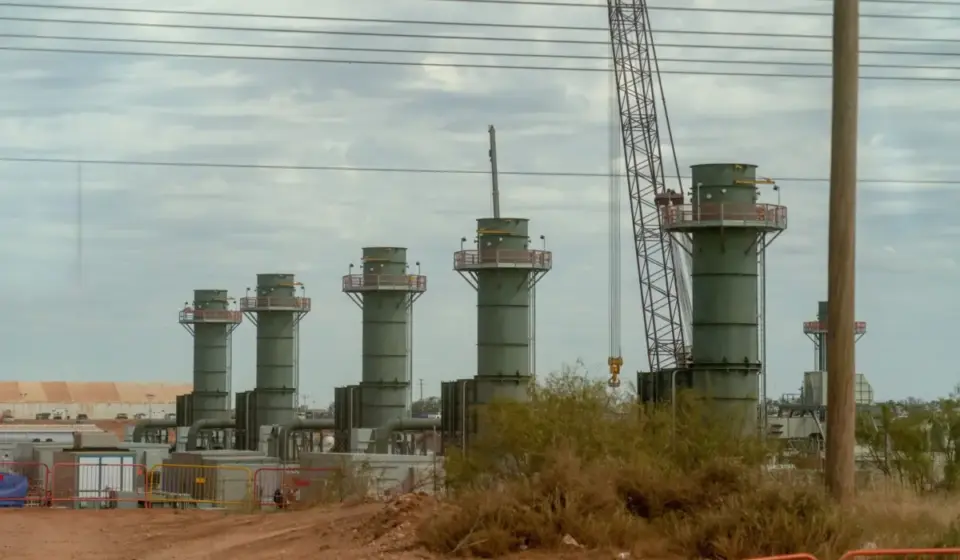
Chris Malone’s departure last week marks a pivotal moment for OpenAI’s physical infrastructure division. Malone, a seasoned infrastructure executive who spent nearly five years at Meta and more than a decade at Google, joined OpenAI in March of last year. His arrival closely followed the launch of the Stargate Project—a massive $500 million data center initiative championed by the Trump administration to scale up domestic AI infrastructure. In this ambitious undertaking, OpenAI operates alongside tech and financial heavyweights such as Oracle, Nvidia, SoftBank, and Microsoft.
Malone’s sudden exit followed an internal reorganization. According to reports from The Wall Street Journal, Malone was shifted away from reporting directly to OpenAI President Greg Brockman, instead answering to OpenAI Vice President Sachin Katti, who assumed broader leadership of the infrastructure group. OpenAI has attempted to steady the ship, naming several leaders to manage various facets of the infrastructure pipeline, including Uday Ruddarraju (data center team lead), Brent Mayo (data center build and delivery program lead), and Spas Lazarov (head of data center engineering). Nevertheless, losing the chief architect of its data center strategy mid-stream is an undeniable operational jolt.
High-Profile C-Suite and Product Departures
The data center division is not alone in experiencing leadership turbulence. The past several months have seen the departure of several corner-office executives who defined OpenAI’s commercial and product identity:
- Brad Lightcap (Chief Operating Officer): In mid-August, OpenAI lost one of its longest-serving and most influential executives. Lightcap, who spent years steering the company’s day-to-day operations as COO, announced his departure to "start something new," though details of his next venture remain undisclosed.
- Denise Dresser (Chief Revenue Officer): Just two days after Lightcap’s departure leaked, OpenAI parted ways with Chief Revenue Officer Denise Dresser. Dresser’s tenure was remarkably brief, lasting only about eight months as she attempted to scale the company’s enterprise monetization efforts.
- Fidji Simo (De Facto Number Two): Roughly a month prior to the summer C-suite shakeup, Fidji Simo—who served as the company’s product and business chief and reported directly to CEO Sam Altman—stepped down from her operational role to recover from a chronic illness. While Simo remains engaged with the company in an advisory capacity, her departure removed a primary pillar from OpenAI’s daily executive leadership.
- Kate Rouch (Chief Marketing Officer): In April, Chief Marketing Officer Kate Rouch also exited the company, reportedly stepping down for health reasons.
Safety, Ethics, and Specialized Product Teams
Beyond core commercial operations, OpenAI’s ethical alignment and experimental product divisions have experienced severe contraction:
- Chloé Bakalar (Head of Ethics): In July, OpenAI lost its head of ethics, Chloé Bakalar, dealing a blow to the organization’s stated commitment to responsible artificial intelligence deployment.
- The Disbandment of the Preparedness Team: In a move that alarmed AI safety advocates, reports surfaced that OpenAI effectively disbanded its "preparedness team"—a specialized unit tasked with evaluating whether frontier models could pose catastrophic, existential risks to society.
- Bill Peebles and the Sora Division: The shuttering of secondary projects has also driven departures. Bill Peebles, the former head of OpenAI’s now-defunct AI video generator project, Sora, exited the company as leadership began shedding peripheral "side quests" to concentrate resources on core foundational models.
Supporting Context & Metrics: The Infrastructure Frenzy and Market Realities
To understand the gravity of Malone’s departure and the broader executive flight, one must examine the fierce economic and structural realities defining the current generative AI landscape.
The Data Center Arms Race
The artificial intelligence industry is currently locked in an unprecedented infrastructure buildout. Training and serving frontier models require unprecedented amounts of electrical power, cooling capacity, and specialized hardware (predominantly GPUs). Companies are burning through billions of dollars to secure real estate, power purchase agreements, and server allocations.
In this environment, the head of data centers is essentially the general managing a capital-intensive supply chain. Any friction in leadership directly threatens milestones associated with initiatives like the Stargate Project. While OpenAI maintains that it possesses a deep bench of engineering talent—highlighted by leaders like Ruddarraju, Mayo, and Lazarov—the loss of an industry veteran with deep roots at Meta and Google complicates the execution timeline.
Financial Pressures and the IPO Horizon
Compounding these operational hurdles are mounting questions regarding OpenAI’s financial trajectory. Originally rumored to target a public market debut this year, OpenAI’s IPO timeline has reportedly been pushed back to 2027. This delay reflects a broader period of introspection and regulatory vetting.
Recent financial analyses have highlighted potential vulnerabilities:
- Valuation Concerns: Market observers and competitor trajectories—such as robust revenue growth demonstrated by rivals like Anthropic—have led analysts to question whether OpenAI is currently overvalued.
- Monetization vs. Expenditure Mismatch: While OpenAI commands staggering revenues from consumer subscriptions and enterprise integrations, these figures are dwarfed by the astronomical costs of compute, R&D, and infrastructure.
When a company experiences a high rate of executive turnover while navigating these financial crosscurrents, it naturally attracts skepticism from institutional investors and market analysts who view stability at the top as a prerequisite for public market success.
Official Statements and Internal Defense
OpenAI’s remaining leadership has mounted a concerted communications effort to reframe the narrative around the talent exodus.
Addressing Malone’s departure and the state of the infrastructure division, OpenAI issued a formal statement to TechCrunch:
"We have recently reorganized our infrastructure organization to support the scale and pace of our work. We have a strong, deeply experienced data center team in place, with clear leadership and the technical expertise to execute our plans."
Internally and externally, executives have urged observers not to read too much into the revolving door of leadership. OpenAI co-founder Greg Brockman recently pushed back against the relentless media coverage, lamenting that the intense "spotlight" on the company subjects every routine corporate departure to an extraordinary level of scrutiny that similar tech enterprises managed more quietly.
Furthermore, the company portrays the structural realignments—such as the merging of reporting lines under Sachin Katti and the sunsetting of side projects like Sora—as necessary acts of maturation. As OpenAI evolves from an agile, chaotic research laboratory into a structured global enterprise, management argues that leadership shifts are a natural byproduct of streamlining operations for massive scale.
Future Outlook: Navigating the Road to 2027
The months ahead will prove decisive for OpenAI. The organization finds itself at a historic crossroads, balancing groundbreaking scientific ambitions with the unyielding demands of commercialization and public accountability.
For the infrastructure team, the immediate priority is proving that the departure of Chris Malone causes zero friction in the execution of the Stargate Project and broader data center expansions. With Sachin Katti at the helm of the engineering group and seasoned project leads managing physical builds, OpenAI must demonstrate that its technical pipeline remains robust.
Simultaneously, the broader executive team faces the challenge of stabilizing morale and filling critical leadership vacuums left by veterans like Brad Lightcap and Fidji Simo. Restoring confidence among enterprise clients, safety researchers, and prospective public market investors will require transparent governance and clear evidence that the company’s core technical vision remains uncompromised by corporate churn.
As OpenAI recalibrates its sights toward a 2027 IPO, the ultimate test will not be whether it can weather executive departures, but whether it can maintain its technological dominance while transforming its bleeding-edge research into a sustainable, profitable global enterprise. Until then, the watchful eyes of Silicon Valley, Wall Street, and the global AI community will remain fixed on every movement within the executive suites of San Francisco.
What do you feel about this post?

Like

Love

Happy

Haha

Sad

Angry