
The Catalyst Effect: Why Professional Mentorship Remains the Ultimate, Underutilized Career Multiplier

Executive Overview
In the modern professional landscape, few developmental instruments possess the transformative power of mentorship, yet fewer still remain so chronically misunderstood and underutilized. Often mischaracterized as informal social hours or networking exercises reserved exclusively for junior novices, structured mentorship is, in reality, a high-yield strategic catalyst. Empirical research consistently demonstrates that engaging in a robust, well-maintained mentorship dynamic correlates directly with accelerated career trajectories, higher compensation benchmarks, increased organizational retention, and elevated overall job satisfaction.
Despite these clear advantages, many professionals talk themselves out of pursuing mentorship before they even initiate contact. Hesitations range from impostor syndrome and fear of rejection to the mistaken belief that asking for guidance signals professional weakness. Furthermore, as artificial intelligence and automated systems increasingly permeate corporate environments, the demand for authentic, human-centric guidance has never been more acute. This article investigates the anatomy of effective mentorship, analyzes why traditional mentorship models frequently falter, and outlines a rigorous, actionable framework for identifying, engaging, and maximizing professional guidance at any career stage.
Detailed Chronology: A Case Study in Perspective Transformation
To understand the profound impact of mentorship, one must examine how isolated professionals often misinterpret workplace friction. Consider the career trajectory of a solo designer who entered an enterprise software company characterized by low UX-maturity. Tasked with building usable software systems while operating in an environment that prioritized rapid feature delivery over user-centered design, the designer rapidly developed acute resentment toward the software development colleagues.
The Trap of Isolated Work
In the early stages of this tenure, the engineering team frequently blocked user research initiatives and stripped down complex design systems for the sake of short-term expediency. Lacking organizational insight or historical context, the designer perceived these developers not as collaborators working under systemic constraints, but as direct adversaries intentionally sabotaging user experience. This adversarial mindset created an invisible glass ceiling, hampering collaborative output and inducing chronic burnout.
The Turning Point: Retrospective Clarity
Years later, after transitioning to a different organization, the designer serendipitously formed a mentorship relationship with a development leader who had recently departed from that very same enterprise company. During a candid review of past operational hurdles, the mentor unlocked a critical piece of organizational context: those developers had never been in control of the project scopes. Instead, executive leadership was unilaterally dictating rigid feature rollouts and placing engineering teams under immense, unrelenting strain.
Had this mentorship dynamic been established years earlier, the designer would have gained operational empathy, adjusted communication strategies, and cultivated cross-functional alliances much sooner. This real-world chronology underscores a fundamental truth: external perspective is frequently the singular variable required to transform an perceived obstacle into a navigable system.
Supporting Context & Metrics: The Anatomy and Value of Mentorship
By definition, mentorship is a structured, one-on-one professional relationship in which a more experienced practitioner—the mentor—provides targeted career guidance, fresh perspectives, organizational insight, and psychological support to a developing professional—the mentee—over an extended timeline.
It is a common misconception that mentors must possess decades of seniority over their mentees. While traditional top-down mentorship is standard, modern organizations increasingly value reverse mentoring, wherein senior leaders receive coaching from junior staff members on emerging industry trends, digital behaviors, or modern technological tools.
The Dual Function of Mentorship
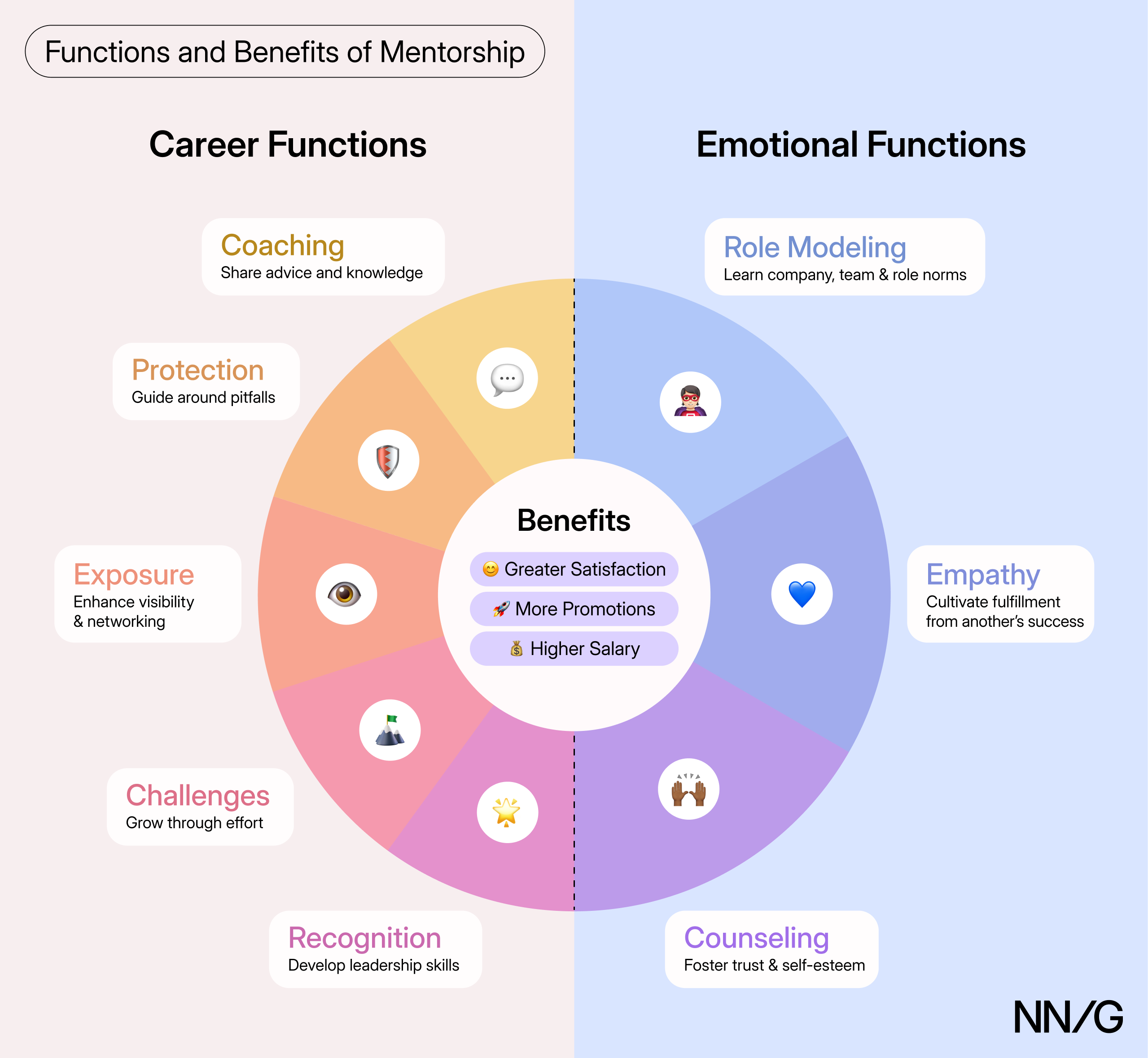
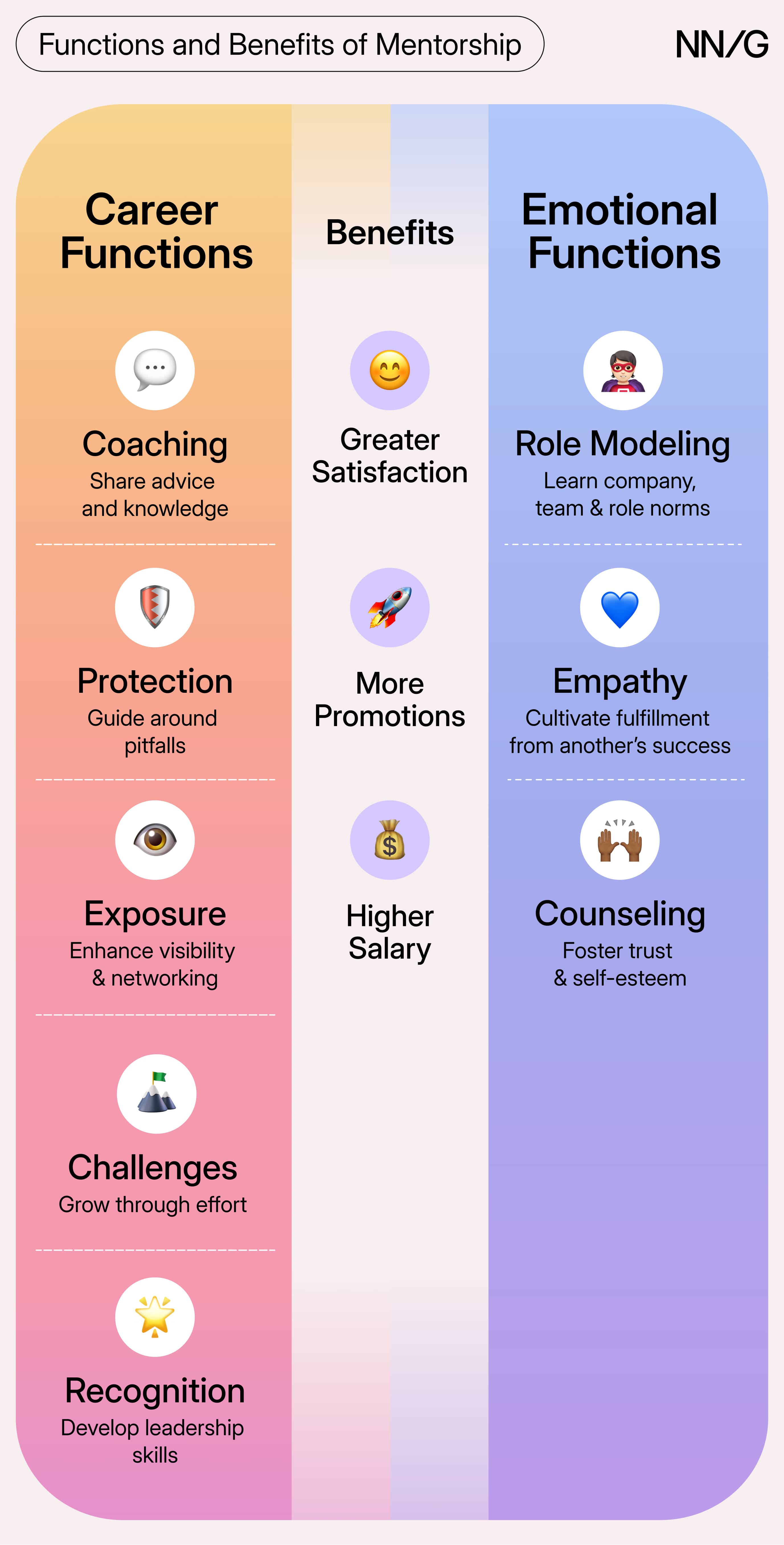
Scholarly frameworks established by organizational researchers like Kathy E. Kram divide the mechanics of mentorship into two distinct pillars:
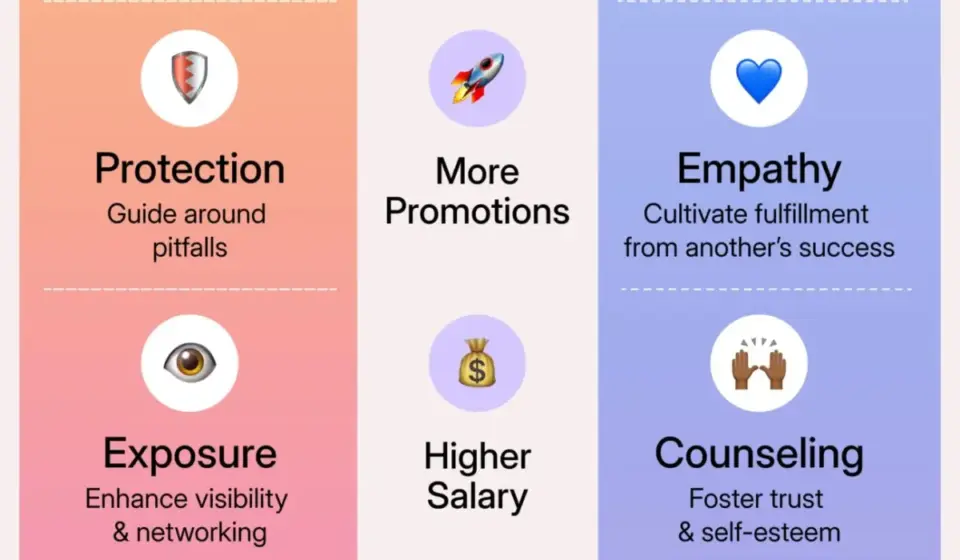
- Career Functions: Comprising sponsorship, coaching, protection, challenging work assignments, and executive exposure. These elements directly accelerate promotion cycles, increase compensation ceilings, and expand professional networks.
- Psychosocial/Emotional Functions: Comprising role modeling, acceptance, counseling, and empathetic friendship. These functions fortify psychological safety, mitigate professional burnout, and elevate workplace satisfaction.
Quantifiable Impact and Empirical Metrics
Mentorship is far from idle socializing; its structural dividends are well-documented across decades of organizational research:
- Promotions and Retention: Studies on corporate diversity and retention (such as research by Conboy & Kelly) indicate that formal mentorship programs can boost promotion, retention, and managerial representation rates among marginalized employee groups by up to 24%.
- Compensation Growth: Meta-analyses of career outcomes (including landmark work by Tammy D. Allen et al.) reveal that professionals who actively engage as mentees experience higher rates of compensation growth and career mobility compared to non-mentored peers.
- Burnout Mitigation: Clinical and institutional research consistently shows that access to compassionate mentors significantly reduces emotional exhaustion and mitigates the risk of professional burnout across complex industries.
Official Statements and Structural Pitfalls: Why Mentorships Underdeliver
Despite these overwhelming advantages, a substantial percentage of workplace mentorship initiatives fail. When a mentorship dynamic dissolves or stagnates, it frequently leaves both parties reluctant to invest in future programs. Understanding the primary failure points is vital for engineering a successful partnership.
Common Failure Points in Mentorship
- Vague Objectives: Entering a mentoring relationship without a concrete scope, timeline, or set of expectations inevitably leads to unstructured, aimless conversations that burn out both participants.
- Mismatched Expectations: When a mentee expects a tactical project manager while the mentor envisions a high-level philosophical sounding board, frustration is guaranteed.
- Power Dynamics and Fear of Candor: Selecting a direct supervisor or organizational manager as a mentor introduces an inherent conflict of interest. Mentees naturally withhold vulnerabilities when interacting with individuals who control their compensation reviews and promotion schedules.
- Over-reliance and Lack of Initiative: Expecting the mentor to drive the relationship, set the agenda, and provide all the answers transforms the dynamic from a collaborative partnership into an unsustainable chore.
Identifying the Right Mentor
To avoid these pitfalls, candidates must be vetted rigorously. Ideal mentors demonstrate deep domain expertise, high emotional intelligence, active listening capabilities, and a proven track record of championing others. Conversely, individuals who manage an excessive portfolio of superficial mentorships—or those who commodify their guidance through high-cost, short-term paid coaching sessions masquerading as ongoing mentorship—should be approached with caution. While paid coaching serves a distinct purpose for rapid, tactical problem-solving, true mentorship requires sustained, organic investment.
Source pools for finding a mentor include:
- Formal Internal Programs: Structured corporate mentorship initiatives designed to match internal talent safely across departments.
- Former Colleagues and Managers: Trusted individuals who understand your baseline capabilities but possess no direct authority over your current career trajectory.
- External Industry Associations: Professional networks and specialized external organizations that facilitate unbiased, cross-organizational pairings.
Future Outlook: The Mentee’s Blueprint and the AI Era
As artificial intelligence systems and machine-learning models increasingly automate routine workflows across global enterprises, the nature of human labor is fundamentally shifting. Routine cognitive tasks are migrating to algorithms, making uniquely human traits—strategic judgment, emotional intelligence, ethical decision-making, and nuanced cultural navigation—more valuable than ever before. In this rapidly evolving landscape, authentic human mentorship serves as an irreplaceable anchor for professional development.
The Responsibilities of the Mentee
An exceptional mentor will not endlessly invest time in a mentee who fails to demonstrate reciprocity and active effort. To ensure mutual success, the mentee must adhere to specific core responsibilities:
- Respecting Time: Arrive at every scheduled session punctual, prepared, and deeply focused.
- Driving the Agenda: Bring specific, tangible dilemmas to the table—whether it is a complex design architecture challenge, an ethical workplace dilemma, or a difficult organizational decision.
- Executing and Reporting Back: A mentorship session must follow a complete feedback loop:
- Present the challenge.
- Brainstorm and listen to guidance.
- Formulate an actionable strategy.
- Execute the strategy in the workplace.
- Report back on the measurable impact during the subsequent session.
Skipping the final two steps starves the mentor of feedback, eroding their motivation to continue investing capital into the relationship.
Graceful Conclusion and Next Steps
It is critical to recognize that all mentorship relationships possess a natural lifecycle. Organizational growth, shifting career priorities, or simple time constraints mean that mentorships will eventually conclude. A conclusion is not a failure; it is a normal, healthy transition point. Many mentorships naturally evolve into enduring professional friendships, while others simply run their course, leaving both individuals better equipped for their respective journeys.
Strategic Call to Action
Do not count yourself out before initiating contact. That senior leader or respected industry veteran you admire is frequently more open to requests for guidance than you might assume.
- If you have never experienced the transformative benefits of being a mentee, commit today to reaching out to a prospective mentor with a concise, respectful message detailing what you admire about their work and requesting a brief, 30-minute introductory dialogue.
- If you are an experienced professional, make yourself available and say "yes" to that promising junior colleague seeking direction.
By investing in structured mentorship, you do not merely optimize your own professional trajectory—you help build a more resilient, empathetic, and capable professional ecosystem for the future.
What do you feel about this post?

Like

Love

Happy

Haha

Sad

Angry