
Building the Autonomous Enterprise: How AI Employees Are Redefining Leverage, Scale, and the Modern Workforce

Executive Overview
In the rapidly evolving landscape of modern business technology, a profound paradigm shift is underway. While casual artificial intelligence prompting has become ubiquitous, organizations are increasingly discovering that utilizing AI as a mere novelty falls critically short of unlocking its true operational value. A sales representative prompts Claude or ChatGPT for an hour to draft a proposal, secures a solid output, and then discards the workflow entirely. The next time a proposal is required, the manual cycle begins anew from scratch.
Enter the era of the "AI employee"—trained, reusable autonomous systems configured to perform specific business functions with precision that matches or exceeds human baselines. Derived from insights shared by Callan Faulkner, co-creator alongside Michael Stelzner on the AI Explored podcast, this deep dive investigates how businesses are moving beyond one-off chat windows. By implementing structured training methodologies, centralizing institutional knowledge into a "business brain," and leveraging automated scheduling tools, organizations are scaling operations to unprecedented heights.
At Faulkner’s company, The Uncommon Business—on track for approximately $40 million in revenue with a lean team of roughly 50 human employees—AI employees have unlocked extraordinary operational leverage. Rather than rendering human capital obsolete, this technological leap shifts human workers out of repetitive, low-value tasks and into high-level strategy, creative direction, and visionary leadership.
Detailed Chronology: The Evolution from Casual Prompting to Autonomous AI Systems
The integration of artificial intelligence into day-to-day business operations has transitioned through distinct phases, marked by a growing realization that human-AI collaboration requires deliberate systems architecture rather than ad-hoc interaction.
Phase 1: The Trap of Casual Prompting and Isolated Workflows
In the early days of generative AI adoption, organizations celebrated any instance of automation. Employees experimented with large language models to draft emails, summarize documents, or write code. However, this decentralized approach created invisible inefficiencies. Without documented workflows or shared prompt repositories, every team member reinvented the wheel daily.
Faulkner notes that organizations frequently claim their teams utilize AI every day. Yet, a closer inspection reveals disconnected workflows. A marketer takes weeks to deliver a single sales page, while an AI-trained counterpart produces tenfold the output in a fraction of the time. This divide established a stark reality: the barrier to productivity is no longer access to tools, but the willingness to adopt structured, AI-directed workflows.
Phase 2: Establishing the Foundational Architecture
Moving past casual prompting requires shifting organizational mindset toward three core pillars:
- Shortcut-Seeking as Work Ethic: The historical badge of honor—doing everything manually to prove hard work—has transformed into a business liability. Finding the fastest, highest-quality path to an "A-plus" output is now the ultimate competitive advantage. Shortcuts, when backed by rigorous training data, do not mean cutting corners; they mean collapsing time and energy costs.
- Training Equals Output Quality: Generic prompts yield generic results. To achieve superior outputs, companies must document brand tone, operational standards, target goals, and exemplary historical work.
- The "Business Brain": Just as a newly hired executive requires onboarding documentation to succeed, an AI employee relies on a centralized repository containing pricing models, brand voice guidelines, ideal client profiles, and historical win/loss data. Messy Google Drives are replaced by structured, searchable digital ecosystems.
Phase 3: The AI Interview and Custom Skill Development
To construct an effective AI employee, practitioners utilize systematic interview techniques. Rather than guessing how to prompt a model, a user initiates a conversation by describing the operational context and asking the AI to conduct an interactive interview. By employing voice-to-text tools like Wispr Flow, users can articulate complex operational nuances naturally, bypassing the self-editing tendencies of typed text.
Once refined through iterative testing, these conversational workflows are crystallized into reusable "skills"—saved sets of instructions integrated directly into advanced workspaces like Claude Projects. Connected with external APIs and data repositories, these skills transition from static prompts into fully functional, autonomous AI employees.
Phase 4: Autonomous Scheduling and Execution
The final frontier in this evolutionary chronology is autonomous operation. By pairing refined skills with scheduling software—such as the Claude Co-Work desktop application—businesses can trigger automated tasks at designated intervals. Competitor research, content curation, meeting transcription filing, and data synthesis now execute seamlessly in the background, transforming human team members from creators into strategic editors and approvers.
Supporting Context & Metrics: The State of AI Adoption
The transition toward autonomous AI operations occurs against a backdrop of widespread independent experimentation and shifting enterprise standards. Industry data highlights a profound gap between formal organizational support and employee self-education.
Key Insights from the Field
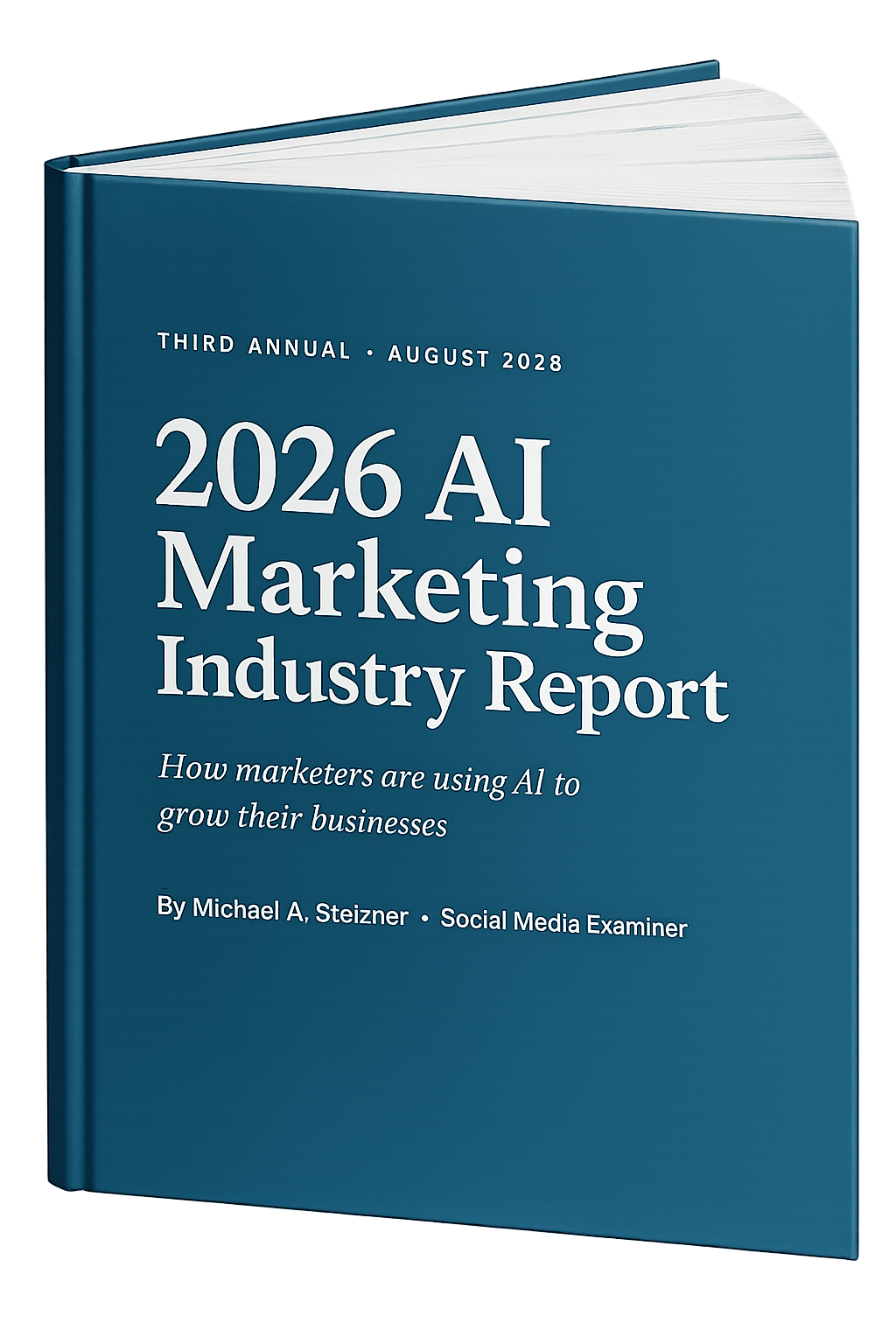
- The Self-Taught Workforce: Recent industry data reveals that approximately 85% of marketing professionals learn artificial intelligence through independent experimentation. Only a fraction—around 7%—receive formal, company-sponsored training, with many workers spending personal funds on software subscriptions.
- Operational Leverage Ratios: Exemplified by high-growth enterprises scaling rapidly with lean human headcounts, organizations utilizing trained AI systems achieve revenue-to-employee ratios that were mathematically improbable just a decade prior. Crucially, this scaling model prioritizes augmentation over displacement; human workers are elevated to supervisory roles.
- The Cost of Technological Stagnation: Hiring practices are rapidly adapting. Candidates lacking foundational AI literacy struggle to maintain parity with peers who utilize AI systems to accelerate output. The friction point in modern employment is not human replacement by algorithms, but rather the failure of humans to effectively direct and govern automated systems.
Official Statements and Methodological Frameworks
The methodologies driving modern AI employee architecture rely on rigorous testing, cross-functional collaboration, and meticulous data governance. Industry experts emphasize that building an AI employee mirrors the process of managing human talent.
The Board of Directors Technique
When confronting complex strategic challenges—such as designing executive compensation structures, establishing bonus frameworks, or formulating growth metrics—practitioners utilize advanced prompting to simulate advisory boards. By instructing the model to synthesize the strategic frameworks of recognized industry leaders (such as Mark Cuban or Sara Blakely), organizations bypass generic search engine results in favor of battle-tested business philosophies.
Iterative Quality Control and the Correction Loop
Accepting mediocre outputs stalls automation maturity. Faulkner advocates for rigorous testing protocols:
- Pushing Back: Challenging the model when initial outputs fall below standard—explicitly instructing it to re-evaluate its approach as if critical outcomes depended on it.
- The Correction Prompt: When an AI output requires manual revision, the corrected text is fed back into the system with precise instructions: “Here is what you wrote. Here is how I corrected it. Update your core instructions to reflect this adjustment and explain what logical gap caused the initial error.”
- Version Control and Auditing: To prevent operational drift within enterprise projects, mature teams maintain comprehensive Notion databases tracking every skill, its creator, version history, and primary business function. Quarterly performance reviews now encompass an audit of departmental AI employees and automated workflows.
Future Outlook: The Autonomous Enterprise Horizon
As conversational agents evolve into persistent, scheduled agents capable of interacting directly with software connectors and external APIs, the boundaries of organizational design will continue to dissolve.

The future enterprise will not measure productivity merely by hours worked, but by the sophistication of the AI systems an individual or team successfully manages. Routine administrative tasks, initial data synthesis, content ideation, and recurring research loops will increasingly run autonomously on background schedules, triggered at dawn and curated by human oversight before the workday begins.
Ultimately, the successful integration of AI employees demands a return to fundamental business clarity. Organizations must clearly define their operational standards, codify their institutional knowledge, and embrace a culture where shortcut-seeking is celebrated as the pinnacle of professional efficiency. Those who master this transition will secure unprecedented market leverage, while those bound to purely manual processes risk obsolescence in an accelerating digital economy.
What do you feel about this post?

Like

Love

Happy

Haha

Sad

Angry