By Danielle Torrie | Updated July 9, 2026 | 16 min read
Executive Overview
Demo requests are down. The eternal tug-of-war between sales and marketing is in full swing: sales complains to marketing about low lead volume and poor lead quality, while marketing responds by dumping more budget behind performance ads pointing directly to "Request a Demo" landing pages. Yet, the problem stubbornly persists.
For B2B software companies, treating a "request a demo" call-to-action (CTA) like a low-friction trigger—comparable to downloading an e-book, registering for a webinar, or browsing a feature page—is one of the most perilous traps in modern digital marketing. Asking a potential buyer to commit time to a sales conversation is a monumental step.
According to Dreamdata’s 2025 LinkedIn Ads benchmark report, the average B2B customer journey stretches across a grueling 211 days and incorporates roughly 88 distinct touchpoints. High-investment software decisions require nurturing, validation, and a deliberate accumulation of trust. Despite this reality, countless marketing teams still aggressively push demo requests onto buyers who have neither completed their independent research, built sufficient institutional trust, nor decided whether they are genuinely ready to speak with a sales representative.
Successfully converting a visitor into a demo submitter requires them to raise their hand, disclose proprietary professional data, and cross a psychological Rubicon into a sales pipeline. Therefore, optimizing a demo page isn’t just about tweaking copy or changing button colors; it demands a strategic alignment of traffic quality, psychological reassurance, and structural web design.
Detailed Chronology: The Anatomy of a Broken Funnel
To understand why traditional SaaS demo landing pages are failing, one must look at how marketing strategies evolved—and where they disconnected from modern buyer behavior.
Phase 1: The Era of Cold-Traffic Aggression
In the early days of SaaS hyper-growth, performance marketers operated under a blunt instrument philosophy: drive as much top-of-funnel (TOFU) paid traffic as possible directly to conversion-optimized pages. Landing pages were engineered as tight funnels stripping away navigation, footer links, and contextual details, forcing visitors into a binary choice: convert or bounce.
However, as B2B buying committees grew larger (averaging six to ten decision-makers per purchase) and buying cycles lengthened past the 200-day mark, this aggressive approach began to fracture. Cold buyers arriving via interruptive ad formats were immediately confronted with a high-friction form demanding a sales conversation. Conversion rates plummeted into the sub-1% range, and the leads that did convert proved chronically unqualified.
Phase 2: The Shift Toward Intent-Driven Architecture
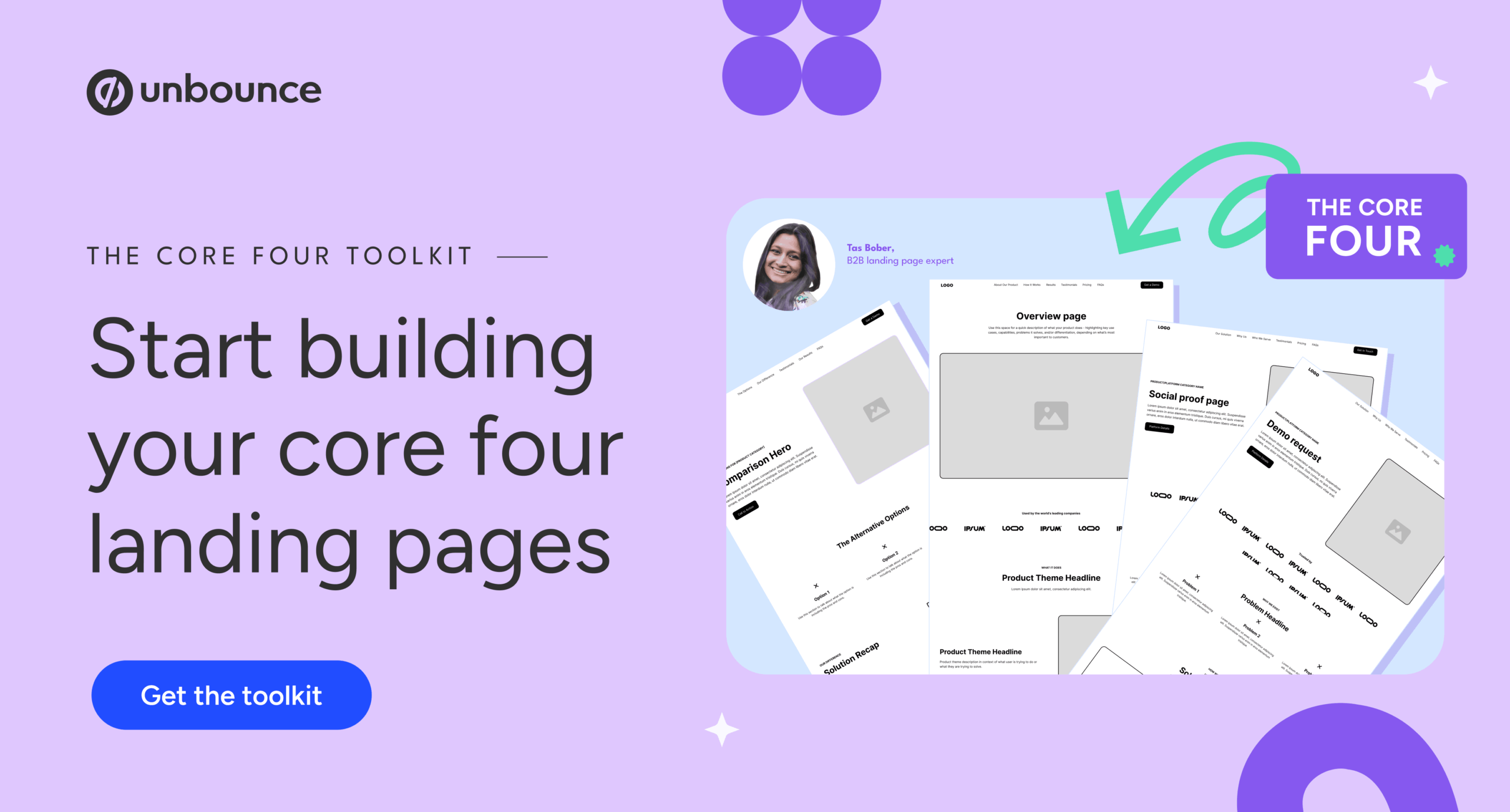
Recognizing that the traditional playbook was broken, digital marketing experts began reimagining the funnel. Industry frameworks, such as B2B landing page strategist Tas Bober’s "Core Four" methodology, began gaining traction across paid media teams. Marketers realized that a demo landing page should never act as a prospect’s introduction to a brand.
Instead, the modern B2B pipeline requires a sequenced progression of landing pages that systematically warm up buyers through education, differentiation, and social proof before exposing them to a high-intent conversion form.
Phase 3: The 2026 Regulatory and Algorithmic Realignment
By 2026, major search and ad networks—most notably Google’s ad quality prediction updates—began penalizing sterile, exit-restricted landing pages that lacked context and navigational alignment with search intent. Concurrently, platforms like LinkedIn adjusted organic and paid algorithms to favor demand-generation content that nurtures audiences over direct-response lead capture.
Today, successful SaaS organizations are abandoning the "demo-first" trap. They are treating the demo landing page as the final, highly secure gate of a meticulously curated buyer journey—one that admits only those prospects who have already self-qualified, researched alternative solutions, and concluded that the vendor belongs on their shortlist.
Supporting Context & Metrics: Benchmarks and Common Mistakes
To diagnose why a demo page is underperforming, marketing and sales leadership must examine hard data rather than relying on subjective assumptions.
The Conversion Benchmark Reality
According to Unbounce’s conversion benchmark data, SaaS landing pages achieve a median conversion rate of 3.8%. More recent first-party data compiled by B2B conversion specialists actively optimizing enterprise demo sequences points to an average conversion rate hovering around 3.1%.
This establishes a realistic baseline in the low single digits, with 3% to 4% serving as a reliable industry benchmark. However, this number fluctuates wildly depending on the temperature of the traffic hitting the page. Pushing cold, uneducated traffic to a 3% benchmarked page will inevitably hit a hard performance ceiling. Conversely, routing warm, highly researched enterprise buyers to that same page pushes conversion metrics significantly higher.
Furthermore, form-field data underscores the delicate balance of lead qualification:
1 to 5 fields: Average conversion rates sit near 17%.
6 to 7 fields: Conversion rates drop off sharply to approximately 11%.
10+ fields: Conversion rates fall below 7%.
The 7 Most Common SaaS Demo Landing Page Mistakes
Targeting Cold Traffic: Treating a demo page like a top-of-funnel asset and driving uneducated prospects directly to it.
Hiding Pricing Entirely: Forcing buyers to jump through sales hoops just to find out if a solution fits their budget.
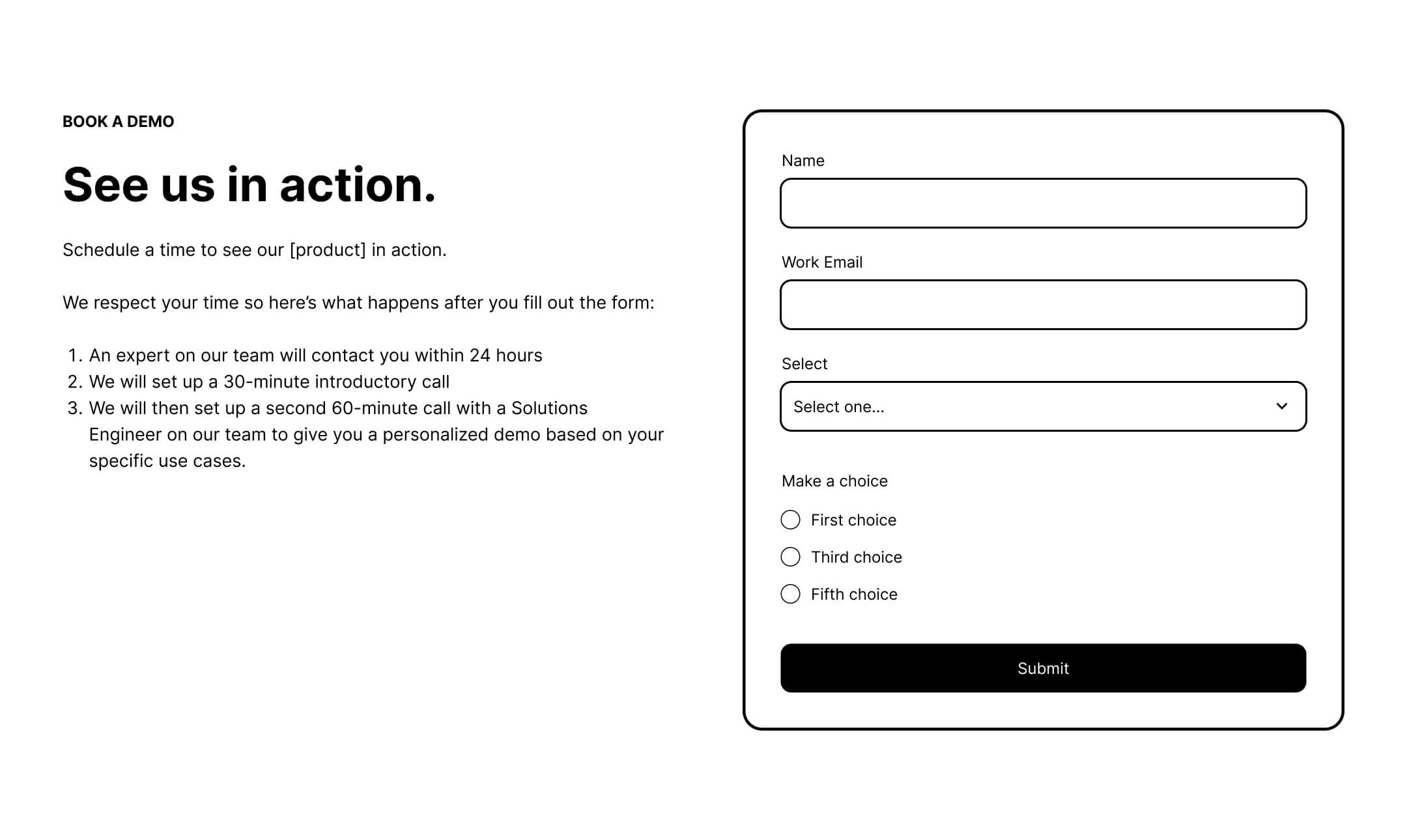
Vague Post-Submission Expectations: Failing to inform the user what happens after they click "Submit," breeding anxiety over aggressive sales tactics.
Over-Complicated Forms: Piling on unnecessary qualifying fields that skyrocket friction and depress submission rates.
Absent or Weak Social Proof: Displaying abstract claims without concrete customer logos, verified reviews, or quantifiable metrics.
Generic CTA Copy: Relying on uninspired buttons like "Submit" or generic "Request a Demo" phrasing that misrepresents the actual next step (such as a preliminary discovery call).
Zero Navigational Context: Trapping users on a dead-end page that forces them to hit the back button if they aren’t quite ready to convert.
Official Statements and Strategic Frameworks
Industry authorities emphasize that fixing a broken demo pipeline requires looking beyond tactical interface design and addressing foundational traffic segmentation.
"If you’re sending cold traffic to a demo page, even a brilliantly built page will eventually hit a performance ceiling. You can improve the headline, form, proof, and CTA, but you can’t optimize your way around the fact that most visitors aren’t ready to talk to sales yet."
— Tas Bober, B2B Landing Page Expert
The "Core Four" Framework for Paid Media
To ensure that only high-intent visitors reach the demo landing page, B2B marketing ecosystems must deploy a structured sequence of web assets designed for different stages of the research cycle:
Problem/Education Pages (TOFU): Introduce market dynamics and validate buyer pain points without pushing a product.
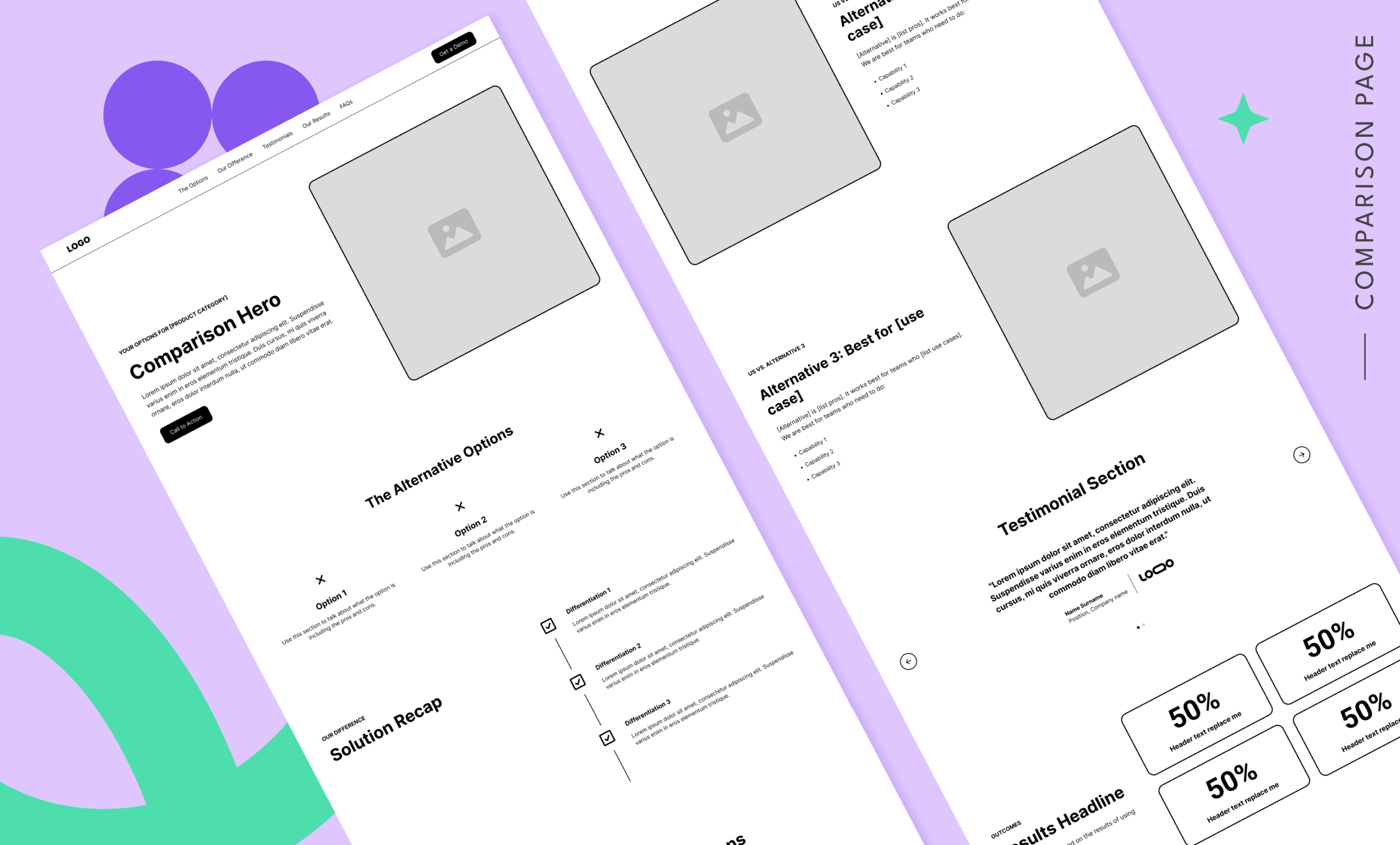
Solution/Alternative Pages (MOFU): Compare methodologies and position your product’s unique value proposition against category alternatives.
Pricing Pages: Provide transparent financial brackets or starting ranges to let buyers self-qualify.
Demo Landing Pages (BOFU): The final, high-assurance destination for warm buyers ready for a guided walkthrough.
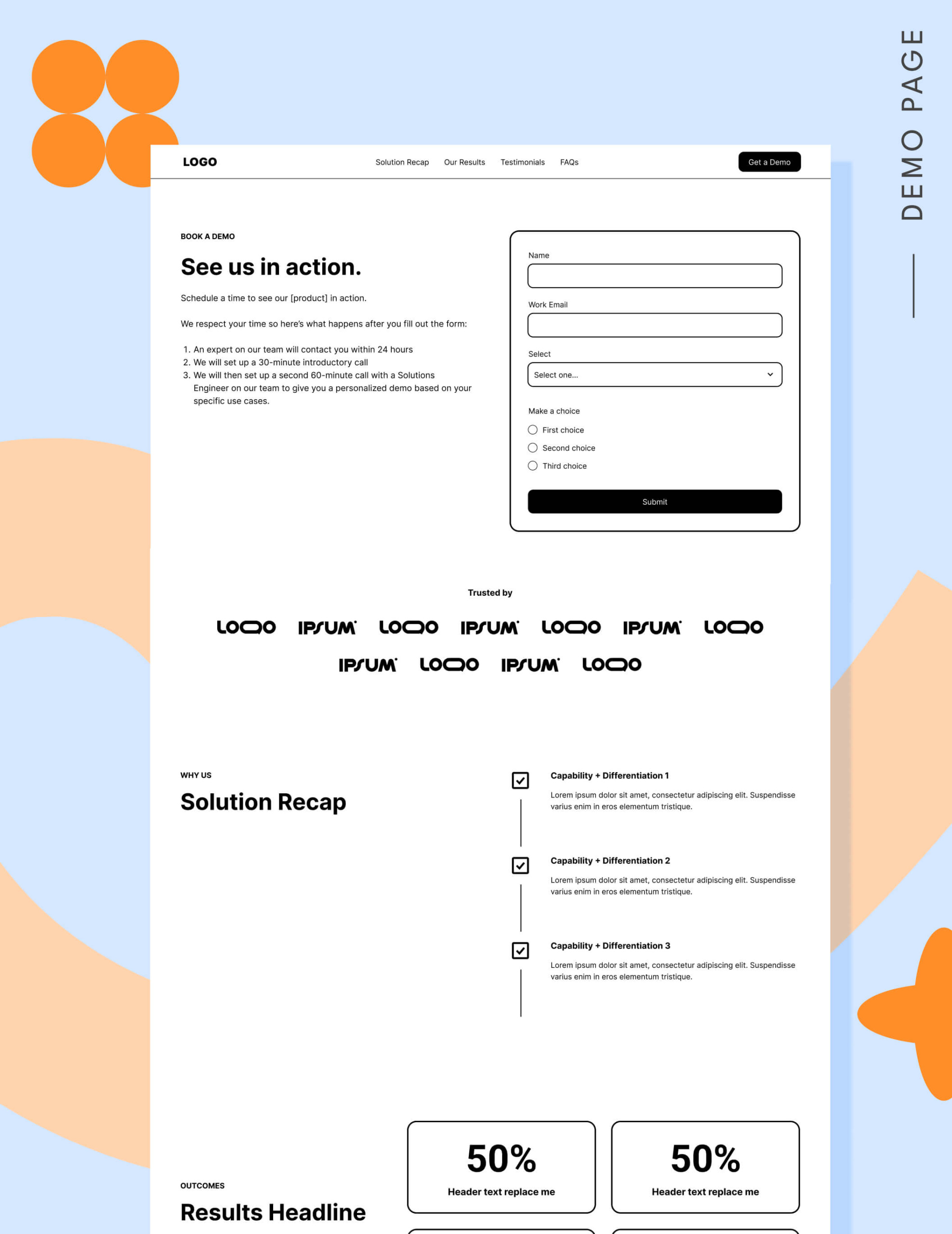
Anatomy of a High-Performing Demo Page Layout
When structuring the demo page itself, best-practice wireframes incorporate specific blocks in a precise psychological order:
Navigation: Maintain an anchor navigation system allowing visitors to jump to core page sections, accompanied by a minimal footer linking back to pricing and core educational resources. Google’s ad quality models reward this contextual transparency.
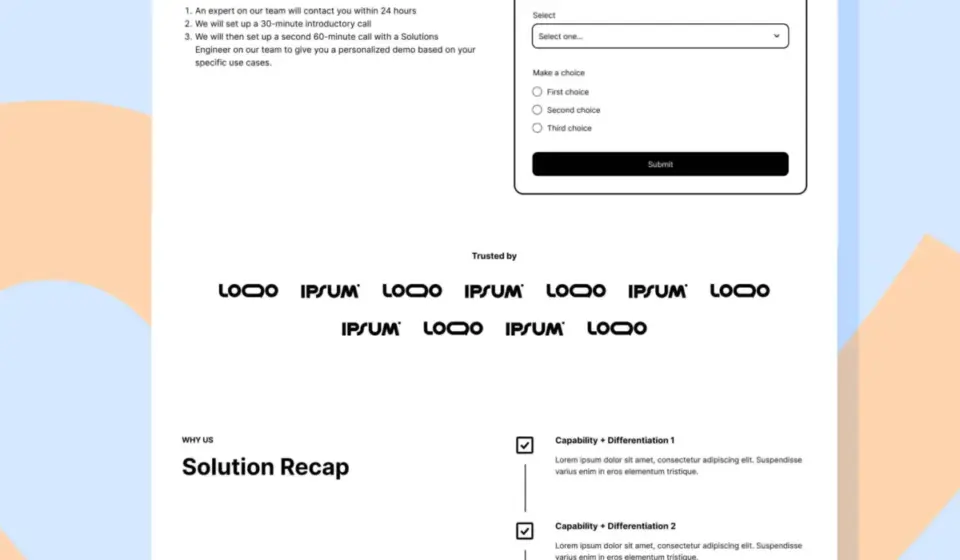
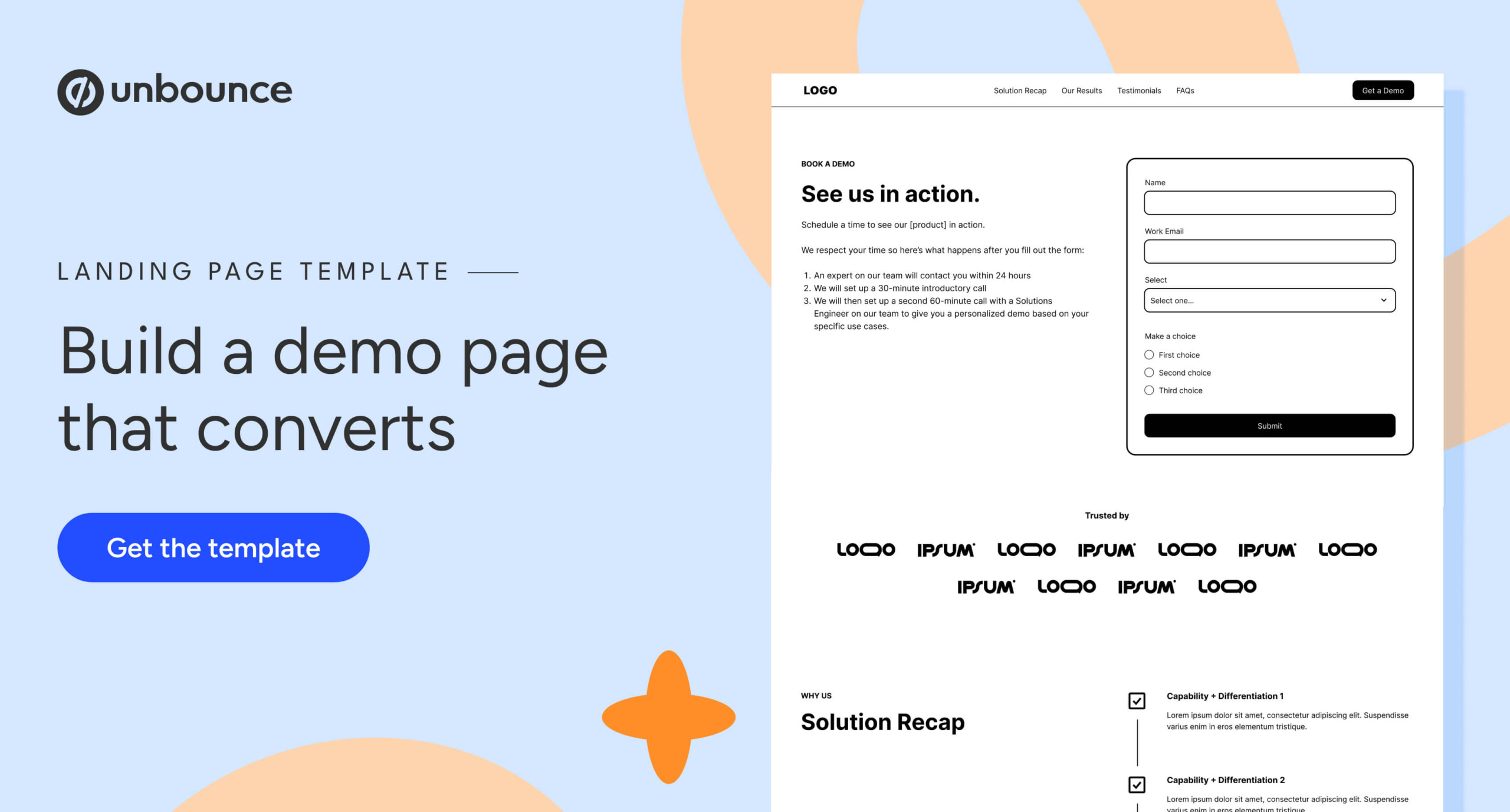
The Hero Section: Because this is a high-intent page, placing the form above the fold is acceptable—provided it is paired with clear expectations of what happens post-submission.
Logo Garden / Light Testimonials: Instantly validate credibility by showcasing recognizable enterprise clients or punchy, outcome-driven customer quotes.
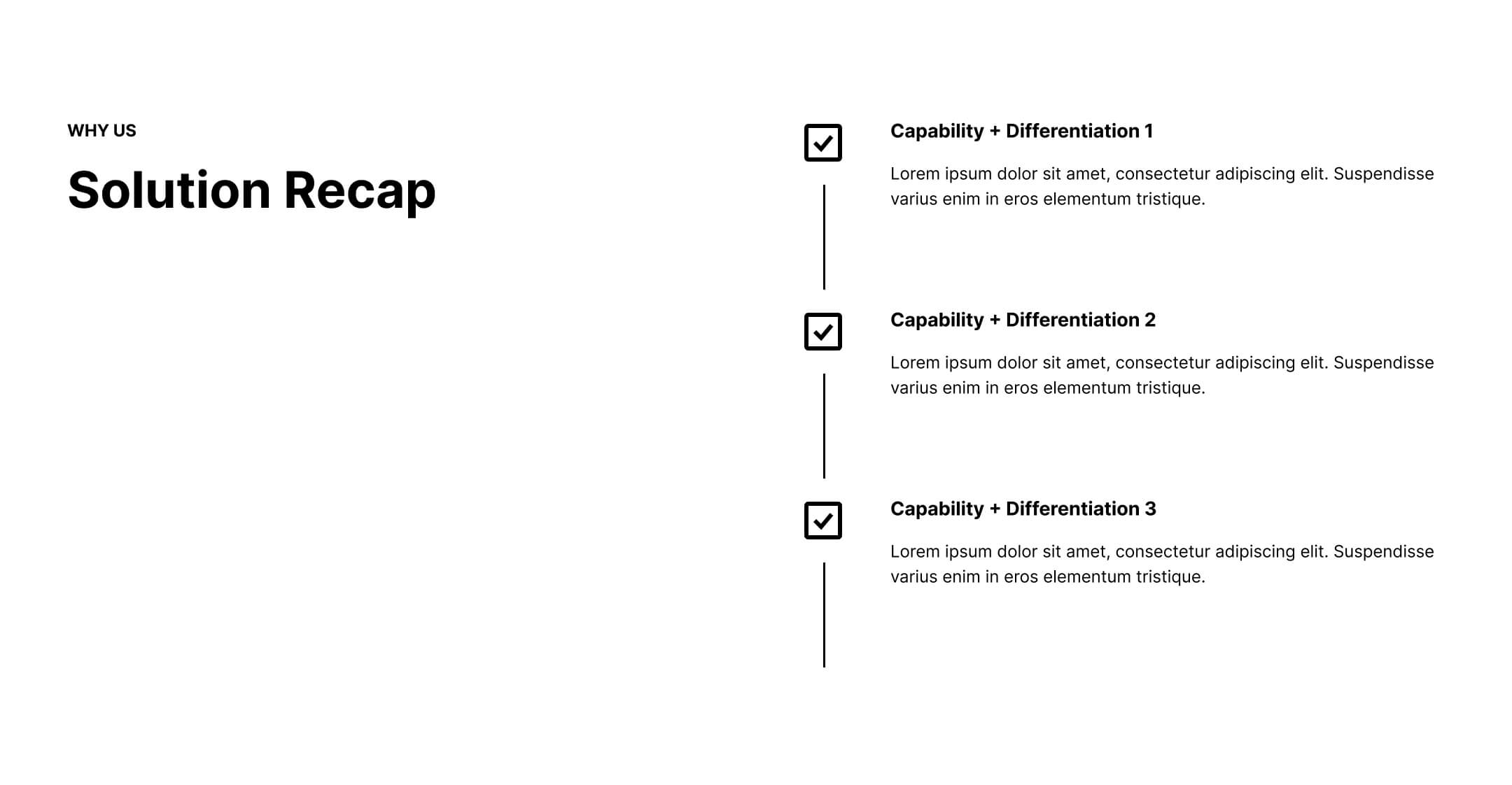
Solution Recap: Remind visitors of your primary differentiators to reinforce why they chose to evaluate your platform over competitors.
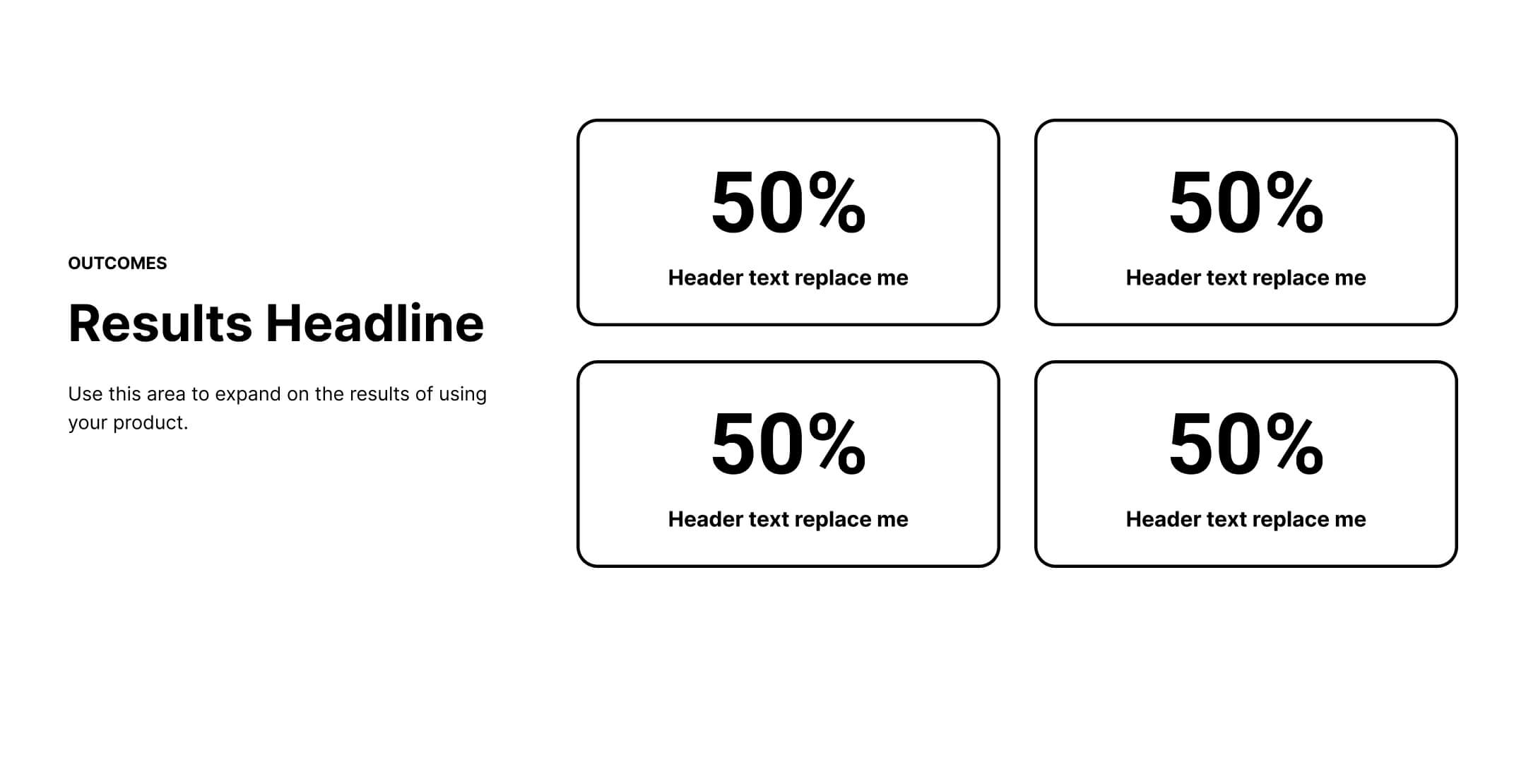
Measurable Results: Quantify the business impact (e.g., "Increased pipeline efficiency by 42%") to justify the investment of time.
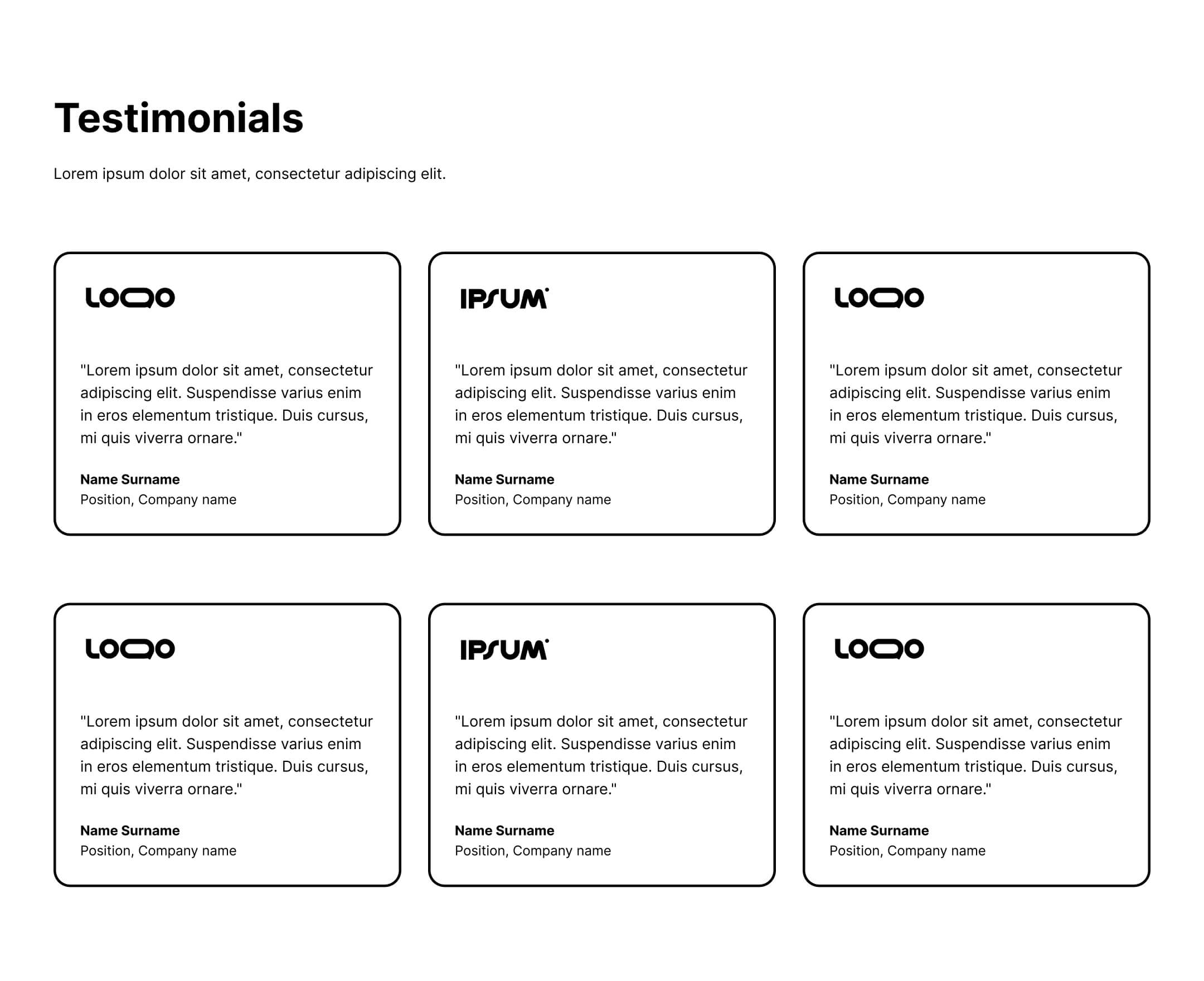
Comprehensive Testimonials: Mirror e-commerce proof standards by featuring a robust volume of reviews to minimize perceived risk.
Targeted FAQs: Proactively address the top three to four objections sales teams encounter on live calls, alongside procedural questions about implementation timelines.
Future Outlook: The Evolution of B2B Conversion Paths
As we look toward the remainder of the decade, the friction points governing software sales are shifting dramatically. Buyers increasingly demand self-service options, interactive product tours, and immediate value before engaging with human sellers.
Forward-thinking organizations are already bridging the gap between passive form fills and active product engagement. For instance, replacing rigid "Request a Demo" CTAs with interactive product tours or "Take a Tour" mechanisms has been shown to dramatically lift pipeline velocity—in some cases increasing pay-per-click (PPC) conversion rates by upwards of 30% while nearly halving customer acquisition costs (CAC) in Account-Based Marketing (ABM) campaigns.
Ultimately, the mandate for modern marketing and sales leadership is clear: Fix your targeting first, then fix your page. By aligning traffic quality with a transparent, friction-aware landing page experience, B2B brands can finally dismantle the wall between marketing lead generation and sales closing power—turning the demo page from a bottleneck into a predictable growth engine.