Turning Expertise into Enterprise: How Expert-Backed AI Tools are Reshaping the Knowledge Economy

Executive Overview
For decades, the standard playbook for monetizing professional expertise has remained largely unchanged. Consultants, strategists, and educators package their hard-won frameworks into digital courses, books, or high-ticket coaching programs. Yet, a fundamental friction point has consistently plagued this digital product ecosystem: the chasm between education and execution.
According to recent industry data, digital course completion rates hover between a meager 10% and 20%. Buyers routinely hit a wall of overwhelm, struggling to bridge the gap between abstract theoretical frameworks and the blank-page reality of their own day-to-day businesses.
Enter the next evolution of the knowledge economy: expert-backed artificial intelligence.
Rather than relying on generic, publicly available AI models that regurgitate broad best practices, forward-thinking creators are productizing their proprietary methodologies into customized, interactive tool suites. Co-created by brand strategist Kelly Sinclair and digital media pioneer Michael Stelzner, this emerging paradigm shifts the value proposition entirely. Instead of teaching clients how to think, experts are now equipping clients with tools that allow them to use the expert’s proven thinking in real time.
By building what Sinclair terms "bot squads"—interconnected networks of AI-powered tools designed to guide users through complex, multi-step workflows—knowledge businesses are shattering historical completion barriers. Data indicates that when interactive AI implementation layers are integrated into training pipelines, course and program completion rates skyrocket to an impressive 70% to 80%. This comprehensive analysis explores how professionals can identify high-value opportunities, structure their methodologies using the IPO framework, and navigate the technical deployment landscape to build scalable, high-margin AI products.
Detailed Chronology: The Evolution from Generic Automation to Expert-Backed AI
The democratization of generative AI initially sparked a wave of commoditization. With tools like ChatGPT readily available, anyone could prompt an LLM to draft a marketing strategy, generate a content calendar, or write an outbound sales pitch. However, a critical flaw quickly surfaced: generic AI outputs lack validation. Users had no way of knowing whether the generated response was structurally sound, strategically viable, or aligned with a proven field-tested framework.
Phase 1: The Commodity Trap and the Rise of Specialized Prompts
In the early days of generative AI adoption, creators attempted to protect their intellectual property by developing static prompt libraries and PDF guides. While these resources offered temporary value, they failed to solve the core implementation bottleneck. Users still faced the cognitive load of interpreting prompts, adapting templates, and executing multi-stage workflows without real-time guidance.
Phase 2: The Birth of the "Bot Squad"
Recognizing that static resources were insufficient, experts like Kelly Sinclair began engineering multi-agent workflows. Instead of treating AI as a single-prompt solution, innovators designed interconnected ecosystems—dubbed "bot squads."
In these systems, Bot A handles initial data ingestion and intake; Bot B processes that data through an advanced strategic filter; and Bot C converts the refined insights into tangible, execution-ready deliverables like media pitches, brand messaging documents, or visibility audits. This evolution transformed AI from a novel drafting toy into an indispensable infrastructure layer for professional services.
Phase 3: Transitioning from One-Time Sales to Recurring SaaS Models
Historically, digital course creators relied on transactional, one-time sales models characterized by high customer acquisition costs and low lifetime value. By transitioning to expert-backed AI tools delivered via subscription models, knowledge businesses are stabilizing their revenue streams. Clients willingly maintain recurring subscriptions because the AI tools continuously compound their operational efficiency, saving them hours of manual labor week after week.
Supporting Context & Metrics: Overcoming the Implementation Gap
To understand why expert-backed AI is experiencing exponential demand, one must examine the core behavioral patterns of modern digital learners and marketers.
The State of AI Learning and Implementation
Recent industry insights into professional education reveal a striking reality regarding self-directed learning. A vast majority of marketers—approximately 85%—learn how to navigate and apply AI by experimenting entirely on their own. Only 7% receive formal corporate or organizational training, forcing more than half of professionals to invest their own personal capital into software tools and subscriptions.

This DIY approach creates widespread industry fatigue. Professionals are flooded with new tools, platform updates, and conflicting strategies on a weekly basis, resulting in widespread paralysis by analysis. Expert-backed AI tools directly solve this dilemma by baking authoritative methodology directly into the software interface, removing the guesswork from professional execution.
Diagnosing the Four Core Friction Points
Before building any AI-powered product, creators must diagnose where their clients experience the most acute operational friction. Sinclair outlines four critical diagnostic questions that large language models can help surface during initial product planning:
- Repetition: Where do clients constantly ask the exact same foundational questions? Any recurring inquiry represents a prime candidate for an automated, customized tool that delivers immediate answers.
- The Implementation Gap: Where do clients stall out after receiving a brilliant strategy? The distance between possessing a static PDF plan and taking concrete action is precisely where AI tools generate momentum.
- The Skip Zone: Which essential steps in your methodology do clients actively avoid due to "blank-page syndrome" or perceived effort? Deploying an AI tool to generate the difficult first draft eliminates friction and keeps users moving forward.
- The Confidence Gap: Where do clients understand the intellectual concepts but lack the self-assurance to execute? Real-time validation and contextual guidance bridge this psychological barrier.
Official Methodologies: The IPO Framework
Successfully productizing expertise requires a rigorous structural blueprint. Sinclair advocates for the IPO Framework—Input, Process, Output—a universal architecture that ensures tools remain user-agnostic in structure while delivering hyper-personalized results.
[ USER INPUTS ]
(Business Profile, Target Audience, Raw Data)
       │
       ▼
[ EXPERT PROCESS ]
(Tool Goal + Custom Instructions + Domain Training Resources)
       │
       ▼
[ ACTIONABLE OUTPUT ]
(Audits, Pitches, Strategic Roadmaps, Messaging Docs)
1. Input (The Variable)
The input represents everything the customer brings to the interaction. This includes their specific business description, target demographic data, operational metrics, or raw answers to a structured intake questionnaire. The input acts as the primary variable that ensures the final output is uniquely tailored to the user’s specific context.
2. Process (The Expert IP)
This is where the creator’s proprietary intellectual property lives. A robust process layer comprises three vital components:
- Clear Definition of Purpose: Exactly what specific job is this tool hired to accomplish?
- Detailed Instructions: Granular prompt engineering and behavioral guardrails that dictate how the model must reason.
- Training Resources: Domain-specific reference materials used to train the model, such as coaching call transcripts, proprietary worksheets, frameworks, and verified examples of high-performing outputs.
3. Output (The Deliverable)
The output is the tangible end product received by the customer. Whether it is a comprehensive visibility audit, an investor-ready pitch deck, or a tailored brand messaging architecture, defining the exact output parameters first allows creators to reverse-engineer the required inputs and processes.
Real-World Applications in the Knowledge Economy
- Moxie (Messaging Strategy): Developed by communications expert Michelle, Moxie addresses the common client objection that brand messaging takes months to develop. Clients input raw voice-of-customer research, which Moxie analyzes using Michelle’s specialized methodology to instantly generate actionable marketing copy.
- Valerie the Visibility Auditor: Built by Kelly Sinclair, this tool intercepts entrepreneurs who default to low-ROI daily social media posting. Valerie evaluates weekly activities against a rigorous ROI framework, redirecting users toward high-impact collaborative and networking strategies.
- The PR Bot Suite: Designed by PR coach Nicole, this three-tier bot squad automates media outreach. Bot 1 conducts intake and drafts messaging; Bot 2 cross-references niche business profiles with targeted podcast opportunities; Bot 3 drafts personalized media pitches written entirely in the client’s voice.
Technical Deployment: Choosing Your Delivery Infrastructure
Once an expert has mapped their methodology using the IPO framework, they must select a technical delivery method. Each approach presents distinct advantages, scalability limits, and intellectual property tradeoffs.
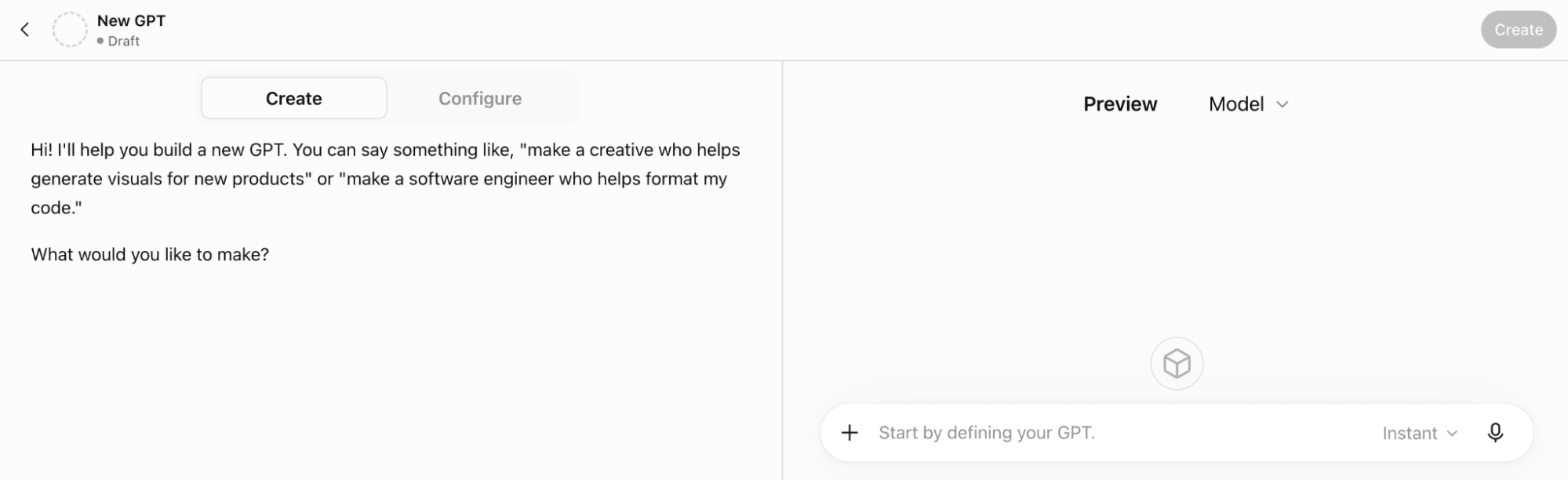
1. Custom GPTs (The Proof of Concept)
- Overview: Built natively within OpenAI’s ChatGPT interface through a conversational setup process.
- Advantages: Exceptionally fast to deploy; highly accessible for non-technical creators.
- Limitations: Siloed architecture means tools cannot easily communicate across multi-step workflows without manual copy-pasting. Furthermore, subscription security is difficult to enforce, platform updates can break underlying models without warning, and user access cannot be automatically revoked when a membership expires.
- Best For: Early-stage proof-of-concept testing or single-step utility tools.
2. Claude Skills (Portable Multi-Agent Orchestration)
- Overview: Advanced conversational workflows supported by platforms like Anthropic’s Claude, which allow multiple agents to coordinate seamlessly within a single user account.
- Advantages: Exceptional capability for multi-step workflows; highly portable across different LLM environments.
- Limitations: Requires handing over the underlying instruction files (effectively a digital zip folder of proprietary methodology), exposing intellectual property to sophisticated users.
- Best For: Creators comfortable distributing framework code within high-ticket masterminds or enterprise environments.
3. Custom Software via "Vibe Coding" & Dedicated Platforms
- Overview: Building standalone, multi-tenant software applications using visual development environments (such as Lovable) or code-generation utilities (like Claude Code and OpenAI Codex), or deploying specialized studio platforms like Gravia Studio’s wAIv.
- Advantages: Complete brand control, robust multi-tenancy data isolation, airtight client access management, and the ability to route different steps of a workflow to cost-effective models (e.g., using lightweight models like Claude Haiku for intake and advanced frontier models for deep strategic analysis).
- Limitations: Demands a shift toward software operations management, including security oversight and infrastructure maintenance.
- Best For: Established experts seeking to build scalable, high-retention software-as-a-service (SaaS) revenue engines.
Future Outlook: The Next Frontier for Knowledge Businesses
As artificial intelligence continues to mature, the dividing line in the digital economy will no longer be between those who have access to information and those who do not. Information has been permanently commoditized. Instead, market leadership will belong exclusively to practitioners who successfully merge deep domain expertise with seamless software execution.

For consultants, coaches, and course creators, the message is clear: the future of digital products lies in moving beyond passive education. By packaging proprietary frameworks into intelligent bot squads, experts can finally eliminate the implementation gap, drive completion rates toward 80%, and transform transient client relationships into enduring, high-margin subscription ecosystems. The tools are accessible, the frameworks are proven, and the window to establish market dominance is wide open.