In the hyper-competitive world of direct-to-consumer (D2C) e-commerce, digital infrastructure often dictates the boundaries of a brand’s growth. For fast-growing beauty and personal care brand grüum, choosing the right technological foundation wasn’t just a matter of convenience—it was a strategic decision that preserved their business model, protected their profit margins, and safeguarded their most valuable asset: customer data.
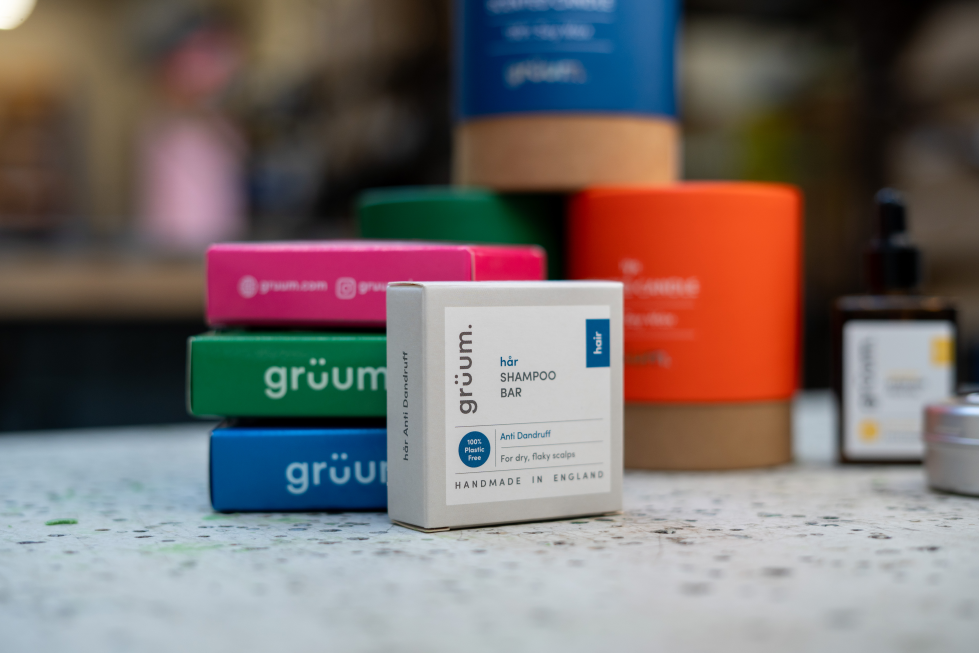
Founded in September 2016 by industry veterans Simon Leonard, Andy Shaw, Bethanie Sleigh, and George Lagonikas, grüum has evolved from a niche male skincare and shaving startup into a thriving, multi-gender personal care powerhouse. Operating out of Stockport, UK, the company manufactures its comprehensive range of skincare, haircare, bodycare, and shaving products in-house, boasting a massive catalog led by its multi-million-selling shampoo bars.
By 2023, the brand was processing an astounding 80,000 orders a month across roughly 300 Stock Keeping Units (SKUs) with a remarkably lean technical team. Facing a crucial crossroads, management undertook a rigorous four-month evaluation to determine whether their existing platform—WooCommerce—could sustain their aggressive trajectory, or if they needed to migrate to an enterprise alternative like Adobe Commerce (Magento) or Shopify Plus.
The verdict? grüum chose to stay put. This in-depth investigative report examines the operational realities, financial calculations, and architectural flexibility that led one of Europe’s fastest-growing sustainable brands to double down on WooCommerce.
Detailed Chronology: From Garage Concept to Multi-Million-Pound Brand
The Genesis (2016)
The story of grüum began in January 2016, when four former colleagues—Simon Leonard, Andy Shaw, Bethanie Sleigh, and George Lagonikas—decided to leave their established corporate roles behind. Spanning operations across both the Netherlands and the United Kingdom, the founding quartet shared a singular vision: to strip away the unnecessary chemicals, exorbitant pricing, and excessive packaging plaguing the traditional high-street beauty industry.
Working collaboratively across borders, they officially launched grüum in September 2016 with an initial lineup of roughly 10 products. Back then, the brand’s identity was sharply focused on male skincare and shaving essentials. However, the market responded enthusiastically to their transparent, no-nonsense approach to personal care.
Evolution and Expansion (2017–2022)
Recognizing broader consumer demand for inclusive, eco-friendly goods, grüum rapidly expanded its portfolio. The brand pivoted to serve all ages and genders, developing lines that span facial skincare, advanced haircare, hydrating bodycare, and sustainable shaving accessories.
Crucially, grüum opted to bring its manufacturing and scientific research entirely in-house to Stockport. Rather than relying on third-party contract manufacturers, the brand hired its own cosmetic scientists. This internal R&D infrastructure allowed the team to formulate products from scratch, significantly accelerating iteration cycles and enforcing uncompromising quality control.
At the heart of this product evolution is their flagship shampoo bar. Engineered to eliminate single-use plastic bottles entirely, this sustainable powerhouse has gone on to sell millions of units globally, anchoring grüum’s reputation as a pioneer in waterless formulations and natural ingredients.
The 2023 Infrastructure Audit
By 2023, grüum’s digital storefront was handling staggering volumes. Operating with a streamlined team—including just one full-time developer and a part-time QA tester—the site was processing up to 80,000 orders every single month.
Recognizing that their technical infrastructure needed to support future expansion without demanding an inflated corporate overhead, the leadership team initiated a comprehensive four-month audit. They systematically evaluated alternative enterprise e-commerce platforms to see if WooCommerce could truly carry them into the next decade.
Supporting Context & Metrics: The Economics of E-Commerce Platforms
When scaling to tens of thousands of monthly transactions, platform fees, operational friction, and developer overhead become make-or-break metrics. grüum’s audit of enterprise alternatives revealed stark structural incompatibilities with their business model.
1. The Custom Bundle Conundrum vs. Shopify Plus
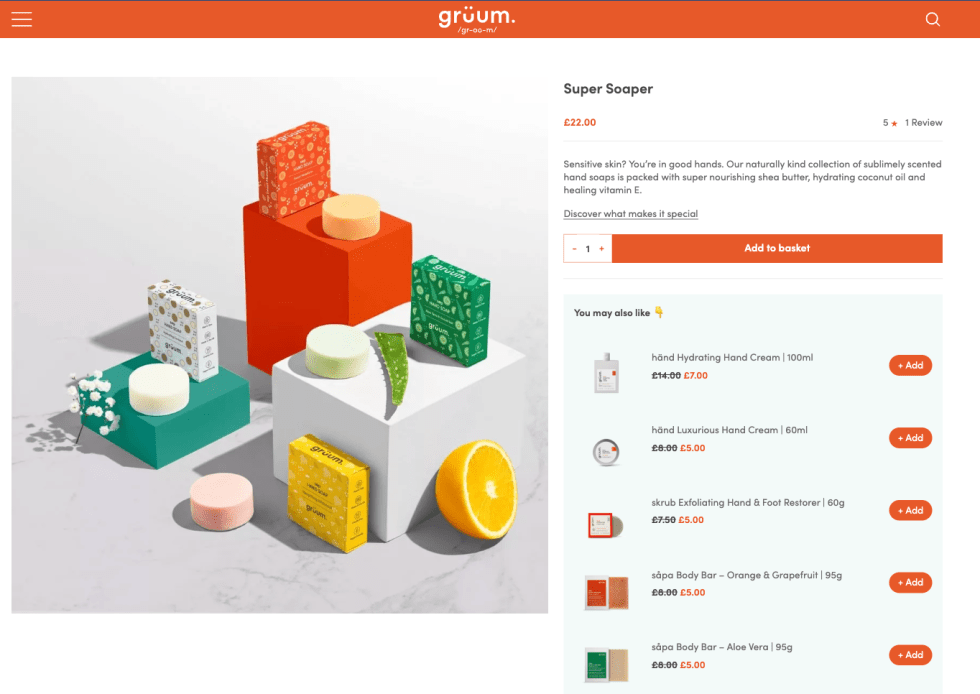
grüum’s product catalog is uniquely dynamic. Customers can purchase single items, set up automated recurring subscriptions, or build custom bundles. These bundles aren’t merely static gift sets; they dynamically manage contents, localized pricing, and real-time stock levels as a single configurable unit. For instance, a buyer might purchase a curated soap set, append individual add-on items, and opt into a subscription for specific components to maximize their savings.
When grüum tested Shopify Plus, they found it fundamentally incompatible with their catalog structure.
"We were going to have to change our business to fit into that business," co-founder Simon Leonard explains. "With WooCommerce, we can make WooCommerce fit around our business and make it work for us. We don’t have to change our principles."
Because WooCommerce is built on an open-source architecture, grüum isn’t restricted by rigid default configurations. If a complex bundle requires advanced conditional logic, developers can utilize existing extensions or custom-code a native solution.
2. The True Cost of Enterprise Operations: Eliminating Magento (Adobe Commerce)
The platform evaluation process quickly eliminated Adobe Commerce (formerly Magento). While Adobe Commerce is engineered for massive enterprise operations with near-limitless customization depth, it requires a staggering amount of technical and financial overhead.
Maintaining an Adobe Commerce environment demands a dedicated, specialized engineering team. For grüum, absorbing that level of operational expenditure was economically unviable. As Leonard bluntly summarized: "We weren’t going to employ a team of 20 people running our website."
3. Subscription Economics and Payment Infrastructure
Subscriptions form a vital pillar of grüum’s business model, currently accounting for 10% of total revenue. Impressively, once a customer subscribes, their average tenure spans a remarkable 30 months. At this scale, the financial structure of subscription software is a critical determinant of profitability.
Shopify Plus levies a percentage-based fee on subscription revenue. When scaling subscription sales into the millions of pounds, those percentage cuts compound rapidly. Leonard crunched the numbers:
"When you’re doing £1 million or £10 million through subscriptions, that soon adds up. You’re instantly shelling out £100,000 a year."
By contrast, WooCommerce Subscriptions operates on a predictable flat-fee structure, saving the brand substantial capital annually. To streamline transactions further, Leonard selected WooPayments for its native integration, minimizing friction at checkout.
Furthermore, speed of execution emerged as a major differentiator. grüum’s CTO estimated that initiatives and feature rollouts that would have taken a grueling year on alternative platforms could be designed, tested, and deployed within a single month using WooCommerce.
Official Statements & Operational Insights
Behind grüum’s lean technological success is a philosophy of empowerment—giving non-technical team members the tools they need to drive marketing and merchandising without bottlenecks.
Empowering the Content Team
Despite processing up to 80,000 orders monthly, grüum’s day-to-day operations do not rely on a sprawling web development department. Alongside their single full-time developer, a dedicated content team handles everything from product launches and seasonal promotions to aesthetic page creation and daily updates.
"We don’t often need development assistance," notes co-founder Bethanie Sleigh.
This operational independence is achieved through the maturity of the WordPress and WooCommerce ecosystem. The content team utilizes Gutenberg for seamless, block-based page building, Max Mega Menu for intuitive site navigation, and Yoast SEO to maintain top-tier search engine visibility. By relying on robust, standard tools rather than bespoke workarounds, the brand’s sole developer is free to focus entirely on high-impact customer experience enhancements rather than routine site maintenance.
Data Ownership and Sovereign Customer Relationships
Perhaps the most persuasive argument for grüum’s steadfast loyalty to WooCommerce lies in data governance. Many proprietary SaaS subscription platforms act as gatekeepers to customer information, blurring the lines of direct ownership.
Leonard is unequivocal on this point:
"If we ever left WooCommerce—I don’t think we will—the data is ours, which is quite different from other subscription platforms. It gives us control over our customers rather than giving them to a third party."
Given that grüum’s average subscriber maintains an active relationship for 30 months, holding absolute ownership over purchase histories, behavioral patterns, and preference profiles is vital. Relying on a third-party ecosystem that restricts data access introduces an unacceptable strategic risk—one that grüum’s leadership refuses to take.
Future Outlook: Sustainable Growth Without Compromise
As the direct-to-consumer landscape matures, brands are increasingly forced to choose between the path of least resistance—conforming to the rigid constraints of closed-source SaaS giants—or retaining absolute autonomy over their digital destiny.
For grüum, the four-month audit of 2023 cemented a permanent commitment to openness, cost-efficiency, and operational independence. By harnessing the open-source flexibility of WooCommerce, the Stockport-based brand has proven that high-volume e-commerce does not require an inflated corporate tech stack or restrictive percentage-based revenue sharing.
Armed with in-house manufacturing, eco-friendly formulations, a fiercely loyal customer base averaging 30-month subscription cycles, and an e-commerce engine customized entirely to their exact operational needs, grüum is uniquely positioned for its next phase of global expansion—all without ever compromising its founding principles.