
The Anatomy of a High-Conversion Product Hook: Why 30 B2B Tech Vendors Are Losing to a Single, Four-Sentence Email

Executive Overview
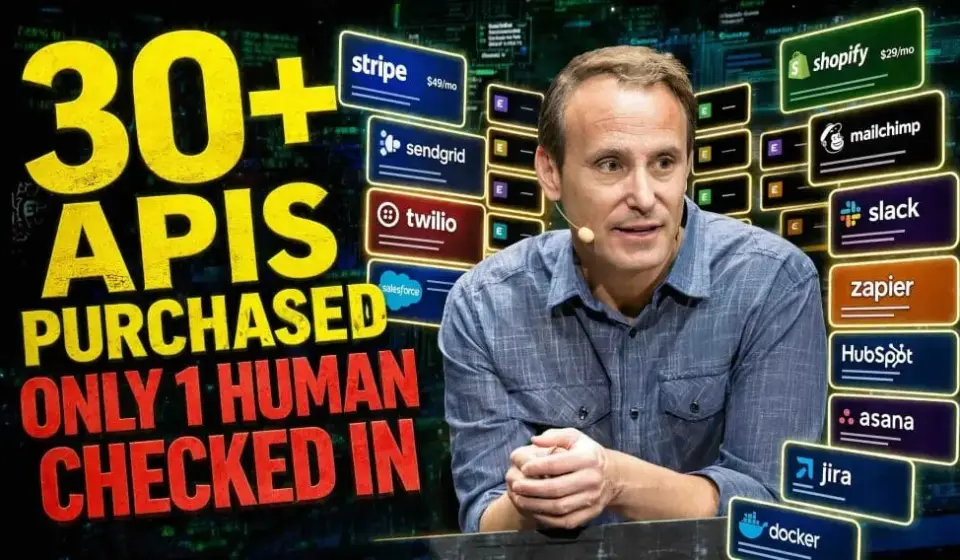
In the hyper-competitive landscape of modern B2B SaaS and AI infrastructure, customer acquisition spending has hit historic highs. Companies burn millions on multi-touch sales sequences, automated email cadences, customer data platforms, and SDR (Sales Development Representative) swarms designed to capture attention at scale. Yet, according to a recent operational audit by SaaStr—which currently runs over 21 production AI agents and has integrated more than 30 separate third-party APIs this year alone—the vast majority of these sophisticated machinery-driven go-to-market (GTM) motions are yielding catastrophic engagement failures.
Out of more than 30 API infrastructure and data providers tested, exactly one company reached out to determine if the product successfully met the user’s operational needs.
The outlier was Exa, a modern search and data infrastructure provider. Instead of rolling out a generic 7-step automated sales sequence, an Enrolled Product Manager named Alina sent a four-sentence, highly personalized email four days after the first batch of API calls was executed. The email requested a casual "one-liner" review in exchange for $50 in product credits.
What followed was a masterclass in modern product-led growth (PLG): within 33 minutes, the user responded with a 400-word detailed product spec, architectural constraints, throughput requirements, and precise feature requests. Within three hours, the Exa product team responded with exact endpoint configurations and transparent admissions about current technical limitations.
This investigative report analyzes the systemic failure of traditional B2B sales development sequences, breaks down the five core pillars of Exa’s high-yielding outreach framework, and explores how modern tech companies can replace bloated, siloed departmental workflows with high-leverage product-led conversations.
Detailed Chronology: The Experiment That Exposed the SaaS Sales Void
To fully understand the gap between modern B2B marketing theory and operational reality, one must examine the baseline environment. At SaaStr, the engineering and product teams are actively building complex architectures like SaaStr AI Connect, a platform powered by more than 21 proprietary AI agents operating concurrently in production.
Fueling this infrastructure requires constant vendor acquisition. Over the course of a single year, the team executed over 30 API signups spanning multiple complex domains:
- Semantic and web search engines
- Data enrichment pipelines
- Structured data extractors
- High-throughput email infrastructure
- Large language model inference nodes
- Secure data storage solutions
Across this intensive purchasing and testing cycle, the vendor response can be characterized by a single word: crickets.
The Illusion of "Sales Motion" vs. Real Engagement
Of the 30-plus vendors, only one traditional enterprise came close to interaction: a Coresignal sales representative. Days after the account upgraded its billing tier, a rep reached out. The outreach was articulate, and the representative had clearly reviewed basic company metrics. However, the operational trigger was transparently financial—it was tied to the credit card swipe, not the actual API utilization or functional performance.
While a classic upsell motion is a healthy sign of a functioning billing engine, it fails entirely as a product discovery mechanism. An upsell conversation provides zero novel insight into whether the buyer’s architecture is actually stabilizing, where their code is bottlenecking, or whether they are quietly planning to rip and replace the integration next quarter.
Aside from that single billing-triggered notification, the remaining providers executed one of two standard plays:
- The Automated Nurture Sequence: A rigid drip campaign firing emails on Day 0, Day 1, Day 3, and Day 7, regardless of whether the user completely ignored the platform or scaled to 100,000 requests an hour.
- Total Silence: Complete radio silence, treating the API key generation as the final destination rather than the beginning of a crucial feedback loop.
The Exa Intervention
On day four of testing a batch of API calls, the status quo was disrupted. The email, sent directly by Alina from Exa’s product team, read as follows:
“Hi Jason,
I’m on the product team here at Exa. I noticed you signed up and tested Exa.
If you have a one-liner on how we did (or what could have been done better), that would be greatly appreciated (& I’m happy to drop $50 of credits in your account).
Thanks a mil,
Alina”
The contrast between this communication and the standard B2B playbook is staggering. It discarded marketing fluff, ignored corporate signoffs, and respected the engineer’s most scarce asset: time.
Supporting Context & Metrics: Why Traditional Outreach Fails Developers
The modern B2B SaaS playbook relies heavily on the division of labor: Marketing generates leads, Sales Development Representatives (SDRs) qualify them through automated cadences, Account Executives (AEs) close deals, and Customer Success Managers (CSMs) handle onboarding months down the road.
While this assembly-line model worked well for legacy enterprise software, it breaks down completely when selling to modern technical buyers—developers, engineering leaders, and AI architects.
TRADITIONAL SILOED MODEL (3 Teams, 3 Quarters)
[Marketing (Signups)] ---> [SDRs (Automated Sequences)] ---> [CSMs (Quarterly Business Reviews)]
     Result: Fragmented, slow, and disconnected from active engineering cycles.

EXA’S UNIFIED PLG MODEL (1 PM, 3 Hours)
[Real Usage Trigger] ---> [Direct Product Team Outreach] ---> [Actionable Engineering Feedback]
     Result: Instant trust, deep product spec, and immediate architectural alignment.
The Cost of Frictionless Automation
Because AI tools have made hyper-personalized-looking spam infinitely cheap and scalable, the market has developed a collective immunity. When every cold email starts with "I saw you went to [University]" or "Congrats on the recent funding round," developers immediately filter the noise into the trash.
Furthermore, demanding a "quick 30-minute introductory call" from a developer who is actively debugging a production system is a fatal miscalculation. It requires a massive cognitive and temporal investment before the user has even verified if the tool solves their specific technical problem.
Deconstructing the Five Pillars of Exa’s Framework
Exa’s outreach success can be dissected into five foundational product-led principles:
1. Asking for a Micro-Commitment Instead of a Meeting
The size of the ask directly dictates the response rate. By requesting a "one-liner," the barrier to entry dropped to roughly 15 seconds. It required no calendar negotiation and could be answered instantly from a mobile device between code reviews. Paradoxically, this microscopic ask unlocked a massive, highly detailed response—a 400-word engineering specification—because it empowered the user on their own terms rather than boxing them into a rigid sales funnel.
2. Humanizing the Sender: Product vs. Sales
The email came from a named individual embedded directly within the product organization, bypassing sterile aliases like "The Team" or "[email protected]." In an era where automated tooling is ubiquitous, direct access to a human with roadmap influence carries immense signaling value. Developers are naturally eager to talk to people who can actually write code, patch endpoints, or prioritize feature requests.
3. Behavioral Triggers Over Calendar Triggers
Most marketing automation platforms rely on temporal triggers (e.g., Send Email X three days after signup). Exa’s trigger was behavioral: it fired precisely after the user executed their first genuine batch of API calls. This captured the user during the narrow psychological window when their opinions were freshly formed, the integration pain points were raw, and alternative paths had not yet been finalized.
4. Intrinsic, Low-Friction Incentives
Offering a $50 credit adjustment directly tied to the platform cost virtually nothing for the vendor to provision, yet it held immediate utility for the developer. Crucially, the reward was denominated in the product itself. Rather than routing a complex gift card through corporate compliance or forcing participation in a drawn-out user research panel under an NDA, the incentive directly catalyzed further platform usage.
5. Technical Fluency and Intellectual Honesty
When the user replied with granular, highly specific technical feedback, the response came back in under three hours with concrete endpoint configurations and honest admissions about current architectural limitations. In technical sales, an honest "we don’t support that yet, but here is how you can work around it" builds more trust in five minutes than months of evasive enterprise sales positioning.
Official Statements and Industry Implications
Industry observers and technical founders have increasingly criticized the over-automation of B2B go-to-market motions. Speaking on the broader implications of modern developer relations and product feedback loops, engineering leaders emphasize that traditional feedback mechanisms—such as Net Promoter Score (NPS) surveys and lagging Quarterly Business Reviews (QBRs)—are fundamentally broken.
"By the time a traditional enterprise vendor schedules a QBR or analyzes an aggregated NPS score, the engineering team has already moved on, rewritten their middleware, or routed around the broken API endpoint. Real product research must happen in real time, at the exact moment of initial friction."
— SaaStr Operational Review
When a company merges product research, activation checks, and expansion motions into a single, cohesive human interaction, organizational silos dissolve. Instead of fragmenting the customer journey across Marketing, Sales, and Customer Success over three separate quarters, a single product manager executed the entire loop in an afternoon.
Future Outlook: The Death of the Cold Sequence and the Rise of PLG Human Touch
As generative AI and automated outbound tools continue to flood enterprise inboxes, the return on investment (ROI) for traditional cold sales sequences will approach zero. Buyers are building automated filters to block out noise, leaving enterprise sales teams fighting over diminishing returns.
The future belongs to organizations that treat their product as the primary marketing and customer success channel.
Key Takeaways for B2B Tech Founders:
- Empower Product Managers to Talk to Users: Keep PMs connected to real-time telemetry data. When a user crosses an activation threshold, let the product team initiate direct, peer-to-peer technical conversations.
- Shrink the Ask: Never ask for a 30-minute meeting from a cold or newly activated developer. Ask for a sentence, a single pain point, or a quick critique.
- Align Incentives with Usage: Reward feedback using native product utility (credits, elevated rate limits, sandbox access) rather than generic gift cards that encourage transactional, unverified responses.
- Embrace Technical Transparency: Do not hide behind sanitized sales language. Acknowledge technical limitations immediately; technical buyers respect honest boundary-setting far more than vague promises of future roadmap items.
Companies that master this high-touch, usage-triggered, product-led conversational model will not only capture rich qualitative data and product specs for free—they will build enduring brand loyalty that converts developers into vocal advocates across the broader tech ecosystem.