
Decoding the Mechanics of Mobile Value-Added Services (mVAS): A Comprehensive Guide to Conversion Flows and Affiliate Strategies

Executive Overview
The Mobile Value-Added Services (mVAS) ecosystem remains one of the most dynamic and lucrative verticals in digital marketing and performance-based media buying. Spanning a diverse array of consumer-facing niches—including mobile gaming, lifestyle apps, sweepstakes, and the rapidly expanding sector of artificial intelligence companion applications—mVAS monetization relies entirely on the underlying mechanics of transaction execution. For digital marketers, media buyers, and affiliate networks, mastering the anatomy of an mVAS offer is no longer optional; it is a fundamental prerequisite for campaign profitability.
At its core, a conversion flow defines the exact procedural journey a user takes from clicking an initial promotional advertisement to the final authorization of a mobile charge, which in turn triggers a payout for the publisher. These flows dictate critical campaign metrics: user friction, conversion rates, payout thresholds, regulatory compliance, and lead quality.
While understanding the baseline principles of mVAS and selecting appropriate niches (such as casual gaming or utility apps) are critical first steps, campaign success ultimately hinges on understanding how a conversion happens. This comprehensive guide provides an authoritative breakdown of every major mVAS conversion flow, analyzing Direct Carrier Billing (DCB), SMS Billing, Mobile Originated (MO), and Mobile Terminated (MT) frameworks. By dissecting these mechanics, media buyers can optimize their landing page architecture, align traffic sources with the correct billing logic, and safeguard their campaigns against low-quality leads and premature budget exhaustion.

Detailed Chronology: The Evolution and Mechanics of mVAS Billing
The architecture of mobile billing has undergone significant transformation, evolving from rudimentary, highly vulnerable text-message protocols to sophisticated, carrier-integrated web APIs designed to balance frictionless user acquisition with robust fraud prevention. To deploy successful campaigns, marketers must understand the chronological development and operational execution of these conversion mechanisms.
1. Direct Billing Conversion Flows (Direct Carrier Billing / Direct Operator Billing)
Direct Carrier Billing (DCB) stands as the gold standard for frictionless monetization within the mVAS industry. By leveraging the user’s mobile network connection, DCB bypasses traditional credit card processing, allowing digital purchases to be charged directly to the user’s monthly mobile phone bill or deducted from their prepaid balance.
The cornerstone of DCB is the Mobile Station International Subscriber Directory Number (MSISDN). This unique network identifier corresponds directly to the subscriber’s SIM card and mobile account. When a user engages with an mVAS offer over a cellular network connection (e.g., 4G or 5G), the mobile network operator (MNO) automatically detects and authenticates the MSISDN, permitting seamless, one-touch or multi-touch billing authorization.

The operational execution of Direct Billing manifests in three primary click-flow variations:
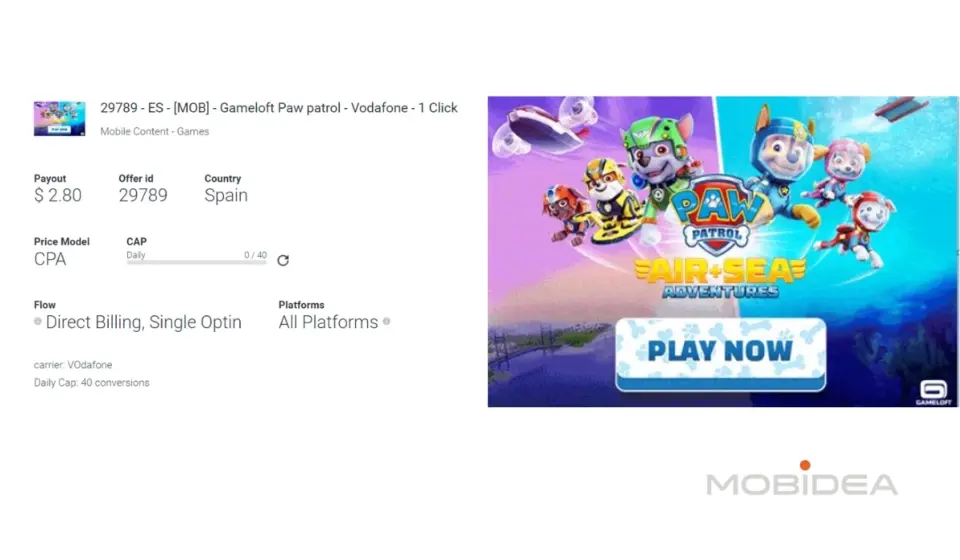
The One-Click Flow
- Mechanism: The user encounters an offer landing page and completes the subscription process by executing a single click on a Call-to-Action (CTA) button (e.g., "Subscribe Now").
- Funnel Dynamic: This flow acts as the mVAS equivalent of a Single Opt-In (SOI) lead generation funnel, measured strictly by webpage interactions.
- Strategic Implications: Because it eliminates virtually all user friction, the One-Click flow yields exceptionally high conversion volumes and is heavily favored by affiliates seeking rapid scale. However, this lack of friction introduces a notable drawback: accidental clicks and uninformed opt-ins are frequent, leading to lower lead quality, higher churn rates, and strict scrutiny from carriers. Consequently, payout rates for One-Click offers are typically positioned on the lower end of the spectrum.
The Two-Click Flow
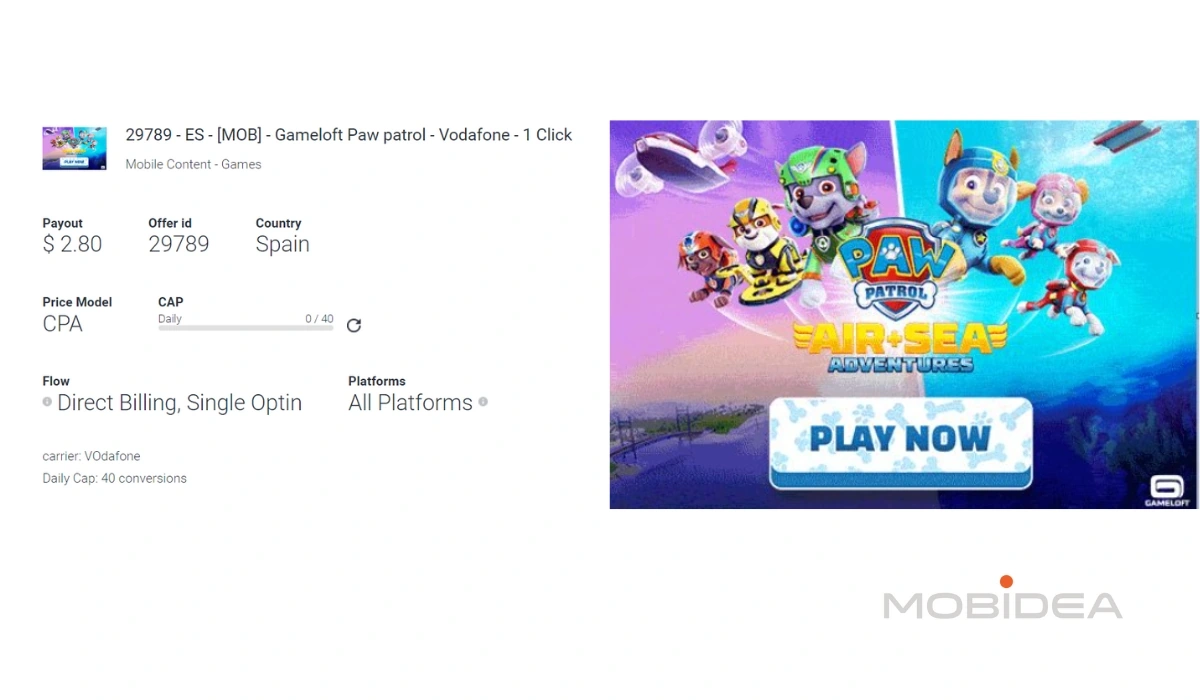
- Mechanism: To introduce a layer of intentionality, the Two-Click flow requires two distinct actions from the user. First, the user clicks an initial "Subscribe" button on a landing page pre-filled with their MSISDN. Second, they are redirected to a dedicated confirmation page where they must explicitly click a "Confirm" button to finalize the charge.
- Funnel Dynamic: Functioning similarly to a Double Opt-In (DOI) process localized entirely within the web environment, this flow curtails accidental acquisitions.
- Strategic Implications: While conversion rates are inherently lower than the One-Click model, lead quality increases substantially. Advertisers reward this higher intent with elevated payout rates. Affiliates running Two-Click flows must implement effective pre-landing page warm-up strategies to prepare traffic before it hits the conversion funnel.
The Three-Click Flow and Advanced Checkboxes
- Mechanism: Designed to combat low-quality conversions and regulatory pressure, the Three-Click flow mandates three distinct user interactions. Following the initial subscription click and the secondary confirmation page, users are routed to a third tier requiring an additional verification step—such as entering a One-Time Password (OTP) or manually checking a mandatory disclosure box explicitly stating: "I understand that clicking Confirm will incur a monthly recurring charge of $X."
- Strategic Implications: This rigorous multi-step verification drastically reduces fraudulent and accidental leads, producing high-intent subscribers with exceptional lifetime value (LTV). Advertisers compensate publishers with premium payouts for these verified conversions, though media buyers must carefully optimize their ad creative to prevent severe drop-off rates during the funnel sequence.
Header Enrichment with PIN Submit (HE+PIN)
- Mechanism: Combining the speed of network recognition with the security of cryptographic validation, the Header Enrichment (HE) plus PIN flow begins when the operator automatically injects the user’s MSISDN into the HTTP header of the request, pre-filling the mobile number on the landing page.
- Funnel Dynamic: The user clicks "Subscribe," confirming ownership of the pre-populated number. Simultaneously, an SMS containing a unique Personal Identification Number (PIN) is dispatched to the device. The user retrieves this code, inputs it into the webpage field, and clicks "Confirm."
- Strategic Implications: This flow provides a balanced compromise between regulatory compliance, carrier security protocols, and conversion efficiency, making it a staple in highly regulated Tier 1 markets.
2. SMS Billing Conversion Flows
When users connect to the internet via Wi-Fi networks instead of cellular data, mobile operators cannot automatically detect the MSISDN via HTTP header enrichment. In these scenarios, Direct Carrier Billing becomes technically impossible, necessitating the deployment of SMS Billing Conversion Flows.
SMS billing capitalizes on the ubiquity of SMS text messaging to facilitate transactions. While conversion friction is noticeably higher than DCB, SMS billing provides a reliable fallback monetization channel across diverse network environments.
Mobile Originated (MO) Flows
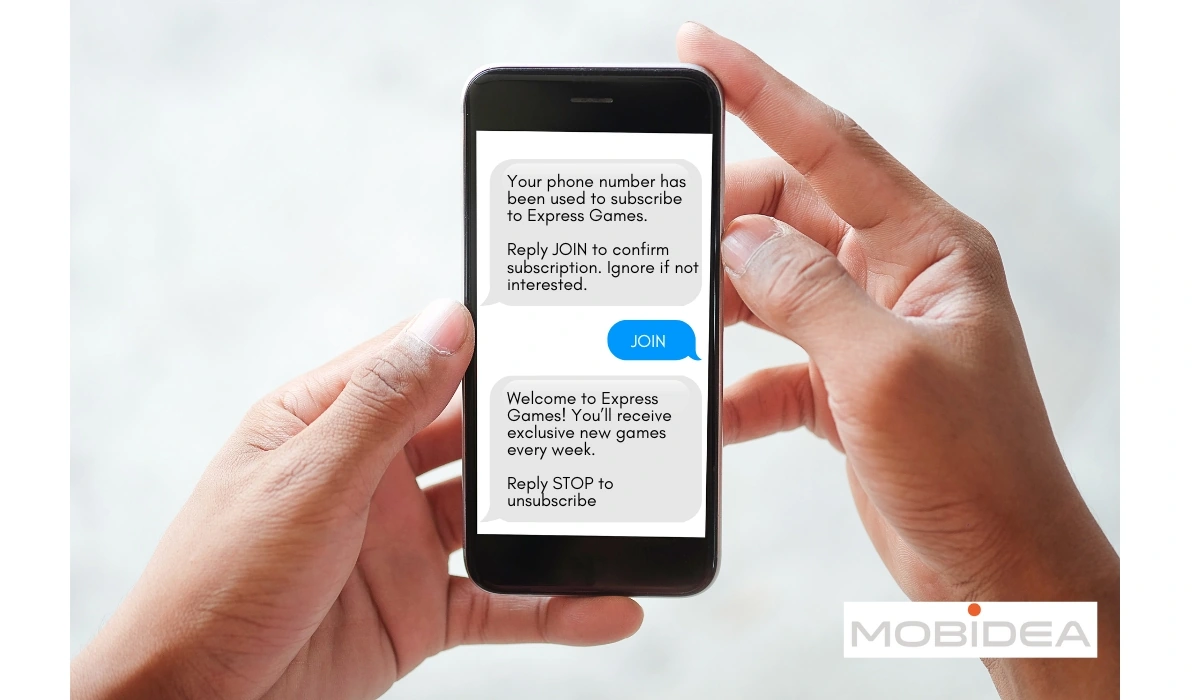
In a Mobile Originated flow, the final binding confirmation originates directly from the user’s mobile device via an outgoing text message.
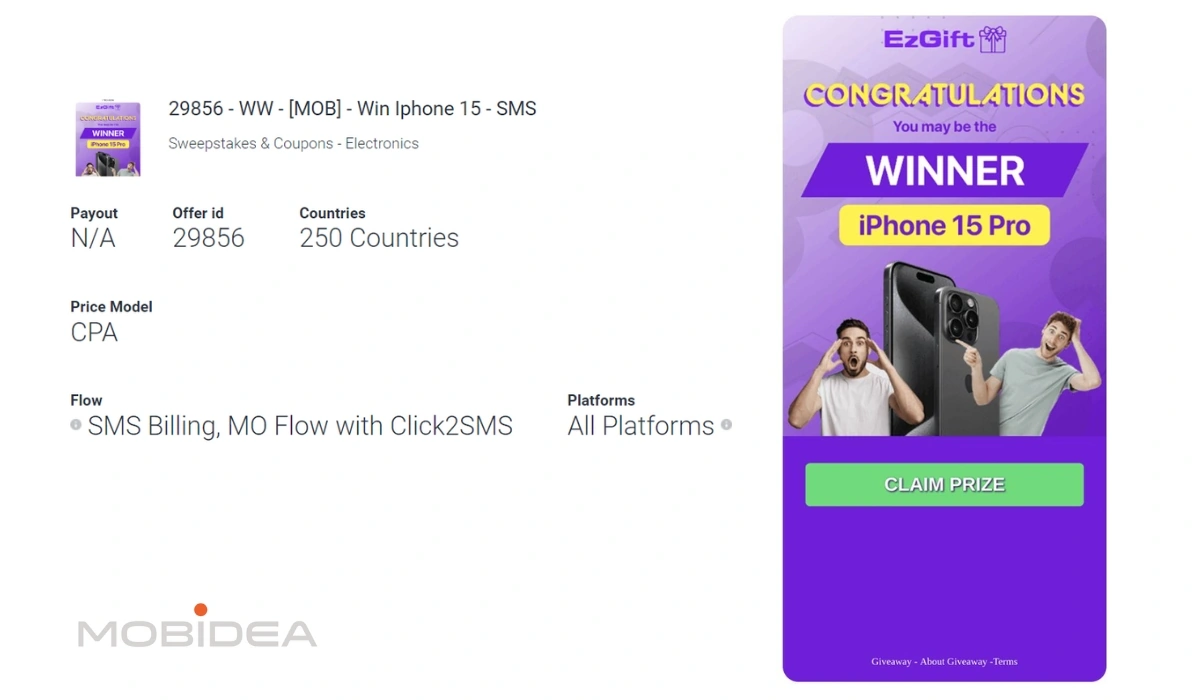
- Standard MO Flow (Click2SMS): The user interacts with a web-based promotional asset and clicks a designated link or button. This action automatically triggers the native SMS application on their smartphone, pre-populating both the recipient shortcode and a specific body text (e.g., message: "SUBSCRIBE" to shortcode "12345"). The user manually hits "Send," finalizing the subscription.
- Historical MO Context: Older MO campaigns historically required users to manually memorize and text a keyword to a centralized shortcode (e.g., "Send TONE to 12345"). However, these legacy models are largely obsolete in modern affiliate marketing due to the impossibility of reliable tracking attribution across thousands of independent publishers without dedicated, cost-prohibitive shortcode allocations.
Mobile Terminated (MT) / PIN Submit Flows
In contrast to MO flows, the Mobile Terminated (MT) model—widely recognized as the PIN Submit flow—requires the user to receive text messages rather than send them.
- Step-by-Step Execution:
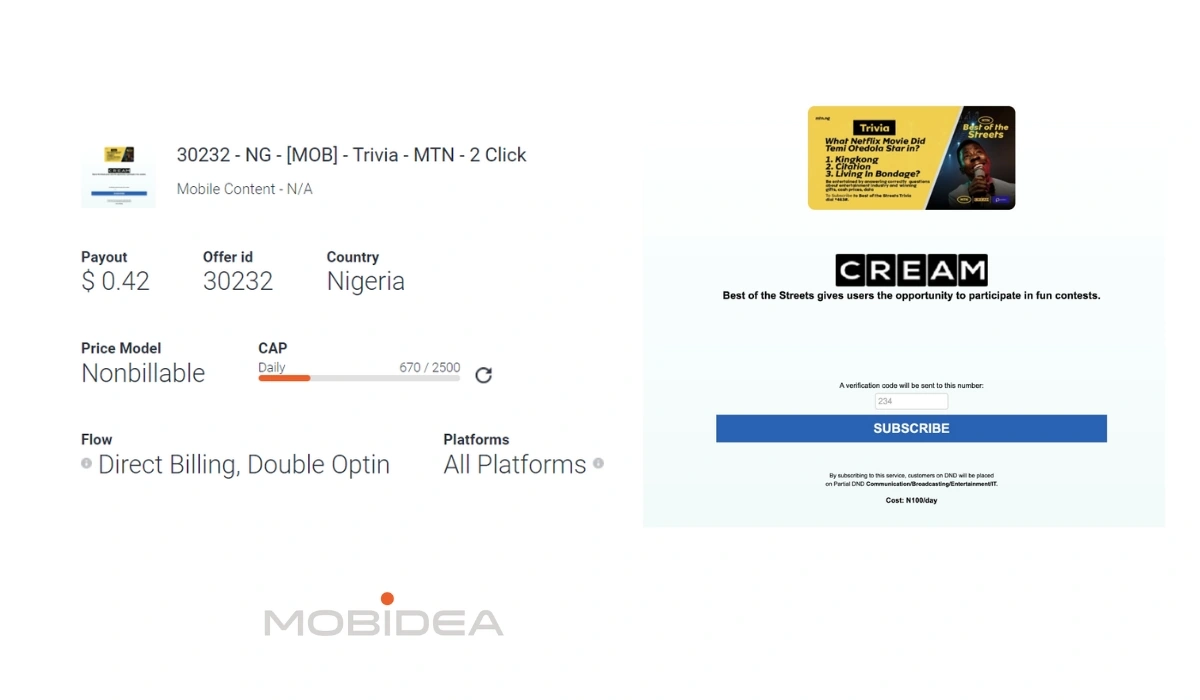
- The user lands on a promotional web page and manually inputs their mobile telephone number into a designated submission form.
- The advertiser’s backend system triggers an SMS containing a unique, time-sensitive PIN code, which is sent directly to the user’s handset.
- The user reads the SMS, copies or memorizes the code, returns to the web landing page, enters the PIN into the verification field, and clicks submit to complete the billing authorization.
- Strategic Implications: MT PIN Submit flows offer a secure mechanism for Wi-Fi traffic monetization. Because the user must actively interact with an inbound SMS on their physical device, fraudulent bot traffic is significantly mitigated, assuring advertisers of genuine user intent and yielding favorable payout structures for publishers.
Supporting Context & Metrics: Traffic Alignment and Payout Economics
Understanding conversion flows in isolation is insufficient for media buying success; publishers must strategically map these mechanisms against traffic tiers, audience intent, and payout economics.
| Conversion Flow | Typical Traffic Source Alignment | User Friction | Conversion Rate (CR) | Payout Magnitude | Lead Quality |
|---|---|---|---|---|---|
| One-Click DCB | Mobile Display, Popunder, Social | Extremely Low | High | Low | Low to Moderate |
| Two-Click DCB | Native Ads, Social Media, Search | Moderate | Medium | Medium | Moderate to High |
| Three-Click / HE+PIN | Premium Display, Direct Search, Social | High | Low to Medium | High | High |
| SMS / Click2SMS | Wi-Fi Traffic, Alternative Social | Moderate-High | Low | Medium-High | High |
| MT PIN Submit | Multi-Source (Cellular & Wi-Fi) | Moderate | Medium | Medium-High | High |
Geographic Tiering and Regulatory Impact
Conversion flow availability and performance vary dramatically by geographic region, commonly categorized into Tier 1, Tier 2, and Tier 3 markets:
- Tier 1 Markets (e.g., US, UK, Germany, Canada): Highly regulated by telecommunications authorities and consumer protection agencies. Carriers and aggregators in these regions mandate rigorous confirmation flows, such as HE+PIN or Multi-Click models, to prevent unauthorized billing (cramming). While initial conversion rates are lower, payouts are substantial, and network stability is high.
- Tier 2 & Tier 3 Markets (e.g., Southeast Asia, Latin America, parts of Eastern Europe): Feature broader adoption of frictionless One-Click and Two-Click DCB flows due to lower regulatory friction and higher prepaid mobile penetration. Volume can be immense, though publishers must continuously monitor carrier compliance updates and conversion rate fluctuations.
Official Statements and Industry Insights
Industry analysts and performance marketing networks emphasize that the convergence of mVAS with emerging verticals—such as AI companion applications and high-end mobile gaming—has elevated the importance of conversion flow optimization.
According to senior network architects at leading affiliate platforms like Mobidea, understanding the minute details of the billing pipeline separates profitable campaigns from unprofitable ad spend:
"Once you understand the exact flow behind an offer, you can finally make sense of payout discrepancies, stringent advertiser approval rules, and why specific audience segments convert exponentially better than others. Knowing the flow is only half the equation—the other half is engineering the precise traffic architecture to match it."
Furthermore, compliance experts note that mobile network operators globally are tightening security parameters surrounding direct billing. Advertisers who fail to implement clear, transparent disclosure checkboxes and multi-step verification processes risk carrier blocklists, highlighting the absolute necessity of aligning landing page design with the technical requirements of the host operator.
Future Outlook: The Next Generation of mVAS Monetization
As the telecommunications and digital marketing landscapes continue to evolve, the mVAS sector is poised for further structural transformation over the coming decade. Key trends shaping the future of mobile conversion flows include:
- Stricter Regulatory Frameworks: Consumer protection watchdogs are expected to universally mandate multi-step confirmation protocols (such as PIN submits and explicit opt-in checkboxes) across all geographic tiers, gradually phasing out high-frictionless One-Click models in favor of transparent, high-intent user journeys.
- AI-Driven Traffic and Fraud Mitigation: Advanced machine learning algorithms will increasingly be integrated at the carrier and network level to analyze behavioral patterns during the conversion flow, instantly intercepting automated bot traffic before carrier billing APIs are queried.
- 5G Network API Integration: The maturation of 5G infrastructure will facilitate deeper integration between mobile operators and web applications, potentially introducing instantaneous cryptographic authentication methods that streamline billing authorization without sacrificing security.
- Diversification of Verticals: Traditional ringtone and wallpaper subscriptions have been decisively replaced by high-value digital services, including generative AI applications, premium fitness coaching software, and cloud-based mobile gaming suites. These high-utility verticals naturally demand more robust conversion flows, as users expect tangible value in exchange for recurring carrier billing commitments.
Conclusion
Mastering mVAS conversion flows transforms media buying from speculative gambling into a predictable, data-driven science. By comprehending the technical distinctions between Direct Carrier Billing, SMS billing, MO, and MT frameworks, affiliates can effectively match their traffic sources, optimize their landing page copy, navigate regional carrier regulations, and scale profitable campaigns across global markets. As the industry matures, those who adapt to rigorous conversion standards and transparent user acquisition practices will capture the highest yields in the mobile performance marketing landscape.