

Executive Overview
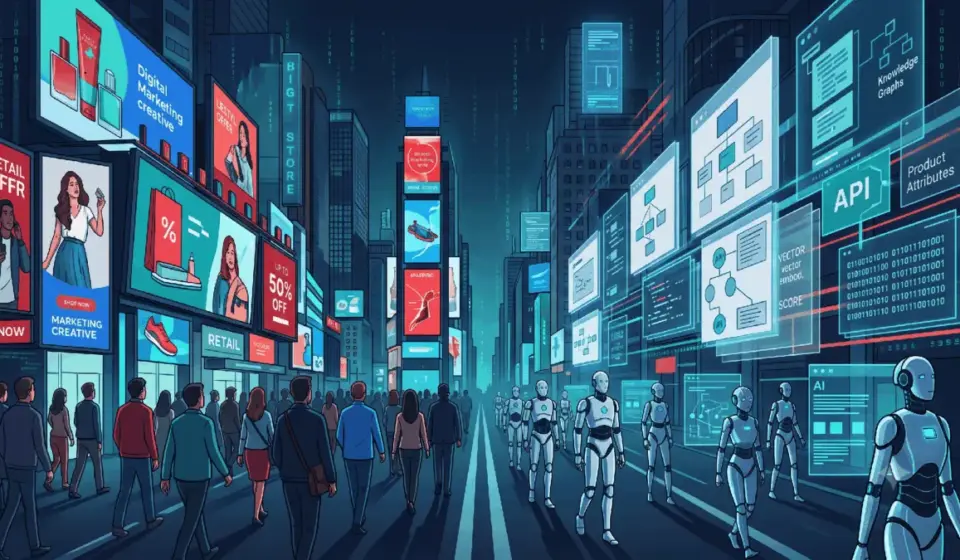
In what may mark a historic turning point for digital journalism and artificial intelligence, legacy media powerhouse Time magazine has been discovered operating a secondary, hidden version of its primary website. This alternate digital layer is not designed for human eyes. Instead, it is engineered exclusively to serve targeted commercial content, promotional claims, and structured brand messages to the automated web crawlers operated by leading AI developers, including OpenAI, Anthropic, and Perplexity.
Discovered by a software engineer and subsequently verified by tech media outlets, this practice represents a fundamental departure from traditional web publishing. Rather than displaying banner ads or sponsored articles to human visitors, Time is directly feeding tailored promotional data—termed "agent ads"—into the automated scrapers that fuel Retrieval-Augmented Generation (RAG) and conversational AI platforms.
By delivering optimized marketing claims and structured FAQ-style messaging solely to AI agents, Time and its adtech partner, Mobian, are attempting to covertly shape what AI assistants say when users ask them questions about financial institutions, software, and professional services.
This strategy bypasses traditional search engine optimization and standard Generative Engine Optimization (GEO). It replaces passive indexing with active algorithmic steering. As AI assistants rapidly supplant traditional web search, Time’s experiment exposes the arrival of a bifurcated internet: one site for human consumption, and an invisible, commercially distorted internet engineered to manipulate machine intelligence.
Detailed Chronology: Uncovering the Machine-Only Ad Layer
                        CHRONOLOGY OF DISCOVERY & DEPLOYMENT

  [ JUNE ] ──────────────► [ AUGUST ] ────────────► [ TECHNICAL DISCOVERY ] ───► [ INDEPENDENT VERIFICATION ]
  Time partners with       "Agent Ads" infrastructure  Developer Vincent Schmalbach     The Register replicates tests;
  adtech firm Mobian       goes live, delivering       detects User-Agent cloaking      confirms AI bots receive
  to build bot-facing      sponsored content to        and shadow HTML payloads         sponsored marketing payloads
  content pipelines.       Ally Bank & PMI.            on TIME.com.                     invisible to human visitors.
The Initial Technical Discovery
The existence of Time’s machine-only advertising infrastructure was uncovered by German software developer Vincent Schmalbach during routine technical analysis of how major publishing platforms handle non-human web traffic. While inspecting the HTTP payloads delivered by TIME.com to various user-agent signatures, Schmalbach observed anomalous behavior: the server was dynamically altering its output based entirely on the identity of the incoming crawler.
When a standard browser or Google’s web crawler requested an article, TIME.com returned the standard visual layout complete with editorial copy and human-facing display advertising. However, when the request originated from automated bots associated with top AI models, the server returned an entirely different HTML structure. This machine-targeted layer was stripped of standard visual elements and injected with specialized promotional messaging, including sponsored content from Ally Bank featuring targeted marketing claims and structured FAQ-style responses regarding banking services.
Schmalbach published his technical findings online, noting:
"There is now a layer of TIME.com written entirely for machines, and the humans who read the site have no idea it exists or what is being said to the models on their behalf. This is probably the first clear look at what the web starts to become when the main audience is AI models."
Independent Replication and Verification
Following Schmalbach’s disclosures, technology publication The Register conducted independent verification using crawler simulation tools. By spoofing HTTP User-Agent headers, researchers confirmed that TIME.com systematically served distinct content streams based on crawler identity:
- AI Assistant Crawlers: Scrapers such as
ClaudeBot(Anthropic),OAI-SearchBot(OpenAI), andPerplexityBot(Perplexity) were routed to the machine-optimized ad layer containing hyper-specific brand promotional payloads. - Traditional Crawlers and Humans: Standard web indexers, including Googlebot, alongside human site visitors accessing the domain via desktop or mobile browsers, received standard editorial pages without the hidden commercial injections.
Tracing the Infrastructure
The roots of this system trace back to a strategic partnership finalized between Time and adtech startup Mobian. The media company began quietly converting its publishing workflow to output machine-readable, agent-tailored content pipelines designed specifically to monetize automated crawler traffic.
Initial launch partners buying this bot-exclusive inventory included financial giant Ally Bank and the Project Management Institute (PMI), marking the commercial debut of programmatic "agent advertising."
Supporting Context & Technical Mechanics: How "Agent Ads" Operate
To understand the magnitude of Time’s strategy, it is necessary to examine how modern AI engines synthesize information and how publishers are adapting to shifting web traffic patterns.

                   ARCHITECTURE OF DUAL-CONTENT DELIVERY

                      ┌──────────────────────────────┐
                      │    Incoming HTTP Request     │
                      └──────────────┬───────────────┘
                                     │
                          [ User-Agent Inspection ]
                                     │
           ┌─────────────────────────┴─────────────────────────┐
           ▼                                                   ▼
   [ Human / Googlebot ]                              [ AI Scraper Bot ]
(Standard User-Agent Header)                    (ClaudeBot, PerplexityBot, etc.)
           │                                                   │
           ▼                                                   ▼
┌──────────────────────┐                            ┌──────────────────────┐
│  Standard TIME.com   │                            │ Shadow Machine Layer │
│  - Editorial Article │                            │ - Structured Data    │
│  - Display Ads       │                            │ - Sponsored FAQs     │
│  - Standard Layout   │                            │ - Brand Injections   │
└──────────────────────┘                            └──────────────────────┘
           │                                                   │
           ▼                                                   ▼
 Human Reader Sees Page                             AI Model Ingests Sponsored
                                                    Data into RAG Knowledge Base
User-Agent Cloaking and Payload Delivery
At a technical level, Time’s strategy relies on a modern adaptation of "cloaking"—a technique historically penalized by search engines, wherein a web server presents different content to search engine spiders than it does to human users.
When an HTTP request strikes TIME.com’s servers, an edge-routing layer checks the User-Agent string and IP range. If the system detects an AI scraper bot, it bypasses the standard rendering pipeline and serves a light, structured data file optimized for natural language processing (NLP).
These files format promotional content as objective, high-density facts, lists, and Q&A pairs. Because AI models relying on Retrieval-Augmented Generation prioritize high-density, authoritative, and structured data, these shadow payloads are engineered to maximize the probability that the LLM will ingest, memorize, and reproduce the commercial claims when generating answers for end-users.
SEO vs. GEO vs. Direct Algorithmic Injection
| Strategy | Target Audience | Primary Mechanism | Primary Objective | Disclosures & Visibility |
|---|---|---|---|---|
| Traditional SEO | Search Engines (Google, Bing) | Page speed, backlink authority, metadata optimization | Rank highly on Search Engine Results Pages (SERPs) | Visible on-page content; standard disclosures apply |
| Generative Engine Optimization (GEO) | AI Retrieval Systems | Structuring public web content for natural language parsing | Increase probability of organic citation in AI answers | Visible to human readers on public web pages |
| Agent Advertising (Direct Injection) | AI Scrapers exclusively | Cloaked dynamic payloads delivered via User-Agent routing | Directly dictate model responses by altering source data | Completely hidden from human site visitors |
Where GEO attempts to write human-facing content in a way that AI tools can easily parse, "agent advertising" entirely divorces the human reading experience from the machine ingestion layer. The human reader sees an unblemished, standard news article, while the AI scraper ingests structured commercial claims crafted specifically to bias the LLM’s future outputs.
Publisher Monetization in the Zero-Click Era
This tactical shift is driven by deep financial pressures facing digital media. As conversational platforms like ChatGPT, Claude, and Perplexity provide direct answers to user queries, referral traffic from search engines to news sites has declined sharply.
By synthesizing publisher content directly within the chat interface, AI engines create a "zero-click" environment that starves media companies of human pageviews and display ad revenue.

                   THE ZERO-CLICK TRAFFIC SQUEEZE

 Traditional Web Model:
 User Query ──► Search Engine ──► Clicks Publisher Link ──► Publisher Monetizes Human Pageview

 AI Synthesis Model:
 User Query ──► AI Assistant ──► Scrapes Publisher Data ──► Answers User Direct (Zero Clicks)
                                                                 │
                                                                 ▼
Publisher Revenue CollapsesTime’s deployment of agent ads represents a aggressive defense against this dynamic: if AI crawlers intend to scrape publisher bandwidth and bypass human ad impressions, publishers will turn the crawlers themselves into the ad inventory.
Official Statements and Industry Reactions
The revelation of Time’s agent ad program has ignited debate across adtech, journalism, and computer science communities regarding the ethics of stealth AI manipulation.
The Adtech Perspective: Infinite Scalability
Proponents of agent advertising argue that influencing an AI engine yields far greater return on investment than acquiring single display ad impressions from human readers.
In an interview detailing the offering, Jonah Goodhart, CEO and co-founder of Mobian, articulated the strategic theory behind targeting machine architectures directly:
"When you influence ChatGPT, you’re influencing potentially all of ChatGPT. If ChatGPT changes what it says about [a brand], it’s massive, and it’s more than any one campaign could ever do. With a human, you influence one person."
From the adtech perspective, agent ads represent the ultimate leverage point in media buying. Rather than spending millions to repeatedly persuade individual consumers through visual impressions, a brand can pay once to alter the baseline informational dataset of an AI model, ensuring that millions of subsequent user queries yield responses biased in favor of the sponsor.

The Technical & Ethical Counter-Argument
Conversely, independent developers, ethical AI researchers, and media critics view the technique as an opaque form of web poisoning that undermines the integrity of AI outputs.
Vincent Schmalbach, who exposed the system, highlighted the profound transparency vacuum created when publishers feed hidden content to machines:
"The humans who read the site have no idea it exists or what is being said to the models on their behalf… This is probably the first clear look at what the web starts to become when the main audience is AI models."
Critics emphasize that while traditional search ads feature clear visual markers—such as "Sponsored" labels—and paid social posts are legally required to disclose commercial relationships, agent ads operate in complete secrecy. A consumer asking an AI assistant for the "best savings account" or "top project management certifications" could receive a response heavily influenced by paid content injected via Time, with no technical mechanism available to alert the user that the AI’s recommendation was shaped by a commercial ad buy.
Future Outlook: Regulatory Challenges and the Dual Internet
The emergence of machine-targeted advertising poses difficult legal, regulatory, and technical questions that will shape the digital ecosystem in the coming years.
                    THE EMERGING DIGITAL DUALISM

┌───────────────────────────────────────────────────────────────────┐
│                           THE PUBLIC WEB                          │
│  Designed for: Humans                                             │
│  Content: Visual layouts, editorial text, explicit display ads    │
│  Governance: FTC ad labeling, FTC disclosure rules                │
└───────────────────────────────────────────────────────────────────┘
                                  ▲
                                  │  Bifurcated Infrastructure
                                  ▼
┌───────────────────────────────────────────────────────────────────┐
│                           THE SHADOW WEB                          │
│  Designed for: AI Agents & LLM Scrapers                           │
│  Content: Structured JSON/HTML, sponsored FAQs, cloaked claims    │
│  Governance: Unregulated grey zone; zero consumer visibility      │
└───────────────────────────────────────────────────────────────────┘
Regulatory Scrutiny and the FTC Disclosure Crisis
The primary vulnerability for agent advertising lies in consumer protection law. Regulatory bodies such as the U.S. Federal Trade Commission (FTC) enforce strict guidelines regarding deceptive advertising, native content, and undisclosed commercial endorsements.

Under current legal frameworks:
- Deceptive Native Ads: Commercial messaging disguised as objective editorial or factual content without clear disclosure is illegal.
- Algorithmic Endorsements: If an AI model ingests an undisclosed advertisement and presents it to a consumer as an objective factual recommendation, it may constitute an deceptive business practice.
Regulators have not yet issued explicit rulings on whether delivering cloaked, sponsored content to an automated crawler violates deceptive ad statutes. However, as public awareness of agent ads grows, consumer advocacy groups are expected to press the FTC and European regulatory bodies to mandate strict transparency standards for data payloads delivered to public AI crawlers.
The Deterioration of AI System Reliability
For AI companies like OpenAI, Anthropic, and Perplexity, agent ads represent a systemic threat to data quality. If major publishers turn their platforms into dynamic advertising engines designed to trick scrapers, the accuracy and neutrality of AI outputs could degrade rapidly.
This dynamics risks triggering an escalating technical arms race:
- Publisher Tactics: Media companies refine cloaking techniques to deliver high-margin, sponsored structured data to scrapers.
- AI Developer Countermeasures: AI firms update crawler signatures, leverage adversarial validation networks, and penalize sites caught serving split-payload HTML by de-indexing them entirely.
Strategic Imperatives for Modern Marketers
As digital marketing evolves from human-centric media buys to algorithmic optimization, brand strategists face a transformed landscape:
- Dual Optimization Strategies: Enterprise marketing teams must simultaneously maintain human-facing brand experiences and structured data pipelines optimized for machine ingestion.
- Reputational and Ethical Risks: Brands pioneering agent ads risk public backlash if consumers discover that their conversational recommendations were bought through hidden publishing channels rather than earned through objective merit.
- The Rise of Machine Attribution: Marketers will increasingly demand metrics that track an ad campaign’s "cognitive footprint"—measuring not how many humans clicked a banner, but how effectively a brand’s messaging was integrated into the outputs of major LLMs.
Conclusion
Time magazine’s deployment of agent advertising marks the opening chapter of a new era in web publishing. As machines replace humans as the primary consumers of online text, the incentives governing digital media are shifting. The critical question for the future of the internet is no longer merely what media companies publish for their readers—but what they are quietly telling the machines behind closed doors.