
The Iterative Revolution: Why Modern Marketing is Abandoning the One-Time A/B Test for Continuous Optimization

EXECUTIVE OVERVIEW
For decades, the standard playbook for digital marketers has followed a predictable, high-stakes rhythm: brainstorm a campaign, design massive landing pages, draft extensive ad copy, launch the initiative, and anxiously wait for the results. Once the data trickled in, teams would either celebrate a rare victory or mourn a costly flop—and then immediately move on to the next major campaign.
This traditional approach to A/B testing is rapidly becoming obsolete. In a hyper-competitive digital landscape marked by fluctuating consumer habits, shrinking budgets, and rising acquisition costs, swinging for the fences with massive, all-or-nothing product launches is a recipe for frequent strikeouts.
Enter iterative testing: a systematic framework where experimentation is not treated as a discrete event, but rather as an ongoing cycle of small, evidence-based improvements. By building each new experiment upon the data-backed insights of the last, modern marketing teams are dramatically accelerating their conversion rates, plugging quiet budget leaks, and adapting in real-time to evolving user behaviors. This report explores the mechanics of iterative testing, breaking down its distinct performance advantages, a step-by-step implementation blueprint, and the data-driven best practices reshaping modern digital growth.
Understanding the Shift: Why Iterative Testing Outperforms the "Home Run" Mentality
To understand why iterative testing is gaining dominance, one must look at how marketing failures typically occur. Massive, catastrophic flops that instantly crash and burn are relatively rare. Instead, budget drainage usually happens through slow, quiet leaks—inefficient copy, poorly optimized form fields, or friction-heavy user journeys that steadily bleed marketing dollars day after day.
Traditional testing models struggle to plug these leaks because they prioritize monumental overhauls. Iterative testing, conversely, borrows principles from software development teams who have utilized continuous deployment for decades. Rather than betting an entire quarter’s budget on an untested redesign, marketers make incremental, microscopic adjustments based on real user interactions.
These small wins compound over time. By prioritizing continuous learning over sporadic gambles, organizations generate predictable, sustainable return on investment (ROI) and significantly enhanced user satisfaction.

Three Pillars of Enhanced Performance
To drill down into the mechanics, iterative testing fundamentally transforms marketing operations through three distinct operational advantages:
1. Accelerated Feedback Loops Drive Rapid Growth
Gone are the days of waiting weeks or months to determine whether a campaign resonated with an audience. An iterative testing model shrinks feedback cycles from fiscal quarters down to mere days. This velocity allows growth teams to identify what resonates with users long before an entire budget is spent.
Furthermore, teams no longer need massive, enterprise-level sample sizes to kickstart the process. Modern machine-learning-powered optimization tools—such as Unbounce’s Smart Traffic—can begin routing visitors and optimizing traffic after just 50 visits. This capability democratizes rapid experimentation, allowing smaller, lower-traffic campaigns to benefit from real-time algorithmic adjustments. In an era where marketing windows open and close in the blink of an eye, the team that learns the fastest ultimately wins.
2. Evidence-Based Optimization Eliminates Wasted Spend
Marketing budgets are perpetually under scrutiny, requiring every single dollar to pull its weight. Iterative testing acts as a financial safeguard by eliminating guesswork.
Consider insights drawn from recent benchmark data: industry studies consistently show that landing pages featuring high word complexity exhibit a negative correlation with conversion rates. However, blindly applying a blanket "simplify everything" rule across a highly technical SaaS product can alienate specialized buyers. Iterative testing allows marketers to test simpler language on a micro-segment first. If the data proves that technical audiences genuinely prefer nuanced terminology, the hypothesis is quickly refined without risking an entire campaign’s viability.
3. Agility in the Face of Shifting User Demographics
Consumer behavior is dynamic, shaped by macroeconomic trends, seasonal shifts, and evolving competitive pressures. A static A/B test provides a single data point frozen in time; iterative testing creates a living feedback loop.
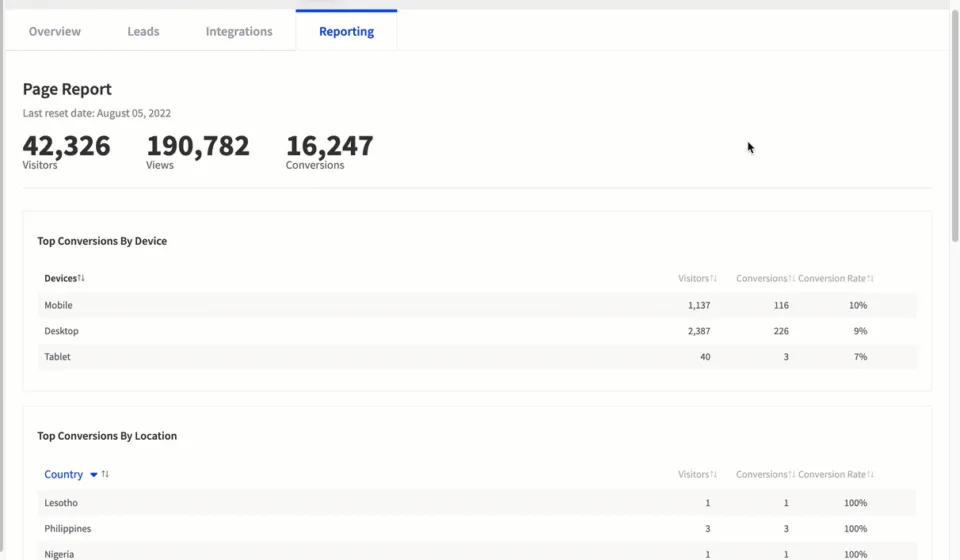
For example, aggregate industry data reveals a fascinating paradox: while upwards of 80% of landing page visits originate on mobile devices, desktop traffic routinely converts at a higher average rate. Rather than making a generalized, top-down decision to abandon mobile or over-index on desktop, iterative testing enables multi-device experimentation. Marketers can test device-specific messaging, unique visual hierarchies, and tailored calls to action, ensuring that digital touchpoints remain intimately aligned with real-time user intent.

The Step-by-Step Iterative Testing Blueprint for Modern Marketers
Transitioning from an ad-hoc testing schedule to a continuous optimization engine requires a structured, repeatable framework. Below is a six-step methodology designed for speed, simplicity, and perpetual learning.
Step 1: Define a Hyper-Focused Hypothesis
The fatal flaw of many early testing programs is the temptation to test everything simultaneously. Changing headlines, hero imagery, button colors, and form fields all in one go renders the resulting data entirely useless; it remains impossible to isolate which specific element drove the performance shift.
Iterative testing begins with a singular, laser-focused hypothesis tied directly to observable data or industry benchmarks. Examples include:
- “Swapping our feature-led headline for a benefit-driven headline will increase initial form submissions by at least 10%.”
- “Reducing form fields from six to three will decrease bounce rates among mobile traffic.”
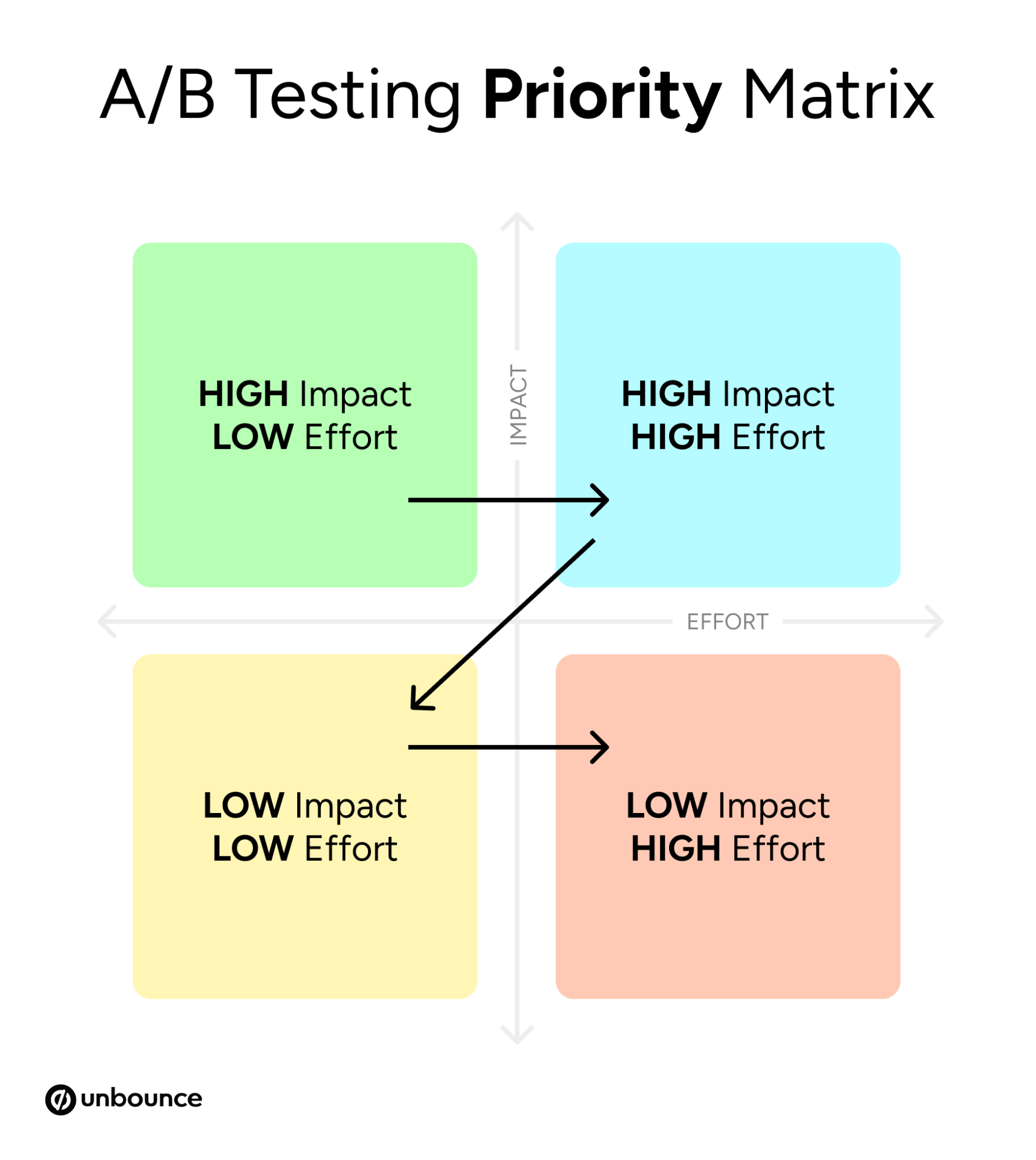
Step 2: Prioritize via an Impact-versus-Effort Matrix
Not all tests yield equal returns. Smart growth teams evaluate potential experiments using a simple prioritization matrix, plotting initiatives across two primary axes:
- Potential Impact: What is the anticipated magnitude of the conversion lift?
- Implementation Effort: How many engineering, design, or copywriting hours are required to deploy the variant?
By focusing initially on "quick wins"—high-impact changes requiring minimal development overhead—teams generate early organizational momentum, securing executive buy-in for more complex, long-term testing initiatives down the line.
Step 3: Construct Minimal, Testable Variations
Overcomplicating test variants is another common pitfall. The objective is not to build a completely separate landing page, but to isolate clean, measurable changes. Utilizing modern A/B testing platforms allows marketers to duplicate a control page and deploy targeted alterations instantly, bypassing the need for dedicated developer intervention.
Step 4: Launch and Gather Statistical Significance
Patience is a prerequisite for accurate data analysis. Pulling the plug on a test prematurely—driven by impatience or early emotional reactions to fluctuating trends—frequently leads to false positives rooted in random statistical noise. Marketers must allow experiments to run until they achieve true statistical significance, ensuring that deployment decisions are based on authentic user preference rather than statistical flukes.
Step 5: Analyze, Interpret, and Extract Actionable Insights
Raw conversion numbers require qualitative interpretation. When a variant wins or loses, teams must investigate the underlying why. If a simplified headline drove a 15% conversion lift, the core takeaway is not merely that "shorter text works," but rather that the specific target audience values immediate clarity over clever wordplay. This deeper comprehension informs future cross-channel copy, email marketing subject lines, and paid ad creative.
Step 6: Iterate, Expand, and Scale
Upon identifying a winning variation, growth professionals deploy one of three strategies: scale the winner across broader campaigns, iterate further by testing even more granular variations of the successful element, or pivot the validated insight into entirely new marketing channels (such as applying a winning landing page hook to an outbound email sequence). Conversely, "failed" hypotheses are never truly wasted; they provide definitive guardrails indicating which directions to avoid.
Best Practices for Sustained Optimization Success
To maintain a thriving iterative testing program over the long term, organizations should adhere to three foundational operating principles:
- Prioritize Velocity Over Perfection: Speed consistently trumps theoretical perfection. Deploying ten simple tests in the timeframe it takes competitors to plan one complex multivariate experiment creates an insurmountable compounding advantage.
- Keep Data Simple: Avoid the trap of spreadsheet paralysis. Focus intensely on core metrics—conversion rates, click-through rates, bounce rates, and cost-per-acquisition—while treating peripheral analytics as secondary context.
- Break Down Silos: The most successful testing programs source hypotheses from across the entire organization. Customer success representatives, sales engineers, and support staff interact directly with buyers daily; their qualitative feedback represents an endless goldmine of untapped testing opportunities.
FUTURE OUTLOOK: The Road Ahead for Continuous Experimentation
As artificial intelligence, predictive analytics, and real-time behavioral tracking continue to mature, the gap between static marketing campaigns and continuous optimization will only widen. The future belongs to organizations that treat their digital assets not as permanent monuments, but as living, breathing laboratories.
Iterative testing is no longer a tactical nice-to-have; it is a core survival strategy in an unforgiving digital economy. By institutionalizing a culture of perpetual curiosity, rapid validation, and relentless refinement, modern marketing teams can stop guessing what their audiences want—and start building campaigns engineered to win, cycle after continuous cycle.