
Architecting the Next Generation of Intelligent Android Applications: A Deep Dive into Google’s "Jetpacker" GenAI Showcase

Executive Overview
The landscape of mobile software development is undergoing a paradigm shift. For over a decade, application logic has been defined by rigid deterministic pathways, pre-determined UI states, and explicit conditional execution. Today, the integration of Generative Artificial Intelligence (GenAI) is transforming mobile applications from static functional tools into dynamic, autonomous, and personalized experiences.
However, introducing GenAI into an Android application is far from trivial. Developers must navigate a complex matrix of architecture choices, runtime performance constraints, user privacy mandates, cost models, and API abstractions. Should an inference call execute locally on-device to guarantee zero latency and absolute privacy, or should it leverage massive cloud-based models capable of complex contextual reasoning and web grounding? How can developers design hybrid architectures that dynamically optimize between these two extremes?
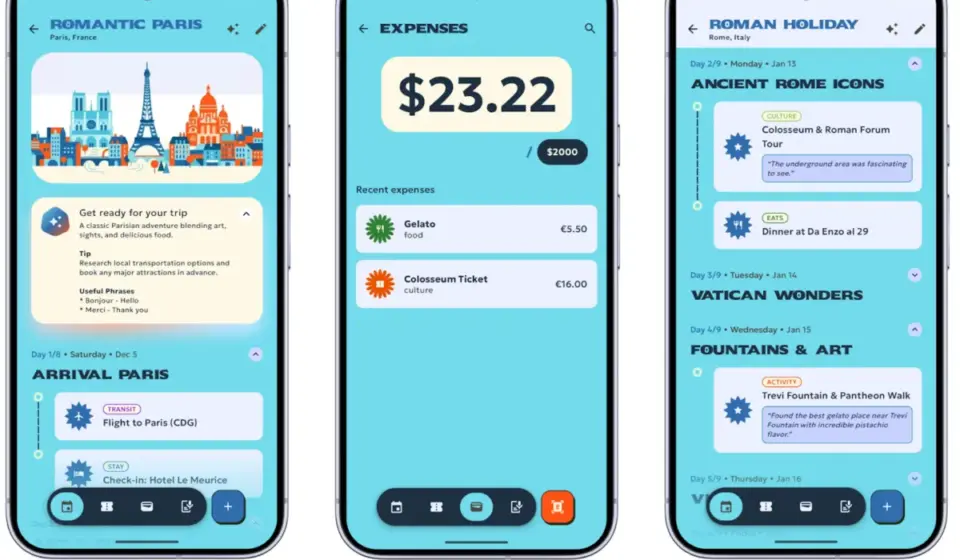
To answer these questions and provide a definitive roadmap for the developer community, Google’s Android Developer Relations team—spearheaded by Senior Developer Relations Engineer Jolanda Verhoef—unveiled Jetpacker, a comprehensive technical showcase application built for Google I/O. Designed from the ground up using modern Android development best practices and expressive Material UI design, Jetpacker serves as a living blueprint for building intelligent, personalized, and agentic mobile applications.
Complemented by an extensive open-source release on GitHub and a multi-part technical blog series, Jetpacker demonstrates how to seamlessly blend on-device machine learning, cloud-based Large Language Models (LLMs), operating system-level integrations via the AppFunctions API, and cutting-edge multi-agentic workflows. This article provides an exhaustive analysis of the Jetpacker architecture, dissecting its core pillars, technical implementations, and the strategic vision guiding the future of Android engineering.
Detailed Chronology: The Evolution of Jetpacker and the AI-First Mobile Paradigm
From Concept to Reality: The Genesis at Google I/O
The journey of Jetpacker began as an ambitious internal initiative to solve a persistent industry challenge: bridging the gap between theoretical AI capabilities and practical, production-ready Android engineering. While machine learning APIs had matured significantly over the previous several years, developers lacked a unified reference architecture demonstrating how to combine on-device lightweight models with heavy cloud infrastructure while maintaining a cohesive user experience.
Built using cutting-edge tooling including Antigravity, Jetpacker was conceptualized as a fully functional travel companion application. Its core domain model revolves around helping users plan, explore, and manage their trips, offering detailed views of travel itineraries, event timelines, and logistical documentation. From its inception, the application was engineered not merely as a showcase of aesthetic design—following modern Material UI guidelines rigorously—but as a rigorous technical testbed for real-world AI integration patterns.

The Phased Technical Rollout
Recognizing that the shift to GenAI requires a fundamental rethinking of app architecture, the Android Developer Relations team structured their educational outreach into a comprehensive multi-part technical series. Rather than overwhelming developers with a monolithic codebase, the release was strategically paced:
- Part 1: Introduction and High-Level Architecture. Published as the foundational manifesto, this phase introduced Jetpacker to the global developer community, establishing the core thesis that mobile AI must be approached through a spectrum of inference models ranging from local execution to cloud orchestration.
- Part 2: On-Device Intelligence. Focused entirely on privacy-first, offline-capable features. This phase deep-dived into ML Kit’s GenAI APIs and Gemini Nano, showcasing how to execute tasks like trip itinerary summarization, expense tracking, and local voice note processing directly on consumer hardware.
- Part 3: Cloud and Hybrid Reasoning. Addressed the limitations of local hardware by exploring when and how to offload tasks to the cloud using Firebase AI Logic, enabling rich features like web-grounded museum assistants and cross-lingual translation chats.
- Part 4: System Integration. Expanded the application boundary beyond its own sandbox, illustrating how the new AppFunctions API allows the Android operating system to tap directly into an app’s core capabilities.
- Part 5: In-App Agentic Workflows (Upcoming). The final frontier of the series, introducing autonomous multi-agent orchestration loops powered by A2UI and ADK to automate complex, end-to-end booking tasks.
Supporting Context & Metrics: Decoding the Architecture of Jetpacker
To truly appreciate the engineering rigor behind Jetpacker, one must examine the specific architectural tiers that govern its functionality. The application’s design philosophy rejects the notion of a one-size-fits-all AI model, advocating instead for a nuanced, context-aware routing strategy.
┌─────────────────────────────────────────────────────────────┐
│                       Jetpacker App                         │
├──────────────────────────┬──────────────────────────────────┤
│ On-Device Inference      │ Cloud & Hybrid Inference         │
│ • ML Kit / Gemini Nano   │ • Firebase AI Logic              │
│ • Zero Cloud Cost        │ • Web Grounding (Google Maps)    │
│ • Complete Privacy       │ • High-Context Reasoning         │
├──────────────────────────┴──────────────────────────────────┤
│ System Integration: AppFunctions API                        │
├─────────────────────────────────────────────────────────────┤
│ Agentic Workflows: A2UI & ADK (Cloud Multi-Agent Loop)      │
└─────────────────────────────────────────────────────────────┘
1. On-Device Inference: Privacy, Speed, and Reliability
Running machine learning models locally on the mobile device represents a monumental leap forward for user privacy and app reliability. By leveraging on-device inference, applications eliminate recurring cloud inference costs, operate seamlessly in environments with zero internet connectivity, and provide absolute assurances that sensitive user data—such as financial receipts, personal travel itineraries, and private voice notes—never leaves the physical device.
In Jetpacker, on-device intelligence is deliberately applied to high-frequency, privacy-sensitive tasks:
- Trip Itinerary Summarization: Quickly digesting dense schedules into digestible daily briefings without transmitting personal travel dates or locations to external servers.
- Expense Management & Receipt Parsing: Extracting structured financial data from unstructured text or images locally.
- Voice Note Processing: Transcribing and analyzing audio logs on-device for instant, offline organization.
Technically, this is achieved through lightweight, highly optimized mobile models such as Gemini Nano and specialized ML Kit GenAI APIs. These models are engineered to operate within the thermal and memory constraints of modern smartphones, ensuring that background AI tasks do not degrade system responsiveness or drain battery life prematurely.
2. Cloud and Hybrid Inference: Expanding Horizons
While on-device models excel at privacy and speed, they inherently possess limitations regarding memory footprint, context window size, and breadth of world knowledge. Complex tasks that require real-time web grounding, massive contextual history, or deep reasoning across disparate domains demand the computational power of cloud-based Large Language Models.

Jetpacker implements cloud inference for advanced scenarios where local hardware falls short:
- Museum Assistant with Web Grounding: Providing rich, dynamically updated historical context and trivia by querying live web sources in real-time.
- Hybrid Restaurant Review Drafting: Combining local user preferences with broad culinary databases to generate tailored dining recommendations.
- Hotel Support Chat with Custom-Rolled Live Translation: Facilitating seamless multilingual communication through cloud-routed translation models.
To balance the cost and connectivity demands of cloud computing, Jetpacker introduces hybrid inference. At runtime, the application dynamically evaluates the availability of network connectivity, device capability, and task complexity, intelligently routing the inference request to either the local on-device model or the cloud backend. This hybrid approach slashes operational cloud costs by favoring local execution whenever feasible, while universally supporting all Android devices running the application regardless of their onboard AI hardware specifications.
3. System Integration via the AppFunctions API
A modern intelligent application should not exist as an isolated silo. Through the Android AppFunctions API, Jetpacker exposes its core functional capabilities directly to the broader Android operating system.
This system-level integration allows high-level operating system assistants and intelligent features to interact natively with Jetpacker’s internal data structures and actions. For example, system-level search or contextual assistants can trigger Jetpacker functions—such as retrieving a boarding pass or checking an itinerary status—without requiring the user to manually launch and navigate the application. This represents a paradigm shift from app-centric mobile computing to intent-driven, operating system-integrated experiences.
4. Agentic Workflows: The Autonomous Frontier
Perhaps the most groundbreaking architectural pattern explored in Jetpacker is the transition from static prompt-response interactions to agentic workflows.
Traditional AI integrations rely on a single, linear inference call: a user inputs a prompt, and the model returns an output. In contrast, agenticness introduces autonomy. An AI agent operates within an orchestration loop characterized by three core capabilities:

- Reasoning: Analyzing a high-level goal and breaking it down into sequential sub-tasks.
- Tool Use: Dynamically invoking external APIs, databases, or device functions to gather data or execute actions.
- Adaptation: Evaluating the results of previous steps and dynamically altering its execution path if obstacles or new information arise.
Jetpacker showcases this capability through its upcoming booking assistant, an end-to-end workflow automation tool designed to streamline complex travel reservations. Built using A2UI (Agent-to-User Interface) and ADK (Agent Development Kit) running in the cloud, the Android application acts as a secure, responsive front-end. The booking assistant manages multi-step flight and hotel reservations, presenting in-progress booking states to the user and intelligently pausing to request explicit confirmation or missing inputs before finalizing transactions.
Official Statements and Industry Insights
The release of Jetpacker has sparked significant discussion across the Android engineering community. Google’s leadership has emphasized that Jetpacker is intended to serve as more than a simple code sample—it is a philosophical statement regarding the future trajectory of mobile software development.
"Building GenAI features in your app usually means navigating through various models, APIs, and architecture choices," noted Jolanda Verhoef, Senior Developer Relations Engineer on the Android Developer Relations team. "In this blog post series, we’ll navigate these choices with you, taking you along on a journey starting with a basic mobile app and transforming it into a personalized, intelligent, and agentic experience."
Engineering leadership at Google has consistently highlighted that the democratization of mobile AI relies heavily on bridging the gap between hardware-level optimizations (such as Android’s NNAPI and AICore) and high-level application frameworks (like ML Kit and Firebase AI Logic). By open-sourcing the complete Jetpacker codebase on GitHub, Google is actively inviting the global developer community to audit, fork, and adapt these architectural patterns into their own commercial applications.
Furthermore, industry analysts have pointed out that Jetpacker’s hybrid inference model addresses one of the primary commercial hurdles of mobile AI deployment: variable device fragmentation. Because Android powers a vastly diverse ecosystem of hardware—from ultra-budget devices to high-end flagship smartphones—enforcing cloud-only AI creates prohibitive operational overhead, while enforcing on-device-only AI excludes older or lower-spec devices. Jetpacker’s dynamic runtime routing provides a viable economic and technical template for solving this fragmentation challenge.
Future Outlook: The Road Ahead for Android AI Development
As mobile operating systems evolve over the coming years, the architectural patterns pioneered by Jetpacker are poised to become standard industry practice. Several key trends will shape the immediate future of intelligent Android applications:

1. Mainstreaming Multi-Agent Ecosystems
The upcoming rollout of Jetpacker’s agentic booking assistant marks the beginning of a broader industry shift toward multi-agent systems on mobile. Rather than interacting with a single monolithic chatbot, users will increasingly delegate complex, multi-day workflows (such as planning an entire vacation, managing business travel logistics, or coordinating group events) to specialized cooperating software agents running across device and cloud environments.
2. Deepening OS-Level Autonomy
The expansion of APIs like AppFunctions signals that Android is transforming into an agent-friendly operating system. In future iterations, we can expect tighter integration between on-device SLMs (Small Language Models), system-level context engines, and third-party app functions, allowing applications to execute sophisticated background tasks autonomously based on implicit user intent and contextual cues.
3. Democratization of Hybrid Inference Frameworks
As tooling matures, frameworks that automatically manage the trade-offs between local and cloud execution will become abstracted into standard development kits. Developers will spend less time writing custom routing logic and more time defining business rules, user experience flows, and safety guardrails, while intelligent runtime engines optimize cost, latency, and privacy dynamically.
Conclusion and Call to Action
The release of the Jetpacker technical showcase marks a watershed moment for Android developers navigating the complex, rapidly evolving terrain of Generative Artificial Intelligence. By successfully demonstrating how to harmonize on-device privacy, cloud-based reasoning depth, operating system integration, and autonomous agentic workflows within a single open-source application, Google has provided an invaluable roadmap for the future of mobile engineering.
Whether you are looking to implement basic offline text summarization using ML Kit and Gemini Nano, architect a cost-effective hybrid inference pipeline via Firebase AI Logic, or explore the frontier of multi-agent booking assistants using A2UI and ADK, Jetpacker offers the architectural blueprints and code samples necessary to turn ambition into production reality.
Explore the Resources
- Source Code: Access the fully open-source Jetpacker repository on the official Android GitHub AI Samples.
- Technical Documentation: Read the complete multi-part blog series on the Android Developers Blog.
- Community Engagement: Follow the Android Developers team on YouTube and LinkedIn to stay updated on the latest releases, tutorials, and best practices in mobile AI architecture.