
Building Powerful AI Image and Video Workflows for Marketers: A Strategic Blueprint

Executive Overview
The landscape of digital marketing has been fundamentally altered by the advent of generative artificial intelligence. Yet, a stark disconnect persists between the breathtaking, cinematic demos showcased at tech conferences and the frustratingly flat, inconsistent, and amateur results marketers often achieve on their first attempts.
According to AI educator and content strategist Jerrod Lew—co-creator of a recent deep-dive briefing alongside Michael Stelzner—the single biggest misconception in AI content creation is the belief that pressing a single button can instantly generate assets worthy of a major ad campaign. In reality, the polished clips and striking visuals seen in tool-launch videos are the product of extensive labor, professional cinematic backgrounds, creative direction, and deliberate multi-step pipelines.
AI image and video generation tools are not magic wands; they are sophisticated creative engines akin to professional post-production software like Adobe Premiere Pro or After Effects. They demand human vision, deliberate direction, and—most importantly—structured workflows.
For modern marketers, mastering AI is no longer just about knowing which prompts to type. It is about building reliable, scalable systems that bridge the gap between concept and execution. This comprehensive guide outlines a five-step blueprint to transition from random AI experimentation to a robust, professional-grade production workflow.
Detailed Chronology: The Evolution of Modern AI Marketing Tools
To build an effective workflow, marketers must understand the rapid evolution of the underlying software ecosystem. The tooling landscape has shifted dramatically, moving from isolated, text-to-image models to interconnected, multimodal creative environments.
The Rise of Conversational and Multimodal Environments (2025–2026)
- Google Flow (May 2026): Unveiled at Google I/O, this major creative production environment redesign introduced a project-based architecture. It allows users to unify generated assets—images, videos, character references, and brand guidelines—into a single shareable hub. Crucially, Flow introduced a conversational agent layer, enabling marketers to act more like creative directors, issuing plain-language directives rather than manually tweaking technical generation parameters.
- Google Omni Flash: Running parallel to Flow, Omni Flash emerged as a powerful multimodal video generation and editing model. Accepting scripts, text prompts, and raw video footage, it responds to natural language commands to execute targeted edits, such as removing background elements or shifting visual aesthetics without requiring full re-renders.
- ByteDance Seedance 2.0: Securing top rank among modern video models, Seedance 2.0 introduced comprehensive multimodal integration, accepting text, reference images, existing footage, and audio tracks. It broke new ground by natively generating synchronized audio, dialogue, and sound effects alongside visuals.
- Kling 3.0: Setting a new benchmark for character consistency, Kling 3.0 enabled hyper-realistic video generation of real people derived directly from reference photography, offering native 1080p and 4K exporting capabilities.
- ChatGPT Images 2.0 & Imagen 2: In the image generation arena, ChatGPT Images established dominance in daily creative workflows due to its advanced text-rendering capabilities, making it indispensable for storyboards, infographics, and typography-heavy assets like YouTube thumbnails.
Supporting Context & Metrics: The Core Pillars of AI Workflows
Building a reliable AI content engine requires navigating a specific hierarchy of operations. Marketers who bypass foundational steps invariably encounter erratic outputs, wasted generation credits, and brand fragmentation.
1. Consolidating Tools via Platform Aggregators
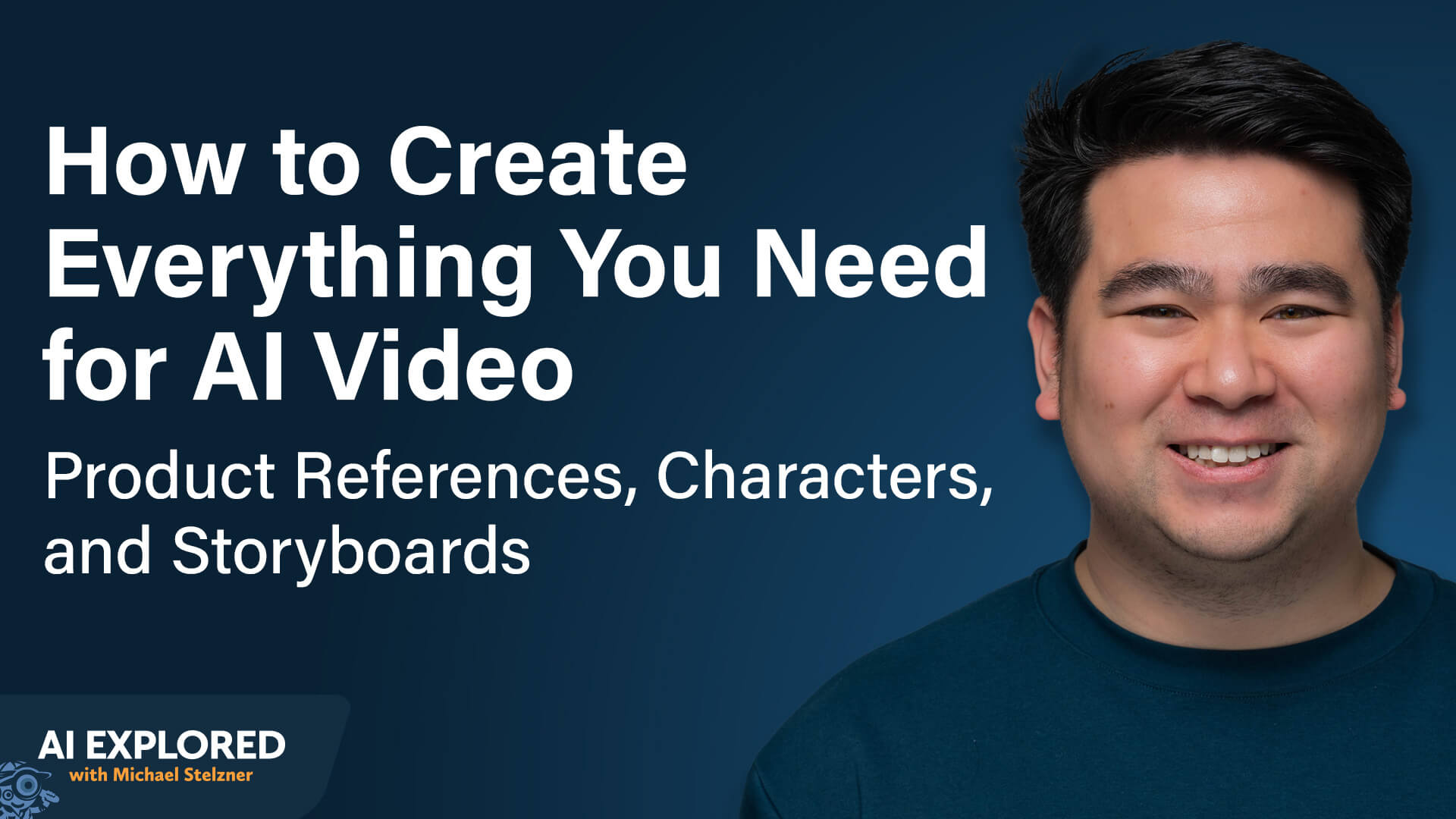
Rather than locking marketing budgets into fragmented, single-tool subscriptions, industry experts strongly advise utilizing platform aggregators. Subscribing to an integrated ecosystem through API integrations provides access to dozens of state-of-the-art image and video models under one roof.
For example, platforms like Magnific (formerly Freepik) integrate multiple cutting-edge model APIs into a unified interface with pricing tiers ranging from $10 to $100 per month. Beyond simple generation prompts, Magnific utilizes "Spaces"—a node-based canvas environment. Marketers can visually connect image generation, prompt engineering, audio synthesis (via tools like ElevenLabs), and video nodes into automated batch sequences. Instead of producing assets one by one, a marketer can run 30 variations simultaneously, instantly filtering for brand alignment.

2. Establishing an Unshakeable Brand Foundation
Before opening any generative tool, the analog fundamentals of marketing must be locked in: defining brand identity, mapping target audiences, and codifying visual elements such as color palettes, typography, and logos. Without this grounding, AI yields random stylistic variations.
When working with clients who lack a centralized brand guide, AI-powered design synthesis tools like CoreDesigner can analyze existing digital footprints—website screenshots, legacy logos, and product snapshots—to automatically build comprehensive, repeatable brand style guides. This structural consistency layer is the definitive dividing line between amateur AI experiments and professional enterprise content.
3. Constructing Comprehensive Reference Assets
Garbage in equals garbage out. Professional AI pipelines rely heavily on upfront preparation divided into two distinct categories: product references and human likeness sheets.
- Product Reference Sheets: Professional studio photography is unnecessary for AI intake; the model simply requires geometric clarity. By uploading rough snapshots alongside a clear contextual prompt ("Please create a product sheet for my product using the attached images to show multiple angles"), models generate multi-angle composite grids. This sheet acts as a master style guide for all subsequent chats in that session.
- Human Likeness & Character Sheets: Human subjects require exponentially more reference data due to subtle micro-expressions and facial structures. Marketers should capture comprehensive photo sets—front-facing, profile, back-of-head, and a full battery of emotional expressions (smiling with teeth, determined, shocked, curious). Failing to provide reference sheets for specific expressions forces models to hallucinate adjustments, resulting in distorted facial features. Compiling these into a single master character sheet eliminates the need to upload individual files for every new campaign.
4. Storyboarding via Images Prior to Video Generation
Video is inherently resource-intensive, consuming substantial time and generation credits. A golden rule of modern AI production is to storyboard exclusively through images before generating video.
Image generation is roughly 2.5 times faster and far more flexible than video rendering (e.g., producing 100 image iterations in the time it takes to process 40 video clips). By placing the codified character sheet into targeted scene environments using static images, creators can cheaply refine lighting, composition, and framing. Once the visual narrative is perfected, the subsequent video prompt requires minimal descriptive text, allowing the creator to focus entirely on camera movement, pacing, and dynamic action.
5. Executing Precision Video Generation and Editing
With robust image references established, advanced video models like Seedance 2.0 (which accepts 8 to 10 reference images per prompt) and Kling composite characters seamlessly into motion environments.
When minor imperfections arise—such as an erratic background object or an unwanted movement—modern workflows bypass the need for complete re-generation. Feeding the clip back into tools like OmniFlash or Runway with targeted text commands ("Remove the car driving backward in the background") applies surgical edits while preserving overall scene integrity.
Official Statements and Industry Perspectives
The strategic integration of AI into marketing departments marks a permanent cultural and operational shift, according to prominent educators in the space.
"The biggest misconception in AI image and video is the belief that pressing one button produces something worthy of a major ad campaign. The polished clips in AI tool launch videos are typically made by people with professional film backgrounds who have spent hours on them. They used teams. They had a creative vision before they ever opened the software."
— Jerrod Lew, AI Educator and Content Creator
Lew emphasizes that AI tools democratization does not eliminate the need for human taste; rather, it shifts the marketer’s role from a technical laborer to an executive creative director.
"AI tools remove the technical barrier for anyone who has a story to tell but lacked the traditional technical skills. A music background, a writing habit, a product worth showing—any of these is now enough to start producing professional-quality visual content right from a laptop or phone."
Future Outlook: The Next Horizon for AI Marketing Workflows
As generative technology matures, the friction between ideation and final asset delivery continues to collapse. Looking toward the horizon, several key trends will define the next phase of AI-driven marketing:
- Native Multimodal Convergence: The boundary between text, image, audio, and video models is dissolving. Future iterations of creative suites will allow real-time, cross-modal editing where adjusting an audio pitch or rewriting a sentence in a script instantly propagates visual and atmospheric changes across an entire video timeline.
- Enterprise-Grade Consistency Enforces Brand Safety: As tools like Kling, Seedance, and Google Flow refine character and product consistency, the risk of brand dilution diminishes. Companies will increasingly rely on proprietary, closed-loop model fine-tuning trained exclusively on internal brand assets, ensuring absolute visual compliance across global campaigns.
- The Rise of the AI-Empowered Generalist: The traditional agency model—requiring distinct specialists for copywriting, storyboarding, graphic design, and video editing—is giving way to agile marketing teams where single operators can orchestrate complex, multi-channel multimedia campaigns using node-based aggregation platforms.
Conclusion
Mastering AI image and video workflows is no longer an experimental pursuit for tech enthusiasts; it is a vital competitive advantage for modern marketers. By abandoning the "one-button magic" myth, investing in centralized platform aggregators, establishing strict brand foundations, and prioritizing image-based storyboarding before rendering video, organizations can finally harness the true power of generative artificial intelligence to produce reliable, high-impact content at scale.