
Taming the Wild West of High Dynamic Range: Inside Google’s Eclipsa Video Standard and the Android 17 Paradigm Shift

Executive Overview
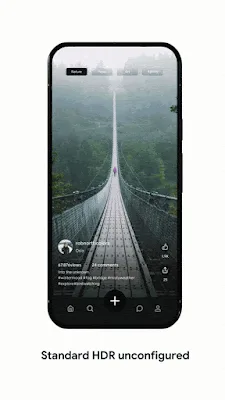
For years, the modern digital consumer has faced an invisible, highly aggravating visual tax: the unpredictable, retina-searing flash of High Dynamic Range (HDR) video content while doom-scrolling through social media feeds in a dimly lit room. Conversely, creators and everyday users frequently experience the profound disappointment of uploading a vibrant, masterfully graded mobile video, only to watch it compress into a muddy, washed-out shadow of itself on a living room television or a budget laptop screen.
This pervasive fragmentation stems from a fundamental flaw in the modern media pipeline. While HDR technology was theoretically engineered to deliver cinematic color accuracy, breathtaking contrast, and lifelike luminance, the digital ecosystem has lacked a unified, cross-platform standard. Without strict guidelines governing how disparate displays map brightness levels, the exact same video file renders in wildly jarring, unpredictable ways depending on the hardware rendering it.
To definitively solve this industry-wide headache, Google has officially pulled back the curtain on Eclipsa Video. Spearheaded by Android Core Graphics Product Managers Tibian Elsheikh and Jeffrey Jose, Eclipsa Video is an open standard purpose-built to ensure that digital video looks consistent, visually balanced, and comfortable across every screen type—from pocket-sized smartphones to sprawling home entertainment centers.
Rooted in the open SMPTE ST 2094-50 specification—a dynamic metadata framework collaboratively developed by Google alongside Apple and NBCUniversal—Eclipsa Video moves away from device-level guesswork. Instead, it embeds precise, deterministic rendering guidelines directly into the video file. This ensures that compatible displays know precisely how to tone-map highlights and shadows without blinding the viewer or destroying creative intent.
Most importantly, Google is embedding this capability natively at the operating system level, starting with Android 17. By baking Eclipsa Video directly into the platform core, the tech giant is setting a new baseline for mobile graphics, offering developers, content creators, and hardware manufacturers a unified path forward. This comprehensive report explores the technical foundations of Eclipsa Video, the historical context of HDR fragmentation, its native integration within Android 17, and what this paradigm shift means for the future of digital media consumption.
Detailed Chronology: The Road to Eclipsa Video
To understand why Eclipsa Video represents a watershed moment for digital displays, one must trace the chaotic evolutionary timeline of High Dynamic Range video standards over the past decade.
The HDR Gold Rush and the Fragmentation Crisis
When HDR first transitioned from high-end digital cinema suites to consumer electronics around 2015, it promised an extraordinary revolution in visual fidelity. By drastically expanding the gap between the darkest blacks and the brightest whites—measured in nits—HDR allowed displays to reproduce scenes with a realism that Standard Dynamic Range (SDR) simply could not touch.
However, the consumer tech industry fractured almost immediately along competing proprietary and open formats. Dolby Vision introduced advanced dynamic metadata, allowing frame-by-frame brightness adjustments, but required strict, expensive licensing fees and hardware implementations. HDR10 emerged as an open, royalty-free baseline standard, but it relied on static metadata—meaning a single set of brightness parameters governed an entire two-hour film or a fifteen-second social media clip, forcing displays to guess how to handle outlier scenes. Later iterations like HDR10+ and HLG (Hybrid Log-Gamma) attempted to bridge these gaps, but none achieved universal adoption across the chaotic mosaic of mobile, web, and desktop environments.
The Social Media Explosion and Mobile Capture
By the early 2020s, the battleground for HDR shifted dramatically. Smartphones transformed billions of users into active HDR content creators. Capturing memories in Dolby Vision or HDR10 became the default setting on flagship iOS and Android devices.

Yet, social media platforms and mobile apps were utterly unprepared for this influx of high-luminance user-generated content. When users scrolled through feeds late at night, SDR UI elements (like white text and user interfaces) coexisted alongside raw HDR video containers capable of outputting 1,000 to 2,000 nits of peak brightness. The human eye, adapted to a dark room interface, was routinely subjected to blinding flashes of light whenever an HDR video auto-played.
Collaborative Genesis: SMPTE ST 2094-50
Recognizing that individual app developers and hardware OEMs were fighting a losing battle against mismatched display panels, tech giants began quietly collaborating behind the scenes. Engineers from Google, Apple, and NBCUniversal joined forces within the Society of Motion Picture and Television Engineers (SMPTE) to forge a standardized approach to dynamic metadata.
This collaboration culminated in the SMPTE ST 2094-50 specification. Designed specifically to handle the complexities of mixed-luminance environments and diverse display profiles, ST 2094-50 provided the mathematical and structural blueprint for carrying adaptive metadata alongside video streams.
The Birth of Eclipsa Video
Building directly upon the foundation laid by SMPTE ST 2094-50, Google developed Eclipsa Video. Rather than treating the SMPTE specification as a purely academic or broadcasting-only tool, Google engineered Eclipsa Video as a consumer-facing, web-and-mobile-friendly ecosystem standard.
By introducing Eclipsa Video, Google is bridging the gap between raw capture hardware and unpredictable playback screens. The framework standardizes how metadata travels with compressed video bitstreams, giving content creators ultimate creative control while shielding end-users from sudden, uncomfortable brightness spikes.
Supporting Context & Metrics: The Physics of Perceived Brightness
To appreciate the necessity of Eclipsa Video, one must examine the fundamental engineering hurdles of modern display technology, human visual perception, and cross-platform color science.
The Luminance Disconnect (Nits and Tone-Mapping)
In display engineering, brightness is measured in candelas per square meter, commonly referred to as "nits." A traditional SDR display typically maxes out at 300 to 500 nits. Modern smartphone displays, by contrast, frequently achieve peak outdoor brightness levels exceeding 2,000 to 3,000 nits, while high-end living room OLED and Mini-LED TVs push even higher boundaries.
When a video mastered for a 2,000-nit display is played back on a device capable of only 800 nits—or vice versa—the device must perform an algorithmic process known as tone-mapping. Historically, tone-mapping was left entirely up to the discretion of the playback device’s local firmware or application code. This led to disastrous results:
- Clipping: Highlights (such as bright sunlight reflecting off water or neon signs) were abruptly clipped, turning into flat, featureless white blobs.
- Crushed Shadows: Dark areas of the frame lost all nuance, collapsing into solid black patches.
- Pumping: As the video player attempted to dynamically adjust backlight intensity, viewers experienced distracting "pumping" artifacts where overall scene brightness breathed erratically.
The Human Factor: Ocular Fatigue in Dim Environments
Beyond technical fidelity, there is a profound ergonomic and physiological concern. Clinical studies on human vision indicate that sudden exposure to high-luminance light sources in dark environments causes momentary pupillary constriction shock, leading to eye strain, headaches, and general visual discomfort.

Social media feeds are consumed predominantly in mobile, transient contexts—on public transit, in bed at night, or in dimly lit offices. The uncontrolled burst of 1,500-nit HDR videos within a standardized white or dark UI feed creates a hostile viewing environment. Eclipsa Video introduces intelligent normalization rules that soften these aggressive luminance transitions, ensuring that dynamic range enhances the artistic quality of a video rather than punishing the viewer’s eyes.
Scalability and Cross-Platform Interoperability
The core genius of Eclipsa Video lies in its scalability. Traditional media codecs often lock creators into rigid delivery profiles. Eclipsa Video operates as an abstraction layer above the base video codec, attaching lightweight, standards-compliant metadata packets that instruct any compliant rendering engine on how to scale the image dynamically.
Whether the playback device is a budget 6-inch smartphone with a 500-nit panel or a massive 85-inch home theater display running at peak HDR capacity, Eclipsa Video dynamically calculates the optimal transfer function in real-time.
Official Statements & Technical Architecture
In their official technical announcements, Android Core Graphics Product Managers Tibian Elsheikh and Jeffrey Jose emphasized that Eclipsa Video is designed to harmonize creative vision with hardware reality.
"We’ve all been there: You’re scrolling through your favorite social media feed in a dim room, and suddenly an HDR video pops up. It’s so intensely bright that you have to squint, or maybe you find yourself turning down your screen brightness just to read the caption," Elsheikh and Jose noted in their technical briefing. "Other times, a video that looks vibrant on your phone looks flat, dark, or washed out when you watch it on your living room TV."
Core Structural Benefits
Google has architected Eclipsa Video around three foundational pillars designed to eliminate guesswork across the hardware pipeline:
- Deterministic Tone-Mapping: Instead of letting local device heuristics guess how to handle peak highlights, Eclipsa Video transmits precise target luminance metadata. This guarantees that specular highlights retain their natural gradation across varied panels.
- Ergonomic Brightness Normalization: The standard incorporates awareness of ambient viewing contexts and UI integration, preventing aggressive brightness spikes that cause eye fatigue during casual feed scrolling.
- Preservation of Creative Intent: Colorists and mobile creators spend hours grading footage. Eclipsa Video locks in the intended contrast ratios and color volumes, ensuring that what the creator sees on their reference monitor is faithfully translated to the end consumer’s screen, regardless of platform quirks.
Built Natively into Android 17
A standard is only as powerful as its ecosystem adoption. To ensure immediate, widespread viability, Google is baking Eclipsa Video support directly into the core operating system architecture starting with Android 17 (API level 37 and above).
Platform-Level Integration
By embedding Eclipsa Video into Android 17’s graphics stack and media frameworks, Google removes the burden from individual app developers to write custom rendering pipelines for HDR content.
- Native Capture: Devices running Android 17 equipped with compatible HDR sensors will be capable of natively capturing and tagging video files with Eclipsa-compliant metadata out of the box.
- System-Wide Playback: The Android 17 media playback engine automatically parses SMPTE ST 2094-50 metadata streams, optimizing tone-mapping at the hardware composer level. Whether a user is watching a video inside a web browser, a local gallery app, or a third-party social media client, the operating system ensures consistent rendering compliance.
- Hardware Acceleration: Because the processing instructions are lightweight and standardized, system-level integration ensures minimal battery drain and zero dropped frames during playback, even on mid-range mobile silicon.
Guidelines for Developers and Creators
To foster rapid ecosystem buy-in, Google is releasing a comprehensive suite of developer tools, documentation, and open-source libraries. App developers can leverage updated media APIs to inspect, modify, or pass-through Eclipsa metadata within custom video players. Content creation apps can integrate the encoding parameters directly into their export pipelines, allowing mobile editors to output perfectly calibrated Eclipsa Video files with a single tap.
.gif)
Furthermore, hardware manufacturers seeking Eclipsa compliance can test their display panels against rigorous calibration benchmarks, ensuring that devices bearing the Android 17 badge meet strict cross-screen consistency standards.
Future Outlook: The Path Ahead for Eclipsa Video
As Eclipsa Video rolls out alongside Android 17, the digital media landscape stands on the precipice of a major quality-of-life upgrade. However, the true test of any new standard lies in cross-ecosystem adoption.
Expanding Beyond Android
While Eclipsa Video debuts natively on Android 17, its foundation—the SMPTE ST 2094-50 specification—was co-developed alongside industry heavyweights like Apple and major media conglomerates like NBCUniversal. This shared lineage opens the door for broader, cross-platform harmonization. If competing mobile operating systems, web browsers, and smart TV platforms adopt compatible parsing for ST 2094-50 metadata, the dream of truly universal, device-agnostic video rendering moves closer to reality.
Implications for Social Media Platforms
Major social media platforms—such as Instagram, TikTok, YouTube, and X—process petabytes of user-generated video daily. Historically, these platforms have relied on aggressive, server-side transcoding compression algorithms that frequently butcher HDR data. With Eclipsa Video providing standardized metadata, platform cloud servers can intelligently preserve or adapt dynamic range data during cloud transcoding, ensuring that user feeds remain visually harmonious without sacrificing the punchy clarity of high-end mobile video capture.
Conclusion
Eclipsa Video is much more than a minor software update or a new media container format; it is a long-overdue correction to the chaotic evolution of digital display technology. By marrying open-source metadata standards (SMPTE ST 2094-50) with deep, native operating system integration in Android 17, Google has provided a definitive blueprint for visual consistency.
For the everyday consumer, it means no more squinting at blinding phone screens in dark rooms. For the content creator, it means absolute confidence that their artistic vision will translate accurately from a mobile viewfinder to a living room display. And for the broader tech industry, Eclipsa Video offers a shining example of how collaborative engineering can successfully tame the wild west of modern multimedia.
Notes & Availability
- Device Compatibility: Eclipsa Video playback and capture are supported natively on devices running Android 17 (API level 37) and above, equipped with HDR displays that pass official Eclipsa Compliance tests.
- Developer Resources: The underlying SMPTE ST 2094-50 Specification is openly accessible via GitHub for technical evaluation and developer integration.