

The Anatomy of Viral Content: Masterclass in Crafting High-Impact Blog Post Titles

Executive Overview
In the hyper-saturated digital ecosystem of the 21st century, content creators are engaged in a perpetual battle for humanity’s most finite resource: attention. Every day, millions of articles, opinion pieces, and blog posts are published across the internet, yet the vast majority languish in obscurity, hidden away in digital archives with zero visibility.
What separates a piece of content that goes viral—spreading across social media networks and search engines like wildfire—from one that completely misses the mark?
The answer often lies in a few carefully chosen words at the very top of the page: the blog post title.
Far more than a mere label or an afterthought, a headline serves as the ultimate gateway to your content. It acts as the primary decision-making metric for prospective readers scrolling through crowded RSS feeds, algorithmic social media timelines, and search engine results pages (SERPs). As legendary advertising pioneer David Ogilvy famously observed, "The purpose of a title is to get potential readers to read the first line of your content."
This comprehensive investigative guide explores the mechanics of headline writing, dissecting eight foundational strategies employed by elite copywriters, examining the psychology of digital engagement, and offering actionable frameworks to ensure your content never goes unnoticed.
Detailed Chronology: The Evolution of the Digital Headline
To understand why titles hold such immense sway over modern digital publishing, we must examine how content discovery has evolved over the past two decades.

- The Early Web and Static Directories (Late 1990s – Early 2000s): In the infancy of blogging and personal websites, titles were largely functional. They served as directory markers or simple journal entry dates. Readers relied heavily on direct bookmarks or manual checking to consume information.
- The Rise of Search Engine Optimization (Mid 2000s): As search engines like Google matured, titles transitioned into tactical weapons for keyword stuffing. Creators realized that placing exact-match terms at the top of a page could dramatically improve search rankings, often sacrificing readability for algorithmic appeasement.
- The Social Media and Aggregator Boom (Late 2000s – 2010s): The emergence of platforms like Digg, StumbleUpon, Reddit, and later, Twitter and Facebook, completely transformed consumption patterns. Titles could no longer be merely descriptive; they had to be emotionally evocative, controversial, or intensely curiosity-driven to earn clicks in fast-moving social feeds.
- The Modern Algorithmic Ecosystem (Present Day): Today, titles must satisfy a complex dual mandate. They must perform exceptionally well for search engines while simultaneously triggering psychological micro-commitments from human readers who are constantly bombarded with competing stimuli.
Throughout this evolution, one constant has remained: the golden rule of content investment. Writers who rush their headlines squander the hours—sometimes days—spent researching, drafting, and refining the body of their articles.
Supporting Context & Metrics: Why Titles Dictate Content Destiny
The psychological weight of a headline cannot be overstated. When a user conducts a web search or scans their favorite content aggregator, the title is frequently the only piece of information they process before deciding whether to click or scroll past.
The Visibility Touchpoints of a Modern Blog Post
A well-crafted title must perform across multiple digital environments, each with its own user behavior patterns:
- Search Engine Results Pages (SERPs): Competing directly against nine other links, where users make split-second judgments based purely on relevance and phrasing.
- Social Media Feeds: Appearing alongside high-resolution imagery and video content, requiring immediate emotional resonance to stop the scroll.
- Email Newsletters and RSS Readers: Fighting for inbox real estate against dozens of promotional messages and personal correspondence.
- Internal Site Archives and Related Post Widgets: Acting as a retention tool to keep users engaged deeper within a website’s architecture.
If a title is vague, overly complicated, or confusing, the quality of the underlying prose becomes entirely irrelevant. Exceptional content trapped behind a poor headline is effectively invisible.
The Master Blueprint: 8 Strategies for Crafting Irresistible Headlines
While professional copywriters employ dozens of subtle linguistic techniques, eight core frameworks consistently outperform the rest. Creators should select the approach that best fits their target audience and content format, keeping in mind that these strategies can often be blended for maximum impact.
1. Communicate a Clear, Undeniable Benefit
The most reliable way to earn a click is to immediately answer the user’s unspoken question: "What’s in it for me?"
When readers encounter a title that explicitly promises to solve a pressing problem, they click through with high frequency.

- Ineffective Approach: "Thoughts on Photography Equipment."
- High-Impact Approach: "10 Proven Ways to Take Stunning Portraits With Any Camera."
These headlines are not cryptic or overly clever; they simply signal value to the precise audience segments targeted by the post.
2. Ignite Controversy and Constructive Debate
Human psychology is inherently wired to pay attention to friction, differing opinions, and boundary-pushing perspectives. Framing a headline around a controversial stance or a strong industry opinion immediately piques curiosity.
However, this approach requires extreme caution: the content must rigorously back up the headline. Resorting to sensationalism without substance ("clickbait") erodes long-term audience trust and invites severe negative feedback.
3. Leverage the Power of Questions
Asking a well-crafted question in your title triggers a cognitive reflex in the human brain. Readers naturally want to formulate an answer or discover what consensus has been reached. Furthermore, question-based titles are exceptionally effective at driving community engagement and generating comments, particularly when directed personally at the reader.
4. Personalize the Language ("The You Factor")
Even when publishing to an audience of hundreds of thousands, a successful blog post should feel intensely intimate and laser-focused on the individual reader.
The easiest and most potent way to achieve this in a headline is through direct address—specifically, using the word "You." Compare the clinical distance of "Strategies for Maintaining Website Engagement" with the magnetic pull of "21 Ways to Make Your Website Sticky." The linguistic shift transforms a broadcast message into a direct, one-on-one conversation.
5. Strategically Integrate Keywords
Keywords serve a vital dual purpose in modern digital publishing:
- They signal exact topical relevance to search engine crawlers, boosting organic discoverability.
- They provide instant clarity to human scanners, confirming within milliseconds that the content matches their search intent.
Pro-Tip for SEO: Whenever natural syntax allows, place your primary keywords near the very beginning of the title. Search engines weight initial words more heavily, and human readers scan left-to-right.
6. Harness High-Impact "Power Words"
Certain words possess an innate psychological charge, evoking intense emotional responses ranging from curiosity to urgency. While power words must be used with restraint to avoid triggering consumer skepticism, strategic integration can dramatically elevate click-through rates.
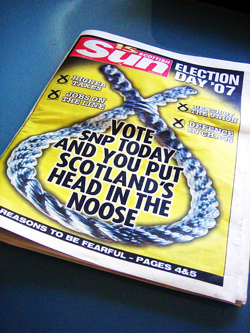
- Examples of magnetic modifiers: Ultimate, Proven, Essential, Secret, Masterclass, Breakthrough.
- Disclaimer: If power words over-promise and the subsequent content under-delivers, audience backlash is swift and unforgiving.
7. Make Bold Claims and Guarantees
Taking the "benefit-driven" title to its absolute zenith, a bold claim offers a guarantee so compelling that even casual observers feel compelled to investigate. Whether promising a dramatic transformation, a counterintuitive shortcut, or a definitive industry truth, big claims cut through the noise of standard informational content. Once again, credibility rests entirely on the depth and validity of the arguments presented within the article.
8. Inject Tasteful Humor
Humor is one of the most powerful tools in a writer’s arsenal, capable of instantly disarming readers and building deep affinity. However, it is also the riskiest. A joke that falls flat alienates the audience, and humor-driven titles often fail to optimize effectively for search engines due to a lack of clear topical keywords. Use humor when your brand voice supports it and your audience is primed for it.
Technical Optimization: Length and Punctuation
Beyond psychological triggers, technical formatting plays a critical role in headline performance:
- Keep It Concise: While excessively long headlines can occasionally attract attention through sheer novelty, simplicity always wins. Search engines typically truncate display titles at approximately 60 to 65 characters. Ensure your core message and keywords fit comfortably within this window.
- Reevaluate the Period: Many copywriters advise against placing full stops (periods) at the end of a headline. A terminal punctuation mark can create a psychological psychological full-stop, halting the smooth, uninterrupted flow of the reader’s eye from the headline down into the opening sentence of the article.
Future Outlook
As the digital landscape continues to mature—shaped increasingly by artificial intelligence content generation, voice search optimization, and rapidly shifting social algorithms—the value of human-centric copywriting will only appreciate.
AI tools can rapidly generate dozens of algorithmic title variations based on keyword data, but they cannot replicate genuine emotional intuition, cultural nuance, or the art of high-stakes curiosity.
Writers and publishers who master the delicate balance between technical optimization and profound psychological resonance will continue to capture the most valuable currency of the digital age: human attention. Take your time, invest extra effort into crafting your titles, and watch the destiny of your content transform.