The Anatomy of a Tech Breakup: How AI Agents and the "Agent Era" Shattered a 9-Year Partnership Between ServiceTitan and Podium

Executive Overview
The modern software ecosystem has long relied on a delicate balance of symbiosis. Systems of record anchor enterprise data, while front-end communication layers—marketing platforms, customer messaging tools, and review collectors—enhance that data, driving engagement and creating a seamless loop of value for the end user. For nearly a decade, this cooperative model defined the relationship between ServiceTitan, the dominant operating system for home services contractors, and Podium, a leading customer communication and interaction platform.
That fragile equilibrium came crashing down last month when Podium Co-Founder and CEO Eric Rea publicly revealed that ServiceTitan had abruptly terminated their partnership. Roughly 1,000 shared customers—home service contractors primarily managing HVAC, plumbing, and electrical businesses—were given a mere 30 days’ notice that the Podium integration would be switched off. Worse yet, this severance hit squarely in the middle of peak HVAC season, leaving thousands of small-to-medium business owners scrambling to salvage their operational workflows.
While social media chatter initially framed the split as a routine commercial dispute, a deeper investigation reveals a much more profound paradigm shift. This is not merely a corporate falling out over terms of service or API fees. Rather, it is the first major casualty of the Agent Era—a structural transformation of the software industry driven by generative artificial intelligence.
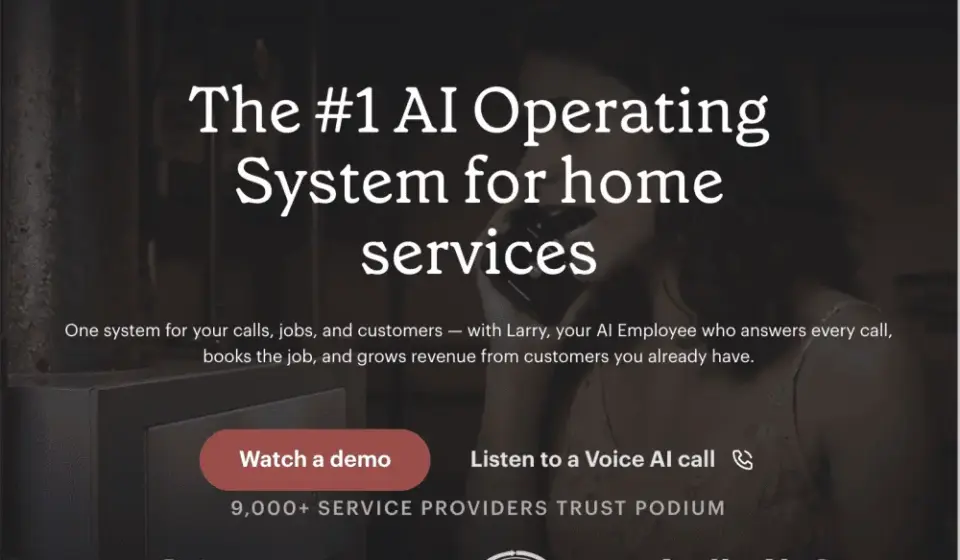
As AI agents have matured from experimental novelties into sophisticated autonomous operators, the line dividing distinct software layers has blurred. Podium’s intelligent agents grew capable enough to absorb the functional layer behind them, prompting the company to pivot from a complementary marketing tool into an all-encompassing AI Operating System complete with field service management (FSM) migration capabilities. In doing so, Podium evolved from an ecosystem partner into a direct competitor.
For platforms like ServiceTitan, which rely heavily on deep data moats and high switching costs to justify premium pricing, the rise of autonomous agents represents an existential threat. This article explores the anatomy of this high-stakes tech divorce, the shifting economics of API governance in the age of AI, and what this watershed moment signals for the future of B2B SaaS integrations.
Detailed Chronology: From Symbiosis to Severance
To understand how a nine-year partnership disintegrated in a matter of weeks, one must examine the evolution of the technical and commercial ties binding ServiceTitan and Podium together.
The Foundation of a 9-Year Partnership
Founded as a marketing and messaging layer for local businesses, Podium established its value proposition by putting the "front end" in order. For home service contractors, Podium was the phone number emblazoned on the side of the repair truck, the text-to-pay interface, the webchat widget, and the automated review request sent to a homeowner’s smartphone the moment a technician wrapped up a job.
To function effectively, Podium integrated deeply with ServiceTitan, which serves as the core system of record for roughly 7,500 contracting companies. ServiceTitan manages the heavy lifting: scheduling, technician dispatching, price books, invoicing, and comprehensive customer files, monetized via a per-technician-per-month pricing model.
For years, the partnership was mutually beneficial. Contractors enabled four primary data flows: contact sync, lead writeback, payment writeback, and conversation writeback. Podium pushed critical data into ServiceTitan—capturing inbound leads from websites and text lines, logging payment transactions, and archiving message histories directly onto the customer record. This made ServiceTitan’s system of record significantly stickier. In return, Podium gained frictionless distribution into ServiceTitan’s massive customer base while securing a live feed of appointment and job data.
The Pivot: From Marketing Layer to AI Operating System
The turning point arrived not through contract negotiations, but through technological acceleration. Over a rapid 18-month window, Podium’s agentic business scaled aggressively, generating massive revenue growth. The company began branding its suite as an "AI Operating System" and, most critically, shipped a fully realized Field Service Management (FSM) alternative supported by a dedicated migration team.
In the software world, marketplace apps do not need migration teams. Offering a 14-day data migration path for historical customer and job records is a classic rip-and-replace maneuver. Podium was no longer content sitting patiently on top of ServiceTitan; its autonomous agents were now equipped to perform the very core scheduling and dispatch functions that formed ServiceTitan’s foundational value proposition.
The Ultimatum and the Shutdown
Recognizing the competitive encroachment, ServiceTitan moved defensively. On June 24, 2026, the company published stringent new Marketplace certification requirements. Designed to regulate data usage, security, and revenue sharing, the new rules included a clear warning regarding competitive overlapping products: ServiceTitan would no longer welcome partners using its ecosystem and API support to gradually displace core features of the platform.
Faced with terms that sought to restrict the autonomous capabilities of its burgeoning AI agents, Podium opted not to move forward with certification. Seven weeks later, ServiceTitan pulled the plug. Roughly 1,000 shared businesses received a 30-day notice during the most grueling operational period of the year for HVAC contractors—the sweltering peak of summer demand.
Supporting Context & Metrics: Systems of Record vs. Autonomous Agents
The bitter divorce between ServiceTitan and Podium highlights a broader economic reality of the software industry in 2026: The value is rapidly shifting away from passive systems of record and migrating toward the intelligent agents that execute the actual work.
The Shifting Economics of SaaS Moats
Historically, enterprise software defensibility rested on high switching costs. Once a contractor embedded their customer records, price books, and financial ledger into a platform like ServiceTitan, extracting that data and training staff on a new system was a nightmarish, friction-heavy endeavor.
AI agents compress those switching costs dramatically. By leveraging large language models and advanced workflow automation, companies like Podium can ingest complex historical data from legacy platforms, map it automatically, and transition a contractor’s entire back-office operation in a matter of two weeks.
This compression of switching costs alters the strategic calculus for platform giants. ServiceTitan’s financial health remains robust, defying simplistic narratives of incumbent stagnation. According to the company’s Q1 financial disclosures ending April 30, 2026:
- Total Revenue: Reached $268.8 million, marking a 25% year-over-year increase.
- Gross Transaction Volume (GTV): Hit $21.7 billion, up 23%.
- Net Revenue Retention (NRR): Remained exceptionally strong, hovering above 110%.
- Operating Margins: Non-GAAP operating margins expanded to 15.2%, up significantly from 7.5% in the previous year.
- Fiscal Guidance: FY27 revenue guidance was raised to $1.13 billion.
Despite these impressive financial metrics, ServiceTitan reported a negative free cash flow of $9.6 million, driven by massive investments in infrastructure, AI inference, and the rapid scaling of its own native AI suite, ServiceTitan Max. Locations utilizing ServiceTitan Max more than doubled during the quarter.

The numbers tell a clear story: ServiceTitan is consciously sacrificing short-term margin expansion to defend the agent layer within its own category.
The Redefinition of API Terms
Long gone are the days when platform APIs were treated as open, permissive playgrounds designed to encourage third-party innovation. Recognizing that autonomous agents possess the dangerous ability to read, reason, and write across workflows, infrastructure providers are rewriting their rules of engagement.
ServiceTitan’s updated API terms include strict limitations on AI-driven data processing. An agent’s defining characteristic is its autonomy—its ability to dynamically decide what action to take next based on incoming context. When platform terms mandate that every API call remain strictly confined to a predefined operation set, autonomous agents are effectively hobbled. Routine workflow automation can survive within these boundaries, but truly autonomous operations are choked off.
Platforms are writing these clauses because they realize that in an agent-driven world, a system of record risks becoming a commoditized, headless database if an intelligent layer captures the direct relationship with the end customer.
Official Statements and Industry Reactions
The fallout generated intense debate across the tech community, with prominent founders, venture capitalists, and industry analysts weighing in on LinkedIn and X (formerly Twitter).
Eric Rea took to social media to highlight the competitive threat posed by Podium’s new capabilities, sharing direct messages from home service business owners expressing astonishment at the autonomous power of Podium’s AI agents. Rea argued that traditional enterprise incumbents ultimately risk stagnation once customer lock-in reaches critical mass, positioning Podium’s aggressive posture as a necessary consumer-driven evolution.
Conversely, ecosystem defenders and competing vendors noted that platforms are fully within their economic rights to protect the proprietary architectures they spent decades building. Hatch, another prominent AI customer communication platform serving over 1,000 ServiceTitan customers, successfully navigated the new regulatory landscape by announcing its official certification in February 2026. Hatch proved that compliance was achievable for partners whose roadmaps remained complementary rather than substitutionary.
Industry analysts emphasize that while Podium’s growth trajectory—surging from zero to $100 million ARR in under 24 months—is a masterclass in modern SaaS scaling, it inevitably forced a collision course with platform gatekeepers. When a third-party app builds out a comprehensive FSM migration team, the label "partner" ceases to be an accurate description of the commercial relationship, regardless of what the legal contracts state.
The Innocent Bystanders: The Plight of the Contractor
Amidst the high-level strategic maneuvering between venture-backed tech unicorns, a critical group of stakeholders was left holding the bag: the end-user contractors.
The average HVAC business owner did not sign a legal agreement governing the API integration between ServiceTitan and Podium. They simply purchased ServiceTitan to run their operations and adopted Podium to drive lead generation and customer engagement. The technical handshake between the two platforms operated silently in the background, governed by private API agreements they never reviewed.
When the partnership dissolved overnight, 1,000 businesses faced an operational crisis during their busiest seasonal window. The real-world consequences were immediate and disruptive:
- Data Disconnection: Contact syncs halted instantly, leaving customer records fragmented.
- Workflow Breakdowns: Automated job-triggered text messages and review requests abruptly ceased.
- Interface Frustration: Customer conversation histories vanished from ServiceTitan dashboards right as customer service representatives (CSRs) were actively fielding incoming emergency repair calls.
This sudden severance turned what was ostensibly a defensible corporate boundary dispute into a deeply personal operational crisis. For many small business owners, it served as a harsh reminder that critical components of their digital infrastructure were rented, not owned, and subject to the shifting geopolitical whims of software giants.
Future Outlook: Navigating the Agent Era
The ServiceTitan-Podium rupture is not an isolated anomaly; it is the opening salvo in a broader structural war that will reshape the enterprise software landscape over the next decade. As we look toward the future, several definitive trends emerge:
1. The Death of the Passive Integration
The era of casual, loosely governed API integrations is drawing to a close. Platform owners will increasingly scrutinize third-party developers, deploying strict behavioral limits to prevent external AI agents from quietly mapping and replicating core database functionalities.
2. Vertical SaaS vs. Horizontal AI
We are entering a zero-sum battle for the "agent layer." Vertical systems of record are rapidly deploying their own native AI agents (such as ServiceTitan Max) to handle voice calls, dynamic scheduling, and automated quoting. Horizontal AI players, conversely, are building broad operational capabilities designed to sit above any underlying database, effectively turning legacy FSMs into commoditized backend storage engines.
3. The Need for Open Interoperability Standards
As contractor backlash demonstrates, hostile platform lock-outs inflict severe collateral damage on end-users. Moving forward, businesses will demand greater transparency and portable data standards, pushing back against walled gardens that weaponize API access to stifle emerging software alternatives.
Conclusion
The breakdown of the nine-year partnership between ServiceTitan and Podium marks a historical milestone for enterprise technology. It demonstrates that as artificial intelligence transitions from a feature set to an autonomous operating layer, traditional definitions of partnership will inevitably fracture. For software executives, investors, and business owners alike, the message is unmistakable: in the Agent Era, yesterday’s indispensable integration partner may well become tomorrow’s most dangerous competitor.
What do you feel about this post?

Like

Love

Happy

Haha

Sad

Angry