The Frontend Frontier: Decoding What’s !important #16 and the Next Era of CSS Architecture

Executive Overview
The web platform is undergoing a seismic architectural shift, driven by a wave of advanced CSS layout primitives, state-query capabilities, and mathematical additions to styling logic. In the latest edition of the industry publication cycle, What’s !important #16, front-end architects and design systems engineers are treated to a masterclass in modern browser capabilities. From upcoming Baseline browser milestones to groundbreaking applications of mathematical constants in layout styling, the web development landscape is maturing at an unprecedented pace.
This comprehensive report examines the key technological advancements highlighted in the latest industry dispatches. We dissect the upcoming arrival of the sibling-index() function in Firefox 154, analyze practical layout architectures inspired by major global events like the 2026 FIFA World Cup, and unpack unusual mathematical paradigms such as the infinity keyword in CSS. Furthermore, we investigate hot-button debates regarding global lazy-loading defaults, explore innovative techniques for animating hand-drawn typography, and evaluate the architectural implications of container scroll-state "stuck" queries. Finally, we look ahead at long-term browser roadmaps and what they portend for the future of web standards development.
Detailed Chronology of Web Platform Advancements
1. The Maturation of sibling-index() and Structural Animations
Following the foundational exploration of UI transitions in Chris Coyier’s multi-part In-N-Out Animations series, developer Temani Afif showcased a revolutionary approach to structural animations utilizing the soon-to-be-standardized sibling-index() function. Scheduled for native implementation in Firefox 154 (slated for release on August 18, 2026), this feature is set to achieve "Baseline: Newly Available" status.
Historically, staggering animations or applying index-based styling required explicit JavaScript instrumentation to inject custom properties (such as --index: 1, --index: 2) into markup nodes. With sibling-index(), the rendering engine natively exposes the structural position of an element within its parent container. This allows developers to craft reactive, data-free staggered transitions and complex layout choreography directly inside stylesheet definitions, drastically reducing JavaScript overhead and streamlining DOM maintenance.
2. Layout Engineering: Replicating the 2026 FIFA World Cup Knockout Bracket
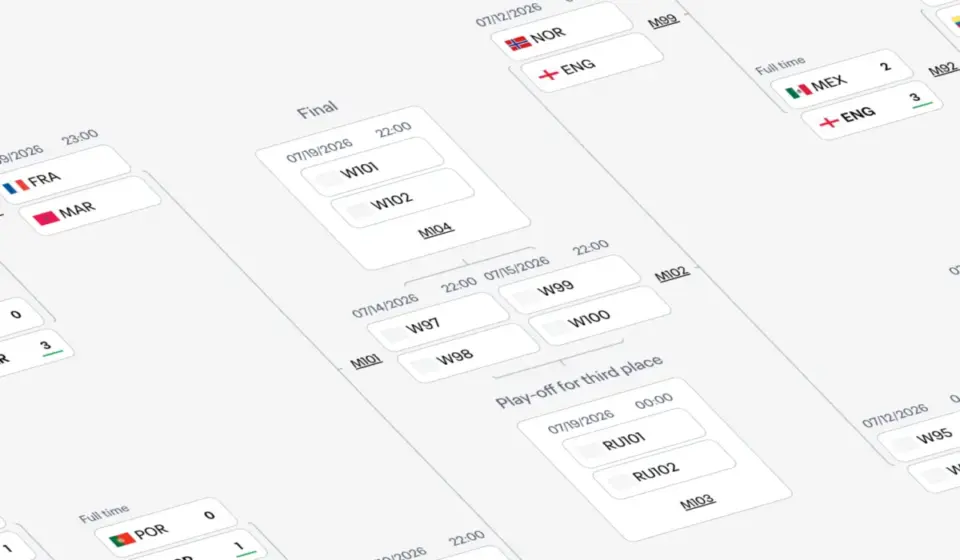
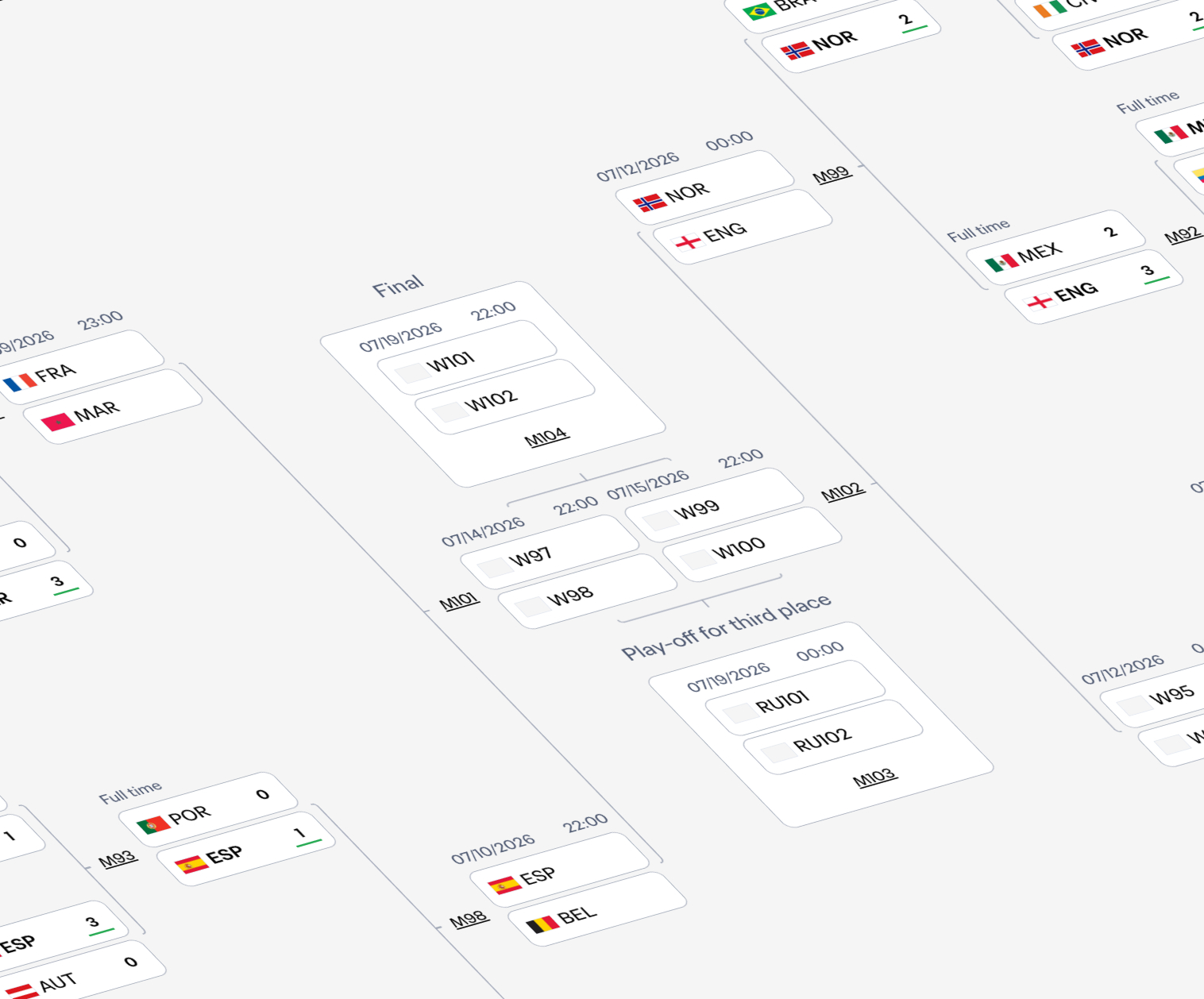
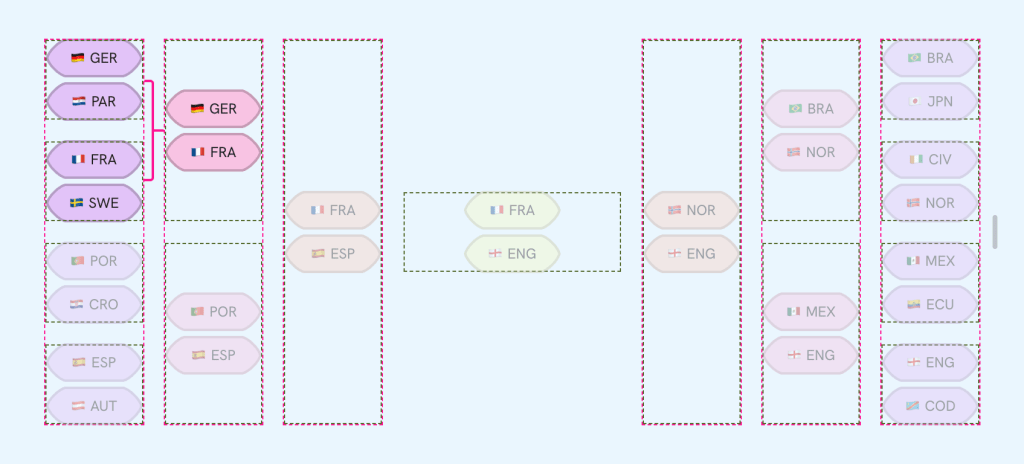
The conclusion of the 2026 FIFA World Cup brought global sporting excitement, but it also inspired a technical triumph within the web design community. Addressing the post-tournament blues, layout expert Ahmad Shadeed published an intricate breakdown demonstrating how to construct complex, responsive knockout tournament brackets using native CSS layout engines.
Traditional tournament bracket designs have long relied on absolute positioning hacks or rigid, nested wrapper elements that break easily under responsive viewports. Shadeed’s implementation leverages modern grid and subgrid mechanics to map complex tree-like data relationships cleanly and fluidly. This case study underscores how modern CSS has evolved from a simple styling language into a robust structural layout engine capable of handling complex visual data visualization without heavy layout libraries.
3. Infinite Possibilities: Unlocking the infinity and -infinity Keywords
Perhaps one of the most intellectually stimulating developments in modern CSS calculations is the formalization of the infinity and -infinity keywords within calc() expressions. While developers initially questioned the practical utility of infinite numerical boundaries in user interface design, styling experts like Adam Argyle have begun uncovering ingenious use cases.
A prime architectural application of this mathematical primitive lies within modern border and corner geometry, specifically interacting with properties like corner-shape. Consider the following mapping:
corner-shape: square;
/* is functionally equivalent to */
corner-shape: superellipse(infinity);

corner-shape: notch;
/* is functionally equivalent to */
corner-shape: superellipse(-infinity);
By passing infinity to a superellipse function, the rendering engine pushes the curvature radius to its absolute mathematical limit, effectively neutralizing the border-radius curve to produce a pristine, mathematically sharp square. Conversely, passing -infinity shifts the geometric calculation inward, producing crisp, deterministic structural notches. This bridges the gap between high-level design tokens and low-level rendering mathematics.
4. Container Scroll-State "Stuck" Queries
Sticky positioning (position: sticky) has long been a staple of modern web UI, allowing elements to remain pinned within the viewport as their container scrolls. However, detecting when an element actually entered its stuck state traditionally required complex IntersectionObserver configurations in JavaScript.
Enter container scroll-state queries. Demonstrated by Chris Coyier in his retrospective on rewriting sticky detection logic, developers can now query whether a sticky element is actively in a "stuck" state using the syntax @container scroll-state(stuck: <keyword>).
While this unlocks profound layout reactivity—such as dynamically applying shadow depths, background blurs, or border alterations the exact microsecond an element locks to the top of its parent container—it currently exists on the bleeding edge of the specification. Broad cross-browser adoption remains pending, with Safari and Firefox yet to roll out native implementations.
Supporting Context & Metrics: The Performance & Standards Debate
As browser vendors race to implement sophisticated styling and layout primitives, the developer ecosystem remains deeply engaged in foundational performance debates. A prominent discussion point centers on default resource management, specifically spearheaded by web pioneer Lea Verou.
Verou reignited the discourse surrounding resource loading behaviors, advocating for a modern reimagining of Tab Atkins’s historical Cascading Attribute Sheets (CAS) proposal. The core premise questions why developers must manually apply loading="lazy" across individual media elements when modern web performance best practices dictate that off-screen resources should always be deferred by default.
/* Proposed default behavior paradigm */
img, video
    loading: lazy;


/* Requiring explicit override only for critical above-the-fold assets */
img.hero
    loading: eager;
By shifting the default posture of the web platform toward performance-first resource management, browsers could automatically protect users from massive initial payload overhead. Developers would only need to opt out of lazy loading for critical, above-the-fold hero assets using loading="eager". This conversation highlights a broader industry movement: shifting performance optimizations away from developer discipline and baking them directly into the core architecture of web standards.
Simultaneously, visual fidelity continues to push forward in niche design territories. Johannes Bechberger’s exploration of animating hand-drawn typography demonstrates that complex, organic SVG path animations can be tamed cleanly using standard CSS keyframes and clean code commenting, lowering the barrier to entry for developers previously intimidated by vector animation pipelines.
Official Statements and Industry Insights
The pace of browser innovation has reached a velocity that occasionally invites humor and awe from the engineering community. A striking example surfaced regarding the long-term planning of core rendering engines.
An inspection of the public Chrome release roadmap revealed a schedule projected outward across an astonishing 14-year horizon, culminating specifically at Chrome version 499. While software roadmaps of this magnitude are largely internal logistical projections rather than rigid guarantees, they illustrate the multi-decade commitment required to maintain, secure, and evolve the modern web platform.
Industry analysts tracking this trajectory note that by the time Chrome reaches its mid-four-hundred version milestones, community publications like What’s !important will have long surpassed their three-hundredth installment—underscoring the unending stream of micro-optimizations, specification revisions, and developer tooling updates that define the discipline.
Future Outlook: The Next Decade of Frontend Engineering
As we project the trajectory of web development following the insights of What’s !important #16, several clear themes emerge for the future of frontend architecture:
- JavaScript De-escalation: With native features like
sibling-index()entering the Baseline and container scroll-state queries maturing, developers will rely significantly less on JavaScript layout calculations and Intersection Observers for standard UI behaviors. The browser rendering pipeline is reclaiming tasks previously offloaded to script execution. - Mathematical Precision in Design Systems: The adoption of advanced mathematical constants like
infinitywithin CSS functions signals a tighter integration between design tokens and low-level graphics math. Expect design system authors to leverage these parameters for fluid, mathematically robust scaling and corner-shape manipulations. - Standardization Bottlenecks: While specification writers continue to innovate at a blistering pace, the widening gap between Chromium implementations and Gecko/WebKit support (as seen with container scroll-state queries) reinforces the ongoing challenge of cross-browser interoperability.
The web platform is stronger, faster, and more expressive than at any point in its history. For engineers willing to stay abreast of rapid standard updates, the tools available today offer unprecedented creative freedom coupled with native performance guarantees.