
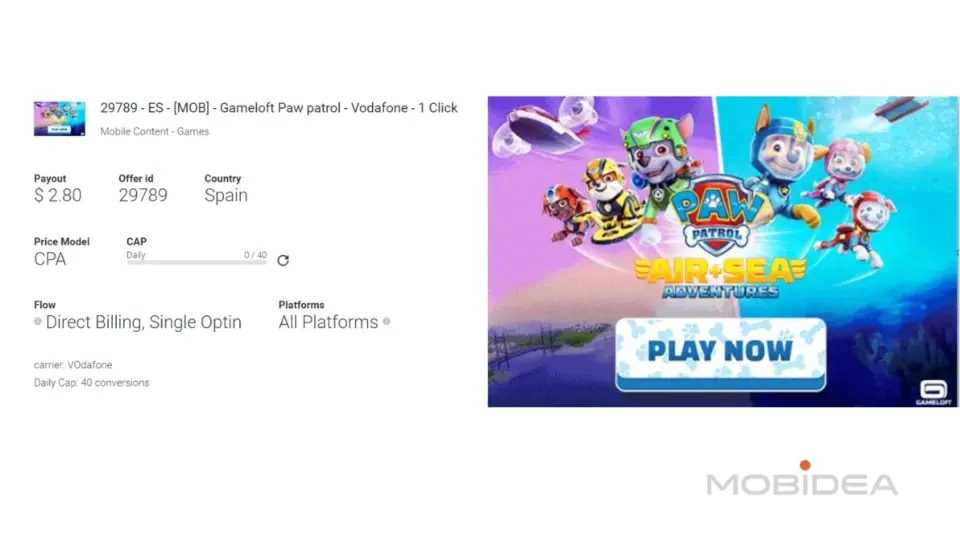
Decoding the Mobile Value-Added Services (mVAS) Ecosystem: A Comprehensive Analysis of Conversion Flows and Monetization Strategies

Executive Overview
In the rapidly evolving landscape of digital marketing and mobile monetization, Mobile Value-Added Services (mVAS) continue to command a prominent position. For digital marketers, media buyers, and affiliate networks, mastering the fundamentals of mVAS—ranging from understanding audience verticals like mobile gaming, sweepstakes, and AI companion applications to selecting the right traffic sources—is only half the battle. The true differentiator between a profitable campaign and a wasted ad budget lies in understanding the mechanics of the conversion flow.
A conversion flow encompasses the exact sequence of technical and user-driven steps that transform a simple ad click into a verified, billable mobile subscription. The specific flow utilized dictates campaign performance metrics across several key dimensions: user friction, conversion rates, payout structures, compliance requirements, and overall lead quality. Because different mobile carriers, regulatory environments, and user behaviors demand varied approaches, affiliate marketers must navigate a complex web of technical frameworks, including Direct Carrier Billing (DCB) and SMS-based billing models.
This report provides an exhaustive, authoritative breakdown of every major mVAS conversion flow currently active in the global marketplace. By examining the structural mechanics of Direct Billing, Mobile Originated (MO) flows, Mobile Terminated (MT) flows, and hybrid verification models, media buyers can optimize their landing page designs, traffic-warming strategies, and ROI calculations before launching campaigns across Tier 1, Tier 2, and Tier 3 geos.
Detailed Chronology: The Evolution and Mechanics of mVAS Billing
The architecture of mobile billing has undergone significant transformation over the past decade, shifting away from cumbersome, insecure protocols toward streamlined, instant authentication mechanisms. Historically, mobile content monetization relied heavily on legacy SMS shortcode setups that required manual text inputs, resulting in massive drop-offs. Today, modern mVAS frameworks leverage advanced telecommunications infrastructure, allowing for instantaneous user recognition and frictionless payment execution directly through a consumer’s mobile operator.

To appreciate how modern conversion flows operate, one must trace the chronological progression of how user authentication and billing consent are established:
- The Legacy Era (Manual SMS): Users were required to memorize shortcodes and keywords, manually open their messaging apps, and send a text to a premium number. While functional, attribution tracking was extremely difficult, and user drop-off rates were astronomical.
- The Web-SMS Integration Era (Click2SMS and PIN Submit): As mobile browsing grew, advertisers bridged the gap between web interactions and carrier networks. This led to the widespread adoption of Mobile Terminated (MT) PIN submits, where a unique code sent via SMS acts as cryptographic proof of user consent.
- The Direct Carrier Billing (DCB) Revolution: The elimination of manual verification steps for on-network traffic revolutionized the industry. Utilizing Mobile Station International Subscriber Directory Numbers (MSISDN), carrier networks began recognizing user identities natively via HTTP header enrichment, paving the way for instantaneous 1-click and 2-click subscription models.
Direct Billing Conversion Flows: Speed, Convenience, and Carrier Integration
Direct Billing—frequently referred to as Direct Carrier Billing (DCB) or Direct Operator Billing—remains the gold standard for mVAS transactions due to its unmatched convenience. By bypassing traditional credit card entry forms, DCB leverages the consumer’s existing relationship with their mobile network operator (MNO) or Mobile Virtual Network Operator (MVNO).
The Role of the MSISDN
The cornerstone of Direct Billing is the MSISDN (Mobile Station International Subscriber Directory Number). This unique identifier corresponds directly to the user’s mobile phone number and active SIM card. When a user browsing on mobile data accesses a DCB-enabled landing page, the mobile operator automatically detects the MSISDN in real-time via the data network connection. This seamless identification allows the carrier to authenticate the user instantly without requiring them to type out their phone number manually. Once the user confirms the transaction, the operator automatically posts the charge to their prepaid balance or postpaid monthly bill.
Depending on the required level of security, regulatory compliance, and advertiser risk tolerance, Direct Billing manifests in several distinct flow variations:

1. The One-Click Flow
The 1-Click flow represents the pinnacle of conversion velocity. In this model, a user lands on a promotional web page, views an offer, and completes the entire subscription process with a single click on a call-to-action (CTA) button.
- The Mechanics: Highly effective at eliminating user friction, the 1-Click flow operates similarly to a Single Opt-In (SOI) lead generation model, restricted purely to on-page interactions.
- Affiliate Perspective: Affiliates favor this flow because conversion rates are exceptionally high and user acquisition costs are easily justified.
- The Trade-Off: Because accidental clicks or uninformed taps are common, lead quality can suffer. Consequently, network payouts for 1-Click flows are typically positioned on the lower end of the spectrum.
2. The Two-Click Flow
To introduce a baseline of security and filter out accidental clicks, advertisers utilize the 2-Click flow.
- The Mechanics:
- Step 1: The user clicks a pre-filled "Subscribe" button on the primary landing page.
- Step 2: The user is dynamically redirected to a secondary confirmation page where they must explicitly click a "Confirm" button to finalize the subscription and authorize the charge.
- Affiliate Perspective: This setup acts similarly to a Double Opt-In (DOI) process localized entirely within the web environment. While conversions require more effort and traffic must be adequately "warmed," the resulting conversion quality is noticeably higher, yielding superior payout structures.
3. The Three-Click Flow
Addressing the persistent industry challenge of low-quality or fraudulent leads, the 3-Click flow introduces multiple layers of user confirmation.
- The Mechanics:
- Step 1: The user clicks the initial "Subscribe" button on a page pre-filled with their MSISDN.
- Step 2: The user is directed to an intermediary page requiring them to check a mandatory compliance box (e.g., "I understand that clicking Confirm will incur a recurring monthly charge of $X").
- Step 3: The user clicks the final confirmation button, sometimes supplemented by an additional One-Time Password (OTP) verification step sent via SMS.
- Affiliate Perspective: While top-of-funnel conversion rates drop due to increased friction, the downstream retention and advertiser ROI are significantly elevated.
4. Header Enrichment with PIN Submit (HE+)
When standard DCB cannot verify identity securely or when local regulatory frameworks demand explicit consent, networks deploy Header Enrichment combined with a PIN Submit.
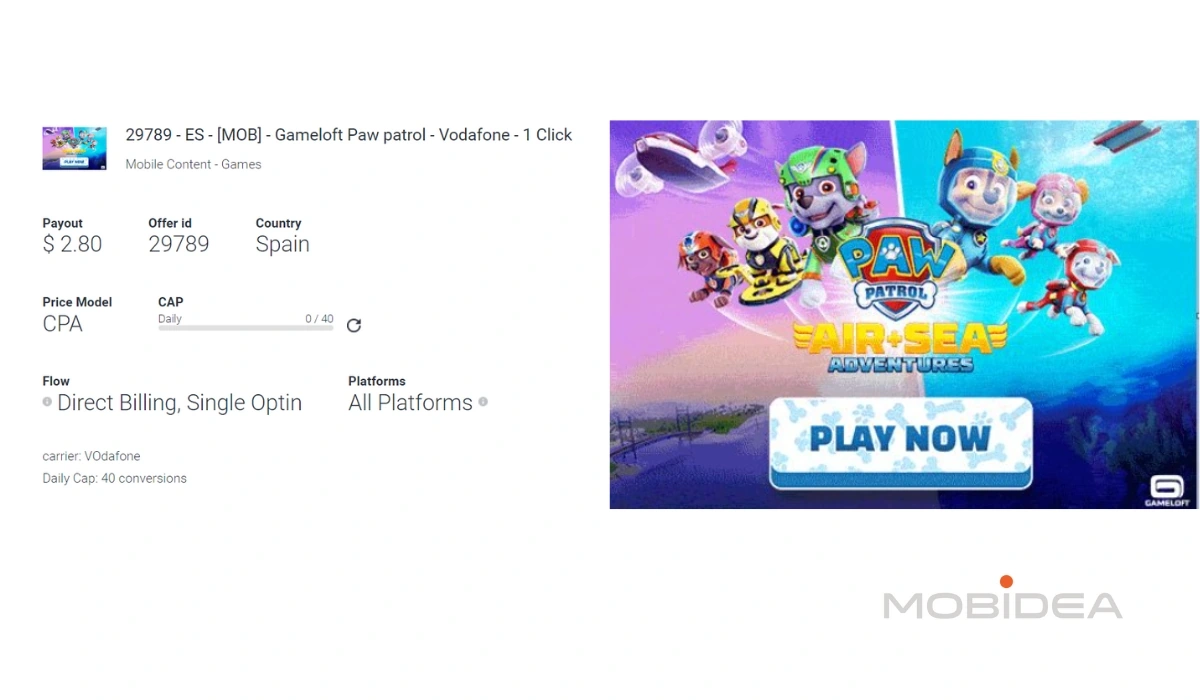
- The Mechanics: The landing page instantly captures the user’s mobile number via network header enrichment. Upon clicking "Subscribe," an automated SMS containing a unique PIN code is dispatched to the device. The user must manually input this PIN code on the subsequent web page interface to finalize the transaction.
SMS Billing Conversion Flows: Overcoming Wi-Fi Limitations
While Direct Carrier Billing is ideal, it fails when a user is connected to a fixed broadband or Wi-Fi network. Because the MNO cannot detect the MSISDN over a Wi-Fi router connection, alternative billing mechanisms must be deployed. This is where SMS Billing becomes indispensable.
SMS billing utilizes text-based message exchanges to facilitate secure mVAS subscriptions. While conversions are statistically harder to secure compared to direct on-network billing, SMS billing provides universal compatibility regardless of the user’s internet connection type.
Mobile Originated (MO) Flows
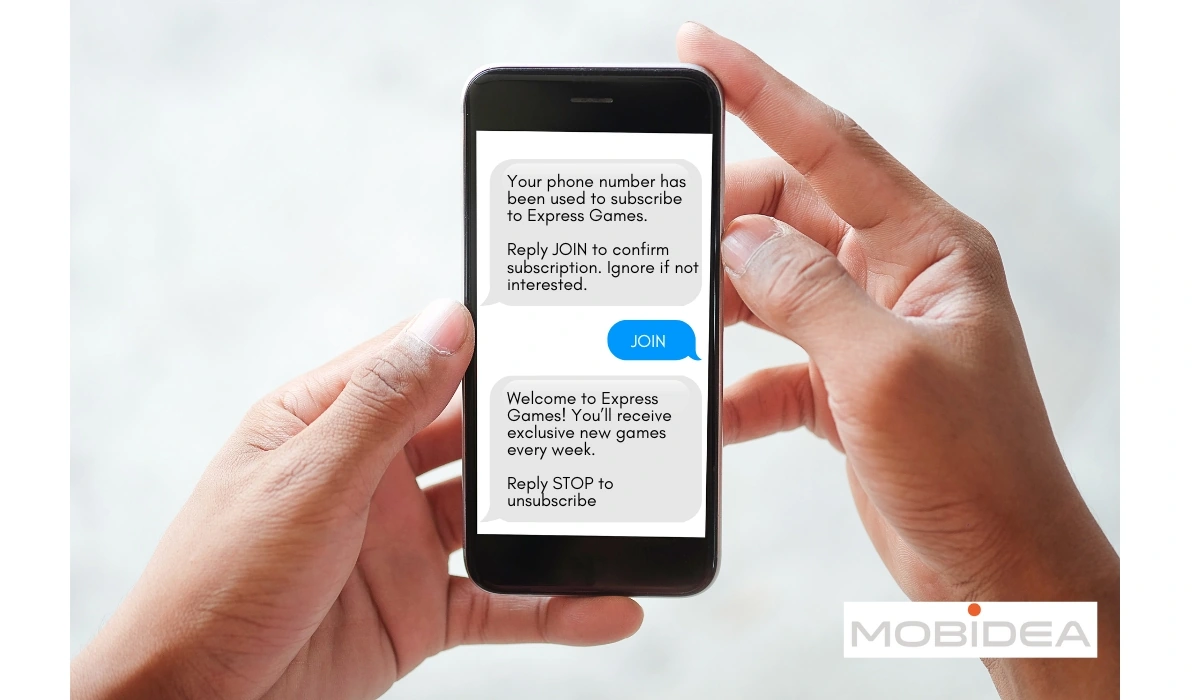
In Mobile Originated flows, the final transaction confirmation must explicitly originate from the user’s mobile device via an outgoing text message.
- Click2SMS Flow: Highly integrated with web traffic, the user clicks a promotional button on a landing page, which automatically triggers their native smartphone messaging application. The app opens with a pre-filled recipient shortcode and message body (e.g., SUBSCRIBE). The user simply hits "Send" to complete the subscription.
- Interactive Voice Response (IVR / Click-to-Call): Operating on a similar direct-action principle, the landing page triggers the phone’s native dialer app with a pre-filled number. The user places a call. Once connected, the subscription activates. Advertisers frequently couple IVR flows with duration metrics, requiring the user to remain on the line for a minimum threshold (e.g., 60 seconds) to successfully trigger a conversion event.
Mobile Terminated (MT) Flows (PIN Submit)
Famously known as the PIN Submit flow, Mobile Terminated architectures do not require the user to send an SMS; rather, they must receive, process, and input data sent to them.
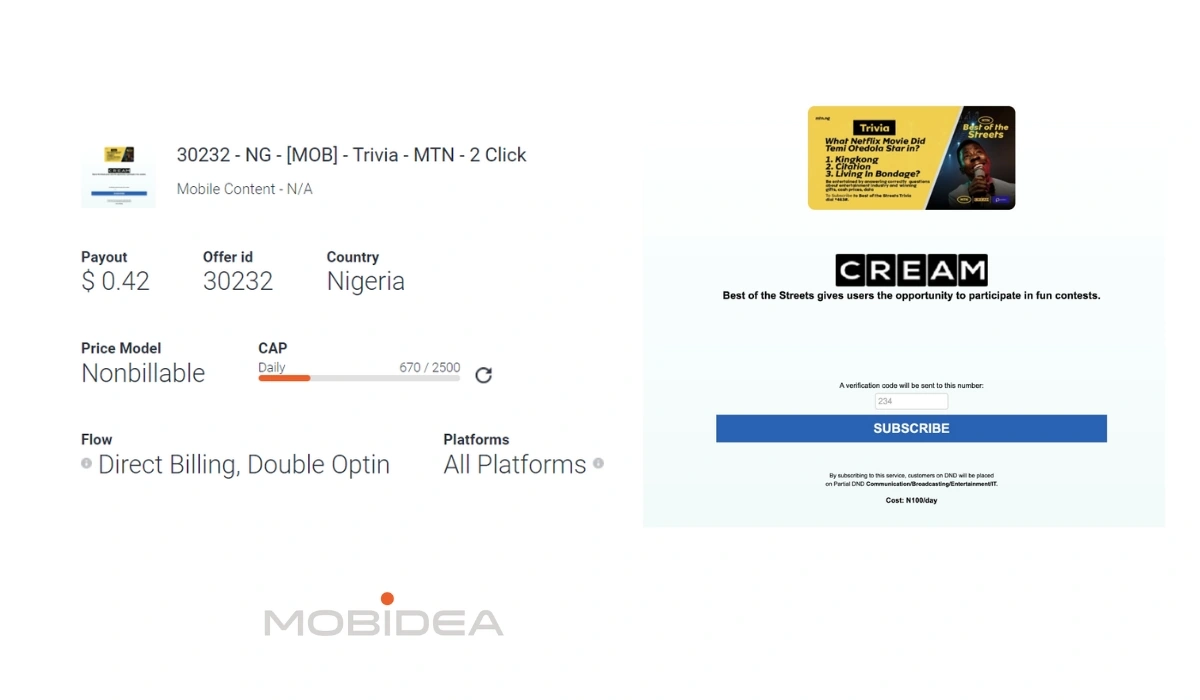
- Step 1: The user visits a landing page and manually inputs their phone number into a data capture form.
- Step 2: The advertiser’s backend dispatches an SMS containing a secure, time-sensitive PIN code to the provided mobile number.
- Step 3: The user inputs the received PIN into the designated field on the advertiser’s web interface, successfully authenticating and securing the subscription.
Supporting Context & Metrics: Analyzing Payouts, Traffic Quality, and Funnel Dynamics
Understanding conversion flows directly influences media buying Key Performance Indicators (KPIs). The structural design of a billing flow dictates several critical variables that every professional affiliate marketer must balance:
| Flow Type | User Friction | Conversion Rate (CR) | Payout Level | Lead Quality | Primary Use Case |
|---|---|---|---|---|---|
| 1-Click DCB | Extremely Low | High | Low | Low-Medium | Casual Games, Broad Mass Market |
| 2-Click DCB | Moderate | Medium | Medium | Medium | Premium Content, Video Streaming |
| 3-Click / HE+PIN | High | Low-Medium | High | High | High-Ticket Apps, Fitness, Utilities |
| Click2SMS / MO | Moderate | Medium | Medium | Medium | Wi-Fi Traffic, Alternative Geos |
| MT PIN Submit | High | Low | High | Very High | Strict Regulatory Markets, Compliance-Heavy Offers |
Media buyers must align their traffic sources with these metrics. For instance, pushing aggressive, broad display traffic into a strict 3-Click PIN Submit flow will invariably yield dismal Return on Ad Spend (ROAS). Conversely, sending high-intent, warm search traffic into a low-payout 1-click offer leaves substantial profit on the table.
Official Industry Perspectives and Network Insights
Industry leaders emphasize that mastering conversion flows is no longer optional for serious media buyers. As digital privacy regulations tighten globally and mobile carriers enforce stricter compliance guidelines, understanding the precise handshake between an ad click and a carrier billing gateway is paramount.
According to leading performance marketing networks specializing in the mVAS vertical, such as Mobidea:
"Knowing the conversion flow is only half the equation—the other half is routing the right traffic to it. Once you understand the mechanics behind an offer, you can finally make sense of payout differentials, carrier approval rules, and campaign performance variances."
Industry analysts point out that compliance and user transparency have become vital for long-term campaign sustainability. Regulatory bodies across Tier 1 and Tier 2 jurisdictions increasingly penalize opaque billing practices. Consequently, flows that incorporate explicit user consent mechanisms—such as Multi-Click confirmation checkboxes and clear pricing disclaimers—exhibit superior longevity and maintain stable relationships with mobile operators.
Future Outlook: The Next Generation of Mobile Billing
As the mobile content ecosystem matures, several emerging trends are poised to shape the future of mVAS conversion flows:
- Stricter Regulatory Frameworks: Mobile operators and consumer protection agencies will continue implementing mandatory double-opt-in protocols, effectively phasing out highly unverified single-click flows in sensitive regions.
- AI-Driven Traffic Routing: Advanced affiliate networks are leveraging artificial intelligence to dynamically match incoming user profiles (device type, connection status, carrier, and geo) with the optimal conversion flow in real-time, maximizing yield per visitor (EPV).
- Alternative Payment Integration: While carrier billing remains dominant, progressive mVAS offers are increasingly blending traditional DCB with alternative mobile-first payment gateways (such as digital wallets and carrier-agnostic micro-transactions) to capture non-subscribing users.
Conclusion
Navigating the mVAS vertical requires acute technical awareness. By thoroughly analyzing whether an offer utilizes Direct Carrier Billing, SMS MO, or MT PIN Submit architectures, media buyers can accurately forecast campaign performance, select appropriate landers, and scale profitable campaigns across global markets. Success in mobile value-added services belongs to those who treat conversion flows not as technical background noise, but as the foundational blueprint of their media buying strategy.