
The Anatomy of a Click: Masterclass in Crafting High-Impact Digital Headlines

Executive Overview
In the sprawling, hyper-saturated expanse of the modern internet, the digital headline is the ultimate gatekeeper of attention. Every single day, millions of pieces of content are published across the web, yet a vast majority languish in obscurity, hidden away in deep archival folders with negligible view counts. The defining variable between viral distribution and total digital oblivion is not necessarily the depth of the prose, the complexity of the research, or the elegance of the design—it is the title.
Comprising merely a handful of carefully chosen words, a blog post title, article heading, or newsletter subject line carries the entire weight of audience acquisition. It acts as the primary hook across search engine results pages (SERPs), social media feeds, RSS aggregators, and email inboxes. If a title is overly complicated, dry, or ambiguous, even the most groundbreaking piece of writing will go unread.
Drawing from foundational copywriting philosophies—most notably legendary advertising pioneer David Ogilvy’s assertion that the sole purpose of a headline is to compel the reader to read the first line of the copy—this report explores the strategic imperatives of headline creation. By analyzing the structural psychology, search engine optimization (SEO) mechanics, and stylistic variations of high-converting titles, content creators can systematically transform their publishing impact.
Detailed Chronology: The Evolution of the Digital Headline
The art of the headline did not begin with the internet; rather, it was forged centuries ago during the golden age of print journalism and direct-response advertising. However, the migration of content from physical broadsheets to digital screens fundamentally accelerated and re-engineered how titles function.
The Print Era: Hooking the Browser
In the nineteenth and twentieth centuries, newspaper vendors relied on physical displays and loud declarations to sell papers. Copywriters learned early on that headlines had to interrupt a person’s passive state of mind. Masters of direct response, such as Claude Hopkins and David Ogilvy, realized that readers do not buy products or read articles out of a sense of duty; they read to solve immediate problems. Headlines in print were engineered to capture eyeballs amid a sea of competing typographic noise.
The Early Web: The Keyword Era
When blogging platforms and early search engines emerged in the late 1990s and early 2000s, the focus shifted from pure psychological intrigue to algorithmic optimization. Early web creators discovered that search engines like AltaVista, Yahoo, and eventually Google heavily weighted the words found in page titles. This era gave rise to rigid, keyword-stuffed titles designed explicitly for machines rather than human readers. While effective for ranking, these utilitarian titles often lacked emotional resonance.
The Social Media and Algorithmic Revolution
With the rise of Web 2.0, social media platforms, and content discovery engines (such as Digg, Reddit, Facebook, and Twitter), the digital headline underwent another mutation. Content could now spread virally through peer-to-peer sharing. Creators responded by optimizing titles for curiosity, outrage, and immediate emotional gratification.

Today, the modern content strategist must balance a complex ecosystem. A successful title must simultaneously satisfy advanced AI-driven search algorithms (like Google’s BERT and MUM updates) while remaining deeply compelling to a distracted human reader scrolling on a mobile device.
Supporting Context & Metrics: Why the Title Reigns Supreme
To understand the critical importance of a headline, one must examine where and how content is consumed in the digital age.
When a piece of content is distributed, its title appears in isolation across several distinct environments:
- Search Engine Results Pages (SERPs): Users scanning a list of ten blue links rely entirely on the title meta tag and meta description to decide which web property deserves their time.
- Social Media Feeds: Platforms like LinkedIn, X (formerly Twitter), and Facebook display link previews where the headline is the most prominent visual text element.
- Email Subscriptions & RSS Feeds: Inboxes are battlegrounds where subject lines dictate open rates. A weak title results in immediate deletion or archiving.
- Internal Site Navigation: Featured carousels, category pages, and related post widgets rely on concise titles to keep users engaged on a site.
Data from digital marketing analytics consistently show that roughly 80% of readers will read a headline, but only 20% will read the rest of the content. If the headline fails to bridge that gap, the remaining 80% of the author’s effort is effectively wasted. Furthermore, search engines truncate titles that exceed roughly 60 to 65 characters, adding technical constraints to creative execution.
The Master Blueprint: 8 Strategies for Crafting Irresistible Titles
Crafting a title that consistently drives traffic requires an intentional, methodical approach. Experienced content creators rarely rely on luck; instead, they utilize proven copywriting techniques. While no single title can employ every technique simultaneously, integrating one or two core strategies will dramatically boost performance.
1. Communicate a Clear, Undeniable Benefit
The most reliable way to secure a click is to promise the reader a tangible, valuable outcome. When an internet user searches for a solution on Google or scrolls through an RSS feed, they are hunting for answers to their problems.
Titles that clearly articulate a benefit act as a beacon. For instance, straightforward utility-driven titles—such as "How to Hold a Digital Camera" or "10 Ways to Take Stunning Portraits"—frequently drive hundreds of thousands of organic visits. These titles are not overly clever or cryptic; they simply and loudly broadcast the exact value proposition awaiting the user upon clicking.

2. Ignite Controversy and Spark Debate
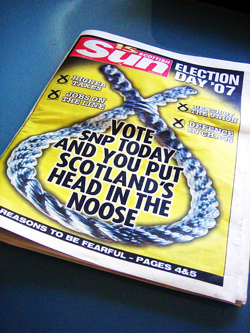
Human psychology is inherently wired to pay attention to friction, opposing viewpoints, and unresolved debates. Creating a sense of controversy can generate immense curiosity and engagement.
However, this technique demands absolute integrity. A controversial title must be backed up by a well-reasoned, robust argument within the body of the post. When executed correctly, controversy stimulates active discussions, encourages comments, and builds a passionate audience. Creators must, however, be prepared for polarizing reactions.
3. Ask a Direct Question
Human beings are conversational creatures wired to respond when directly addressed. Phrasing a title as a question immediately engages the reader’s cognitive processing units, prompting them to formulate an answer in their mind—and compelling them to click to see if their hypothesis is correct. Questions are particularly effective at driving community interaction and comment sections, especially when paired with personalized language.
4. Personalize the Language ("You")
Although digital content is often published to an anonymous, global audience of thousands, the reading experience is intensely personal. By utilizing direct, second-person pronouns—most notably the word "you"—creators can make a sprawling article feel like a one-on-one conversation.
Comparing a generic title to a personalized one reveals a stark difference in psychological impact. Framing a guide as "21 Ways to Make Your Blog or Website Sticky" immediately anchors the topic to the reader’s personal project, elevating their sense of investment.
5. Leverage Strategic Keywords for SEO
Keywords serve a dual purpose in digital publishing:
- They signal the precise topic of the content to search engine crawlers, ensuring proper indexation and ranking.
- They immediately validate the reader’s search intent, confirming they have landed on the right page.
When writing titles, placing primary keywords closer to the beginning of the headline yields stronger SEO impact, particularly if the overall title is long. This is especially vital when covering specific product names, public figures, or corporate entities, which frequently dominate high-volume search queries.
6. Harness the Power of High-Impact Words
Certain words carry disproportionate psychological weight. They evoke curiosity, urgency, or excitement. While these "power words" can dramatically boost click-through rates, they must be used with a degree of caution.
Examples of effective power words include terms that denote exclusivity, urgency, or transformation (e.g., proven, ultimate, essential, breakthrough, secret).
- Disclaimer: Overusing power words can backfire. Modern internet users have developed a healthy skepticism toward hyperbole. If a title makes an aggressive promise that the underlying content fails to deliver, it will trigger reader resentment and erode long-term trust.
7. Make Bold Claims and Big Promises
An extension of the "benefit-driven" title, making a bold claim takes the value proposition to an extreme where it becomes nearly impossible to ignore. Big claims offer guarantees or transformations so desirable that even casual observers will feel compelled to investigate. As with controversy, the golden rule here is delivery: the content must substantiate the boldness of the title to retain reader loyalty.
8. Infuse Humor and Wit
Humor is a powerful magnet for audience engagement, but it is notoriously difficult to execute consistently in a headline. A well-crafted, witty title can establish an instant rapport with readers and set your content apart from dry, corporate competitors. However, humorous titles carry distinct risks: if the joke falls flat, it fails to attract readers and often lacks vital SEO keywords, harming discoverability.
Expert Advisory: Essential Rules for Title Architecture
Beyond thematic strategies, technical execution matters immensely. Content creators should adhere to two fundamental formatting rules:
- Keep It Concise: While excessively long titles can occasionally capture attention through sheer novelty, simplicity always wins. Keeping titles under 65 characters ensures they display fully on search engine result pages without being awkwardly truncated by ellipses.
- Avoid Periods (Full Stops): Ending a headline with a period creates an artificial psychological stop. Removing terminal punctuation maintains the visual flow of the sentence, subtly encouraging the reader’s eye to transition smoothly from the headline into the opening line of the article.
Future Outlook
As the digital publishing landscape continues to evolve alongside artificial intelligence, voice search, and shifting content consumption habits, the fundamentals of headline creation remain anchored in human psychology. While algorithms will continue to refine how content is surfaced and recommended, the ultimate decision-maker remains a human being looking for clarity, utility, or emotional resonance in a crowded digital world.
Content creators who master the delicate balance between technical SEO best practices and timeless copywriting principles will continue to capture the most valuable currency of the digital age: human attention. Investing adequate time into crafting, refining, and testing titles is not merely an editorial afterthought—it is the definitive cornerstone of digital publishing success.