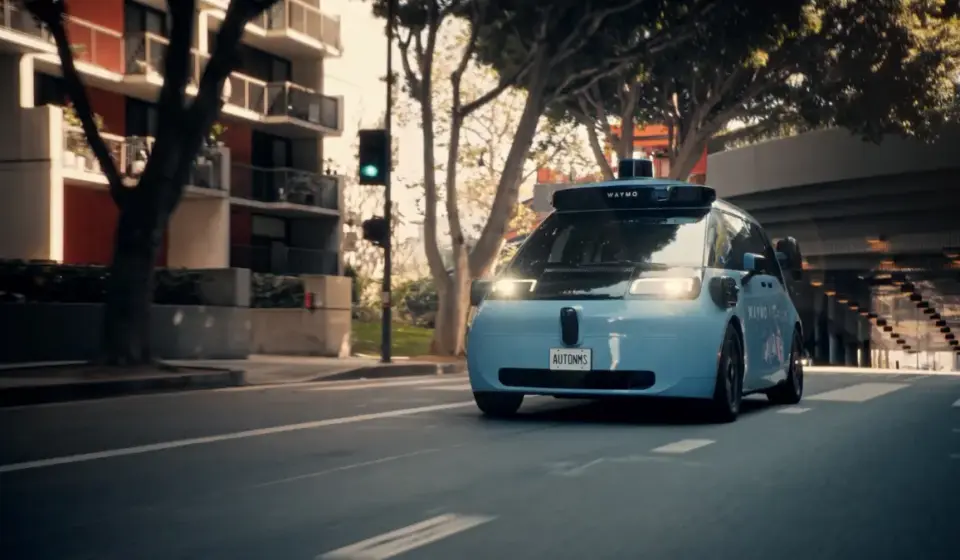
The landscape of global transportation is undergoing a profound structural evolution, driven by aggressive vertical integration, heightened geopolitical scrutiny, and rapid commercial scaling. At the vanguard of this transformation is Alphabet’s autonomous driving unit, Waymo, which has expanded its footprint to major metropolitan hubs like Los Angeles, Phoenix, and San Francisco. Behind this consumer-facing push lies a deeper engineering pivot: the debut of a proprietary, custom-built 5-nanometer Application-Specific Integrated Circuit (ASIC) chip designed to maximize the performance of its sixth-generation self-driving system.
Simultaneously, the regulatory and operational matrices governing electric and autonomous vehicles are shifting. A covert investigation by the Idaho National Laboratory into Chinese lidar technology underscores mounting national security anxieties within the advanced mobility sector. Meanwhile, foundational shifts in venture capital and strategic partnerships—highlighted by Rivian-incubated Also securing $150 million, Serve Robotics diversifying past its split with Uber, and Einride integrating Tesla Semis into its enterprise logistics network—reveal an industry desperately racing to balance rapid scaling with strict supply-chain diversification.
From massive multi-thousand-vehicle robotaxi permits in Clark County, Nevada, to record regulatory fines in Europe and surging drone delivery footprints, the mobility ecosystem is testing the limits of technological capability, economic viability, and geopolitical compliance.
Detailed Chronology
Waymo’s Vertical Integration and Silicon Breakthrough
Waymo’s path to profitability has long hinged on reducing manufacturing and operational expenditure. While previous iterations of its robotaxis relied heavily on off-the-shelf processing components, the company’s recent operational rollout of its next-generation "Ojai" vehicle highlights a definitive shift toward proprietary hardware architecture.
During the third week of August 2026, Waymo officially opened its Ojai robotaxi fleet to the general public across Los Angeles, Phoenix, and San Francisco. More importantly, the company pulled back the curtain on the hardware driving these vehicles, revealing a custom 5nm ASIC chip. Engineered to ingest and process raw sensory data before it ever hits the central computing core, this proprietary silicon delivers computational throughput exceeding 1,000 TOPS (trillions of operations per second). This performance profile places Waymo’s internal chip directly in competition with market heavyweights like Nvidia’s DRIVE AGX Thor.
Despite this vertical leap, Waymo maintains an extensive semiconductor and hardware supply chain. The company officially acknowledged collaborative partnerships with industry titans including AMD, Micron, Nvidia, Samsung, Sandisk, Socionext, and TSMC to bring its hardware ambitions to fruition.
The Idaho National Laboratory Lidar Probe
Parallel to hardware advancements in automated computing, federal security apparatuses have turned their attention to the mechanical eyes of autonomous systems. According to investigative reporting by TechCrunch’s Sean O’Kane, the Idaho National Laboratory is actively evaluating whether Chinese-manufactured lidar sensors present structural national security vulnerabilities if deployed at scale across American roadways.
Crucially, the research is not solely a top-down federal initiative; industry sources indicate the evaluation is being financially backed by one or more entities within the electric and autonomous vehicle sectors. When pressed for comment, prominent EV and AV manufacturers—including Rivian, General Motors, Ford, Kodiak, Lucid Motors, Nuro, and Uber—stated they were entirely unaware of the review. Other sector players, such as Aurora, Nvidia, and Zoox, declined to comment, leaving the identity of the corporate backers shrouded in uncertainty as federal scrutiny over foreign hardware intensifies.
Venture Capital and Strategic Realignments in Micromobility & Logistics
The venture capital landscape within alternative transportation saw significant capital injections and strategic divorces. Also, an autonomous electric vehicle startup spun out of Rivian in March 2025, closed a $150 million Series D funding round led by Prysm Capital, with continued participation from Eclipse, Greenoaks, and MVP Ventures. This brings Also’s total capital raised to $455 million. Initially launched as a micromobility venture focused on pedal-assist e-bikes and cargo quads, Also has rebranded itself as a Palo Alto-based technology firm building autonomous small electric vehicles, fueled by a multiyear deployment agreement with DoorDash.
Conversely, sidewalk delivery robot developer Serve Robotics experienced a stark demonstration of platform dependency risks. Following an earnings call revelation that Uber was phasing out its integration of Serve’s delivery bots ahead of a complete contract termination, Uber liquidated its entire equity stake in the company. However, Serve successfully cushioned the blow through diversified pre-arranged partnerships. The company announced a major deployment with Grubhub across Chicago, Los Angeles, and Alexandria, Virginia, alongside an expanded DoorDash footprint in San Jose and Washington, D.C.
Heavy Trucking, Micro-Vans, and Aerial Logistics
Commercial logistics and alternative transport platforms also locked in key operational deals:
Einride: The Swedish electric autonomous trucking enterprise struck a commercial agreement with Tesla to procure 500 electric Semi trucks. Beginning in September over a 24-month phased rollout, these heavy-duty vehicles will be integrated into Einride’s customer fleets, serving major enterprise clients like Amazon.
Grounded: The Detroit-based custom EV and gas van conversion startup secured a $5 million seed round featuring repeat backing from Also Capital, The 81 Collection, Animal Capital, the Michigan Outdoor Innovation Fund, and former SpaceX engineers.
Zipline & Uber: Aerial drone delivery startup Zipline cemented a partnership and investment deal with Uber, aiming to achieve a staggering 1 million deliveries per day across the Uber Eats network by the end of 2029.
Supporting Context & Metrics
To fully understand the scale of these developments, it is essential to examine the underlying financial, computational, and operational metrics defining the current transportation economy:
1,000 TOPS: The computing performance threshold delivered by Waymo’s new proprietary 5nm ASIC chip, matching the processing bandwidth of elite automotive platforms like Nvidia DRIVE AGX Thor to handle data streams from 13 high-fidelity cameras.
$455 Million: The cumulative capital raised by Rivian spinout Also since its inception in March 2025, culminating in its recent $150 million Series D round.
8,000 Robotaxis: The maximum combined vehicle deployment authorized by Nevada regulators under new commercial permits granted to Tesla, Uber, and Waymo across Clark County (Las Vegas) over a 12-month window.
€825 Million ($966 Million): The historic fine levied against Uber by the Dutch Data Protection Authority for deploying automated driver account suspensions in violation of European privacy mandates.
500 U.S. Cities: Amazon’s stated target footprint for its Prime Air drone delivery network by the close of 2026, marking a sixfold expansion of its current airborne logistics grid.
Official Statements
Industry leaders and regulatory bodies have weighed in on the operational shifts shaping the autonomous and electric vehicle markets:
On Waymo’s Engineering Philosophy: "Our sixth-generation system provides unmatched efficiency and performance. By building custom silicon capable of handling massive raw data influxes natively, we ensure our robotaxis can react instantaneously and safely within complex, high-density urban environments."
— Waymo Engineering Team
On the Evolution of Autonomous Delivery Networks: "The recent market adjustments demonstrate a fundamental law of scaling: absolute reliance on a single partner introduces existential risk. Through rigorous platform diversification and multi-app deployments with Grubhub and DoorDash, we have insulated our operations for sustainable long-term growth."
— Serve Robotics Executive Commentary
On European Regulatory Enforcement: "Automating critical financial and professional livelihood decisions through opaque algorithms without adequate human oversight or transparent communication violates the foundational tenets of European data privacy legislation."
— Dutch Data Protection Authority Official Ruling Statement regarding Uber
Future Outlook
The trajectory of the transportation sector points toward profound consolidation, rigorous regulatory oversight, and technological divergence over the next 24 to 36 months.
In the autonomous ride-hailing sector, Waymo’s deployment of its Ojai vehicle paired with its custom 5nm silicon sets a high technical benchmark that competitors will struggle to match without heavy capital expenditure. However, the regulatory landscape is shifting from mere operational approvals to forensic technical audits. The Idaho National Laboratory’s covert probe into Chinese lidar sensors signals that hardware provenance will become a major political and supply-chain battleground, potentially forcing domestic AV developers to decouple entirely from foreign optical component suppliers.
Concurrently, heavy commercial transport is entering a hybrid implementation phase. Einride’s integration of Tesla Semis alongside autonomous fleet management platforms proves that commercial freight operators are eager to electrify trunk lines, even as manufacturers grapple with volume production targets. In last-mile delivery, the stark divergence between Uber and Serve Robotics underscores that sidewalk robotics and aerial drone networks—exemplified by Amazon’s aggressive 500-city drone expansion and Uber’s tie-up with Zipline—must rely on multi-channel distribution models to survive.
Ultimately, as millions of dollars in venture capital flow into specialized startups like Also and Grounded, and municipal regulators in jurisdictions like Nevada greenlight thousands of commercial robotaxis, the industry is transitioning from a speculative technological science project into a heavily regulated, hyper-competitive global infrastructure utility. Success will no longer be determined solely by software cleverness, but by regulatory compliance, silicon efficiency, and unbreakable supply-chain security.