
The Content Creator’s Court: 10 Surprising Lessons Bloggers Can Learn from the Rise of Pickleball

Executive Overview
In the rapidly evolving digital landscape, content creators continually search for unorthodox sources of inspiration. While traditional marketing textbooks, search engine optimization (SEO) manuals, and analytics dashboards offer a wealth of technical guidance, sometimes the most profound strategic insights come from entirely unrelated domains. Enter pickleball—the hybrid sport blending elements of tennis, badminton, and table tennis that has captured the global zeitgeist.
Beyond its quirky nomenclature and meteoric rise across community centers and suburban parks worldwide, pickleball provides a masterclass in modern audience engagement, scaling, community building, and adaptability. For digital publishers and bloggers navigating an increasingly crowded and competitive content ecosystem, the court offers surprising parallels to the keyboard. This report explores how foundational concepts from America’s fastest-growing sport can be systematically translated into actionable strategies for digital content creation, offering a blueprint for sustainable growth, audience retention, and creative longevity.
Detailed Chronology: From Backyard Pastime to Digital Analogy
To understand how pickleball serves as a metaphor for digital publishing, one must first examine the trajectory of the sport itself and its striking structural similarities to the lifecycle of a successful blog.
1965: The Humble Genesis
Pickleball was born out of sheer necessity and improvisation in 1965 on Bainbridge Island, Washington. Conceived by Joel Pritchard, Bill Bell, and Barney McCallman, the game was invented on a stale summer afternoon to entertain bored children using makeshift equipment: lowered badminton nets, ping-pong paddles, and a perforated plastic ball.
- The Blog Analogy: Every monumental digital property begins in a similar state of improvisation. Much like a makeshift court in a Pacific Northwest backyard, successful blogs often originate as rudimentary WordPress setups or personal journals with minimal resources. The lesson for digital publishers is clear: monumental success does not require an enterprise-level budget on day one. It requires a willingness to start with the tools at hand and a vision for long-term scalability.
The Era of Hyper-Growth and Evolution
Over the subsequent decades—and particularly during the global shifts of the early 2020s—pickleball evolved from a localized novelty into an international phenomenon. This growth was fueled by its low barrier to entry, highly social nature, and adaptability to players of all demographics.
- The Blog Analogy: As the sport scaled, players had to refine their techniques, understand court positioning, and adapt to diverse opponents. Similarly, bloggers must evolve from casual writers into strategic publishers. Transitioning a blog from a hobbyist endeavor into a recognized authority requires studying the digital landscape, optimizing site architecture, and continuously refining content delivery to meet the shifting demands of modern readers.
Supporting Context & Metrics: The Mechanics of Engagement
Translating physical athletic strategy into digital publishing requires examining the core mechanics that make both pickleball and blogging effective. Below is an analysis of key strategic parallels, broken down into essential operational pillars for content creators.
The Power of "Dinking" (Simplicity in Communication)
In pickleball, a "dink" is a soft, highly calculated shot executed near the non-volley zone (the "kitchen"). Its purpose is not to overpower the opponent with brute force, but to control the pace of the rally, force errors, and create openings for a strategic attack.
- Application for Bloggers: In the digital publishing space, creators often fall into the trap of overcomplicating their copy, employing dense industry jargon, or structuring articles with impenetrable walls of text. "Dinking" in blogging translates to the art of radical simplicity. By distilling complex concepts into digestible, reader-friendly prose, clean layouts, and scannable subheadings, bloggers can control the user experience. A gentle, straightforward touch frequently outperforms a heavy-handed, aggressive sales pitch.
Finding the Sweet Spot and Respecting the "Kitchen"
Pickleball rules dictate that players cannot step into the "kitchen" (the non-volley zone near the net) to strike the ball unless it has bounced inside it first. Violating this rule results in a fault. However, playing safely behind the kitchen line while maximizing reach creates a mechanical "sweet spot" for controlling the rally.
- Application for Bloggers: Content creators must constantly navigate the delicate boundary between providing value and pushing aggressive monetization. Standing too far back leads to a lack of commercial viability and audience connection; overstepping into the "kitchen" (over-monetizing, publishing overly promotional content, or spamming affiliate links) results in immediate audience alienation—a digital fault. Finding the sweet spot means delivering high-value, organic content where monetization feels natural rather than intrusive.
Embracing the "Whiff" and Iterative Improvement
Even professional pickleball athletes misjudge a bounce or swing completely through the air, an occurrence affectionately known in the community as a "whiff." The defining characteristic of a skilled player is not the absence of errors, but their immediate recovery and analysis of the missed shot.
- Application for Bloggers: Not every article published will go viral, rank number one on Google, or resonate with the subscriber base. Content performance volatility is an inherent reality of digital publishing. Bloggers must embrace underperforming posts as learning opportunities rather than definitive failures. By analyzing bounce rates, traffic acquisition channels, and reader feedback through an objective lens, creators can refine their editorial calendar and step up to the plate for the next serve with enhanced precision.
Official Industry Perspectives and Strategic Insights
To gain a comprehensive view of how physical activity models intersect with digital media strategy, industry authorities emphasize the psychological parallels between gaming, sports, and content consumption.
The Psychology of the Rally
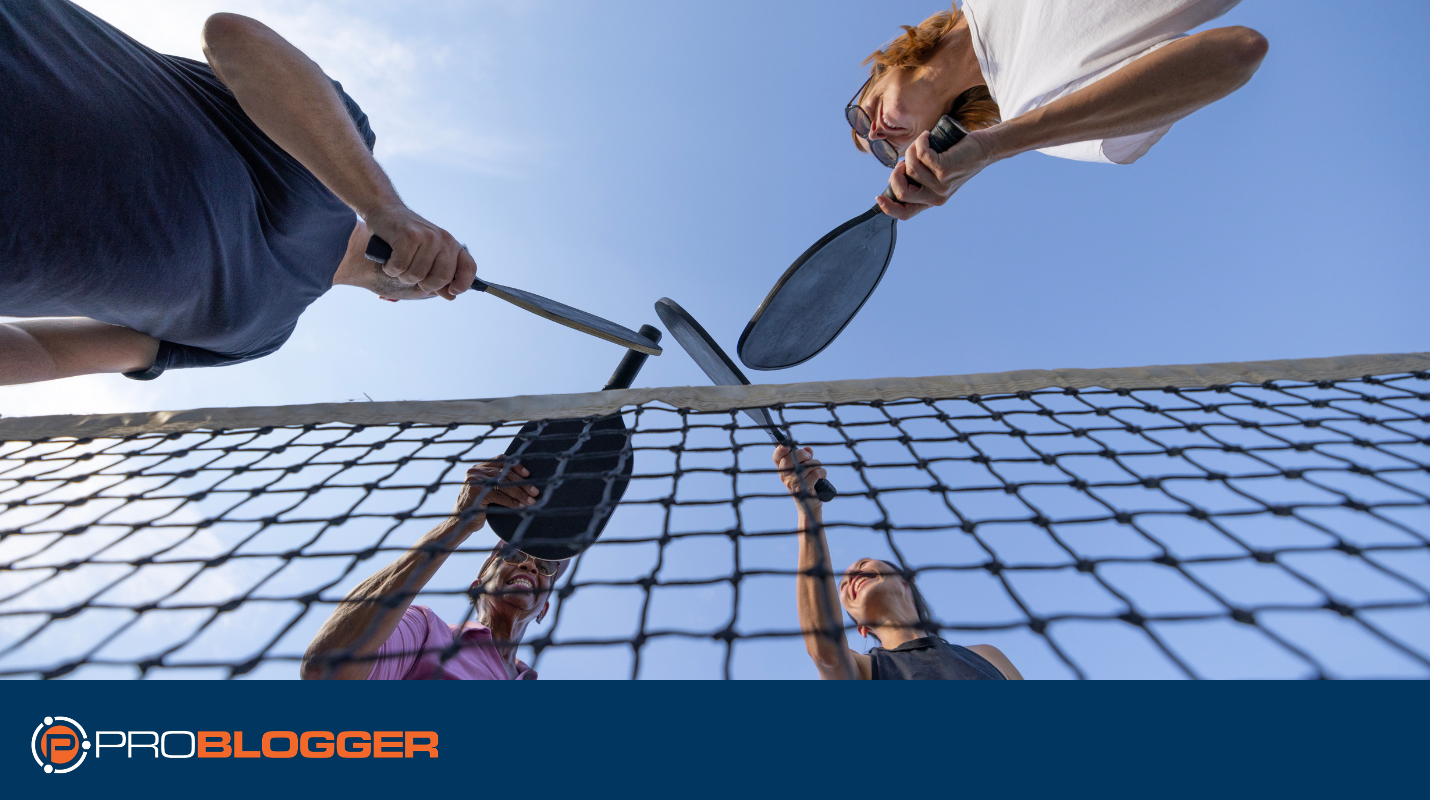
Digital marketing analysts frequently point out that audience retention is fundamentally a game of momentum. Just as a sustained pickleball rally heightens the adrenaline of both participants and spectators, a well-structured blog post maintains reader attention through narrative pacing, internal linking, and interactive elements.
"In both sport and content creation, engagement is a continuous exchange. If you drop the ball—whether through a sluggish site speed, uninspired prose, or poor mobile optimization—the rally ends, and the reader walks away."
— Digital Publishing Strategist Forum
Strategic Positioning and the Art of the Serve
In pickleball, the serve initiates the point, and advanced players utilize spin, depth, and placement to immediately put their opponents on the defensive.
- The Blogging Equivalent: The introduction of a blog post functions as its serve. A compelling hook immediately establishes authority, sets behavioral expectations, and dictates whether a visitor will stay or bounce. Combined with strategic niche positioning—understanding precisely where your blog fits within the broader digital ecosystem—creators can carve out defensible territory that withstands algorithm updates and competitive pressures.
Future Outlook: The Next Evolution of Content Strategy
As we look toward the future of digital publishing, the intersection of community-driven experiences and content creation is poised to deepen. Artificial intelligence, shifting search algorithms, and changing consumer attention spans mean that traditional, static blogging models are no longer sufficient for long-term survival.
1. Community-Centric Ecosystems
Just as pickleball thrives on local clubs, tournaments, and social integration, successful future blogs will operate less like static publication sites and more like interactive community hubs. Fostering active comment sections, hosting live digital Q&As, and building micro-communities will transform casual traffic into loyal brand advocates.

2. Agility in an AI-Driven Landscape
The digital landscape changes at a pace that rivals the rapid adoption of modern sports. Bloggers who treat their editorial strategies as dynamic, adaptable playbooks—rather than rigid annual plans—will thrive. By continuously monitoring macro-trends, pivoting content formats (such as integrating multimedia, interactive data visualizations, and short-form summaries), and maintaining acute focus on audience needs, creators will ensure their digital footprint remains resilient.
3. Re-injecting Passion into the Craft
Amidst keyword research tools, algorithm updates, and monetization metrics, creators frequently lose sight of the intrinsic joy of writing. Pickleball endures as a global phenomenon fundamentally because it is fun. The ultimate takeaway for digital publishers is that enthusiasm cannot be artificially manufactured. When creators write with genuine passion and authenticity, that energy resonates directly through the screen, transforming routine readers into a dedicated community.
Conclusion
Who could have predicted that a backyard game invented with a perforated plastic ball and ping-pong paddles would yield profound insights for digital publishing? By examining the core tenets of pickleball—starting small, maintaining the rally through community engagement, simplifying complex ideas via "dinking," learning from missteps, and above all, maintaining adaptability and enjoyment—bloggers can fundamentally elevate their craft.
The digital court is wide open, and the next serve is yours. Grab your keyboard, step up to the baseline, and prepare to play your best game yet. Your next viral hit might just be a rally away.