
Amazon’s Texas Data Center and the Colliding Worlds of AI Expansion and Climate Commitments

Executive Overview
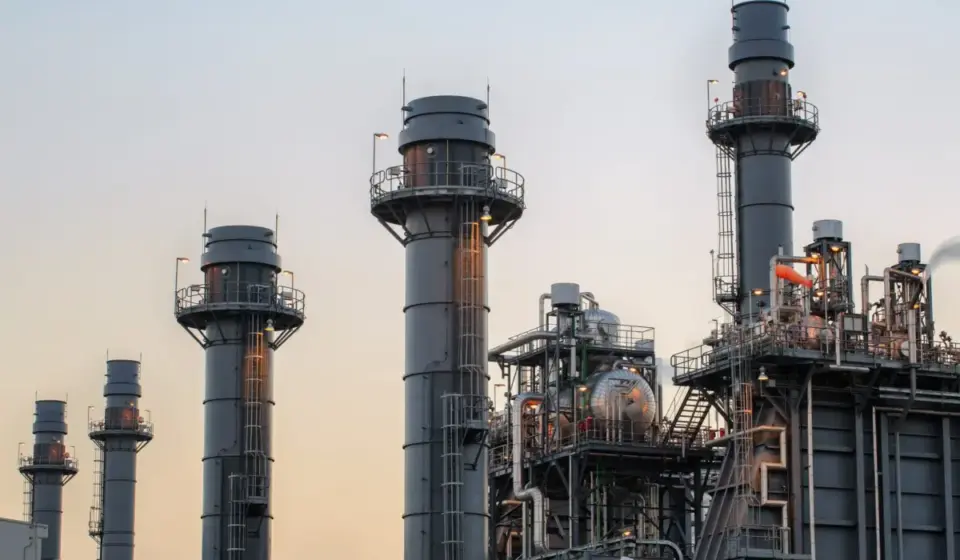
The race for artificial intelligence dominance is colliding head-on with corporate sustainability goals, and the friction point is increasingly measured in millions of tons of carbon dioxide. According to an explosive investigative report by The New York Times, e-commerce and cloud computing giant Amazon is planning a massive data center complex in Pecos County, Texas, that will be backed by a dedicated, on-site natural gas power plant. If built to its currently permitted specifications, this facility could emerge as the single largest source of stationary climate pollution from a power generation source anywhere in the United States.
Permitted to release an astonishing 33 million tons of carbon dioxide annually, the proposed plant underscores a profound strategic dilemma facing the technology sector. As generative AI models, cloud infrastructures, and machine learning workloads demand unprecedented computational power, tech giants are increasingly bypassing traditional municipal and regional electrical grids. Instead, they are securing direct, guaranteed energy pipelines—often relying on fossil fuels—to ensure uninterrupted uptime for their critical infrastructure.
This development deals a severe blow to Amazon’s long-term climate pledges. The company, which co-founded The Climate Pledge with a goal of achieving net-zero carbon emissions across its operations by 2040, saw its total greenhouse gas emissions spike by 16% last year, driven largely by energy-intensive data center expansions. While Amazon defends its Texas project by emphasizing that the facility’s power generation will not strain local grids or drive up electricity costs for everyday Texas families, environmental watchdogs and climate scientists warn that the project represents an existential backsliding on corporate environmental accountability.
This article explores the complex anatomy of Amazon’s Pecos County project, examining the regulatory approvals, the broader technological context of AI’s energy footprint, corporate statements, and the looming future of tech-driven energy consumption in the United States.
Detailed Chronology: The Road to Pecos County
To understand how a single corporate data center project could command a carbon footprint rivalling small industrial nations, it is necessary to trace the convergence of the artificial intelligence boom, Texas’s deregulated energy market, and Amazon’s infrastructure planning.
The AI Infrastructure Gold Rush (2022–2024)
The genesis of this environmental flashpoint lies in the sudden, exponential escalation of compute requirements sparked by generative AI models following the public debut of advanced large language models in late 2022. As tech giants raced to build out massive clusters of graphics processing units (GPUs) and specialized tensor processing units, their energy consumption curves transformed from linear trajectories into exponential upward spikes.
During this period, Amazon Web Services (AWS) began aggressively acquiring land and scouting locations capable of hosting hyperscale data center campuses. These facilities require uninterrupted blocks of power ranging from hundreds of megawatts to gigawatts—quantities equivalent to the energy demands of mid-sized cities.
The Texas Grid Calculus and Pecos County (2024–2025)
Texas emerged as a prime destination for these capital-intensive projects. The Electric Reliability Council of Texas (ERCOT) operates an independent, deregulated grid characterized by rapid interconnection processes, abundant land, and a favorable regulatory climate for industrial development. Pecos County, situated in the heart of the Permian Basin, offered vast expanses of inexpensive land coupled with proximity to rich domestic natural gas reserves.
Rather than relying solely on the strained ERCOT grid—which faced intense public scrutiny and political backlash following extreme weather events like Winter Storm Uri—Amazon’s infrastructure planners opted for an on-site generation model. By co-locating a dedicated power plant directly adjacent to the data center, the facility could insulate itself from grid volatility, transmission losses, and capacity shortages while guaranteeing a dedicated, round-the-clock power supply essential for continuous AI model training and inference operations.
Regulatory Filings and the 33-Million-Ton Revelation (2026)
Public awareness of the project’s true ecological scale crystallized in mid-2026, when environmental filings and air quality permits analyzed by The New York Times brought the project into sharp focus. The regulatory documents revealed that the on-site natural gas power plant intended to serve the Pecos County data center was permitted to emit up to 33 million metric tons of carbon dioxide per year.
This revelation immediately triggered national alarm. To put the figure into perspective, a single industrial installation emitting 33 million tons of $textCO_2$ annually would instantly rank among the most carbon-intensive single facilities in the entire Western Hemisphere, surpassing many existing coal-fired power plants that have operated for decades. The disclosure also ignited immediate friction within political and environmental circles, coming on the heels of other regional jurisdictions—such as New York State, which halted the construction of new data centers earlier in the summer—taking aggressive legislative steps to curb the unbridled expansion of energy-hungry computing infrastructure.
Supporting Context & Metrics: The Carbon Cost of Computation
The Pecos County project is not an isolated incident; rather, it is the most visible symptom of a systemic collision between the digital economy and ecological reality.
The Escalating Emissions Curve
For years, technology conglomerates marketed themselves as clean alternatives to heavy manufacturing, pointing to their digital business models as inherently low-carbon. However, the physical reality of the cloud is heavy, hot, and power-hungry.
Amazon’s corporate sustainability disclosures revealed a sobering reality: total carbon emissions jumped by 16% over the course of a single year, directly undermining the company’s trajectory toward its 2040 net-zero target. This upward trend is mirrored across the broader technology sector. Google, Microsoft, and Meta have all reported significant increases in their operational emissions, directly attributable to the explosive growth of energy-dense data centers designed to support resource-heavy AI workloads.
[Traditional Cloud Computing] ---> Linear Power Demand ---> Modest Emission Growth
[Generative AI / LLM Training] ---> Exponential Power Demand ---> Steep Emission Spike (+16%)
[On-Site Fossil Fuel Generation] ---> Direct Co-Location ---> Industrial-Scale Carbon Output (33M Tons/Yr)
The Fossil Fuel Pivot
Faced with grid congestion and long wait times for transmission line interconnections—which can often take five to seven years through traditional regional transmission organizations—tech companies are increasingly taking matters into their own hands. Across the United States, major cloud providers are backing the development of dedicated natural gas plants, and in some controversial cases, exploring re-commissioning or partnering directly with nuclear facilities.
Natural gas remains the preferred fuel for immediate, large-scale on-site generation because it can be ramped up quickly to match variable loads, is relatively abundant domestically, and can be permitted faster than nuclear or large-scale renewable-plus-storage installations. However, burning natural gas to fuel servers that process AI queries creates a direct, unmitigated carbon loop: fossil fuels are burned to generate electricity, which is converted into computational heat, which in turn accelerates global heating.
Grid Strains and Ratepayer Pressures
The data center boom is also reshaping domestic economics. Communities hosting these massive facilities frequently face localized grid stress, increased water consumption for server cooling, and upward pressure on retail electricity rates. When tech companies build massive dedicated facilities or draw heavily from public utilities, local residential and commercial ratepayers often shoulder the hidden costs of necessary grid upgrades.
Amazon’s Pecos County project attempts to sidestep the ratepayer issue by utilizing on-site generation, a strategy designed to insulate local Texas families from direct electricity price hikes. Yet, while insulating local wallets, it externalizes the environmental cost onto the global atmosphere, substituting local financial burden with planetary atmospheric degradation.
Official Statements and Corporate Realpolitik
As public scrutiny intensifies, Amazon has found itself defending a paradox: championing progressive climate goals while building the largest single source of climate pollution in the country.
Amazon’s Official Defense
In an official corporate statement addressing the Pecos County project, an Amazon spokesperson defended the infrastructure strategy while acknowledging the shifting global landscape:
"The data center will be powered by new on-site generation that won’t raise electricity costs for Texas families."
Addressing the glaring contradiction between this fossil-fuel-heavy installation and the company’s foundational environmental commitments, the spokesperson added:
"The world looks different now than when we co-founded the climate pledge. Our commitment hasn’t changed."
This phrasing highlights a growing rhetorical pivot among multinational corporations. Executives argue that the macroeconomic and technological imperatives of the artificial intelligence revolution—viewed by Silicon Valley as an epochal, industrial-scale transformation akin to the industrial revolution or the internet’s birth—necessitate a pragmatic reassessment of short-term milestones. In Amazon’s view, securing leadership in AI infrastructure is a strategic necessity that supersedes rigid adherence to legacy carbon reduction trajectories, even if it requires temporarily embracing fossil fuels at an unprecedented scale.
The Environmental Critique
Climate advocates and policy experts have fiercely rejected this rationalization. Critics argue that statements affirming a "unchanged commitment" ring hollow when paired with the authorization of a facility emitting 33 million tons of carbon dioxide annually.
Environmental organizations point out that corporate climate pledges lose all meaning if they can be indefinitely postponed or rewritten whenever a profitable new technology emerges. By building fossil fuel infrastructure with a multi-decade operational lifespan, Amazon is effectively locking in high-carbon emissions well past its self-imposed 2040 net-zero deadline.
Future Outlook: A Critical Juncture for Tech and Climate
The controversy surrounding the Pecos County data center marks a definitive turning point for the technology sector and its relationship with global environmental policy. As society hurtles deeper into the age of artificial intelligence, several critical questions and structural challenges loom on the horizon.
1. Regulatory Reckoning and Oversight
The sheer magnitude of emissions tied to single corporate campuses is likely to attract heightened regulatory scrutiny from both federal agencies and state governments. Lawmakers are already examining whether current air quality permitting processes adequately account for the cumulative, localized climate impacts of hyperscale computing facilities. Future regulations may close loopholes that allow private, on-site industrial power plants associated with tech campuses to evade rigorous environmental oversight.
2. The Clean Energy Supply Chain Bottleneck
To reconcile AI expansion with genuine sustainability, the technology sector must dramatically accelerate its investment in firm, zero-carbon power sources. Relying on natural gas is a short-term expediency that mortgages long-term climate stability.
Industry analysts emphasize that tech giants must move beyond mere corporate greenwashing—such as purchasing unbundled renewable energy certificates (RECs)—and actively finance breakthrough clean energy technologies, including advanced geothermal systems, long-duration battery storage, next-generation nuclear small modular reactors (SMRs), and ultra-efficient computing hardware.
3. Corporate Credibility at Stake
Ultimately, Amazon and its peers face a profound test of corporate integrity. The Climate Pledge was heralded as a visionary blueprint for corporate responsibility, proving that major enterprises could decouple economic growth from carbon pollution.
If the digital infrastructure required to power the future of artificial intelligence relies on building the largest fossil fuel polluters in the nation, the credibility of corporate climate commitments will suffer irreparable damage. The decisions made in boardrooms and engineering offices over the next several years will determine whether the artificial intelligence revolution becomes the catalyst that broke global climate targets, or the formidable challenge that finally forced the technology industry to master truly sustainable energy production.