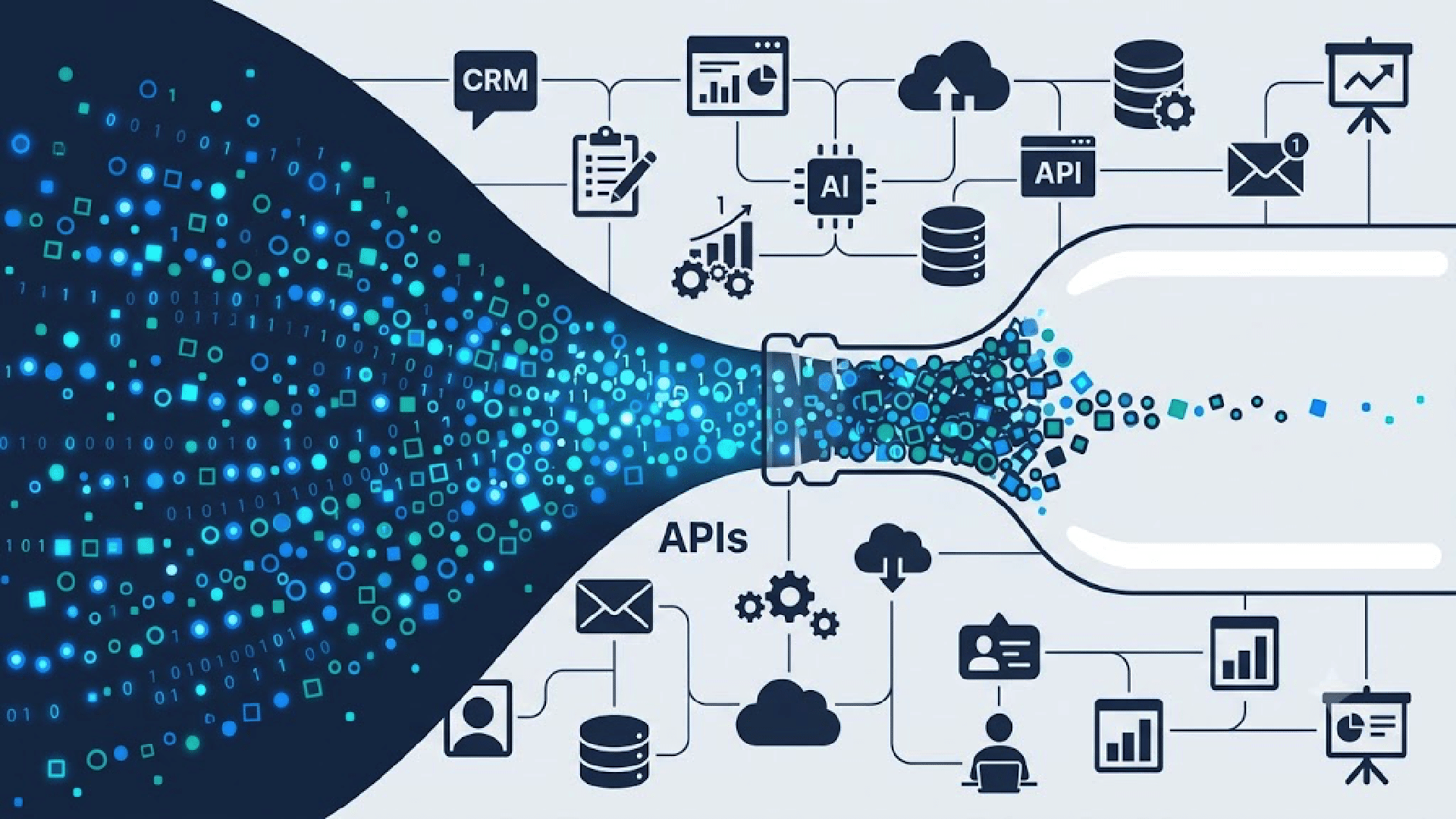
In corporate market research, speed-to-insight is frequently stifled not by creative conceptualization or statistical modeling, but by the operational friction between disparate tools. For decades, consumer insights projects have followed a fragmented path: raw questionnaires drafted in word processors are manually programmed into survey engines, datasets are exported to spreadsheets for cleaning and formatting, statistical tables are generated in legacy software, and findings are painstaking re-keyed into executive presentation decks.
This multi-step handoff creates quiet delays. What should take days often stretches into weeks as context is lost, data schemas are reformatted, and researchers spend invaluable hours managing project logistics rather than analyzing strategic implications.
A new paradigm is emerging with the rise of AI-native research platforms. Designed to unify the entire research lifecycle within a single continuous system, solutions like Scalafai—alongside a growing cohort of next-generation insight engines—are tackling structural inefficiencies head-on. By connecting questionnaire programming, panel deployment, real-time data scrubbing, contextual analysis, and report generation, these platforms eliminate the "mechanical middle" of research execution.
Early operational benchmarks suggest these integrated architectures can accelerate project completion by roughly 30% and lower total operational costs by 20%, all within enterprise-grade, SOC 2-certified security environments. However, the true value proposition lies beyond efficiency: by automating repetitive tasks, AI-native workflows give strategic researchers time back to focus on high-level interpretation, executive advisory, and business decision support.
Detailed Chronology: The End-to-End Connected Workflow
To understand how AI-native systems reshape market research, it is essential to trace a project’s lifecycle from initial concept to executive deliverable, contrasting legacy friction points with the unified AI workflow.
In a traditional setup, moving from a rough research brief to a fielded questionnaire requires multiple back-and-forth reviews between brand leads, insights directors, and operations teams.
In an AI-native ecosystem, the process begins in a unified environment:
Natural Language Refinement: A researcher inputs a draft questionnaire or an unrefined hypothesis—often an incomplete concept or directional thesis.
Contextual Formatting: The platform’s internal reasoning engine analyzes the objectives, optimizes question phrasing to minimize response bias, structures skip-logic branches, and automatically programs the instrument for multi-device deployment.
Seamless Sampling: Rather than exporting specs to third-party panel providers, the researcher specifies target demographics directly within the system or uploads proprietary customer lists, launching fieldwork in a single action.
Phase 2: In-Flight Fieldwork and Dynamic Quality Scrubbing
Data quality management has historically been a reactive, end-of-field process. Insights managers routinely spend days scrubbing datasets after field closure to identify bad actors.
AI-native platforms shift quality control from post-field remediation to real-time, in-flight filtration:
Active Quality Monitoring: As responses flow into the platform, machine learning algorithms evaluate respondent behavior in real time.
Automated Anomaly Detection: The system flags and drops "speeders" (respondents completing surveys unrealistically fast), "straightliners" (those selecting identical scale responses across grid questions), and low-effort open-ended responses generated by bots or copy-paste patterns.
Automated Quota Management: Quotas are monitored continuously. Once target demographics are satisfied, the system closes specific sample buckets automatically, eliminating over-sampling costs and preventing field management oversights.
Phase 3: Contextual Synthesis and Multi-Layer Analytics
The transition from raw data to actionable findings is where conventional workflows experience their worst bottlenecks. Standard software produces crosstabs and raw percentage tables, leaving researchers to manually interpret numeric output line by line.
An integrated platform processes data continuous with the survey’s core objectives:
Dynamic Semantic Processing: Open-ended qualitative responses are transcribed, categorized by sentiment, and mapped to core quantitative variables instantly.
Macro Environment Contextualization: Rather than treating data as isolated statistics, the platform interprets responses against industry benchmarks, historical market conditions, and broader consumer trends.
Integrated Knowledge Retention: Because the system retains the study’s original objectives and context from Phase 1, it connects incoming data points directly back to the strategic questions that prompted the research.
Phase 4: Automated Deliverable Generation and Executive Storytelling
The final phase of a traditional project usually involves late-night efforts building presentation decks, copying charts from software, and re-formatting slide layouts.
In an AI-native workflow, presentation building is the natural culmination of a continuous data stream:
Automated Report Drafting: The platform generates comprehensive draft reports, executive summaries, and structured slide decks natively.
Narrative Continuity: Strategic nuances established during the initial survey design phase are preserved through to the final deliverable. The system formats visual charts, highlights statistically significant variance, and drafts qualitative key takeaways.
Living Data Artifacts: Deliverables remain dynamically tied to the underlying data source, allowing executives to click into specific metrics for instant drill-downs without requesting custom re-runs from the analytics team.
Supporting Context & Performance Metrics
The business imperative for streamlining market research operations is driven by macroeconomic shifts and an increased demand for rapid, consumer-centric decision-making. As business cycles accelerate, enterprise leadership can no longer wait six to eight weeks for primary research results.
Quantifiable Operational Impact
Data from platform implementations, including metrics released by Scalafai, highlights significant efficiency gains across enterprise insights functions:
Performance Indicator
Legacy Fragmented Stack
Integrated AI-Native Platform
Operational Variance
Average Project Timeline
3 to 4 Weeks
1.5 to 2 Weeks
~30% Faster Turnaround
Operational Overhead Cost
High (Multi-tool licensing & manual labor)
Optimized (Unified software stack)
~20% Reduction in Total Cost
Data Quality Assurance
Post-field manual review (1-3 days)
In-flight automated filtration
Immediate / Zero Delay
Context Loss / Re-keying Errors
Moderate to High (Across handoffs)
Zero (Unified data model)
100% Structural Continuity
Governance & Security
Fragmented across vendors
Enterprise SOC 2-certified environment
Unified Compliance Standard
The Enterprise Martech Alignment
The evolution of market research tools reflects broader shifts across the modern martech and data stack. As organizations move toward composable software architectures and contextual intelligence engines, primary research cannot remain trapped in isolated silos.
Recent technical developments point toward broader stack integration:
Contextual Memory Graphs: As marketing architectures adopt context graphs to give generative tools enterprise awareness, AI research platforms rely on similar underlying memory structures. This ensures survey synthesis accounts for proprietary brand histories and corporate knowledge repositories.
Data Clean Rooms & Privacy Governance: With strict data sovereignty standards globally, enterprise research platforms must maintain compliance. Operating within a SOC 2-certified environment guarantees that custom customer panels and first-party data used for research retain end-to-end privacy protections.
From Static Reports to Continuous Intelligence: Traditionally, research was conducted through distinct, ad-hoc projects. Integrated AI platforms enable a shift toward continuous intelligence, where smaller, iterative micro-surveys run constantly to provide real-time market readouts.
Official Statements & Expert Insights
Industry experts emphasize that automating operational tasks does not lessen the need for human expertise. Instead, it alters the core responsibilities of market researchers.
"Most market research projects don’t slow down because of survey design or analysis—they slow down in between. Questionnaires move from one system to another, data gets exported and reformatted, reports are rebuilt from scratch, and small handoffs quietly turn days into weeks."
— Industry Analysis, MarTech Operational Report
This perspective highlights a fundamental reality in corporate insights: operational complexity often consumes more working hours than actual strategic analysis.
The Strategic Shift: From Project Manager to Business Strategist
In traditional setups, senior researchers spend up to 60% of their working hours acting as operational project managers—coordinating panel vendors, checking data formatting, and designing slide layouts. Automated workflows flip this allocation.
Susan Ferrari, an industry advisor and former Most Innovative Researcher of the Year (TMRE), has consistently noted that while AI platforms streamline execution, human strategic judgment remains indispensable:
Defining the Right Questions: AI can refine survey instruments, but human leaders must define what the business actually needs to understand.
Boardroom Relevance: Automated engines generate standard key takeaways, but human experts contextualize those findings within complex corporate political structures and multi-year strategic plans.
Empathy and Intuition: Nuances in consumer emotion, cultural subtlety, and ethical boundaries require human validation that algorithms cannot replicate.
Modular Adoption: "Start Where It Hurts"
A key challenge when deploying enterprise AI technology is the friction of replacing legacy infrastructure. Modern platform architects address this by building modular systems.
Organizations do not need to replace their entire martech stack at once. Instead, they can adopt a "start where it hurts" methodology:
Targeted Integration: If an insights team struggles primarily with open-ended coding and report formatting, they can deploy AI modules specifically for data synthesis while retaining existing data collection platforms.
Low-Risk Pilots: Running a single pilot project alongside established legacy methods allows organizations to measure quality, speed, and cost savings on active enterprise projects before committing to a full deployment.
Future Outlook: The Evolution of Market Research
Looking ahead, the integration of AI platforms into market research will continue to accelerate, reshaping how enterprises track customer sentiment and make strategic investments.
NEAR-TERM (1-2 Years)
• Widespread adoption of modular AI workflows for real-time data scrubbing and automated slide deck assembly.
• Transition from multi-week primary studies to dynamic, 48-hour continuous research sprints.

MID-TERM (3-5 Years)
• Deep integration between research engines, enterprise CRMs, and Context Memory Graphs.
• Expansion of Emotion AI and predictive response modeling to simulate consumer reactions prior to panel deployment.
Key Trends Shaping the Next Era of Insights:
Predictive Pre-Testing via Synthetic Personas: Before fielding surveys to human panels, researchers will run questionnaires through hyper-localized synthetic consumer models to optimize question clarity, forecast response ranges, and refine skip-logic patterns.
Unified Qualitative and Quantitative Frameworks: The historic divide between qualitative depth (focus groups, open interviews) and quantitative scale (broad surveys) will disappear. AI engines will conduct real-time conversational interviews at quantitative scale, analyzing thousands of deep qualitative interactions concurrently.
Democratization with Centralized Governance: As intuitive platforms make survey deployment easier for product managers and marketers, enterprise insights teams will shift from execution gatekeepers to strategic governors. They will set corporate methodological standards while empowering business units to self-serve routine research needs safely.
Final Thoughts
The rise of connected, AI-native platforms like Scalafai marks a major operational shift in market research. By connecting the disconnected steps between survey drafting and executive presentation, these systems eliminate wasted time, reduce data errors, and cut project turnarounds significantly.
Ultimately, technology serves to elevate human intelligence, not replace it. By automating repetitive administrative tasks, AI platforms allow researchers to step away from mechanical project management and reclaim their role as strategic advisors driving corporate growth.