

The B2B Data Trust Paradox: Multi-Million Dollar Budgets Bet on Metrics Leaders Don’t Trust

A landmark global study reveals that while nearly 90% of B2B marketing and communications leaders rely on analytics to allocate capital and shape corporate strategy, less than half fully trust the accuracy of their underlying data.
Executive Overview
Modern B2B enterprises are operating under an unprecedented structural paradox: while corporate boardrooms demand hyper-rigorous, data-driven justification for every dollar spent, the vast majority of marketing strategies are anchored in metrics that executives themselves view with deep skepticism.
According to "The Communications ROI Reset: What B2B Leaders Measure, Trust And Act On," a landmark research report published by agency 10Fold, fewer than half (49%) of the professionals responsible for measuring marketing and communications performance are highly confident in the accuracy and completeness of their data.
Despite this widespread crisis of faith, data continues to exert near-total control over enterprise resource allocation. The study reveals that data directly dictates strategy or budget adjustments for:
- 88% of respondents in paid social campaigns,
- 87% of respondents in paid media and digital channels, and
- 85% of respondents in owned content initiatives.
       DATA TRUST VS. BUDGET INFLUENCE GAP
       ----------------------------------
       Confidence in Data Accuracy : [██████████░░░░░░░░░░] 49%
       Paid Social Budget Impact  : [█████████████████░░░] 88%
       Paid Media Budget Impact   : [█████████████████░░░] 87%
       Owned Content Budget Impact : [█████████████████░░░] 85%
This structural disconnect comes at a pivotal moment. As enterprises race to integrate artificial intelligence (AI) search visibility and Large Language Model (LLM) citations into their reporting frameworks, the underlying infrastructure connecting buyer discovery to real business outcomes remains deeply fragmented.
Based on a comprehensive survey of 400 senior marketing and communications professionals across the United States, the United Kingdom, France, and Germany, the research underscores an urgent truth: B2B organizations have accumulated vast amounts of data, but they lack the unified infrastructure required to turn disparate analytics into trusted commercial intelligence.
Detailed Chronology & Evolution of the B2B Measurement Crisis
The current measurement crisis is the result of a decade-long explosion in marketing technology (martech) adoption, which prioritized tool acquisition over architectural integration.

+-------------------------------------------------------------------------+
|                    EVOLUTION OF B2B MEASUREMENT                         |
+-------------------------------------------------------------------------+
| 2010s: THE MARTECH EXPLOSION                                            |
| Proliferation of isolated point solutions (CRM, Web Analytics, MAP).   |
| Metric Focus: Volume & Vanity Metrics (Impressions, Clicks, Mentions).  |
+-------------------------------------------------------------------------+
                                   │
                                   ▼
+-------------------------------------------------------------------------+
| 2020–2023: THE ATTRIBUTION SQUEEZE                                      |
| Boardrooms demand proof of ROI; linear customer journeys collapse.      |
| Metric Focus: Multi-Touch Attribution & Pipeline Influence.             |
+-------------------------------------------------------------------------+
                                   │
                                   ▼
+-------------------------------------------------------------------------+
| PRESENT: THE DATA PARADOX & AI FRONTIER                                 |
| Omnichannel data available, but 51% lack full data confidence.         |
| Emergence of Generative Engine Optimization (GEO) & LLM Brand Tracking. |
| Metric Focus: Verified Closed-Loop Revenue Impact & AI Visibility.     |
+-------------------------------------------------------------------------+
Historically, B2B communications and public relations operated primarily on proxy metrics—focusing on media placement counts, estimated audience reach, and share of voice (SoV). As digital channels matured throughout the 2010s, marketing teams acquired specialized platforms for web tracking, social listening, customer relationship management (CRM), and marketing automation.
However, rather than creating clarity, this proliferation of siloed systems created data fragmentation:
- The Proliferation Phase: Enterprise martech stacks expanded rapidly, with separate tools deployed across social, content, paid acquisition, and PR.
- The Attribution Squeeze: Boards increasingly demanded proof of bottom-line revenue contributions, forcing communications teams to bridge the gap between top-of-funnel engagement and closed-won deals.
- The Current Impasse: Organizations now gather data from dozens of touchpoints, yet they remain unable to build a coherent, end-to-end view of the buyer journey.
As a result, B2B leaders are caught in a reactive cycle: spending multi-million dollar budgets based on flawed attribution models because no alternative framework exists to guide executive decision-making.
Supporting Context & Core Metrics: Unpacking the Infrastructure Deficit
The 10Fold report surveyed a diverse cross-section of industry leaders, including C-level executives, department heads, directors, and operational managers. Their responses expose the technical and operational gaps dividing data collection from organizational trust.
       DATA SOURCES UTILIZED BY B2B TEAMS
       ----------------------------------
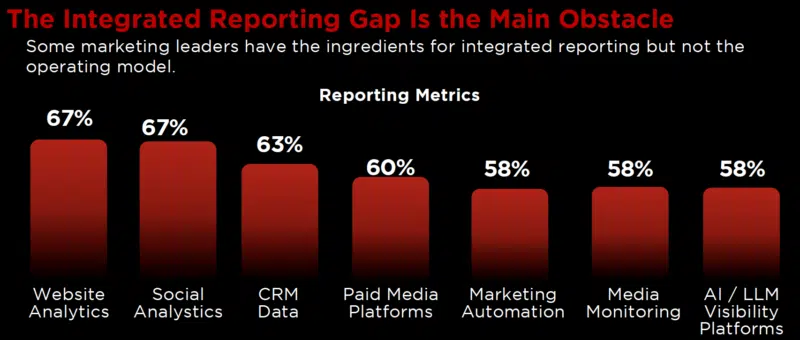
       Website Analytics       : [█████████████░░░░░░░] 67%
       Social Analytics        : [█████████████░░░░░░░] 67%
       CRM Data                : [████████████░░░░░░░░] 63%
       Marketing Automation    : [████████████░░░░░░░░] 58%
1. Data Collection vs. Systems Integration
While B2B organizations collect vast volumes of data across multiple digital touchpoints, few manage to unify these inputs into a single source of truth.
- 67% draw metrics from website analytics platforms.
- 67% monitor social media analytics.
- 63% ingest data from enterprise CRMs.
- 58% leverage marketing automation platforms (MAPs).
Despite high adoption across these core tools, only 35% of respondents have fully integrated reporting across earned media, paid social, content, and digital performance channels.
The remainder of the industry operates in a fragmented state:
- 19% maintain only partially integrated reporting.
- 18% have integrated systems but suffer from unclear or inconsistent attribution.
- 28% operate entirely in siloes or lack formal integration altogether.
       REPORTING INTEGRATION LANDSCAPE
       -------------------------------
       Fully Integrated Reporting        : [███████░░░░░░░░░░░░░] 35%
       Partially Integrated Reporting    : [████░░░░░░░░░░░░░░░░] 19%
       Integrated (Inconsistent Models)  : [████░░░░░░░░░░░░░░░░] 18%
       Manual / Disconnected Frameworks  : [██████░░░░░░░░░░░░░░] 28%
Compounding this technical debt, 37% of organizations still rely on manual spreadsheets to stitch together reporting, while only 46% incorporate external reporting from agency partners into their central intelligence platforms.
Consequently, connecting an initial media impression or social interaction to a buyer’s subsequent interactions—such as whitepaper downloads, demo requests, and signed contracts—remains an elusive challenge.
2. The Executive Priority Matrix: What C-Suites Actually Value
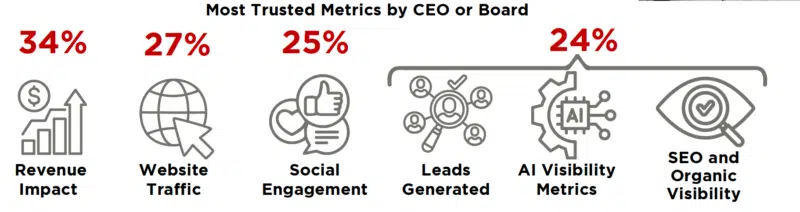
The research highlights a significant divide between top-of-funnel activity tracking and what business leaders prioritize. When evaluating communications and marketing metrics, corporate boards and CEOs focus overwhelmingly on financial business outcomes over traditional public relations vanity metrics.
       MOST TRUSTED METRICS BY CEOS & BOARDS
       -------------------------------------
       Revenue Impact           : [███████░░░░░░░░░░░░░] 34%
       Pipeline Influence       : [████░░░░░░░░░░░░░░░░] 16%
       Media Coverage Volume    : [████░░░░░░░░░░░░░░░░] 16%
       Share of Voice (SoV)     : [██░░░░░░░░░░░░░░░░░░] 11%
This executive focus on commercial metrics is pushing communications measurement further down the sales funnel:
- 48% of teams now track actual leads or conversions influenced by earned media.
- 45% prioritize tracking the absolute volume of media coverage or brand mentions.
When evaluating post-engagement actions across digital touchpoints, organizations rely heavily on immediate interaction signals:
- 51% measure social ad click-through rates (CTRs).
- 41% track form completions and inbound inquiries.
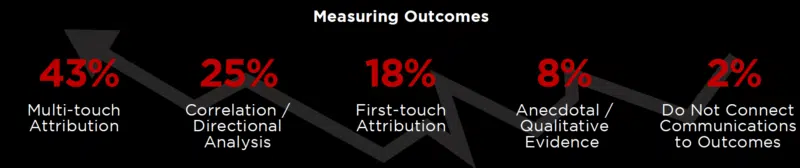
To bridge the gap between buyer touchpoints and revenue outcomes, 43% of organizations rely on multi-touch attribution (MTA) models—making MTA the single most common methodology in enterprise B2B marketing. Meanwhile, 25% rely on correlation or directional analysis, accepting structural approximations when exact tracking fails.
Industry Analysis & Commentary: The Cost of Fragmented Martech
The findings of The Communications ROI Reset align closely with broader industry trends in martech efficiency and governance. As enterprise tech stacks expand, disconnected systems introduce operational friction, administrative drag, and reporting discrepancies.
+-------------------------------------------------------------------------+
|                THE MARTECH PRODUCTIVITY & TRUST CYCLE                   |
+-------------------------------------------------------------------------+
|                                                                         |
|   +-------------------+       Disconnected        +-----------------+   |
|   |  Unintegrated     | ------ Data Tools ------->| Manual Workaround|  |
|   |  Martech Stacks   |                           | (Spreadsheets)  |   |
|   +-------------------+                           +-----------------+   |
|             ^                                              |            |
|             |                                              |            |
|   Inconsistent Attribution                        Admin Overhead &      |
|   & Strategic Uncertainty                          Data Friction        |
|             |                                              v            |
|   +-------------------+                           +-----------------+   |
|   | Executive Loss of |<--- Flawed ROI Proofs --- | Low Confidence  |   |
|   | Data Trust (49%)  |                           |  Metrics Engine |   |
|   +-------------------+                           +-----------------+   |
|                                                                         |
+-------------------------------------------------------------------------+
The Cost of Disconnection
Modern marketing suites often function as collection of isolated point solutions rather than a cohesive ecosystem. When enterprise tools fail to sync automatically, team hours are spent manually consolidating data across web analytics, CRMs, and ad managers.
This operational drag directly erodes ROI. When teams spend more time cleaning and assembling reports than analyzing buyer behavior, data quality suffers—explaining why 51% of professionals lack full confidence in their operational metrics.
Production Speed vs. Attribution Rigor
The rapid adoption of generative AI has accelerated content production across enterprise teams. However, measurement frameworks have failed to keep pace.
While teams can publish content at higher volumes than ever before, their ability to measure how that content drives revenue remains limited. As a result, companies risk overwhelming their target audiences with AI-generated material without understanding its actual commercial impact.
The Emerging Human Judgment Premium
As AI tools automate content generation, basic performance tracking, and surface-level data collection, the strategic value of human oversight is increasing. Enterprise leaders require human judgment to interpret ambiguous data, design custom attribution models, and translate technical analytics into business strategy.
The Emerging AI Frontier: LLM Visibility and Search Disruption
Adding to this complex landscape is the rapid rise of AI search engines and conversational LLMs (e.g., ChatGPT, Claude, Perplexity, and Google Gemini). The migration of buyers from traditional search engines to conversational AI interfaces has forced B2B teams to add new metrics to their reporting stack.
       ADOPTION OF AI VISIBILITY METRICS
       ----------------------------------
       Track AI Search Visibility / Citations : [███████████░░░░░░░░] 54%
       Include AI Visibility in C-Suite Briefs: [█████████░░░░░░░░░] 46%
       Track LLM Prompts Citing Media Coverage : [████████░░░░░░░░░░] 42%
According to the 10Fold study:
- 54% of B2B organizations now measure AI search visibility or brand citations in AI-generated answers.
- 46% incorporate AI visibility metrics into executive and board-level reporting.
- 42% monitor the volume of LLM prompts that cite their brand’s earned media coverage.
+-------------------------------------------------------------------------+
|                  THE AI ATTRIBUTION BOTTLENECK                          |
+-------------------------------------------------------------------------+
|  LLM Brand Mention / Citation Detected                                  |
|  (e.g., ChatGPT references brand whitepaper in user query)             |
+-------------------------------------------------------------------------+
                                   │
                                   ▼
+-------------------------------------------------------------------------+
|  THE ATTRIBUTION GAP (The "Dark Funnel")                                |
|  Did the citation generate downstream commercial momentum?              |
|  - Web Traffic Visit?                                                   |
|  - Form Submission / Inquiry?                                           |
|  - Sales Pipeline Opportunity?                                          |
|  - Closed-Won Revenue Impact?                                           |
+-------------------------------------------------------------------------+
This shift introduces a new measurement challenge. While tracking an AI brand mention confirms that an LLM pulled information from a company’s PR or content efforts, it provides no direct insight into buyer intent or downstream action.
An AI citation is an upstream exposure signal. The core challenge for modern B2B marketers is connecting that exposure to concrete commercial actions: web traffic, inbound inquiries, sales pipeline, and ultimately, closed revenue.
Future Outlook & Strategic Imperatives
As B2B organizations navigate an increasingly complex media and measurement landscape, reliance on fragmented, low-confidence data is becoming untenable. To establish credibility with corporate boards and optimize capital allocation, marketing and communications leaders must modernize their measurement strategies around three core principles.
+-------------------------------------------------------------------------+
|               STRATEGIC IMPERATIVES FOR B2B LEADERS                     |
+-------------------------------------------------------------------------+
|                                                                         |
|  1. ARCHITECT FOR DATA RECONCILIATION                                   |
|     Eliminate manual spreadsheets (37%) by deploying unified API-driven |
|     data warehouses connecting Web, CRM, MAP, and PR data.              |
|                                                                         |
|  2. ALIGN METRICS WITH C-SUITE PRIORITIES                               |
|     Shift executive reporting away from vanity metrics (SoV) and focus  |
|     on verified Revenue Impact (34%) and Pipeline Influence (16%).     |
|                                                                         |
|  3. BRIDGE THE AI ATTRIBUTION GAP                                       |
|     Develop closed-loop models connecting LLM search visibility and    |
|     brand citations directly to downstream buyer engagement.            |
|                                                                         |
+-------------------------------------------------------------------------+
1. Consolidate and Automate Data Infrastructure
Organizations must eliminate reliance on manual spreadsheets (currently used by 37% of teams) and disconnected tools. Enterprise marketers need to build unified, automated data pipelines that connect PR placements, social engagements, and digital ads directly to CRM opportunities. Modernizing this infrastructure reduces administrative overhead and helps restore trust in core marketing metrics.
2. Transition from Activity Volume to Outcome Attribution
With CEOs and boards identifying revenue impact (34%) as their most trusted metric, marketing leaders must step away from reporting vanity metrics. While tracking media coverage volume (16%) and Share of Voice (11%) offers operational value for public relations teams, executive updates should focus on pipeline velocity, customer acquisition costs (CAC), and multi-touch revenue influence.
3. Build Attribution Models for AI Discovery
As conversational engines become a primary channel for business research, enterprise marketing teams must develop robust framework for Generative Engine Optimization (GEO). Marketers need to look beyond simple tracking of LLM brand citations, building models that measure how AI discovery influences downstream web traffic, lead capture, and pipeline creation.
Conclusion
The 10Fold report highlights a critical vulnerability in modern B2B growth strategies: enterprise budgets are heavily reliant on data frameworks that leaders do not fully trust.

By addressing systems fragmentation, aligning metrics with board-level priorities, and building closed-loop attribution models for AI discovery, B2B organizations can close the data trust gap—turning measurement from a source of skepticism into a reliable driver of strategic growth.
The complete 10Fold report, "The Communications ROI Reset: What B2B Leaders Measure, Trust And Act On," contains detailed regional breakdowns and methodology analysis, and is available directly from 10Fold.