

The AI Imperative: How Artificial Intelligence is Completely Reshaping Affiliate Marketing and Creating New Verticals

Executive Overview
The landscape of affiliate marketing has undergone a seismic shift. Just a few short years ago, integrating artificial intelligence into digital campaigns meant little more than prompting a language model to draft a quick blog post in a fraction of the usual time, or experimenting with early-generation image software that routinely generated humans with anatomical anomalies like six fingers. Back then, AI was viewed as a novel toy or a minor productivity hack for copywriters and media buyers.
Today, that sandbox phase is definitively over. Artificial intelligence permeates virtually every facet of the modern affiliate marketing ecosystem. It dictates how content is ideated, written, and optimized; it automates competitive analysis, ad creative generation, and real-time bid management; and it has birthed entirely new, highly lucrative product categories that affiliates can promote directly.
As search behavior transitions from traditional blue links to conversational AI answers, and as media buyers leverage predictive models to anticipate market trends before they hit the mainstream, the divide between industry leaders and laggards is widening. This report provides a comprehensive, authoritative examination of how AI is transforming traffic acquisition, detailing the specialized tool stacks utilized by modern publishers and media buyers, exploring the explosive growth of AI as a standalone affiliate vertical, and forecasting the trajectory of the industry for the years ahead.
Detailed Chronology: The Evolution of AI in Digital Marketing
To understand where affiliate marketing stands today, it is essential to trace how artificial intelligence has evolved from an experimental novelty into the core operating system of the digital economy.
Phase 1: The Novelty and Text-Generation Era (2022–2023)
The mainstream introduction of large language models (LLMs) like ChatGPT democratized content creation. Affiliate marketers initially adopted these tools primarily for volume—speeding up article generation, brainstorming email subject lines, and drafting basic product reviews. Concurrently, early generative image networks captured public attention. While these visual outputs were often flawed, they signaled a radical departure from traditional stock photography, allowing media buyers to rapidly prototype ad concepts without relying entirely on human graphic designers.
Phase 2: Workflow Integration and Automation (2023–2024)
As models matured, the focus shifted from raw generation to integration. Affiliates stopped treating AI as a standalone chat window and began embedding it into established workflows. Programmatic SEO tools, automated keyword cluster generators, and dynamic ad-building platforms entered the mainstream. Media buyers utilized machine learning algorithms to automate basic split-testing, while publishers began employing automated internal linking and structural optimization to maintain search rankings amid rapidly shifting algorithm updates.

Phase 3: The Generative Search and Vertical Shift (2025–Present)
The current era is defined by systemic disruption. Traditional search engine results pages (SERPs) are being bypassed in favor of conversational answer engines. Affiliates are no longer just optimizing for Google rankings; they are optimizing for inclusion in AI-generated summaries via Generative Engine Optimization (GEO). Furthermore, AI has transitioned from an internal tool to an external product vertical. AI companions, productivity software, creative suites, and specialized vertical apps now command massive consumer spend, establishing AI as one of the most profitable verticals for modern affiliate marketers.
Supporting Context & Metrics: The Numbers Driving the AI Revolution
The integration of artificial intelligence into affiliate marketing is not driven by hype, but by hard data and shifting consumer habits.
The Rise of Generative Engine Optimization (GEO)
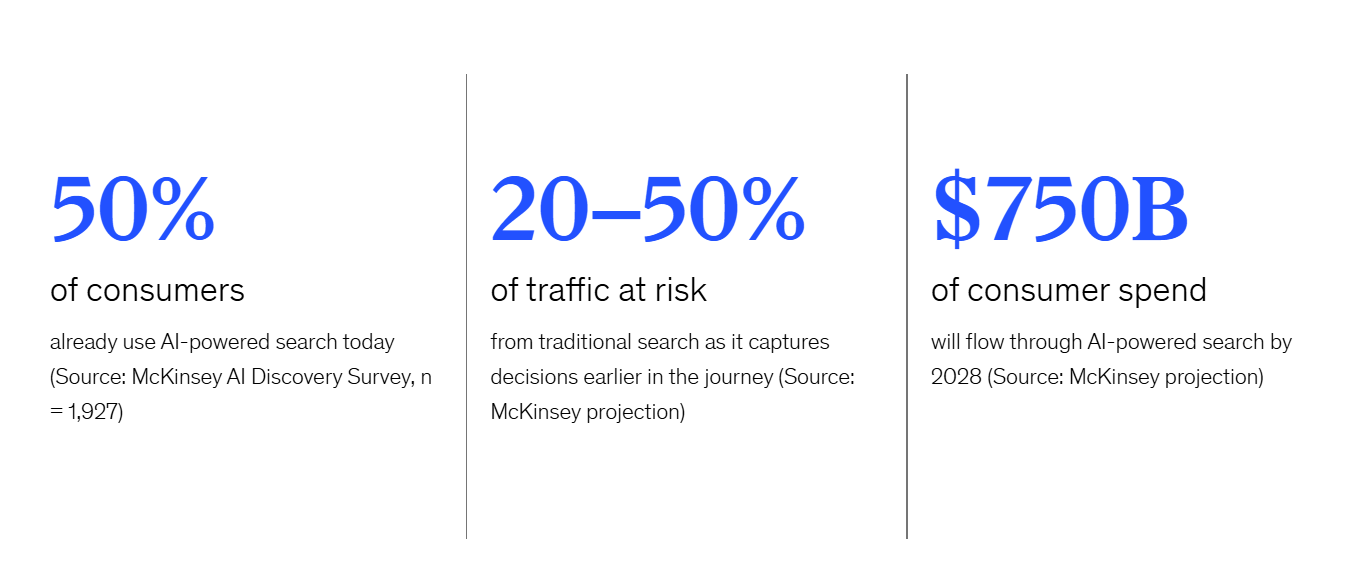
The mechanics of how users discover products and services online have fundamentally changed. According to projections by McKinsey & Company, an astounding $750 billion is projected to flow through AI-powered search engines and conversational interfaces by 2028. This shift threatens traditional organic search visibility: brands and publishers that fail to adapt risk seeing their conventional search traffic plummet by 20% to 50%.
Despite this looming disruption, industry adoption remains surprisingly uneven. Current market research indicates that only 16% of brands systematically track and optimize how they appear within AI-generated responses. This structural gap represents a massive arbitrage opportunity for forward-thinking affiliate marketers who understand how to position review and comparison content to influence AI citations.
Operational Efficiency and Daily Adoption
Within the affiliate community, AI utilization has transitioned from a competitive advantage to an operational baseline. Recent industry surveys reveal that over 60% of active affiliate marketers incorporate artificial intelligence into their daily workflows, with approximately 70% planning to expand their usage further.
The primary driver of this adoption is time reclamation. Affiliates report dedicating the majority of their AI-allocated hours to high-friction, repetitive tasks:

- Synthesizing competitor ad variations and landing page structures.
- Generating multilingual localization for global campaign scaling.
- Batch-producing video scripts and social media snippets from long-form source material.
- Analyzing tracking data anomalies to instantly halt underperforming ad sets.
By automating these foundational chores, affiliates free up critical bandwidth for high-level strategy, offer negotiation, and creative direction.
The Modern Affiliate AI Tool Stack
Running a profitable campaign today requires a sophisticated, highly segmented tool stack. Publishers and media buyers may both claim to "use AI," but their operational requirements are vastly different.
For Publishing and SEO-Focused Affiliates
Content-driven marketers rely on traffic generated through organic search, email newsletters, and content platforms. Their AI stack reflects the need for scale, relevance, and editorial quality:
- AI Content Generation Suites: Platforms like ChatGPT, Claude, and Jasper serve as advanced co-pilots. They handle initial structural outlines, comprehensive product reviews, comparison matrices, and high-converting email sequences. Crucially, successful publishers use AI to generate the foundational draft, applying human editorial oversight to ensure accuracy, voice, and E-E-A-T (Experience, Expertise, Authoritativeness, and Trustworthiness) compliance.
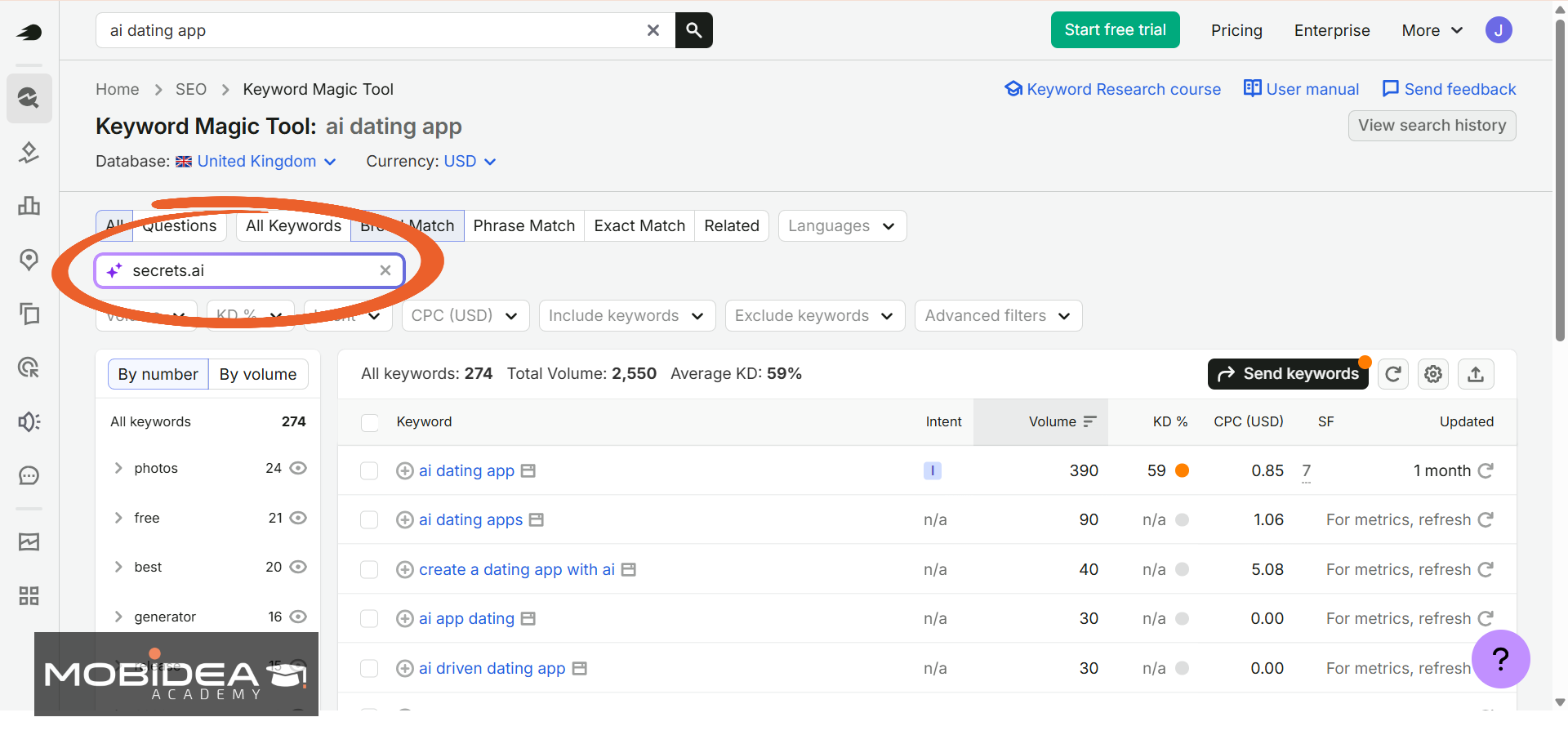
- Advanced SEO & Keyword Optimization Tools: Enterprise platforms such as Semrush and SERanking now integrate machine learning to analyze historical ranking data, identify genuine content gaps, and forecast keyword volatility. These tools allow publishers to target rising search queries before they become saturated.
- Video Production and Repurposing Engines: Long-form video content has become a primary top-of-funnel traffic source. AI video tools can ingest a single webinar or long-form review, instantly extract high-performing hooks, auto-generate captions, and slice the footage into vertical clips optimized for TikTok, Instagram Reels, and YouTube Shorts.
- Search Visibility Tracking: Moving beyond traditional rank trackers, modern visibility tools monitor whether a brand or product is actively cited within AI chatbot recommendations and search overviews, offering actionable data on how to adjust content for conversational algorithms.
For Media Buying and Paid Traffic Affiliates
Media buyers operate in a high-speed environment where creative fatigue sets in rapidly and margins depend on precise optimization:
- Ad Creative Generation: Tools such as AdCreative.ai, Creatify, HeyGen, Synthesia, and AdsTurbo allow buyers to input a product URL and instantly generate dozens of static image variations, dynamic video ads, and localized voiceovers. For affiliates specializing in niche sectors—such as adult entertainment platforms utilizing specialized ecosystems like MojoAI (featuring MojoChatter and MojoContent)—AI generates hyper-targeted creative assets at an unprecedented scale.
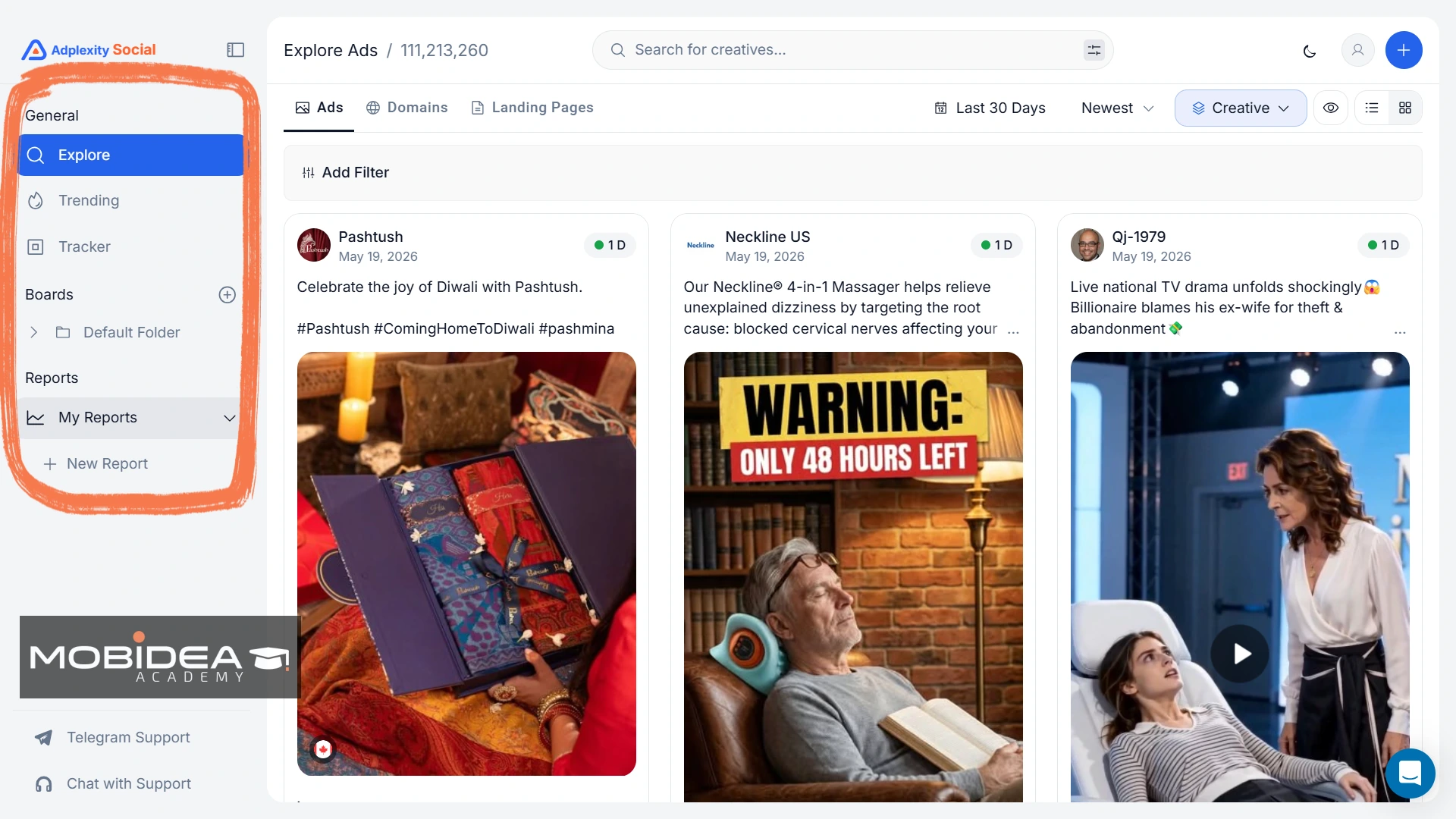
- Competitive Intelligence and Ad Spy Software: Platforms equipped with artificial intelligence enable buyers to filter through thousands of active campaigns across Meta, TikTok, native ad networks, and push channels in seconds. These tools highlight winning angles, landers, and promotional hooks instantly.
- Automated Landing Page and Funnel Builders: AI-driven funnel builders can construct complete, multi-step lead-qualification quizzes and sales pages from a simple text prompt. These platforms are optimized specifically for performance marketing workflows, allowing for rapid A/B testing and seamless tracking integration.
- Bid and Budget Optimization: Tools like TheOptimizer, alongside native network solutions such as Kadam AI, automate the tedious process of manual bid adjustments. By monitoring performance indicators 24/7, these systems reallocate budgets away from underperforming publisher IDs and scale winning campaigns automatically, all while utilizing advanced fraud detection to filter out invalid traffic before it depletes return on ad spend (ROAS).
AI as Its Own Standalone Affiliate Vertical
Perhaps the most exciting development in the industry is that artificial intelligence has transcended its status as an internal tool to become a massive, highly profitable affiliate vertical in its own right.
1. AI Companion and Dating Apps
The market for AI-powered companionship and conversational dating platforms has exploded. Featuring sophisticated LLM-driven agents designed to simulate human interaction, this niche addresses a growing consumer demand for personalized digital connection.

Market projections indicate that the AI companion sector is set to scale from approximately $48 billion to nearly $318 billion over the coming decade. For affiliate marketers, this vertical offers exceptional monetization potential, frequently featuring aggressive commission structures, including lifetime revenue share models. Programs within networks like Mobidea are capitalizing heavily on this trend, providing live offers that consistently outperform traditional dating verticals.
2. AI Productivity and Business Software
From advanced writing assistants to all-in-one marketing automation suites, business-to-business (B2B) and consumer productivity tools represent a goldmine for affiliate publishers. Unlike traditional software-as-a-service (SaaS) programs that historically offered modest 10% to 20% payouts, AI productivity tools frequently offer recurring commissions ranging from 20% to 50%—with some programs extending payouts across the entire customer lifetime.
3. AI Content Creation and Creator Economy Tools
The creator economy demands constant output, making text-to-speech generators, automated video editors, and AI design suites exceptionally easy to promote. Affiliates targeting e-learning producers, podcasters, and independent creators can direct audiences to tools that drastically reduce production overhead, resulting in high conversion rates and substantial recurring revenue streams.

Official Statements and Industry Perspective
Industry leaders and performance marketing networks agree that adaptation is no longer optional. According to seasoned analysts within the digital marketing space, the rapid consolidation of AI tooling points toward an inevitable future:
"Right now, the ecosystem is fragmented. Affiliates juggle separate subscriptions for writing, spying, creative generation, and tracking. The inevitable convergence point is an all-in-one autonomous AI agent that manages campaigns from ideation to conversion based on pre-set KPI boundaries."
Furthermore, network executives emphasize that while automation accelerates production, the fundamental pillars of successful affiliate marketing remain stubbornly human. Understanding audience psychology, maintaining ethical compliance regarding data privacy, and rigorously analyzing attribution data are the differentiating factors that separate profitable campaigns from expensive experiments.
Future Outlook: Navigating the Next Era of Performance Marketing
As we look toward the horizon, the line between utilizing artificial intelligence and competing directly with it will continue to blur. Search engines will evolve into fully conversational recommendation engines, and ad networks will rely entirely on autonomous machine learning models to match traffic with offers.
For affiliate marketers, the path forward is clear:
- Embrace Generative Engine Optimization: Adapt content strategies to ensure visibility within AI-driven search models and conversational summaries.
- Consolidate and Automate: Move away from manual grunt work by integrating robust, data-backed AI tool stacks for tracking, creative testing, and bid management.
- Explore Emerging Verticals: Capitalize on the explosive growth of AI-native verticals—such as AI companions, specialized productivity apps, and creator tools—while commission structures remain exceptionally generous.
The affiliates who succeed over the next year will not be those who view artificial intelligence as a temporary marketing gimmick, but those who integrate it as the foundational engine of their enterprise. In a market that moves at breakneck speed, treating AI as a core strategic asset provides the ultimate competitive edge.