

The Living Room Takeover: How YouTube’s Pivot to Connected TVs Is Rewriting the Rules for Marketers

Executive Overview
The modern living room has undergone a quiet, seismic revolution. For years, digital video strategies were dictated by the constraints of the palm-sized screen: compressed timelines, low expectations for technical polish, and the frantic competition for a user’s split-second attention while scrolling on a commute. Today, however, YouTube’s aggressive push into connected televisions (CTVs) has fundamentally inverted the paradigm.
Television is no longer just a secondary device or a novelty casting option; it is YouTube’s primary strategic horizon. With living-room consumption scaling at an unprecedented rate, digital marketers can no longer treat their channel strategy as an afterthought designed exclusively for mobile devices.
This shift forces a radical reassessment of everything from visual asset design and pacing to AI-driven discovery and e-commerce integration. Viewers lounging on a couch watching a 65-inch screen carry the high-production expectations of traditional studio streaming services over to individual creators and brands. Consequently, marketers must adapt to a new standard of "infotainment," master emerging analytics tools like Unique Reach, optimize for conversational voice and multimodal AI search, and prepare for seamless living-room transactions.
Detailed Chronology of the Shift to Connected TV
Phase 1: The Transition from Mobile to the Living Room
For over a decade, YouTube grew up alongside the smartphone. Mobile-first optimization meant designing content that could grab attention instantly, with bright, cluttered thumbnails and lightning-fast cuts meant to retain users who were inches away from swiping to the next video.

However, user behavior changed organically. Audiences began casting and opening YouTube directly on their smart TVs, gaming consoles, and streaming sticks. YouTube recognized this behavior as a massive strategic opportunity, signaling internally and externally that connected televisions were the end goal. For many content creators and brands today, the living room has quietly surpassed mobile as the top traffic source.
Phase 2: Shifting Audience Psychology and Production Standards
This hardware migration brought about a profound shift in audience psychology. A viewer watching a clip on a crowded train commute has low expectations for audio-visual fidelity. Conversely, a consumer who just finished a cinematic documentary on a major subscription streaming platform and clicks over to YouTube brings those exact unconscious quality standards with them.
Industry experts, including digital strategist Liron Segev, emphasize that while quality on TV does not necessarily demand Hollywood-level perfection—especially in an era where AI-generated polish makes everything look uniform—it does require acute self-awareness. Segev points out that the single most common mistake marketers make is failing to consume their own content from a couch perspective. Creators routinely audit their work on a high-end desktop monitor or smartphone, completely ignoring how a 65-inch screen magnifies visual missteps, poor typography, and sloppy framing.
Phase 3: Optimizing Low-Hanging Visual Fruit
Adapting to the living room begins with foundational visual assets that most marketers overlook:

- Channel Banners: On mobile and desktop, channel banners occupy a standard, restricted dimension. On a connected TV, however, the display reveals expansive dead space at the top and bottom that is otherwise cropped out. Brands can utilize these TV-only zones to display targeted branding and promotional messaging, provided they test their assets against YouTube’s multi-device layout guidelines.
- Thumbnails: YouTube expanded its thumbnail file size limit from 2MB to 50MB to support pristine 4K resolution uploads. Yet, a higher-resolution version of a cluttered, confusing thumbnail remains fundamentally ineffective. The golden rule of visual design holds true: a thumbnail’s primary job is to halt the scroll. Minimalist designs, high-contrast colors, and restrained typography perform best across every screen size. Additionally, YouTube introduced AI-powered upscaling to automatically elevate videos uploaded below 1080p, though brands retain the option to disable this feature to maintain absolute quality control.
- Immediate Value Delivery: Because TV viewers are less forgiving of meandering introductions, whatever a title and thumbnail promise must be delivered immediately. Creators must front-load their core value proposition in the opening moments before expanding into deeper context. This approach also aligns perfectly with modern AI discovery algorithms, which heavily weight the first 100 words of a video’s transcript.
Supporting Context & Metrics: The Couch Audience and Unique Reach
The Rise of Episodic "Infotainment"
The couch audience demands a fundamentally different viewing cadence. While traditional YouTube strategies prized aggressive editing and rapid-fire cuts, the living-room format rewards longer runtimes, often starting at 10 minutes or more.
Viewers are relaxed, often holding a secondary device while seeking immersive content to settle into. This environment favors an "infotainment" approach—a blend of substantive education and relaxed, conversational pacing that makes the viewer feel like they are hanging out with the host rather than enduring a lecture.
Furthermore, humanizing moments that older generations of digital video creators would have aggressively edited out—such as minor fluffs, spontaneous reactions, or behind-the-scenes glimpses—now function as powerful markers of authenticity. This mirrors a broader cultural shift across modern media, where even scripted traditional television formats lean heavily into unscripted, raw perspectives.
To maintain viewer retention across extended runtimes, creators must incorporate re-hooks—brief, natural periodic recaps designed to re-engage audiences who may have glanced down at their smartphones. Rather than feeling jarring, these transitions can be framed naturally, such as: "We’ve just covered the foundational strategy; now let’s dive into the execution."

Decoding YouTube’s Unique Reach Metric
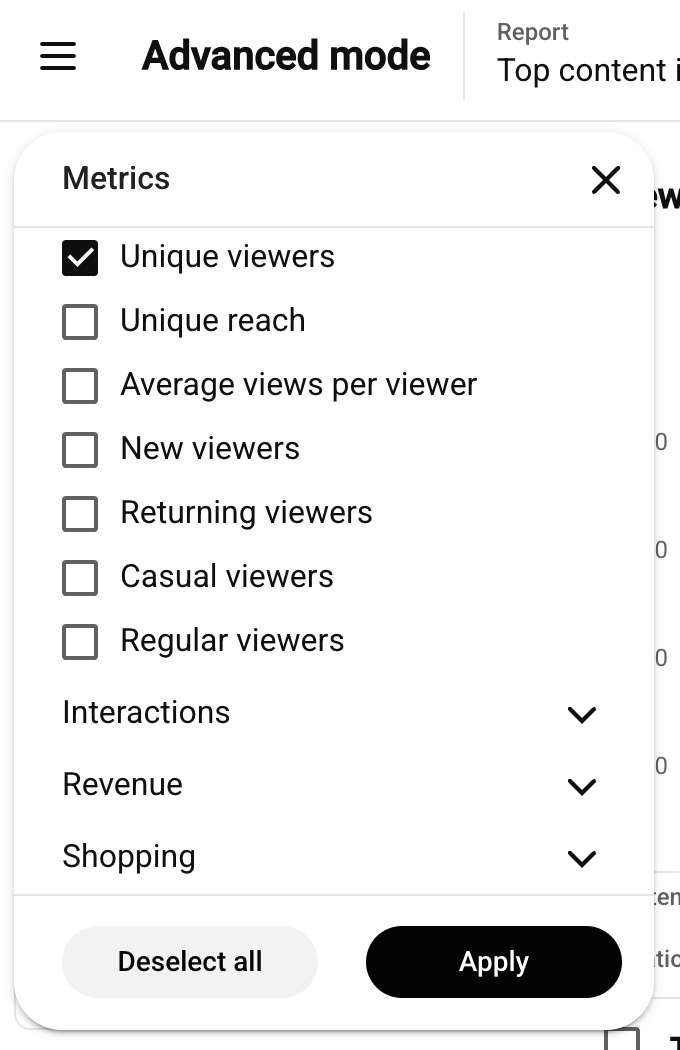
As ad spend shifts toward connected TVs, measuring viewership has become increasingly complex. To address this, YouTube rolled out the Unique Reach metric.
Unlike traditional unique viewers—which tracks distinct, logged-in individual accounts—Unique Reach estimates the total number of human beings exposed to a piece of content, accounting for co-viewers sitting together on a shared living room couch who may not be logged into separate profiles.
Modeled after traditional broadcast measurement frameworks like Nielsen ratings, this metric synthesizes multiple data signals:
- Time of day (evening hours imply higher household aggregation)
- Device taxonomy (TV versus mobile)
- Audience demographics
- Content genre (e.g., family-oriented programming versus solo technical tutorials)
While this metric provides marketers with powerful leverage when negotiating sponsorships and reporting aggregate impact, experts advise caution. If a sponsored video generates 5,000 baseline views but boasts a Unique Reach of 15,000, brands should request both data points and treat the traditional view count as the conservative baseline. Unique Reach is a powerful indicator of broader household resonance, but it should not automatically justify exponential budget inflation unless the channel’s niche naturally supports group viewing environments (such as cooking shows, family vlogs, or live-streamed unboxings).
Official Statements and Technological Integration
Ask YouTube and Multimodal AI Discovery
The integration of Gemini-powered AI into living room hardware represents another massive evolution. Features like Ask YouTube are expanding rapidly across smart TVs, gaming consoles, and streaming hardware, allowing viewers to use their remote control’s microphone to ask questions, command summaries, and search directly inside videos without ever touching a phone.
This technological leap mirrors the disruptions seen in organic search traffic following the rise of generative AI search overviews. If an AI chatbot answers a viewer’s core question directly on screen, raw view counts may experience downward pressure. However, forward-thinking marketers recognize that the ultimate metric of success is not vanity view counts, but qualified conversion results. If a brand becomes the cited authority within an AI-driven discovery engine, the resulting business outcomes far outweigh superficial impressions.
To capture this traffic, marketers must restructure how they present information:
- Front-Load Transcripts: Answering primary user queries within the first 100 words ensures AI scrapers easily identify and index the core solution.
- Verbally State URLs and Handles: Because TV users cannot easily navigate to traditional description boxes via a remote control, creators must verbally articulate websites and social handles directly on screen.
- Leverage Multimodal Vision Models: Because Gemini is a multimodal AI capable of processing visual frames as well as audio tracks, on-screen text overlays, lower-thirds, and graphic cards serve as critical data signals. Visualizing key URLs and brand handles gives AI systems robust metadata to surface during voice queries.
- Adopt Conversational Query Phrasing: Instead of optimizing for robotic keywords (e.g., "lawn care products Arizona"), creators should weave natural human questions into their scripts (e.g., "My friend asked me, what are the best lawn care products to use in Arizona during summer?"). This matches how users actually prompt AI assistants.
Frictionless Living-Room E-Commerce
YouTube is systematically transforming the living room from a passive viewing environment into a transactional marketplace via features like Buy with Google Pay.

Integrated directly into connected TV ads and tagged shopping videos, this functionality allows viewers to complete purchases using their TV remote in as little as two clicks. With platform data indicating that users consume tens of billions of hours of shopping-related content—a massive share of which occurs in the living room—the barrier to entry for lower-ticket merchandise, consumer goods, and affiliate products has vanished.
While high-ticket offerings like enterprise consulting or exclusive masterminds still necessitate dedicated landing pages and sales funnels, physical product brands and e-commerce stores now have a direct line to impulse-driven household buyers.
Future Outlook: Mastering the Multi-Screen Era
As connected television continues to swallow traditional viewing habits, the strategic chasm between legacy media and individual creator brands is narrowing. The future belongs to marketers who refuse to treat the TV screen as an oversized smartphone monitor.
Success in this new era requires a synthesis of high-authenticity storytelling, meticulous multi-device asset optimization, proactive alignment with generative AI discovery tools, and frictionless living-room commerce. Brands that adapt their pacing, respect the couch-viewer’s psychological state, and engineer their content to be easily digested by multimodal AI systems will capture the most coveted real estate in modern media: the family living room.