
The Anatomy of Growth: Why Modern Mentorship Remains the Ultimate Career Accelerator

Executive Overview
In an era dominated by automation, rapid artificial intelligence integration, and shifting corporate landscapes, professional survival often feels like a solitary pursuit. Yet, the foundational driver of long-term career acceleration remains deeply human: mentorship. Far from being an informal chat over coffee or a nostalgic relic of traditional corporate ladders, effective mentorship is a dynamic, high-impact growth tool backed by decades of organizational psychology and academic research.
Despite its proven efficacy, mentorship is routinely underutilized. Professionals frequently talk themselves out of seeking guidance, paralyzed by misconceptions that they lack the necessary seniority, that finding a mentor is too daunting, or that asking for help signals professional weakness. This hesitation carries a steep cost. Without objective guidance, professionals frequently misinterpret workplace friction, misalign their internal goals, and miss out on crucial promotions and salary increases.
This article explores the mechanics of successful mentorship, dissects the common pitfalls that cause professional pairings to underdeliver, and provides an authoritative roadmap for selecting, engaging with, and eventually concluding a mentorship journey. Whether you are an early-career practitioner or a seasoned leader navigating an evolving industry, mastering the art of mentorship is no longer optional—it is a critical imperative for sustainable career vitality.
Detailed Chronology: A Personal Case Study in Perspective
To understand the transformative power of mentorship, one must examine how isolation distorts professional reality. Consider the trajectory of a solo designer who entered the enterprise software sector within a low-UX-maturity organization. Tasked with building usable software in an environment that heavily undervalued user-centered design, this practitioner quickly grew resentful of their development colleagues.
Whenever the designer attempted to conduct user research or pitch intuitive layouts, the developers blocked the efforts or gutted the designs under the banner of expediency. Over time, a toxic psychological barrier formed: the designer stopped viewing the developers as teammates and began seeing them as direct obstacles to good work. The relationship grew adversarial, performance suffered, and workplace satisfaction plummeted.
Years later, the designer crossed paths with a seasoned development leader who had recently departed that very same enterprise company. During a candid conversation about past professional traumas, the mentor offered a revelatory piece of context. The developers, he explained, had never been in control of those design decisions. Instead, corporate executives had been ruthlessly dictating arbitrary workflows and shipping timelines directly to the engineering teams, placing them under extreme strain. The developers were not malicious actors trying to sabotage user experience; they were overwhelmed subordinates simply trying to survive a hostile operational environment.
Had the designer sought external mentorship years earlier, this perspective would have dismantled the resentment instantly. It would have fostered empathy, improved interdepartmental collaboration, and optimized performance years ahead of schedule. This chronological evolution—moving from isolated frustration to enlightened collaboration—epitomizes the core value proposition of mentorship: it corrects distorted viewpoints and illuminates pathways that remain invisible to the solo worker.
Supporting Context & Metrics: The Science of Mentorship
By formal definition, mentorship is a structured, one-stop professional relationship wherein a more experienced practitioner (the mentor) provides strategic career guidance, fresh perspectives, organizational insight, and psychological support to a less experienced professional (the mentee) over an extended period.
However, contemporary mentorship defies rigid hierarchical boxes. While traditional models feature a veteran guiding a novice, modern frameworks increasingly embrace "reverse mentoring." In these arrangements, senior executives are mentored by junior professionals who possess native fluency in emerging technologies, cultural shifts, or modern digital trends.
Core Improvements Driven by Quality Mentoring
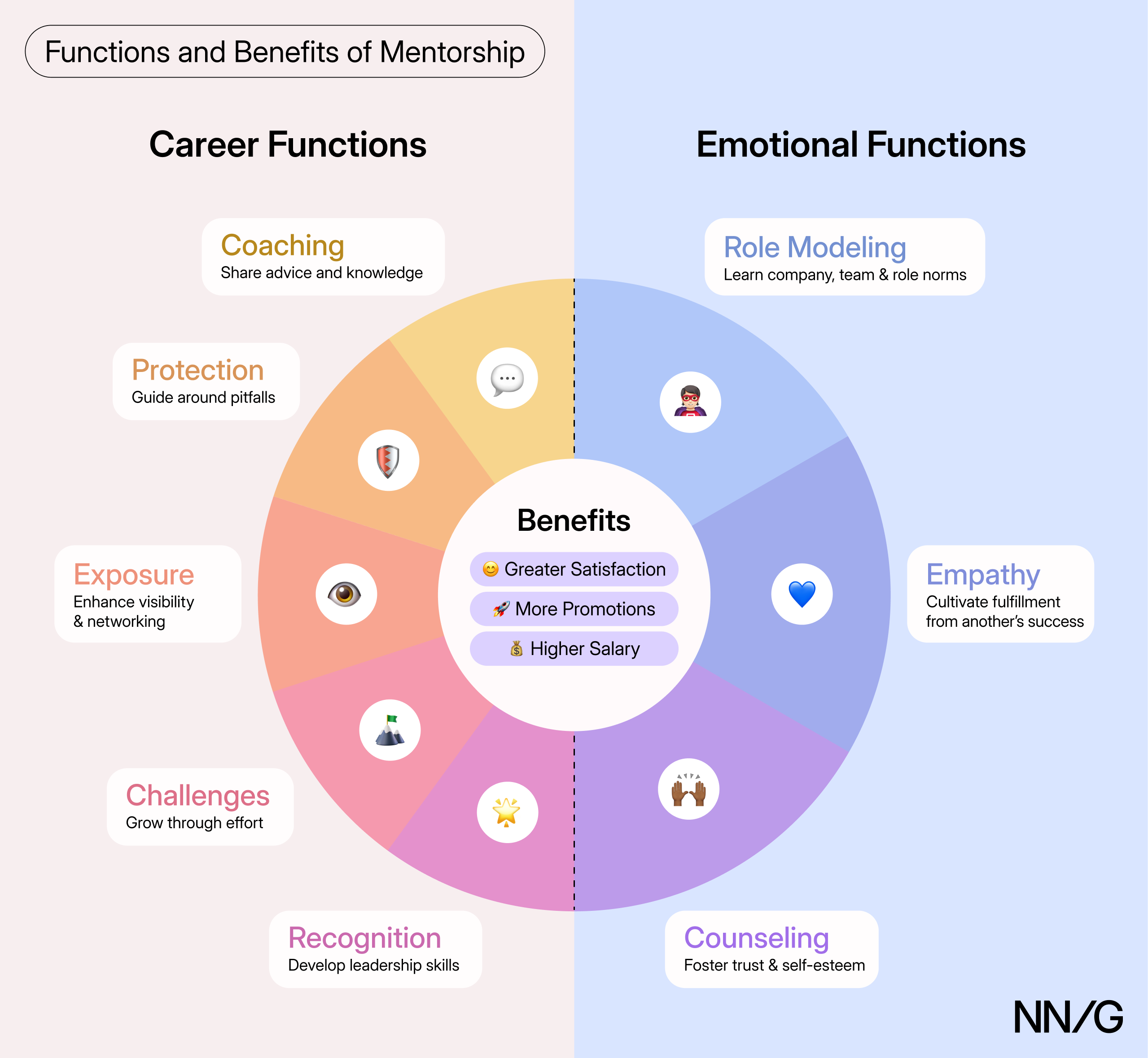
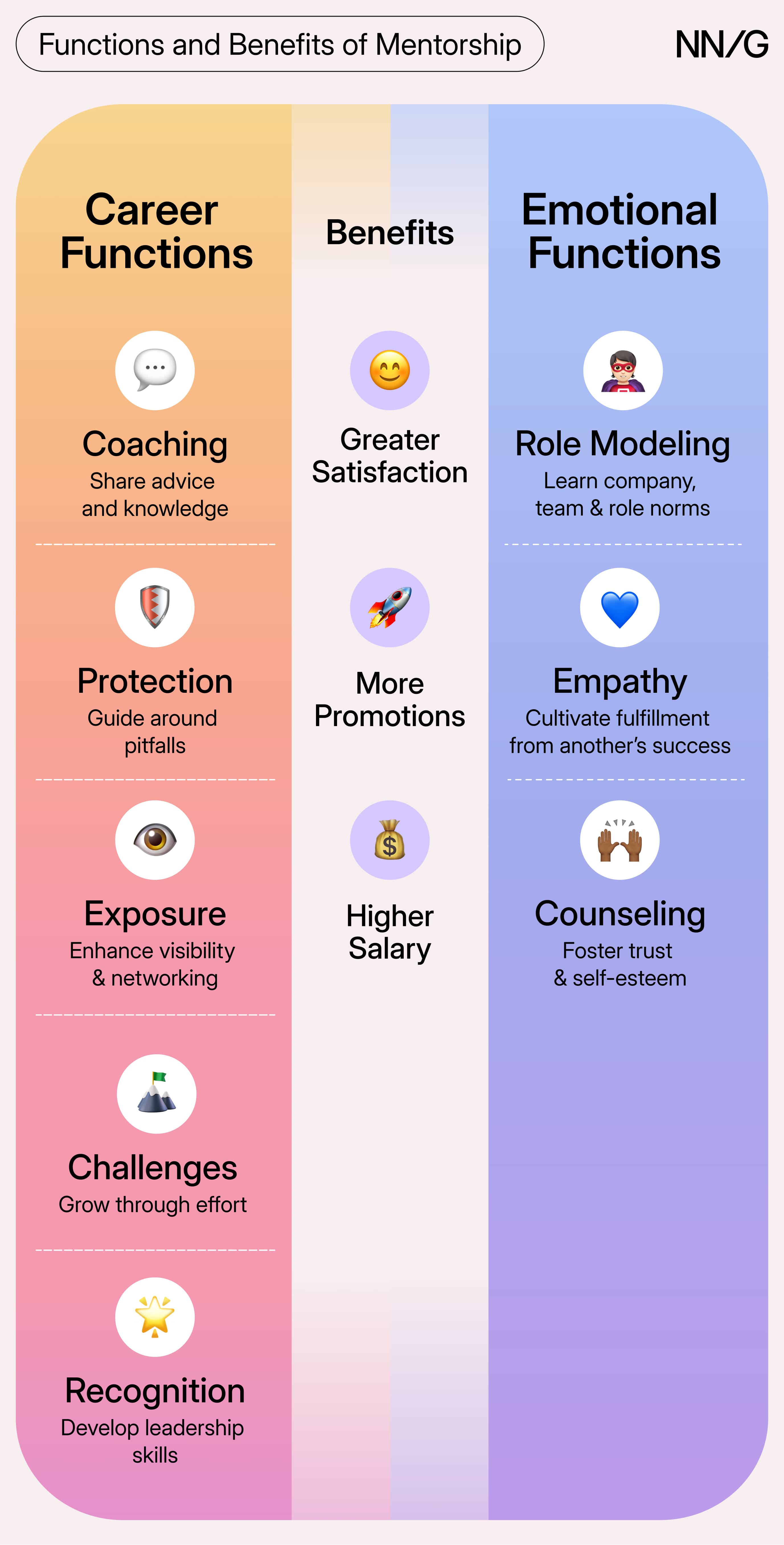
A high-caliber mentor acts as a multi-dimensional catalyst, actively sharpening a mentee’s:
- Strategic Thinking: Navigating complex corporate politics and long-term career planning.
- Technical Mastery: Refining specialized skills through targeted feedback and real-world case reviews.
- Emotional Resilience: Processing burnout, organizational shifts, and interpersonal conflict without losing momentum.
The Quantifiable Return on Investment
Mentorship is far from idle socializing; empirical data confirms that structured guidance pays substantial dividends for all parties involved. Seminal research in organizational psychology highlights undeniable benefits for mentees, including:
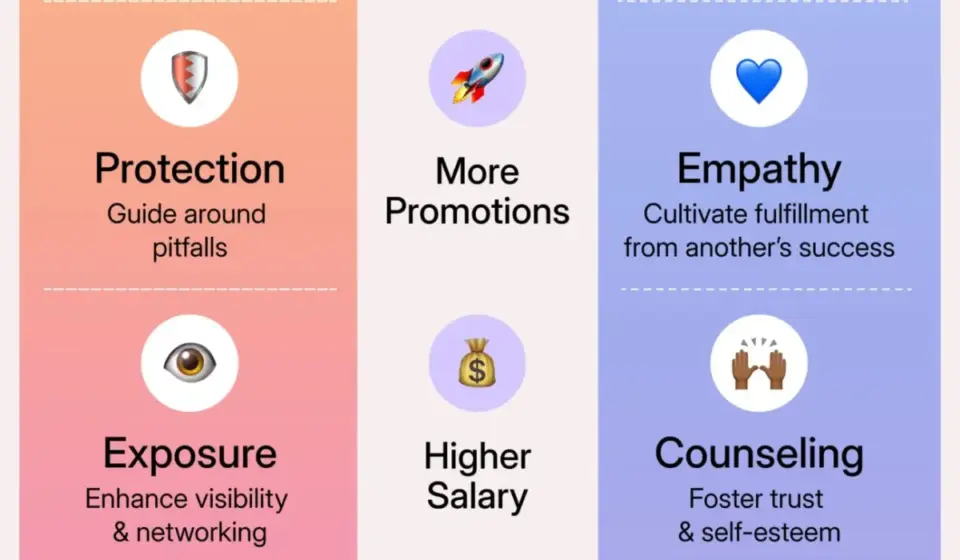
- Accelerated Advancement: Mentees experience significantly higher rates of promotion compared to their unmentored peers.
- Enhanced Compensation: Statistical meta-analyses of career outcomes consistently correlate active mentoring relationships with higher overall salary growth.
- Greater Job Satisfaction: Professionals engaged in robust mentorship report lower levels of professional isolation and higher baseline fulfillment.
The ripple effects extend far beyond individual gains. Comprehensive organizational studies indicate that corporate mentorship programs increase the promotion, retention, and managerial representation of marginalized groups by up to 24%. In environments where institutional barriers often stunt diverse talent, mentorship functions as an equalizer, systematically breaking down opaque networks of power and opening doors to leadership.
Official Guidelines: Choosing the Right Mentor and Partnering Effectively
Despite these advantages, many mentorships fail. They dissolve into vague, unstructured chats that lack direction, leaving both participants disillusioned and unlikely to try again. These failures usually stem from poor matching, misaligned expectations, or a fundamental misunderstanding of the mentor’s role.
Identifying the Ideal Mentor
When searching for a mentor, look for individuals who demonstrate deep subject-matter expertise, emotional intelligence, a track record of actively developing others, and a willingness to offer candid, unfiltered truth rather than hollow validation.
Conversely, actively avoid mentors who juggle multiple superficial relationships, spreading themselves too thin to offer meaningful guidance. Furthermore, exercise caution regarding individuals who market themselves as paid mentors. While paid, short-term sessions can function effectively as career coaching, they are fundamentally distinct from ongoing, organic mentorships. If you require rapid, tactical advice and have the financial resources, coaching is valuable—but it should not be confused with a true mentoring alliance.
Potential mentors can be sourced through formal corporate programs, established industry groups, or your existing professional network (including former bosses, respected colleagues, or industry veterans from outside your organization).
Internal vs. External Mentors: Weighing the Tradeoffs
Your current career objectives should dictate whether you seek an internal or external mentor:
- Internal Mentors: Working within your current employer, they offer unmatched political insight, tactical project guidance, and institutional context. However, they require absolute trust—a commodity many toxic workplaces lack. Crucial Rule: Never select your direct supervisor or anyone with managerial oversight over your career progression. Fear of negative performance reviews or career retaliation will naturally make you guarded, neutering the candor required for genuine mentorship.
- External Mentors with Prior Company Knowledge: Former employees who left your company on good terms within the past few years offer a potent mix of insider context and objective candor. They are particularly useful in low-trust workplaces.
- External Mentors with No Company Connection: These individuals offer the most diverse, unvarnished perspectives. They aggressively challenge insular thinking, though they lack granular knowledge of internal workplace politics.
Initiating the Relationship
Reaching out requires precision and respect for time. Send a concise, polite message detailing a specific piece of their work that you admire, explaining why their perspective is uniquely valuable to you. Request a brief, 30-minute introductory meeting.
If they accept, use this meeting as a mutual evaluation period. Conclude with a thank-you note and, if chemistry permits, a formal invitation to establish a recurring mentorship cadence. Never talk yourself out of asking; senior leaders are frequently flattered by thoughtful, well-crafted requests for guidance.
Future Outlook: The Evolving Landscape of Professional Development
As artificial intelligence continues to reshape the operational fabric of the modern workplace, the nature of work is undergoing seismic disruption. Algorithms can optimize code, generate marketing copy, and synthesize complex datasets in seconds. Yet, technology cannot offer empathy, experiential wisdom, strategic intuition, or a steady shoulder during a professional crisis.
In an increasingly automated world, authentic human mentorship is more valuable than ever. It acts as an anchor against corporate burnout and technological displacement.
Every mentorship eventually reaches a natural conclusion. Promotions, changing life circumstances, or shifting organizational roles can render a mentor’s specific expertise less relevant, or time constraints can make the cadence unsustainable. These conclusions should be celebrated, not feared. Many mentorships evolve into lifelong professional friendships, but even those that do not leave behind a legacy of elevated thinking and changed behavior.
If you have never experienced the clarifying power of a true mentor, commit to identifying and reaching out to a candidate this month. If you are an established professional who has never stepped into the mentor’s shoes, make yourself available and say "yes" to that promising junior colleague. By doing so, you participate in a continuous loop of professional stewardship—passing down wisdom that ensures the next generation of leaders can navigate the complexities of tomorrow with confidence and clarity.