
From Silicon Valley Prodigy to Wall Street Scrutiny: The Meteoric Rise and Rough Waters of AI Hedge Fund ‘Situational Awareness’

Published: August 24, 2026
Dateline: WASHINGTON, D.C. & NEW YORK
Author: Financial & Technology Desk
Executive Overview
The financial markets have long served as a high-stakes amphitheater where ambition collides with cold reality, but few narratives in recent memory have unspooled with the breathtaking velocity of Situational Awareness. Once heralded as Wall Street’s most thrilling and disruptive modern obsession, the artificial intelligence-focused hedge fund is currently enduring a punishing crucible.
Founded by twentysomething OpenAI alumnus Leopold Aschenbrenner, Situational Awareness positioned itself at the absolute vanguard of the generative AI investment boom. By going all-in on aggressive, high-conviction stakes across the broader artificial intelligence ecosystem, the firm enjoyed a meteoric, nearly unprecedented period of growth that captured the imagination of institutional investors and tech enthusiasts alike.
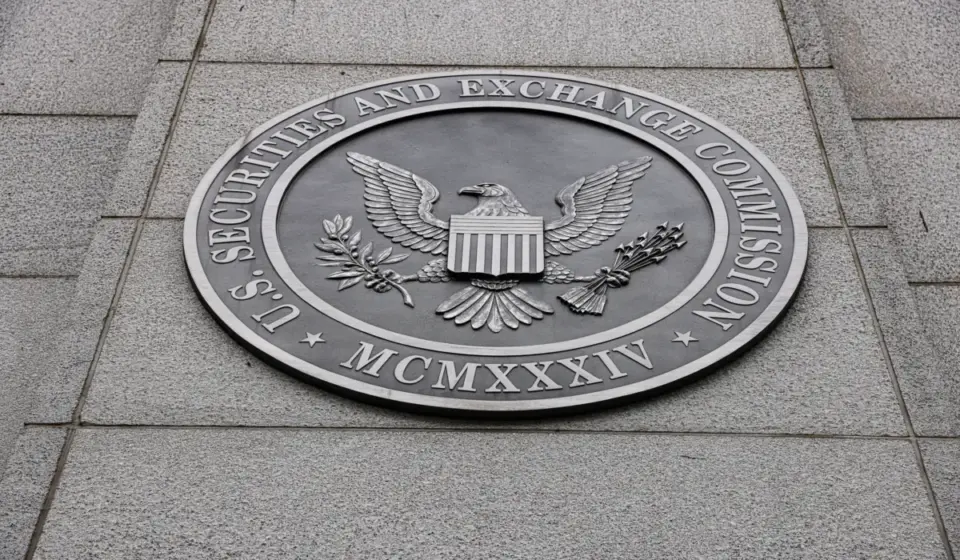
However, the tide turned sharply at the end of July 2026. A sudden, severe downturn in the technology and AI sectors triggered a brutal market correction, effectively evaporating billions of dollars in value almost overnight and forcing a distressed fire-sale of assets. Compounding these historic market losses, the regulatory net has now tightened around the firm. According to recent reports by The New York Times, the U.S. Securities and Exchange Commission (SEC) has launched an active inquiry into the hedge fund, issuing subpoenas to major financial institutions that managed its trading operations and capital pipelines.
While federal regulators have emphasized that Situational Awareness has not yet been formally accused of any legal wrongdoing, the investigation marks a dramatic escalation in scrutiny. As Wall Street processes the wreckage of what was once considered an infallible investment thesis, Situational Awareness increasingly threatens to become the ultimate cautionary tale for a sector that many previously believed enjoyed an unstoppable, gravity-defying trajectory.
Detailed Chronology: The Anatomy of a Collapse
To understand how a glittering portfolio of futuristic investments morphed into a target for federal investigators, one must trace the rapid, dizzying timeline of Situational Awareness.
The Genesis and the OpenAI Pedigree
The foundation of Situational Awareness was built largely on the intellectual cachet of its founder. Leopold Aschenbrenner, a former researcher at OpenAI who garnered a reputation within elite tech circles for his bold prognostications regarding artificial general intelligence (AGI), stepped out of the laboratory and into the high-finance arena with a singular vision. Capitalizing on the post-2023 generative AI gold rush, Aschenbrenner managed to court elite backers, convincing institutional heavyweights that traditional macroeconomic indicators were obsolete in the face of imminent, exponential AI breakthroughs.
The fund launched with a mandate unlike traditional quantitative or value-driven portfolios. Rather than hedging bets across diversified sectors, Situational Awareness heavily concentrated its capital in pure-play AI equities, semiconductor manufacturers, cloud infrastructure providers, and speculative private ventures tied directly to the scaling hypothesis of large language models. For months, this hyper-focused strategy looked like genius. As AI valuations climbed into the stratosphere, Situational Awareness posted eye-watering returns, briefly cementing its status as the darling of modern asset management.
The July Correction and the Billion-Dollar Fire Sale
The cracks in the foundation first appeared in late July 2026. Market saturation, rising interest rate pressures, and mounting skepticism regarding the immediate monetization timelines of enterprise AI projects collided to spark a sharp, painful sector-wide correction. High-growth tech stocks—particularly those heavily bid up by momentum-driven funds—suffered steep double-digit declines in a matter of days.
For Situational Awareness, the downturn was catastrophic. Because the fund was heavily leveraged and concentrated in a narrow band of high-flying assets, the plunging valuations triggered margin calls and forced liquidations. Reports surfaced of a frantic fire sale at the end of July, wherein billions of dollars in paper wealth vanished into thin air as the fund scrambled to meet liquidity requirements. What had looked like an unstoppable ascent transformed instantly into a desperate defensive scramble.
The SEC Intervenes: Subpoenas and Preservation Orders
As if catastrophic market losses were not enough, the regulatory machinery of the federal government shifted into gear. Investigative reporting revealed that the SEC had turned its formidable gaze toward the operations of Situational Awareness.
Rather than focusing solely on the fund’s internal trades, federal investigators cast a wide net across Wall Street’s prime brokerage ecosystem. The SEC began issuing subpoenas to major banking institutions that had provided prime brokerage services, cleared trades, and channeled funding to the hedge fund. In tandem with these subpoenas, regulators issued strict directives instructing the involved banks to preserve all communications, transaction histories, and risk assessments related to their dealings with Situational Awareness.

Legal and financial analysts note that while such preservation orders and early-stage inquiries do not automatically equate to civil or criminal charges, they indicate that federal watchdogs are aggressively probing whether proper risk management, valuation transparency, and disclosure protocols were maintained during the fund’s meteoric rise and subsequent fall.
Supporting Context & Market Metrics
The turmoil surrounding Situational Awareness cannot be viewed in a vacuum; it is emblematic of a broader structural reckoning within the intersection of artificial intelligence and global financial markets.
The Psychology of the AI Gold Rush
The period spanning from 2023 to mid-2026 witnessed an unprecedented mobilization of capital into artificial intelligence. Fuelled by breakthroughs in foundational models, venture capitalists, hedge funds, and retail investors poured trillions of dollars into compute infrastructure, data centers, and application-layer startups. In this hyper-speculative environment, funds like Situational Awareness were rewarded for throwing caution to the wind. Risk models that traditionally penalized high concentration and leverage were frequently sidelined by investors desperate not to miss out on what was billed as the defining technological revolution of the century.
Liquidity, Leverage, and Prime Brokerage Vulnerability
The SEC’s current focus on the banks that financed Situational Awareness highlights systemic concerns regarding how modern hedge funds interact with prime brokers. When a fund pursues a highly concentrated, momentum-driven strategy, the margin of error narrows to razor-thin tolerances. When market sentiment reverses, the ensuing liquidity crunch does not just threaten the fund—it exposes the clearing banks and counterparties to systemic ripple effects. Regulators are increasingly scrutinizing whether the leverage extended to high-flying AI funds adequately accounted for the extreme volatility inherent in emerging tech sectors.
Official Statements and Industry Reactions
As the news cycle churned following The New York Times report, stakeholders across Wall Street and the tech sector rushed to respond, though direct commentary from the fund itself remained measured.
The Response from Situational Awareness
When approached for comment by technology publication TechCrunch, representatives for Situational Awareness declined to offer an immediate statement. However, speaking directly to The New York Times, a spokesperson for the hedge fund adopted a stance of calm compliance, suggesting that regulatory scrutiny is an unavoidable byproduct of managing a high-profile portfolio in a volatile market environment.
"Scrutiny of high-profile funds operating at the frontier of new technologies is to be expected," a representative for Situational Awareness told the Times. The firm further emphasized its commitment to transparency, stating unequivocally that it would "cooperate to the fullest extent with any regulatory request."
Wall Street’s Nervous Retrospective
Industry veterans have begun viewing the Situational Awareness saga through a lens of sober disillusionment. For months, proponents of the "AI singularity" narrative dismissed macroeconomic gravity, arguing that artificial intelligence represented a totally new paradigm immune to traditional market cycles. The sudden evaporation of billions at Aschenbrenner’s fund has injected a heavy dose of caution back into boardrooms across Manhattan and Silicon Valley. Institutional allocators are now re-evaluating their risk exposure, demanding greater transparency from managers who promise outsized returns through hyper-concentration in single sectors.
Future Outlook: A Cautionary Tale for the AI Era
The unfolding crisis at Situational Awareness marks a critical inflection point for the broader artificial intelligence economy.
Regulatory Overhang
In the short term, the SEC’s active investigation will cast a long shadow over the fund’s operational viability. Even if Situational Awareness successfully navigates the regulatory probe without formal enforcement actions, the reputational damage and the loss of investor trust may prove insurmountable. Institutional capital is notoriously risk-averse once regulatory clouds gather, and the prospect of protracted investigations typically spells doom for momentum-dependent hedge funds.
The Broader Implications for AI Investment
More broadly, the rise and stumble of Aschenbrenner’s fund will likely permanently alter how Wall Street prices AI-related risk. The era of uncritical, frictionless capital infusion into any enterprise bearing an "AI-first" label is drawing to a close. Financial institutions, prime brokers, and institutional investors are expected to enforce stricter leverage caps, demand more robust stress-testing against sector-wide corrections, and exercise greater skepticism toward projections that defy traditional economic cycles.
Ultimately, Situational Awareness may well be remembered not as the pioneer of a new financial order, but as the vivid, cautionary boundary marker of the first great AI investment bubble—a stark reminder that even the most revolutionary technology cannot repeal the fundamental laws of market risk, leverage, and regulatory accountability.