Mastering the YouTube Growth Engine: How Professionals Can Build, Scale, and Monetize a Channel Late in the Game

Executive Overview
For midlife professionals, entrepreneurs, and seasoned subject-matter experts, the digital landscape often feels like a young person’s game. A persistent misconception plagues the corporate and consulting sectors: the belief that building a viable YouTube presence requires an innate, bubbly on-camera charisma, high-energy antics, and an early-adopter advantage that expired years ago.
According to YouTube growth strategist Ty Myers, this mindset is entirely false. In a comprehensive framework co-created with Michael Stelzner, Myers argues that the skills required to build a sustainable, revenue-driving YouTube channel—communicating complex solutions clearly, understanding specific audience pain points, and delivering structured value—are precisely the traits forged over years in sales, consulting, teaching, and executive leadership.
Rather than relying on viral gimmicks or youthful bravado, Myers approaches YouTube as a rigorous distribution and business-building system. By shifting focus away from heavy equipment investments and toward data-backed pre-production, strategic topic validation, and conversational scripting, professionals can launch late, scale efficiently, and convert casual viewers into high-ticket clients. This report breaks down the step-by-step methodology required to build a modern YouTube channel from scratch, even if you are starting from behind the curve.
Detailed Chronology: The Four-Phase Launch Blueprint
Myers breaks the startup process of a YouTube channel into four distinct, chronological phases. Crucially, the first two phases take place entirely away from the recording studio, emphasizing that strategic planning supersedes production value every time.
Phase 1: Defining Goals, Mission, and the "Avatar"
The foundational step of any professional channel is absolute clarity regarding its core mission. Creators must ask themselves fundamental business questions: Is the channel designed to generate top-of-funnel leads, attract high-end consulting clients, sell proprietary digital products, establish authoritative domain expertise, or cement a long-term professional legacy?
Ambiguity is the single greatest catalyst for channel failure. Channels that attempt to appeal to a broad, general audience ultimately serve no one.
Once the mission is established, creators must define their "avatar"—the precise persona of the viewer they intend to help. This requires mapping out:
- Core fears and professional anxieties
- Desired transformations and financial outcomes
- The specific terminology and questions keeping the target audience awake at night
This specificity must permeate every layer of the channel, from video titles and custom thumbnails to the verbatim language spoken on camera. Because the YouTube algorithm parses every word of a video’s transcript while simultaneously indexing the viewing habits of individual users, hyper-specific signaling allows the platform’s recommendation engine to precisely match content with the right consumer.

Phase 2: Putting in Reps with Simple Videos
Perfectionism is the primary barrier preventing accomplished professionals from succeeding on digital platforms. Individuals accustomed to high levels of competency in their previous careers often suffer from analysis paralysis, spending months planning their first upload.
Myers advocates for aggressive iteration. Creators should push out early videos regardless of raw production quality. As a general rule, creators cross a psychological threshold around their 15th published video, where self-consciousness fades, natural personality emerges, and on-camera delivery becomes conversational and authentic.
Phase 3: Transitioning from Quantity to Quality
Once the initial 15-video milestone is achieved and the content creation workflow feels manageable, the creator’s focus must pivot. The channel should no longer be viewed merely as an upload receptacle, but as a sophisticated distribution network. Creators must study high-performing competitors within their niche, reverse-engineer outlier videos, and extract leverage from platform analytics.
Phase 4: Systematizing Pre-Production
The final phase involves formalizing a weekly schedule where pre-production dominates production time. In a standard 10-hour weekly commitment to YouTube, Myers recommends allocating fully six hours to pre-production research, title testing, and topic validation before ever touching a script or camera.
Supporting Context & Metrics: The Science of Outlier Research
The most pervasive error creators make is filming a video before validating its market demand. According to platform data, a video’s topic, title, and thumbnail account for roughly 80% of its ultimate success. A brilliantly researched topic packaged with a sharp title and compelling thumbnail will consistently outperform a brilliantly produced video that nobody feels compelled to click on.
Validating Topics with Data Tools
Pre-production begins by looking backward from the audience avatar. Using free tools such as VidIQ alongside YouTube’s native search ecosystem, creators can pressure-test video concepts before investing hours into production.
- Keyword Search Volume: Entering core ideas into VidIQ reveals monthly search volumes and highlights which variations of a phrase possess active buyer or reader intent.
- Outlier Analysis: By evaluating search results through browser extensions, creators can identify videos that dramatically outperformed a specific channel’s historical average. Key indicators include view trajectory—verifying whether a video maintains steady, compounding growth rather than experiencing a temporary traffic spike that immediately flatlined.
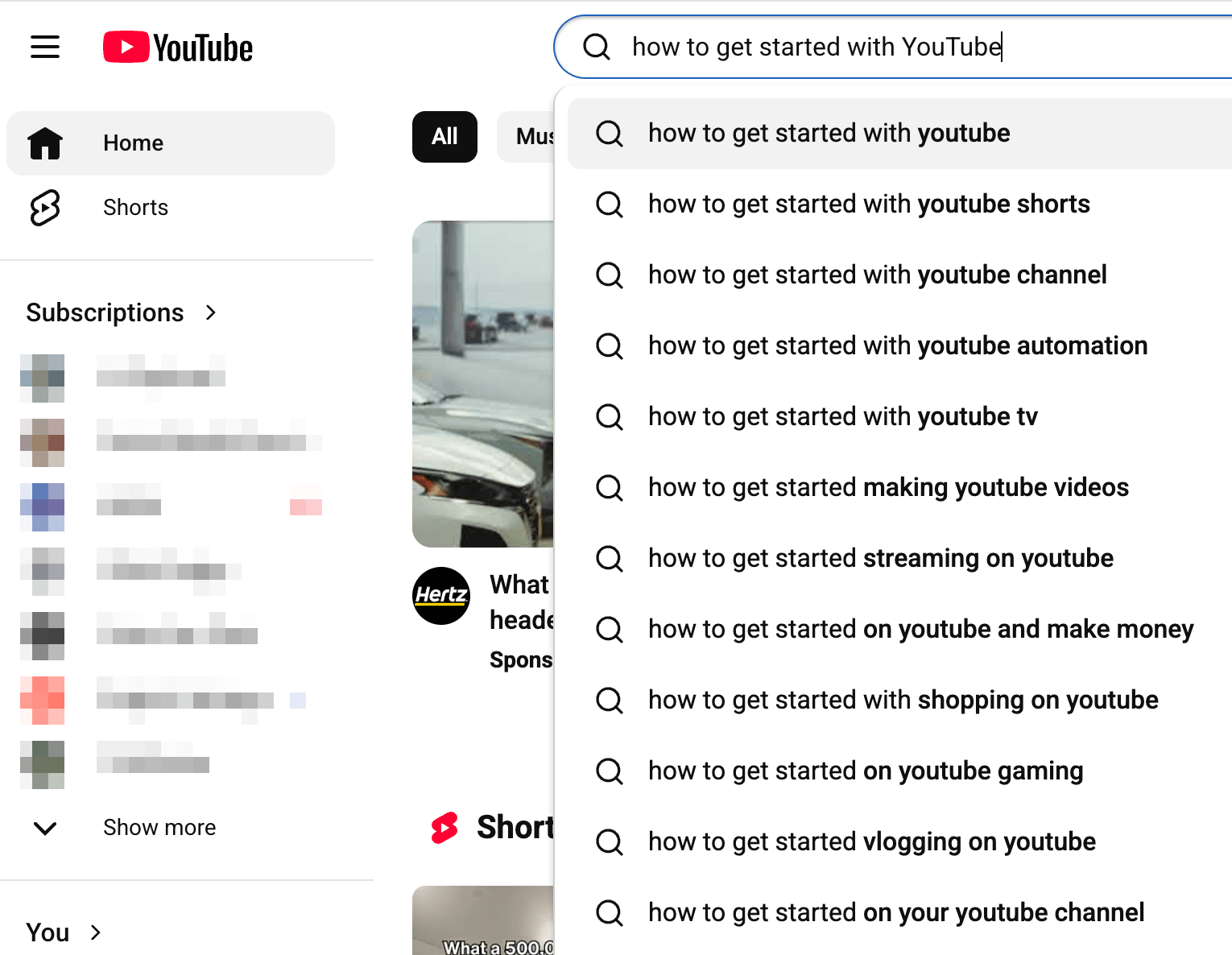
- Autocomplete Intelligence: YouTube’s search autocomplete feature acts as an organic focus group. The suggestions that populate dynamically in the search bar represent exact phrases users are actively querying, offering immediate insight into consumer search intent and natural phrasing.
The Power of Emulation vs. Copycatting
True creative leverage lies in emulation, not plagiarism. Emulation involves reverse-engineering the structural framework, title architecture, and thumbnail psychology of a high-performing video, and then infusing it with personal stories, proprietary experiences, and unique professional analogies.
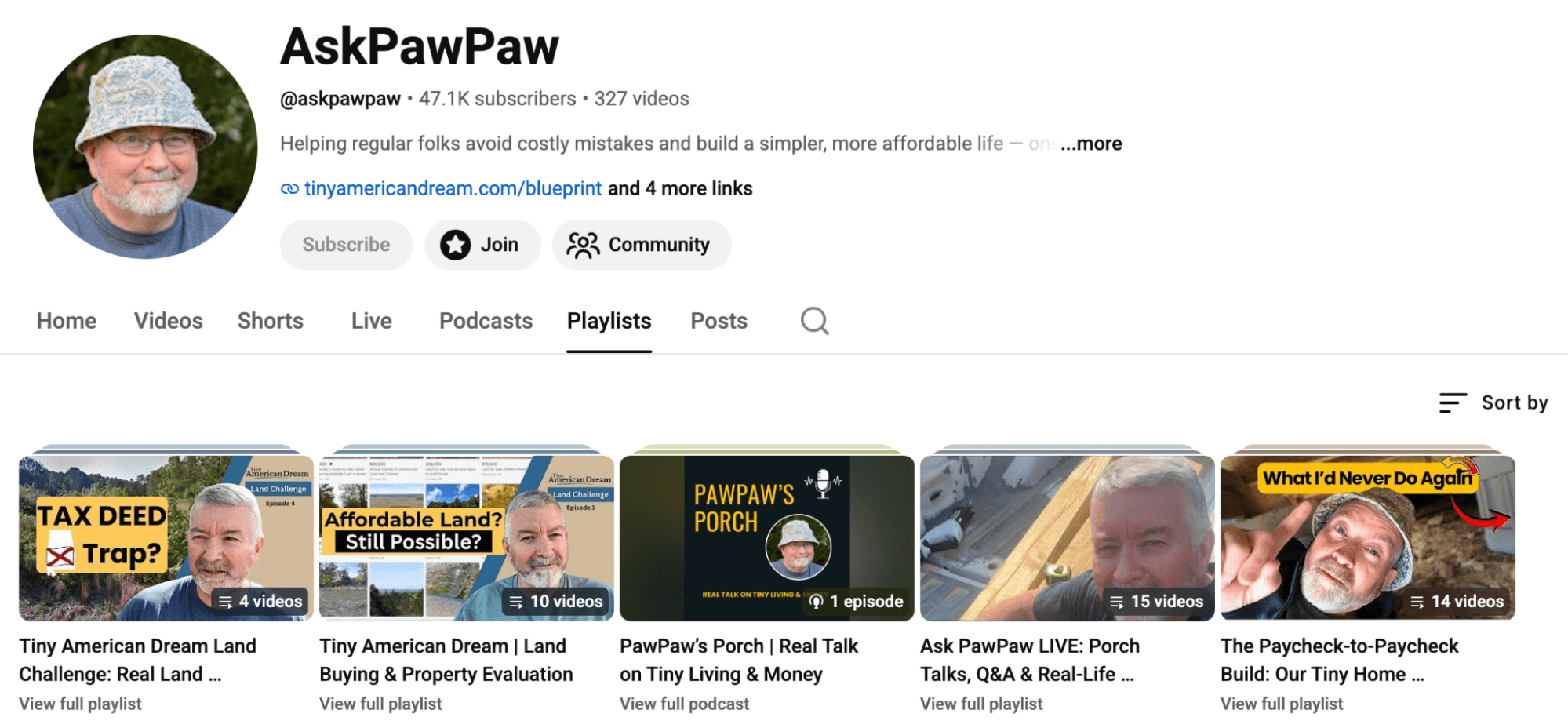
A prime example of this methodology is Kevin, creator of the Ask PawPaw YouTube channel. Initially, Kevin produced conventional financial content focusing on retirement budgeting, Health Savings Accounts (HSAs), and investment vehicles—topics that failed to generate traction.

Through outlier research, Myers identified that videos detailing tiny home shed conversions were pulling in hundreds of thousands of views. Rather than copying a competitor’s exact script, Myers advised Kevin to visit a local display lot, record the physical structures, discuss square footage, and evaluate pricing through his unique lens. The pivot unlocked massive audience demand, allowing Kevin to successfully rebuild his entire channel around alternative housing solutions and land acquisition.
Official Statements & Advanced Frameworks: Scripting, Hooks, and Revenue Funnels
Integrating modern artificial intelligence tools into the pre-production workflow can drastically streamline content creation without sacrificing authenticity.
AI-Assisted Research and Scripting
- Google NotebookLM: For data-dense topics, NotebookLM is deployed to ingest academic literature, white papers, and industry reports, synthesizing complex information into structured summaries.
- Claude: For script development, Myers utilizes advanced conversational AI connected directly to keyword tools. Rather than asking the AI to write a generic script from scratch, the creator prompts the AI to interview them one question at a time. By answering targeted questions about personal client anecdotes, business failures, and professional insights, the resulting script retains human authenticity, nuance, and credibility.
Engineering the 30-Second Hook
The opening 15 to 30 seconds of a YouTube video dictate viewer retention. A high-converting hook relies on three non-negotiable components:
- Explicit Targeting: Directly calling out the specific viewer by naming their exact situation within the opening lines.
- The Curiosity Gap: Introducing a counterintuitive statement or challenging a deep-seated industry assumption, creating an unresolved tension that forces the viewer to keep watching.
- Instant Credibility: Establishing immediate authority by sharing verifiable results or professional background before diving into the core instructional content.
Monetization Without AdSense: Crafting High-Value CTAs
For service-oriented businesses and coaches, AdSense revenue is often secondary to client acquisition. Converting free viewers into paying clients relies on a dual-track call-to-action (CTA) strategy:
- Explicit Mid-Roll CTAs: Placed organically in the middle of a video, the creator briefly mentions that the methodologies being taught are actively implemented within their paid client engagements, pointing viewers directly to the description link.
- Passive Integration: Casually referencing real-world client scenarios and consulting breakthroughs throughout the narrative. Over time, these consistent passive signals establish deep market trust, proving hands-on competence in a way direct advertising pitches cannot replicate.
Future Outlook: Session Duration and Equipment Realities
The ultimate metric governing YouTube’s recommendation algorithm is session duration—the total amount of time a user spends on the platform as a result of your content.
To maximize this metric, Myers completely reimagines standard video endings. Rather than utilizing outro music, summary recaps, or traditional subscription prompts—all of which signal to the user that the session is over—creators should transition directly from the final piece of instructional value into a compelling question answered exclusively by the next video in the series. Linking directly to subsequent videos via end-screen cards creates a self-reinforcing distribution loop that aggressively compounds channel authority.
The Minimalist Equipment Standard
Professionals frequently overspend on cinematic production gear before publishing their first video. According to Myers, high-end cameras and complex lighting rigs are entirely unnecessary at the outset.
- The Setup: An iPhone 15 mounted on an affordable tripod, utilizing natural window light diffused by a standard curtain.
- The Non-Negotiable Exception: Audio quality. Myers notes that poor audio is the single fastest way to drive a viewer away. Investing in a professional USB-C microphone (such as the Shure MV7+, retailing under $300) plugs directly into modern mobile devices, instantly removing friction and establishing immediate broadcast credibility.
As digital platforms continue to reward substantive, problem-solving content over superficial entertainment, midlife professionals equipped with real-world expertise possess an unprecedented window of opportunity to capture attention, build sustainable authority, and monetize their knowledge on YouTube.