
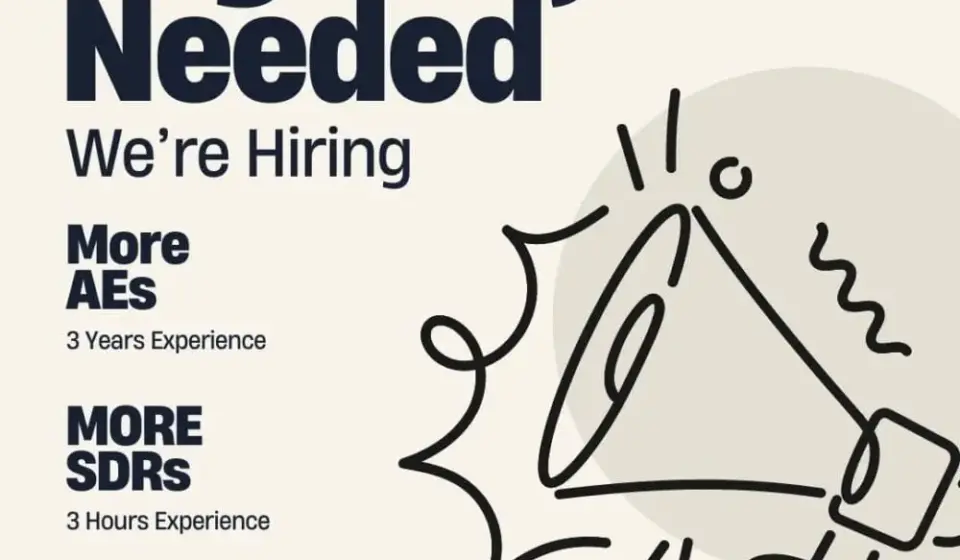
The Growth Paradox: Why Adding Sales Reps Is Almost Always the Wrong Move When Momentum Slows

Executive Overview
In the high-stakes, fast-paced world of B2B software and SaaS (Software as a Service), growth is the ultimate metric of success. Investors, founders, and boards obsess over annual recurring revenue (ARR) growth rates, net retention, and market acquisition velocity. However, when market conditions tighten, product-market fit shifts, or operational friction sets in, revenue growth inevitably slows.
During these critical junctures, a familiar debate often erupts in the C-suite. A panicked Chief Revenue Officer (CRO) or VP of Sales storms into the CEO’s office with a seemingly straightforward, time-tested solution: “We need to hire more sales reps.”
According to industry veteran and SaaStr founder Jason Lemkin, this reflex is not only wrong—it is a flashing red warning light. In nearly 98% of cases, pushing for increased sales headcount during a growth slowdown is a desperation move. It is a symptom of leadership paralysis, revealing that the sales leader has run out of strategic ideas and is attempting to brute-force a complex systemic problem with raw human capital.
This in-depth investigative feature examines why the "hire more reps" strategy is a dangerous fallacy, explores counterintuitive tactics like reducing headcounts to stimulate growth, and outlines how modern executives can diagnose true sales friction rather than masking it with expensive, inefficient hiring sprees.
Detailed Chronology: The Anatomy of a Sales Slowdown and the Hiring Trap
To understand why the knee-jerk reaction to hire more sales reps fails so consistently, one must examine the typical timeline of a SaaS startup experiencing a growth plateau.
Phase 1: The Honeymoon and Initial Momentum
In the early stages of market penetration, a startup often enjoys organic demand. Early adopters seek out the product, sales cycles are relatively short, and the founding team or a small group of high-performing account executives (AEs) easily close deals. The unit economics look promising, and the board demands acceleration. To capture market share rapidly, the company greenlights aggressive hiring.
Phase 2: The Saturation and Friction Point
Eventually, the low-hanging fruit is picked. The company moves up-market or broader into the mainstream market, where competition stiffens, buyer hesitation increases, and product gaps become glaringly obvious. Deals take twice as long to close. Win rates begin a slow, steady decline. Quota attainment across the sales floor drops from 80% to 50%, and then to 30%.
Phase 3: The Panic Response
Faced with missed quarterly forecasts and mounting pressure from the board, the VP of Sales diagnoses the problem through a myopic lens: “Our pipeline coverage is low because we don’t have enough boots on the ground.” They calculate that if one rep brings in $500,000 in ARR, then ten new reps will magically generate an additional $5 million.
Phase 4: The Downward Spiral
The company invests heavily in recruiting, onboarding, and ramping up a new cohort of sales professionals. However, because the underlying sales messaging is muddy, the product lacks key enterprise features, or the ideal customer profile (ICP) is poorly defined, the new reps struggle just as much as the veterans. Within six months, burning through cash reserves on unproductively ramped salaries, leadership realizes that bloating the sales team has only amplified their losses.
Supporting Context & Metrics: Why More Bodies Equal Lower Efficiency
The fundamental flaw in the "brute-force hiring" philosophy lies in a misunderstanding of sales capacity versus sales capability.
1. The Myth of Linear Scalability
In traditional manufacturing, adding assembly line workers linearly increases output, assuming raw materials are abundant. B2B sales, however, is not a linear equation. It relies heavily on qualitative factors:
- Lead Quality & Volume: Adding sales reps does not magically generate more high-intent inbound leads or expand the total addressable market (TAM). Instead, it dilutes the existing lead pool, forcing reps to fight over the same marginal opportunities or spend excessive time on unqualified prospects.
- Ramp-Up Costs: Bringing a new enterprise sales rep up to speed is expensive. According to industry benchmarks, the average ramp time for a B2B SaaS rep is 4 to 6 months, during which they consume company resources, managerial time, and marketing leads without yielding a positive return on investment (ROI).
- Managerial Dilution: When a sales team expands rapidly, the span of control for sales managers widens. Instead of providing deep, tactical coaching to underperforming reps, managers become overwhelmed with administrative tasks, interviewing, and onboarding, leading to a precipitous drop in overall coaching quality.
2. The Counterintuitive Cure: Shrinking to Grow
If adding reps is a failure mode, what is the correct intervention? Counterintuitively, industry experts argue that fewer sales reps often solve the problem in the short term.
When growth stalls, the most effective turnaround strategy involves a "flight to quality":
- Consolidating Opportunities: By freezing hiring and selectively trimming underperforming or poorly ramped reps, leadership can redirect all incoming marketing leads and qualified pipeline exclusively to their top 10–20% of account executives.
- Maximizing Top-Performer Yield: Elite sales reps possess the intuition, product knowledge, and resilience to navigate complex deals. Giving them a higher volume of targeted opportunities maximizes conversion rates and stabilizes immediate revenue flows.
- Diagnosing Root Causes: With a leaner team, leadership can finally step back and isolate the true bottlenecks. Is the product lacking features? Is pricing misaligned? Is the marketing messaging failing to resonate? These systemic issues cannot be solved by a fresh batch of eager college graduates making cold calls.
Official Industry Perspectives and Expert Insights
The debate surrounding sales headcount management has drawn sharp commentary from top-tier venture capitalists, SaaS founders, and revenue operators.
Jason Lemkin, founder of SaaStr and a prolific SaaS investor, pulls no punches when diagnosing the mindset of a struggling sales leader:
"No. Not 9+ times out of 10. Probably 9.8 times out of 10. It’s a desperation move. In fact, the #1 sign your CRO / VP of Sales is really struggling is when their best answer to slowing sales is to… hire even more sales reps."
Lemkin points out that this tactic is essentially a "Hail Mary" pass—a high-risk gamble that looks compelling on a spreadsheet, designed to appease a nervous board of directors, but which inevitably collapses under the weight of reality.
Other revenue operations (RevOps) specialists echo this sentiment, emphasizing that modern buyers have evolved. Modern B2B buyers conduct extensive independent research, involve multiple stakeholders, and demand rigorous proof of ROI before signing contracts. Throwing more entry-level or mid-tier reps at a hesitant buying committee only serves to annoy prospects with uncoordinated outreach and generic pitches.
Future Outlook: The Shift Toward Efficiency over Growth-at-All-Costs
As the venture capital and tech landscapes have matured through successive economic cycles, the mantra of "growth at all costs" has been permanently replaced by a relentless focus on capital efficiency, sustainable unit economics, and Net Burn multiple health.
Looking forward, executive teams and boards are adopting a much more skeptical stance toward sales capacity expansions. Going into the future, several trends are reshaping how companies handle sales slowdowns:
1. AI-Driven Productivity Over Headcount Expansion
Rather than adding human headcount to scale outreach, forward-thinking organizations are investing in artificial intelligence, automated prospecting tools, and data enrichment platforms. The goal is to empower a lean, elite sales force to do the work previously requiring three times the personnel, keeping operational costs low while maintaining market reach.
2. Rigorous Pre-Hiring Audits
Boards are increasingly pushing back when sales leaders request budget for new hires. Before any new requisition is approved, leadership must now prove that:
- Existing reps are consistently hitting at least 70–80% of quota.
- Pipeline coverage ratios are genuinely constrained by market demand, not by lead quality or conversion friction.
- The unit economics of customer acquisition cost (CAC) payback period remain within healthy boundaries (typically under 12–18 months).
3. A Return to Product-Led Growth (PLG) and Customer Success
When top-line sales growth slows, smart companies pivot inward and outward simultaneously—focusing inward on product-led growth mechanics that allow users to discover value autonomously, and outward on customer success and expansion revenue within existing accounts. It is far cheaper and more reliable to expand revenue from current, happy customers than to acquire new ones through an bloated, inefficient outbound sales engine.
Conclusion
When revenue momentum stalls, the pressure on executive leadership is immense. But succumbing to the temptation to hire more sales reps is akin to pouring water into a leaky bucket and hoping it fills up faster.
As seasoned operators like Jason Lemkin remind us, true sales leadership requires diagnosing systemic friction, protecting unit economics, and doubling down on elite execution rather than numerical brute force. By recognizing that fewer reps—strategically deployed—can often stabilize and eventually restart growth, modern companies can avoid the costly trap of desperation hiring and build resilient, highly efficient revenue engines for the long haul.