
The Algorithmic Retail Frontier: Google Intensifies Tests of AI-Generated Descriptions in Shopping and Product Ads

Executive Overview
The landscape of search engine marketing (SEM) is undergoing a structural shift as Google accelerates the integration of generative artificial intelligence into its commercial real estate. In a move that signals the potential end of static, advertiser-controlled ad copy, Google has begun testing AI-generated descriptions directly within Google Shopping and sponsored product listings.
This development, first observed in early August 2026, represents a significant escalation from previous experiments confined to standard text-based search ads. By dynamically synthesizing product descriptions, Google aims to align ad copy more closely with real-time user search intent, transactional context, and historical browsing behavior.
While Google frames these updates as minor utility tests designed to assist consumers in making "informed decisions," the implications for the global digital marketing ecosystem are profound. Advertisers are staring down a dual-edged sword: the promise of hyper-personalized, high-converting ad creative versus the systemic loss of brand control, compliance risks in regulated industries, and the degradation of traditional performance attribution.
Detailed Chronology: The Evolution of Google’s AI Ad Experimentation
The deployment of generative AI within Google’s ad formats has not occurred in a vacuum. Instead, it is the result of a calculated, multi-month testing phase designed to gauge consumer interaction, click-through viability, and algorithmic accuracy.
[June 2026]                    [July 2026]                      [August 2026]
Darcy Burk spots AI summaries  Google tests AI descriptions     Brodie Clark / SERP Alerts
in sponsored product ads.      in standard text ads (Search).   spot AI text in Shopping ads.
June 2026: The Initial Spark in Product Summaries
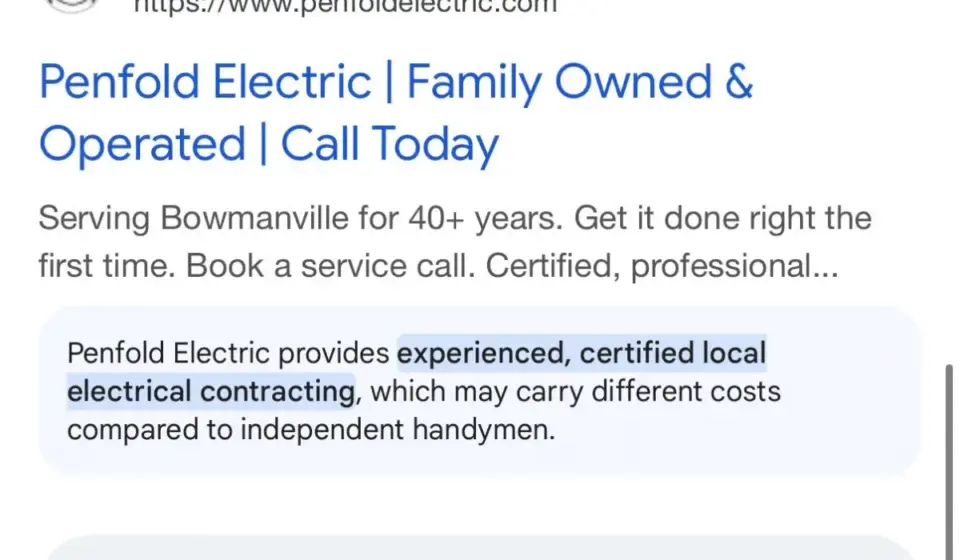
The first public indication of this shift emerged in June 2026, when digital marketing specialist Darcy Burk captured screenshots of an unannounced Google feature. The test showed Google experimenting with AI-generated summaries embedded within the product descriptions of sponsored ads. Rather than pulling directly from the merchant’s product data feed, the system appeared to synthesize disparate data points—such as product specifications and customer reviews—into a concise, bulleted summary directly beneath the primary ad header.
July 2026: Expansion to Core Sponsored Text Ads
By July, the experiment had expanded into Google’s primary revenue engine: standard sponsored text ads. Industry observers noted that Google was dynamically rewriting description lines for mainstream search queries, utilizing generative models to match the specific phrasing of a user’s search query. When pressed by industry analysts, Google confirmed the test but downplayed its scope, characterizing it as a highly localized, small-scale experiment.

August 2026: The Integration into Google Shopping
The latest and most disruptive phase of this testing cycle occurred in early August 2026. Renowned SEO consultant Brodie Clark, alongside the tracking account SERP Alerts, identified and documented AI-generated descriptions appearing directly inside Google Shopping listings on mobile and desktop search engine result pages (SERPs).
Unlike standard text ads, which rely on copy provided by agency copywriters, Google Shopping ads are populated via Google Merchant Center feeds. The appearance of AI-generated descriptions in this space indicates that Google is now actively rewriting or supplementing merchant-provided feed data in real-time. The screenshots shared on social media platform X (formerly Twitter) revealed highly structured, contextually relevant text blocks that seamlessly blended product specifications with persuasive, algorithmically generated selling points.
Technical & Architectural Underpinnings: How It Works
To understand the impact of this transition, one must examine the technology driving these automated ad variations. The system likely leverages Google’s Gemini family of multimodal models, integrated directly into the Google Ads serving engine.
When a user executes a search query, the ad engine performs several parallel operations:
- Query Intent Analysis: The system parses the semantic meaning behind the user’s query, identifying modifiers (e.g., "best for running," "durable," "under $100").
- Data Feed Retrieval: The engine pulls the relevant product data from the merchant’s Google Merchant Center feed, including title, price, standard description, and attributes.
- Landing Page Scraping & Synthesis: In advanced iterations, the AI model cross-references the feed data with the actual landing page content, customer review databases, and Q&A sections on the merchant’s website.
- Real-Time Copy Generation: The model generates a bespoke product description tailored to the user’s specific intent, highlighting the exact features or benefits most likely to trigger a click, all within milliseconds of the query execution.
The Advertisers’ Dilemma: Metrics, Control, and Brand Integrity
While Google’s algorithmic updates are historically designed to maximize platform yield (click-through rate and cost-per-click revenue), the introduction of autonomous copy generation introduces several points of friction for enterprise advertisers and performance agencies.
| Factor | Traditional Ad Copy | AI-Generated Ad Copy (Google Test) |
|---|---|---|
| Control | Absolute control over brand voice, legal compliance, and messaging. | Dynamic generation; potential for brand dilution or compliance violations. |
| Relevance | Static or semi-dynamic (via responsive search ads/feed rules). | Real-time, hyper-personalized alignment with user intent. |
| Speed to Market | Requires manual copywriting, testing, and approval workflows. | Instantaneous, automated creation and scaling. |
| A/B Testing | Clear, clean variables for performance attribution. | "Black box" testing; difficult to isolate which copy variant drove conversions. |
The Threat of Hallucination and Regulatory Compliance
For brands operating in highly regulated verticals—such as pharmaceuticals, financial services, and legal tech—the loss of control over ad copy is an existential risk. If Google’s AI generates a description that makes an unauthorized medical claim, promises an inaccurate interest rate, or misrepresents a warranty, the advertiser, not Google, faces regulatory scrutiny and class-action liability.

The Dilution of Brand Voice
A brand’s identity is carefully cultivated through specific tones, stylistic choices, and vocabulary. Generative AI engines, by their nature, optimize for the "mean"—the most statistically probable converting text. Over time, this threatens to homogenize the search engine results page, making different brands sound virtually identical as the algorithm optimizes all competitors toward the same linguistic patterns.
The "Black Box" Problem in Performance Analytics
Modern performance marketers rely heavily on granular data to optimize campaigns. With Google increasingly obfuscating search query data and automated campaigns like Performance Max (PMax) limiting keyword-level control, the introduction of AI-written descriptions adds another layer of opacity. If an ad performs exceptionally well, marketers will struggle to identify whether the success was driven by product pricing, audience targeting, or the specific, algorithmic text generated for that individual user.
Official Statements and Strategic Positioning
Following the widespread discovery of these tests, a Google spokesperson issued a brief statement confirming the nature of the trial:
"This is a small experiment to see if adding AI-generated context to Search ads helps people make more informed decisions."
This statement is classic Google PR framing, utilizing consumer-centric language ("helps people make more informed decisions") to justify a structural shift in how commercial space is monetized. By positioning the feature as an informational tool for users, Google defuses immediate pushback from advertisers who might object to their proprietary brand assets being rewritten without consent.
Historically, features introduced as "small experiments" by Google—such as Close Variants in keyword matching or Automatically Created Assets (ACA)—eventually transition into default, and sometimes mandatory, settings once the system gathers sufficient training data and proves its monetization efficiency.

Future Outlook: Preparing for the Autonomous Search Era
The trajectory of Google’s ad product roadmap suggests that the automated creation of ad creative is not a temporary trend, but an inevitable destination. As search transitions from a directory of links to an ecosystem of conversational answers, ads must adapt to match that conversational flow.
To stay competitive in this changing landscape, brands and digital agencies should consider several strategic adjustments:
1. Elevate Feed Hygiene to a Core Competency
Because Google’s generative models use the Google Merchant Center feed as their source of truth, the quality of an advertiser’s data feed will directly dictate the quality of the AI-generated ad copy. Brands must move beyond basic product titles and optimize every available attribute field, ensuring high-fidelity, structured data is fed to Google’s crawlers.
2. Implement Rigorous Brand-Safety Safeguards
Advertisers must actively engage with their Google account teams to demand robust opt-out mechanisms or "brand safety guardrails" for AI-generated copy. Enterprise brands may need to establish negative keyword lists, prohibited term databases, and strict asset-generation exclusions within their Google Ads account settings to prevent the AI from generating off-brand or legally risky copy.
3. Transition from Copywriters to "Prompt Engineers" and Editors
The role of the search engine marketer is shifting from manual execution to algorithmic oversight. Rather than writing thousands of individual ad headlines and descriptions, copywriters and SEM specialists will transition to defining the parameters, brand guidelines, and target audiences within which Google’s AI operates, serving as final editors rather than primary creators.
Ultimately, Google’s testing of AI-generated descriptions in Shopping and product ads is a clear indicator that the future of search advertising is dynamic, predictive, and autonomous. The advertisers who thrive in this next era will not be those who fight the automation, but those who learn to feed the algorithm the cleanest data, the sharpest brand guidelines, and the most precise strategic constraints.