Enterprise marketing organizations stand at a paradox. Driven by leaps in generative artificial intelligence, hyper-automated distribution engines, and programmatic channels, marketing and operations teams possess unprecedented capability to generate and publish content at scale. Yet, as content volume reaches historical highs, buyer attention has precipitously plummeted.
Rather than deepening customer relationships, the unyielding surge of corporate messages has triggered widespread buyer fatigue. Modern B2B and B2C audiences have developed sophisticated filtering mechanisms, actively tuning out brands that prioritize touchpoint frequency over genuine value. The core operational challenge facing modern marketing is no longer output capability—it is the widespread adoption of what industry insiders term "the engagement illusion."
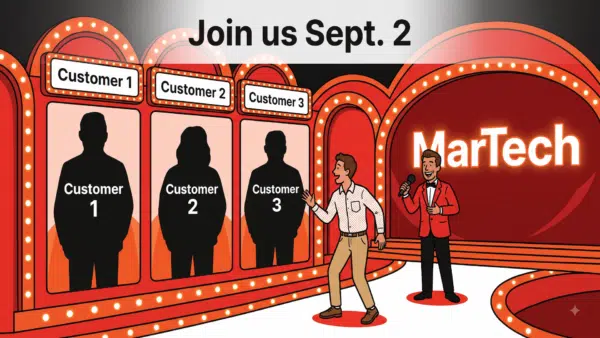
To address this systemic bottleneck, the upcoming MarTech Conference—a free online industry event hosted on September 2, 2026—will feature a crucial session led by prominent industry experts: Jessica Hawthorne-Castro, Shiv Gupta, John Miller, and Julie Zwissler. Titled "The engagement illusion: What actually gets attention (and what gets ignored)," the panel aims to dismantle volume-driven marketing playbooks and replace them with precise, receptivity-focused operational frameworks.
The industry imperative is clear: path-forward strategies can no longer rely on maximizing digital touchpoints. Sustainable revenue growth requires organizations to recalibrate outreach, honor prospect bandwidth, and distinguish surface-level metric inflation from actual sales pipeline generation.
Chronology of Content Saturation: From Automation to the AI Output Explosion
Understanding today’s engagement crisis requires tracing how marketing operations evolved from targeted messaging to industrial-scale distribution.
+-------------------------------------------------------------------------------+
|                        EVOLUTION OF CONTENT SATURATION                        |
+-------------------------------------------------------------------------------+
|  2010s: Marketing Automation Boom                                             |
|  - Emergence of multi-channel orchestration platforms (email, display, web).  |
|  - Operational playbook: Higher outreach frequency = Linear pipeline growth.  |
+-------------------------------------------------------------------------------+
                                       │
                                       ▼
+-------------------------------------------------------------------------------+
|  2020–2023: Channel Multiplication & Data Proliferation                        |
|  - Proliferation of digital touchpoints across social, mobile, and intent ads.|
|  - Audiences adapt: Initial signs of "banner blindness" and message fatigue. |
+-------------------------------------------------------------------------------+
                                       │
                                       ▼
+-------------------------------------------------------------------------------+
|  2024–2026: The Generative AI Production Acceleration                          |
|  - Enterprise deployment of LLMs drastically lowers content production costs.|
|  - Content volume spikes exponentially; buyer bandwidth remains fixed.        |
|  - Result: Structural disconnect between brand activity and genuine impact.   |
+-------------------------------------------------------------------------------+
The 2010s Marketing Automation Boom
During the early proliferation of marketing automation, marketing operations built sophisticated multi-touchpoint nurtures. The baseline operational playbook was straightforward: higher outreach frequency across expanded channels reliably correlated with increased pipeline.
Channel Multiplication and Data Proliferation
As adtech and martech stacks expanded between 2020 and 2023, brands gained access to dozens of distinct distribution channels. However, audience bandwidth did not expand alongside channel availability. Audiences began displaying severe message fatigue, manifest in declining email click-through rates and rising ad-blocker usage.
The Generative AI Production Acceleration
The mainstream integration of generative AI tools between 2024 and 2026 radically drastically reduced content production cycles. Campaigns that previously required weeks of copywriting and graphic design could now be executed in minutes.
However, because generative AI scaled output without intrinsically improving audience receptivity or contextual timing, the strategy served primarily to flood digital ecosystems with homogeneous, low-intent messaging.
Today, the playbook of scaling raw volume is officially broken. While execution speed has accelerated, audience bandwidth remains finite. Increasing messaging frequency without a proportional leap in utility forces prospects to disengage entirely.
Supporting Context & Metrics: Deconstructing "The Engagement Illusion"
The core danger of modern martech architectures lies in vanity metrics—data points that signal activity without confirming business value or buyer trust.
Marketing operational dashboards routinely celebrate superficial wins: spikes in open rates, display ad impressions, and whitepaper downloads. However, these figures often obscure an underlying decay in buyer sentiment.
Open Rates: Automated security bots, privacy changes (such as Apple’s Mail Privacy Protection), and accidental clicks routinely distort email open rates, masking actual reader engagement.
Impressions: A prospect scrolling past a display ad five times a day does not represent five opportunities for relationship building; it frequently represents brand annoyance and message desensitization.
Downloads: Content downloads driven by aggressive gating often result in immediate lead-scoring automation that harasses prospects before an actual purchasing need exists.
The Receptivity & Timing Disconnect
A central thesis of the upcoming MarTech Conference session is that relevance without timing equals friction.
Traditional marketing strategies trigger immediate outbound messaging the moment an intent signal is registered. For instance, if an enterprise buyer views a single product page, automated platforms might instantly enroll them in a five-part, hyper-personalized email drip campaign.
Instead of moving the prospect closer to a transaction, this aggressive cadence frequently backfires. Smart operational teams are beginning to realize that buyer signals should not be treated as automated triggers to barrage a customer, but rather as indicators to evaluate buyer receptivity.
                    SIGNAL DETECTED
                           │
                           ▼
          ┌─────────────────────────────────┐
          │  Evaluate Buyer Receptivity     │
          └────────────────┬────────────────┘
                           │
         ┌─────────────────┴─────────────────┐
         ▼                                   ▼
[ IMMEDIATE OUTBOUND ]             [ STRATEGIC PAUSE ]
- Pushes message instantly          - Respects buyer timeline
- Risks content friction            - Preserves trust & equity
- Often ignored as noise            - Re-engages at high intent
Parallel Crises in Data Architecture and Signal Loss
This engagement breakdown is compounded by structural shifts in marketing data ecosystems. As discussed across related tracks at the MarTech Conference, modern marketing teams are battling simultaneously with:
Data Trust and Decay: Third-party data deprecation and decaying customer profiles render automated personalization engines inaccurate.
Signal Loss: Evolving privacy laws and browser restrictions reduce the visibility of traditional buyer signals, forcing brands to optimize outreach based on fewer, higher-quality interactions rather than continuous tracking.
Official Statements and Speaker Insights
Ahead of the September 2 session, conference organizers and panel leaders highlighted the key challenges facing marketing operations leaders.
Expert Panel Panelists
Jessica Hawthorne-Castro, CEO & Industry Strategist
Shiv Gupta, Founder & Digital Marketing Leader
John Miller, Marketing Operations & Analytics Executive
The session, "The engagement illusion: What actually gets attention (and what gets ignored)," focuses on providing operational executives with actionable tactics to audit their current campaign cadences and strip away counter-productive touchpoints.
Key Takeaways Promoted by the Panelists
Auditing the Cumulative Experience: Teams must evaluate campaign workflows not in isolation, but through the combined volume of touches a prospect receives across email, retargeting, sales outreach, and organic channels.
Determining Interaction Merit: Establishing rigorous internal standards for what content warrants a direct message versus what should remain passive or on-demand content.
Prioritizing Buyer Bandwidth: Transitioning success metrics away from sheer impression totals toward high-intent conversion pathways and compressed sales cycles.
Editorial Leadership Context
Mike Pastore, Head of Content & Media at Third Door Media (publisher of MarTech and Search Engine Land), emphasized the editorial commitment behind the event. With nearly three decades of B2B technology experience, Pastore observed that while execution tools have evolved radically from the late 1990s through today’s AI era, the fundamental rule of audience engagement remains unchanged: value always supersedes volume.
"The real competitive advantage in an AI-driven market won’t belong to the teams producing the most content, but to the leaders who know what deserves to be sent in the first place."
— MarTech Conference Agenda Strategy Preview
(Note: MarTech is owned by Semrush Inc., which maintains a commitment to delivering objective analysis on marketing technology, operations, and media architecture).
Future Outlook: Building High-Intent, Low-Friction Engagement Frameworks
As marketing operations teams plan for 2026 and beyond, success requires shifting from output volume to strategic timing and curation.
+-------------------------------------------------------------------------------+
|                    THE MODERN HIGH-INTENT ENGAGEMENT MODEL                    |
+-------------------------------------------------------------------------------+
|                                                                               |
|   1. AUDIT & PRUNE                                                            |
|      - Identify vanity-driven cadences.                                       |
|      - Eliminate low-value, high-frequency email/ad sequences.                |
|                                                                               |
|   2. EMBED RECEPTIVITY LOGIC                                                  |
|      - Use behavioral intent to inform TIMING rather than immediate triggers.  |
|      - Implement "cool-down" periods to prevent audience fatigue.              |
|                                                                               |
|   3. ADOPT COMPOSABLE DATA ARCHITECTURES                                      |
|      - Unify real-time customer data without rigid infrastructure locks.      |
|      - Ensure high-trust data fuels personalization algorithms.               |
|                                                                               |
|   4. ALIGN METRICS TO PIPELINE                                                |
|      - Replace vanity click metrics with intent-driven account progression.   |
|      - Measure brand health by buyer retention and velocity, not reach.        |
|                                                                               |
+-------------------------------------------------------------------------------+
1. Shift from Trigger-Based Automation to Receptivity Modeling
Future-proof martech stacks will leverage machine learning not to pump out continuous copy, but to predict when a buyer is most receptive to outreach. Receptivity models factor in account activity, recent interaction density, historical purchase cycles, and organizational changes to determine whether an outreach effort will clarify or irritate.
2. Modernize Data Architecture for Real-Time Precision
To power high-intent engagement strategies, enterprises are moving away from monolithic, legacy customer databases toward composable data architectures. As outlined in companion sessions at the September 2 conference, flexible data stacks enable real-time decision-making, ensuring that when an interaction occurs, it is based on accurate, up-to-date customer profiles.
3. Redefining KPIs Around Quality and Speed
Forward-thinking Chief Marketing Officers (CMOs) are restructuring operational metrics. Key Performance Indicators (KPIs) are pivoting away from total email send volumes, impression share, and top-of-funnel form fills toward:
Account-Level Pipeline Velocity: How quickly targeted accounts progress from initial interest to commercial evaluation.
Content Utility Ratings: Direct qualitative and quantitative feedback on whether published research addresses specific buyer challenges.
Unsubscribe and Friction Ratios: Tracking opt-out spikes and negative feedback signals to penalize aggressive campaign cadences internally.
Conclusion
In an ecosystem dominated by automated AI output, content generation is no longer a core differentiator—it is a baseline commodity. The brands that win buyer attention in 2026 and beyond will be those that exercise operational restraint, prioritize timing over repetition, and turn genuine customer respect into their primary competitive advantage.
Event Registration Details
Event: The MarTech Conference (Online & Free)
Date: September 2, 2026
Featured Session:"The engagement illusion: What actually gets attention (and what gets ignored)"
Speakers: Jessica Hawthorne-Castro, Shiv Gupta, John Miller, Julie Zwissler