
The Evolution of AI Search Monetization: Google Tests Sitelink Ad Formats in "AI Mode"

Author: Sachin Patel
Published: August 10, 2026
Category: Search Engine Marketing (SEM), Artificial Intelligence, Digital Advertising Trends
Executive Overview
As conversational artificial intelligence continues to reshape the landscape of digital information retrieval, Alphabet Inc.’s flagship subsidiary, Google, is quietly accelerating its efforts to monetize this new paradigm. On August 10, 2026, search industry observers identified a novel advertising experiment within Google’s "AI Mode"—the conversational, large language model (LLM) powered search interface formerly known during its experimental phases as the Search Generative Experience (SGE) and later integrated as "AI Overviews."
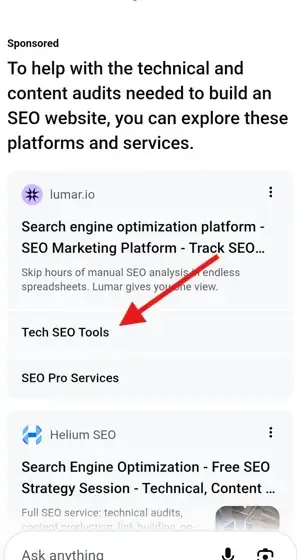
For the first time, Google has been spotted displaying ad-based sitelinks alongside sponsored placements directly within the AI-generated response interface. In a puzzling twist that has captivated search engine marketers (SEMs) and digital ad strategists worldwide, these newly introduced sitelinks are currently non-clickable. Instead, they mimic the visual architecture of traditional search ad sitelinks without offering direct navigational utility.
This development marks a critical inflection point in Google’s ongoing struggle to transition its highly lucrative Cost-Per-Click (CPC) business model into an AI-driven, zero-click-friendly user environment. While the non-clickable nature of these links suggests an early-stage design and user experience (UX) test, the implications for the future of search engine results pages (SERPs), advertiser Return on Ad Spend (ROAS), and user interaction models are profound.
Detailed Chronology: The Path to AI-Native Advertising
To understand the significance of this latest test, one must trace the rapid evolution of Google’s monetization strategies within its generative AI interfaces over the past several years.
[May 2023] SGE Unveiled (Experimental Ads outside the AI Snapshot)
       │
[Mid 2024] AI Overviews Launch (Sponsored Product Carousels inside AI responses)
       │
[Early 2026] Deep Conversational Ads (Interactive ad copy integrated into LLM text)
       │
[August 2026] Sitelinks Test in AI Mode (Visual, non-clickable sitelinks introduced)
Phase 1: The Experimental Genesis (May 2023 – Mid 2024)
When Google first introduced the Search Generative Experience (SGE) at its I/O conference in May 2023, the primary focus was on user utility and accuracy. Advertising was largely relegated to the periphery. Early iterations displayed traditional search ads either above or below the colored generative snapshot. This separation was a defensive play designed to preserve user trust while Google assessed how conversational queries affected search behavior.
Phase 2: Integration and Interstitials (Late 2024 – 2025)
As "AI Overviews" rolled out globally to hundreds of millions of users, Google began testing native placements. Sponsored product carousels, shopping ads, and contextually relevant text ads were injected directly into the AI’s summarized answers. This phase proved that users were willing to engage with commercial content within an AI-generated synthesis, provided the recommendations aligned with their conversational intent.
Phase 3: The August 2026 Discovery
The discovery of sitelink-style formats in AI Mode ads represents the third phase of this evolution: Feature Parity. Sitelinks—traditionally one of Google’s most successful ad extensions—have been ported into the conversational interface.
The initial discovery showed these sitelinks appearing as structured, bulleted, or tabbed text blocks immediately beneath a sponsored text block within the AI response panel. Unlike their traditional counterparts, which deep-link users directly to specific subpages of an advertiser’s website (e.g., "Contact Us," "Pricing," or "Special Offers"), clicking these new elements yielded no action. They functioned purely as static, visual enhancements to the ad copy.
Supporting Context & Metrics: Why Sitelinks Matter
In the traditional search ecosystem, sitelinks are not merely aesthetic; they are critical performance drivers. Understanding their historical utility helps explain why Google is eager to adapt them for AI Mode, even in a temporary, non-functional state.
The Power of Ad Extensions
According to historical Google Ads performance benchmarks, the implementation of sitelink extensions yields significant advantages:
- Click-Through Rate (CTR) Elevation: The addition of sitelinks typically generates a 10% to 20% uplift in CTR for standard text ads.
- Real Estate Dominance: Sitelinks increase the vertical footprint of an ad on both desktop and mobile screens, effectively pushing organic listings and competitor ads further down the page.
- Intent Segmentation: By offering multiple destination options, sitelinks allow advertisers to capture users at different stages of the buying funnel simultaneously.
| Metric | Traditional Search Ads (With Sitelinks) | Early AI Overviews Ads (Standard Text/Product) | Experimental AI Mode Ads (Current Test) |
|---|---|---|---|
| Average CTR | 3.5% – 5.5% | 1.8% – 2.9% | TBD (Testing Phase) |
| Visual Footprint | High (Multi-line) | Medium (Inline/Carousel) | High (Structured List) |
| User Utility | Direct Navigation | Dynamic Shopping/Links | Static/Visual Only |
| Attribution Model | Cost-Per-Click (CPC) | CPC / Cost-Per-Impression (CPM) | Interaction/Impression-based |
Decoding the "Non-Clickable" Enigma
Why would Google launch an ad format with non-clickable links? Ad tech analysts and UX researchers point to three primary hypotheses:

- Visual Hierarchy and Cognitive Load Testing: Before engineering the complex redirection and attribution backend required for multi-link conversational ads, Google’s engineers are likely measuring user eye-tracking, scroll depth, and reading pauses. This data helps determine whether structured sub-options within an AI narrative distract from or enhance the overall search experience.
- Layout A/B Testing: Google frequently runs "paint tests" where the visual layout of an ad is rendered to a small percentage of global traffic to monitor CTR on the primary ad link. If the presence of non-clickable sitelinks increases the click-through rate of the main sponsored headline, the format could be deemed a success even before the sub-links are made active.
- Technical Staging: Integrating dynamic deep-linking within a real-time LLM generation cycle is computationally expensive and logistically complex. The non-clickable links may represent a frontend placeholder while the backend APIs for dynamic sitelink mapping are finalized.
Official Statements and Industry Reactions
Google has historically maintained a cautious but optimistic narrative regarding its AI monetization strategies. During Alphabet’s recent earnings calls, executives have consistently emphasized that user experience remains the guiding star for AI search development.
"We are continuously testing new formats that bring value to both users and advertisers in our AI-native environments," a Google spokesperson commented regarding the experiment. "As we evolve the search experience, we look for ways to make ads more helpful, contextually relevant, and seamless within the conversational flow. We have nothing further to share on this specific design experiment at this time."
The Search Marketing Community Responds
Despite Google’s reticence, the digital marketing community has been vocal in analyzing the implications of the test.
Sachin Patel, Search Analyst and Author:
"My guess is that these sitelinks are non-clickable simply because this is still an early-stage test. It wouldn’t be surprising if Google eventually makes them clickable down the line, once the format is further along. It’s a logical progression: first you test the visual footprint, then you test the functionality."
Sarah Jenkins, VP of Paid Search at a leading global agency:
"If Google transitions these to clickable links, it could solve one of our biggest concerns with AI search: the decline in referral traffic. Sitelinks in AI Mode would give advertisers a direct highway to drive high-intent users out of the conversational walled garden and onto our transactional landing pages."
Future Outlook: The Convergence of Conversation and Commerce
As Google refines its AI Mode, the distinction between traditional search engine optimization (SEO), search engine marketing (SEM), and AI optimization is rapidly dissolving. The introduction of sitelinks—even in an experimental, non-functional state—signals several key trends that will shape the digital advertising landscape heading into 2027 and beyond.
                  [Future AI Monetization Model]
                                │
         ┌──────────────────────┴──────────────────────┐
         ▼                                             ▼
[Dynamic Conversational Ads]               [Interactive Sitelinks]
- Real-time ad copy generation             - Direct checkout integrations
- Natural language ad insertion            - Real-time price/inventory updates
- LLM-driven personalization               - Deep-linking to specific app states
1. The Inevitability of "Functional" AI Sitelinks
It is highly improbable that these sitelinks will remain non-clickable. Once Google’s engineering teams resolve the attribution modeling challenges—specifically, how to track and charge for clicks on multiple sub-links generated dynamically by an AI—these elements will become fully interactive. When they do, they will likely support deep-linking to mobile apps, direct-to-cart checkout funnels, and real-time inventory pages.
2. Hyper-Personalized Ad Extensions
In traditional search, sitelinks are pre-configured by the advertiser based on historical performance data. In an AI-native search ecosystem, the LLM could dynamically generate sitelinks on the fly. For instance, if a user is chatting with Google’s AI about "planning a family trip to Italy," the AI could dynamically generate sitelinks for a travel advertiser that target "family-friendly villas," "kid-approved tour guides," and "child safety seat rentals," matching the specific nuances of the user’s conversation rather than relying on a static set of links.
3. The Defensive Play Against Competitors
Google’s rapid-fire testing of new ad formats is also a defensive measure against emerging search competitors. With OpenAI’s SearchGPT, Perplexity AI, and Microsoft’s Copilot actively vying for market share, Google must prove to Wall Street that its core revenue engine—advertising—can not only survive but thrive in an AI-dominated world. Offering sophisticated, high-performing ad formats like AI-native sitelinks is critical to retaining the loyalty of enterprise advertisers who command multi-billion-dollar annual budgets.
Strategic Recommendations for Advertisers
As Google continues to iterate on these formats, brands and search marketers should take proactive steps to prepare:
- Structure Your Data: Ensure your website’s schema markup and product feeds are flawlessly organized. AI models rely heavily on structured data to pull accurate information for both organic answers and dynamic ad extensions.
- Focus on Deep-Linking: Audit your site’s landing page architecture. If Google enables clickable AI sitelinks, the algorithms will favor advertisers who have highly specific, fast-loading, and context-relevant subpages.
- Monitor SERP Volatility: Keep a close eye on your campaign performance metrics. As Google rolls out more visual elements in AI Mode, traditional text ad CTRs may fluctuate. Brands must be agile enough to shift budgets to formats that capture the highest share of voice within AI Overviews.