

The Intelligence Revolution: How Artificial Intelligence is Completely Transforming the Affiliate Marketing Ecosystem

Executive Overview
The landscape of affiliate marketing has undergone a staggering, high-velocity transformation over the past twenty-four months. Just a single year ago, deploying artificial intelligence within digital marketing workflows meant, almost exclusively, using foundational text-based models like ChatGPT to churn out blog posts in half the time. Before that, media buyers and advertisers were merely experimenting with rudimentary image generation—creating those infamous, surreal visuals of people sporting six fingers and bizarre anatomical distortions. For better or worse, those early, glitchy iterations captured the industry’s imagination, signaling that a profound technological shift was underway.
Today, however, those early experiments look like relics of a bygone era. Artificial intelligence no longer occupies a peripheral role; it touches nearly every conceivable facet of the modern affiliate marketing lifecycle. From programmatic content writing and complex Generative Engine Optimization (GEO) workflows to hyper-fast ad creative generation, deep competitor surveillance, automated bid management, and even the very nature of the digital offers being promoted, AI has become the definitive operational infrastructure of the industry.
Publishers rely on AI to structure, write, and refine long-form content, while media buyers leverage neural networks to synthesize high-converting ad variations, reverse-engineer competitor campaigns, and dynamically manage budgets across multi-channel demand-side platforms (DSPs). Most importantly, AI has transcended its status as a mere tool and has officially matured into a standalone, multi-billion-dollar promotional vertical—sitting proudly alongside heavyweight categories like Dating, Finance, Gaming, and Health and Wellness.
For digital publishers, search engine optimizers, and aggressive media buyers alike, understanding where AI fits into current enterprise frameworks is no longer optional—it is the primary determinant of market survival. In a digital economy that moves at a breakneck pace, affiliates who master artificial intelligence are able to create faster, optimize smarter, spot profitable trends before saturation occurs, and capture emerging product niches months ahead of their competitors.
Detailed Chronology: The Evolution of AI in Affiliate Marketing
To truly grasp where the industry stands today, it is necessary to examine the rapid evolutionary timeline that brought affiliate marketing to this inflection point.
Phase 1: The Novelty Era (2022–2023)
The advent of publicly accessible generative pre-trained transformers introduced a period of unbridled experimentation. Affiliates treated AI as a basic copywriting assistant. The primary goal was volume: generating hundreds of generic, keyword-stuffed blog posts to flood search engine indexers. Simultaneously, early adopters tested text-to-image engines. The results were wildly inconsistent. Ads featuring disfigured hands, unnatural lighting, and bizarre text artifacts dominated display networks. While click-through rates (CTRs) occasionally spiked due to novelty, the overall quality was low, and consumer trust began to fray.

Phase 2: The Workflow Integration Era (2023–2024)
As underlying models grew more sophisticated, the industry matured past the "novelty" phase. Affiliates realized that raw, unedited AI output was actively penalized by search engines and alienated human readers. The focus shifted toward workflow integration. Writers began utilizing AI for outlining, data synthesis, and structural editing rather than wholesale content generation. Media buyers adopted predictive analytics and specialized automation scripts to cut down on manual overhead, transitioning AI from a fun toy into a genuine operational asset.
Phase 3: The Ecosystem & Vertical Shift (2025–Present)
We have now entered the third and most disruptive phase of AI adoption. Artificial intelligence is no longer just an internal productivity hack; it is an external market force reshaping how traffic is discovered, how campaigns are optimized, and what products consumers are buying. AI-powered search engines are dismantling traditional SEO models, predictive analytics are dictating media buying strategies, and AI itself has become the ultimate high-payout offer vertical—spawning massive sub-niches like AI companions, generative productivity suites, and vertical-specific neural applications.
Supporting Context & Metrics: The Shift in Traffic and Technology
The quantitative data behind this technological revolution highlights just how rapidly the digital marketing ground is shifting beneath our feet.
The Rise of Generative Engine Optimization (GEO)
For decades, the undisputed holy grail of the affiliate playbook was securing a top-three ranking on traditional search engine results pages (SERPs). Today, that paradigm is fracturing. Consumers are increasingly bypassing standard blue links entirely, instead turning to conversational AI models like ChatGPT, Perplexity, and Google AI Overviews for personalized, synthesized recommendations.
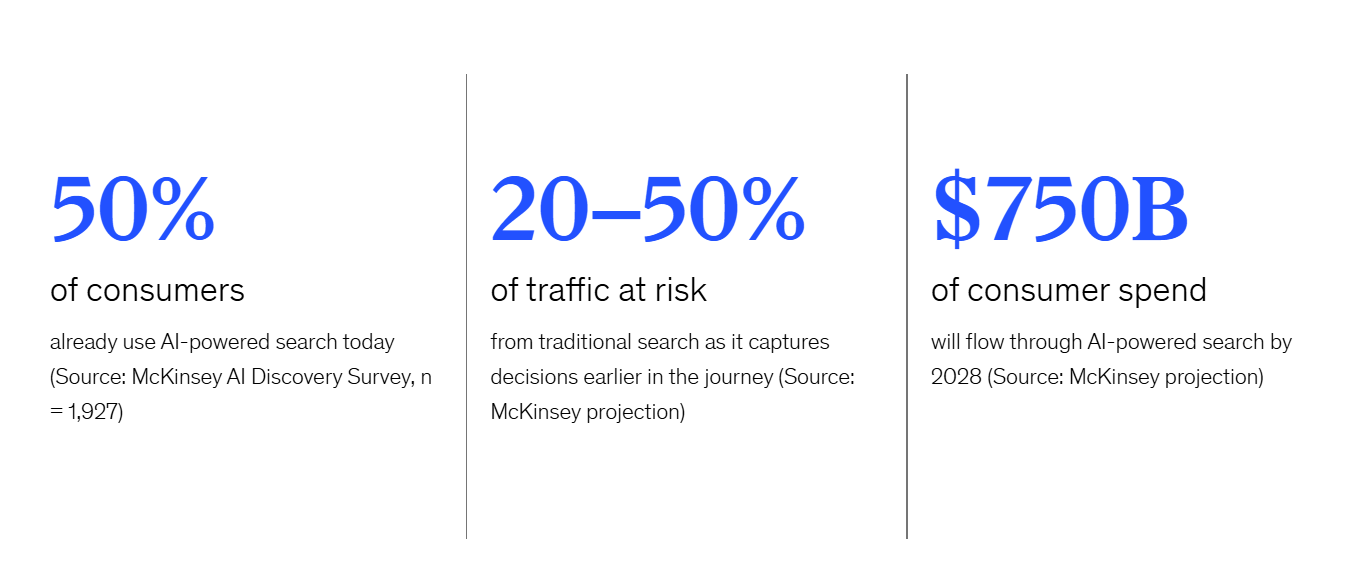
This behavioral shift has given rise to a brand-new discipline: Generative Engine Optimization (GEO). According to macroeconomic projections from management consulting giant McKinsey, an astonishing $750 billion is projected to flow through AI-powered search channels by the year 2028. Brands and publishers that fail to optimize for generative engines risk seeing their traditional organic search traffic plummet by 20% to 50%.
Despite these staggering figures, a massive strategic gap remains: only 16% of brands are systematically tracking how and where they appear within AI-generated answers. This discrepancy represents an unprecedented opening for agile affiliate marketers. Because AI search engines frequently cite third-party validation—such as independent reviews, comparison roundups, and authority blogs—affiliate content is rapidly becoming one of the most powerful vectors for influencing whether a brand gets recommended by an AI chatbot.

However, a critical caveat remains. Mass-produced, low-effort AI content severely damages organic visibility. Search engines and AI scrapers alike are increasingly adept at filtering out generic, soulless copy, making hyper-targeted, value-driven affiliate content more critical than ever.
Automation and the Modern Affiliate Toolkit
Survey data indicates that over 60% of professional affiliate marketers already incorporate artificial intelligence into their day-to-day operations, with roughly 70% planning to aggressively scale their AI budgets. This is no longer a fringe tactic utilized by tech-savvy outliers; it is the absolute baseline for competitive profitability.
The vast majority of this AI utilization targets historically mind-numbing, time-consuming tasks:
- Synthesizing large volumes of competitor data in seconds.
- Generating hundreds of localized ad creative variations simultaneously.
- Automating multi-variate landing page A/B testing.
- Executing dynamic bid adjustments across programmatic ad exchanges.
By stripping away the manual grunt work, AI frees up high-level strategists to focus on what truly drives revenue: relationship-building, high-level offer selection, and visionary campaign architecture.
The Modern AI Tool Stack: Divided by Workflow
Running a profitable campaign requires a sophisticated, highly specialized tool stack. Importantly, publishers and media buyers utilize artificial intelligence in fundamentally different ways. While both groups claim to "use AI," their operational needs diverge sharply.
For Publishing and SEO-Focused Affiliates
Content-driven marketers—those relying on organic search, email newsletters, and informational portals—utilize a distinct suite of AI applications:

- AI Content Generation & Copywriting: Moving far beyond basic text prompts, modern publishers use advanced models like ChatGPT, Claude, and Jasper to draft foundational frameworks for product reviews, buyer’s guides, email sequences, and high-converting calls-to-action (CTAs). These tools slash content production times from days to minutes, though human oversight remains essential for maintaining brand voice and authority.
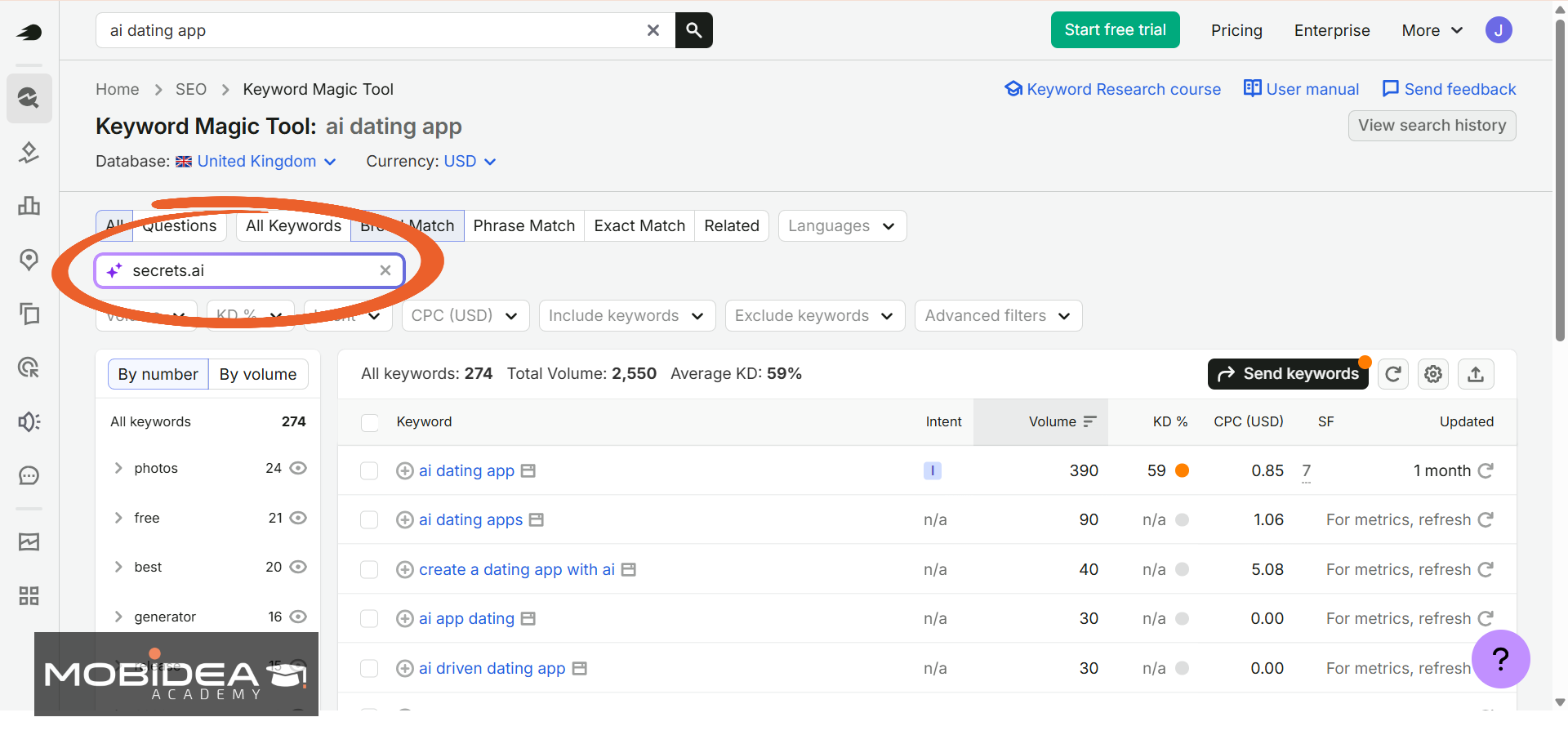
- SEO Research & Optimization: Modern SEO tools leverage machine learning to analyze massive ranking datasets instantly. Platforms like Semrush and SERanking allow publishers to pinpoint exact content gaps, forecast keyword viability, and generate fully optimized articles that align closely with future ranking algorithms.
- Visual & Creative Support: To combat the "wall of text" penalty, affiliates utilize AI image generators to produce stunning custom graphics, comparison visualizers, and social media assets without needing expensive design retainers.
- Video Repurposing: Long-form video is routinely chopped up by AI automation engines into dozens of bite-sized TikToks, YouTube Shorts, and Instagram Reels, complete with automated captioning, dynamic framing, and localized translations.
- Search Visibility Tracking: Cutting-edge tracking utilities now monitor whether a publisher’s brand or recommended products are actively being cited inside conversational AI answers, allowing marketers to protect their digital footprint as traditional search wanes.
For Media Buying Affiliates
Media buyers operating in paid traffic environments—across Meta, native, push, and TikTok channels—rely on a vastly different technological stack:
- Ad Creative Generation: Creative fatigue is the absolute enemy of paid traffic profitability. Using tools like AdCreative.ai, Creatify, HeyGen, Synthesia, Runway, and AdsTurbo, media buyers can input a simple product URL and instantly generate hundreds of high-performing static images, video scripts, and synthetic voiceovers. For specialists in the adult vertical, specialized engines like MojoAI (featuring MojoChatter and MojoContent) provide tailored, top-tier creative assets.
- Predictive Creative Scoring: Before a single dollar of ad spend is committed, AI models evaluate newly generated creatives against historical performance data to predict click-through rates and brand recall, eliminating expensive trial-and-error testing.
- Spy & Competitive Intelligence: Platforms enhanced by machine learning allow media buyers to filter millions of active global ads in seconds, instantly identifying winning angles, landing page structures, and scaling trends across competitor networks.
- Landing Page & Funnel Building: AI-driven landing page builders generate entire multi-step lead-qualification funnels and interactive quizzes from a simple text prompt, optimized specifically for rapid A/B testing in performance marketing environments.
- Bid and Budget Automation: Manual bid management across dozens of campaigns does not scale. Tools like Kadam AI and automated rules engines within demand-side platforms handle real-time delivery optimization, safeguarding return on ad spend (ROAS).
- AI Fraud Detection: Machine learning algorithms flag suspicious bot traffic, invalid clicks, and fraudulent conversions before they drain campaign budgets and distort performance metrics.
The Universal Layer: Tracking and Attribution
Regardless of whether an affiliate is a content publisher or a paid media buyer, tracking performance accurately is non-negotiable. Enterprise tracking platforms like Voluum, RedTrack, and TheOptimizer utilize integrated AI agents to monitor campaigns 24/7. These systems automatically detect micro-patterns in performance data—such as specific geo-device combinations converting at midnight—allowing media buyers and publishers to scale winners and cut losers with absolute mathematical precision.
Official Industry Perspectives and Future Outlook
Industry leaders and performance marketing networks increasingly view artificial intelligence not as a temporary industry trend, but as a permanent structural evolution.

Experts emphasize that the historical divide between "using AI" and "competing with AI" is rapidly collapsing. As search engines transition into conversational answer engines, affiliates who restructure their digital properties to feed these generative models will capture the lion’s share of future traffic. Conversely, those clinging to outdated, manual-only optimization strategies risk rapid irrelevance.
Looking ahead, industry analysts predict significant consolidation within the marketing software sector. Currently, affiliates must juggle a fragmented collection of disparate tools for writing, competitor spying, creative generation, and tracking. The immediate future points toward all-in-one, hyper-intelligent agentic platforms capable of autonomously managing entire affiliate operations from a single unified dashboard.
Furthermore, the explosive growth of AI as an affiliate vertical—encompassing AI companion apps, productivity SaaS, automated text-to-speech generators, and niche-specific neural tools—offers unprecedented earning potential. Recurring commission models offering 20% to 50% lifetime payouts are rapidly replacing older, lower-margin affiliate structures. Early adopters who secure a foothold in these emerging AI product niches stand to reap extraordinary financial rewards, much like the pioneers of the early crypto and mobile app economies.

Conclusion
Artificial intelligence has fundamentally rewritten the rules of engagement for affiliate marketing. It does not replace the foundational principles of the industry—marketers still must understand their target audience, obsessively test variables, and monitor their ROAS. However, AI radically accelerates every single phase of execution.
The affiliate marketers who treat artificial intelligence as a core, mission-critical component of their operational toolkit—rather than a flashy gimmick—will undoubtedly dominate the leaderboards of tomorrow. The revolution is already here; the only question remaining is how fast you will adapt.