
The Rise of Autonomous Execution: How Manus and Agentic Workflows Are Redefining Productivity

Executive Overview
The landscape of artificial intelligence is undergoing a profound structural shift. For the past several years, mainstream AI adoption has been dominated by conversational chatbots—systems like ChatGPT and Claude that excel at ideation, drafting, and analysis, yet ultimately leave the burden of execution squarely on the human user. They ask, "How can I help you?"—a polite invitation for users to orchestrate multi-step processes, copy and paste data across platforms, and manually shepherd projects to completion.
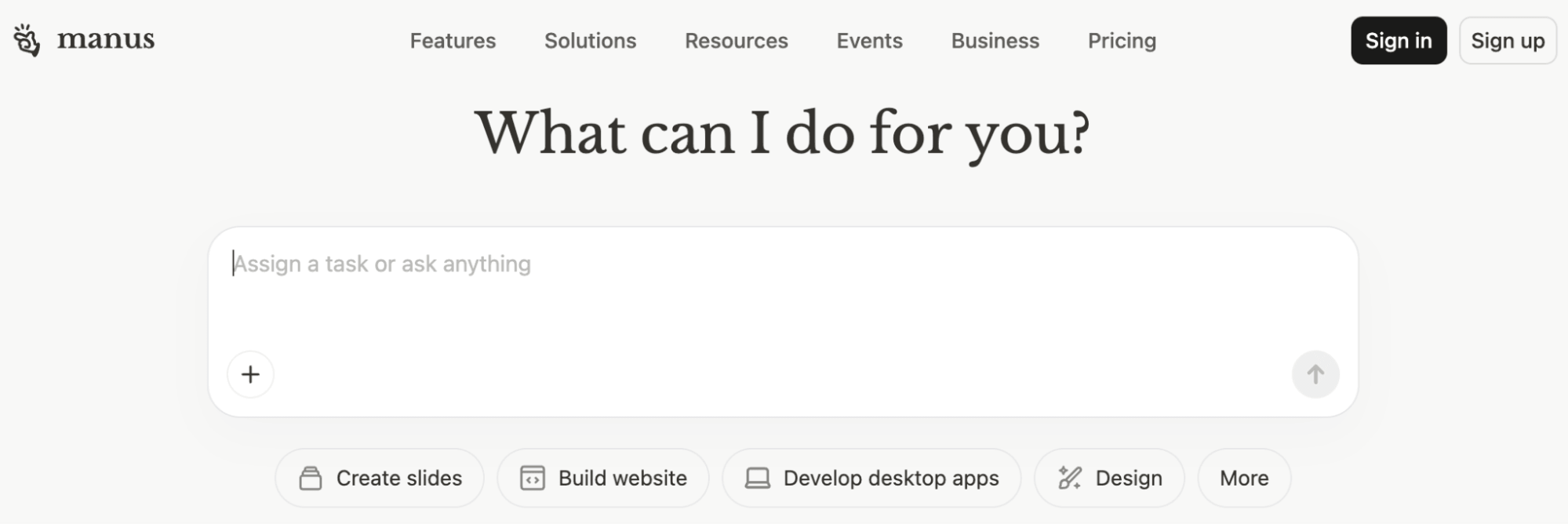
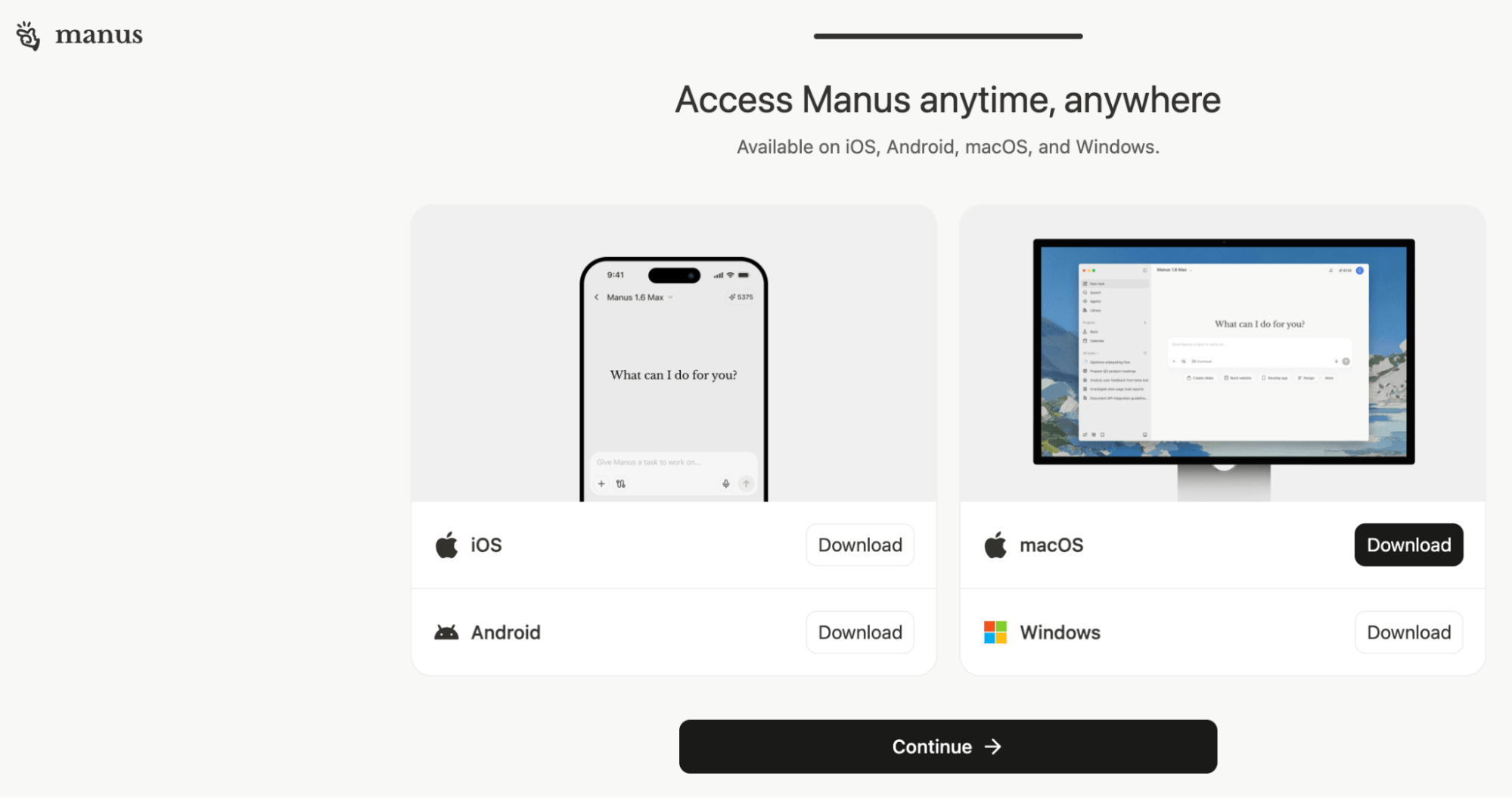
Enter the era of agentic workflows. Spearheaded by next-generation tools like Manus, the paradigm has shifted from conversation to delegation. Instead of asking what it can show you how to do, an agentic AI asks, "What can I do for you?"—and then executes complex, multi-step sequences across the web, desktop applications, and cloud environments entirely autonomously.
Co-created by marketing strategist Kate vanderVoort and Michael Stelzner, recent breakdowns of Manus showcase how non-technical professionals can leverage agentic AI to collapse hours of manual labour into automated, background routines. Whether it is building complex client proposals, generating comprehensive 150-page training manuals, or managing 24/7 business intelligence sweeps, Manus represents a departure from prompt-and-response computing toward genuine digital labour. This report explores the architecture of Manus, its four core access modes, practical workflows, and the strategic imperatives for professionals looking to implement agentic AI in their operations.
Detailed Chronology: Understanding the Agentic Workflow Evolution
To fully appreciate the arrival of platforms like Manus, it is vital to trace how modern artificial intelligence has evolved from static language models to active, tool-wielding agents.
Phase 1: The Chatbot Era (2022–2024)
During the initial generative AI boom, tools established themselves as powerful assistants. However, their operational boundaries were strictly confined to text-in, text-out chat windows. Users quickly recognized a persistent bottleneck: while an LLM could generate a brilliant strategy or a research outline, executing that strategy required moving the data manually into CRMs, web builders, presentation software, and email clients.
Phase 2: The Rise of Multi-Platform Tool Chaining
As APIs and integrations matured, advanced users began chaining tools together—using Perplexity for initial web research, migrating findings into specialized deep-research engines, building structural outlines in workspace canvases, and finalizing outputs in editing platforms. While effective, this manual orchestration often consumed three to four hours per complex project, demanding constant human supervision and context-switching.
Phase 3: Autonomous Agentic Execution (Present)
With the introduction of Manus, the workflow is inverted. Rather than the human acting as the connective tissue between disparate AI tools, the AI agent itself logs into web platforms, navigates browser interfaces, extracts data, and synthesizes outputs end-to-end. The human’s role shifts from an active operator to a strategic director—defining the goal, supplying the parameters, and reviewing the final deliverable.
Supporting Context & Metrics: How Manus Operates
Operating an agentic system requires a nuanced understanding of its underlying architecture, pricing structures, and access tiers.
Pricing and Credit Economics
Manus employs a flexible, credit-based consumption model designed to account for the varying computational weight of automated tasks:
- Base Subscriptions: Paid tiers begin at $20 per month (4,000 credits), scaling to $40 (8,000 credits) and $200 (40,000 credits) per month.
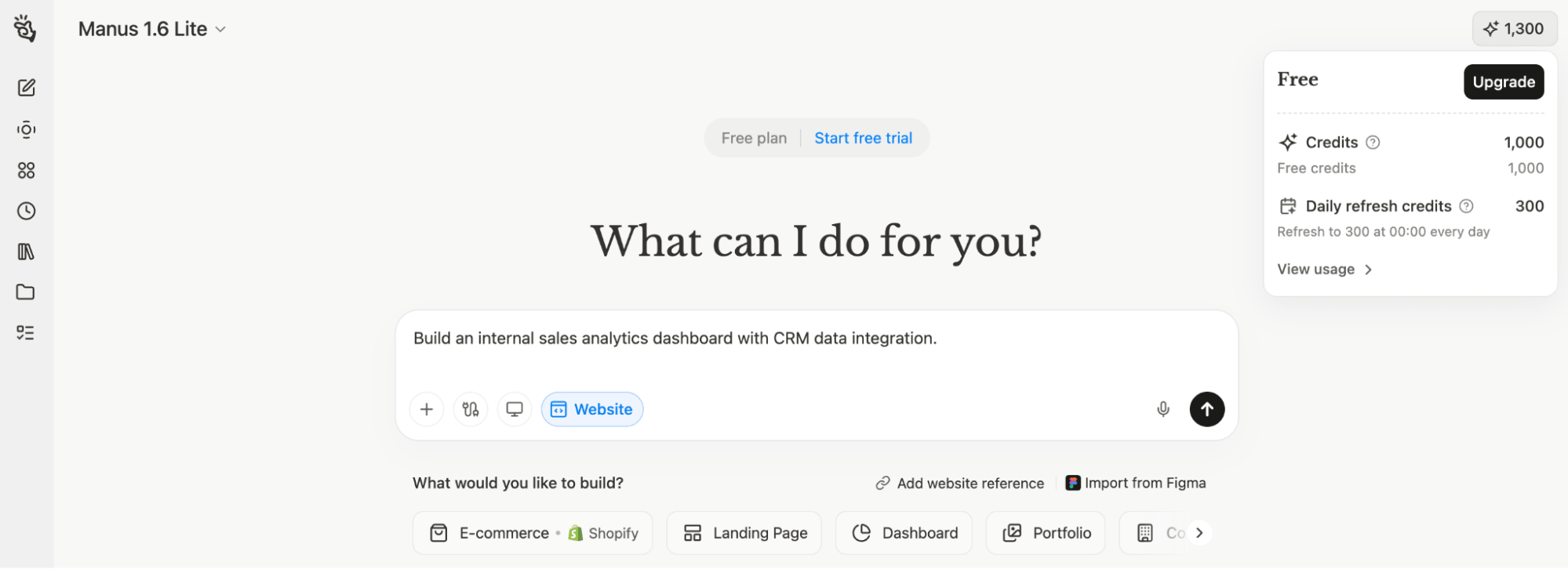
- Daily Refresh: All accounts—including free tiers—receive a complementary allocation of 300 refresh credits that reset every 24 hours.
- Task Costs: Simple queries may consume 5 to 10 credits, whereas deep, autonomous workflows (such as multi-site web scraping, data synthesis, and comprehensive report generation) can burn 900 or more credits per run.
- Note on Rollover: Monthly tier credits do not roll over, requiring users to calibrate their subscription tier to their actual operational volume.
The Four Access Modes of Manus
Manus provides four distinct operational environments tailored to different workflow complexities:
- Browser-Based Access: The most familiar entry point, running directly in a web browser. Unlike standard chatbots, Manus can securely log into online platforms on the user’s behalf—navigating LinkedIn, extracting prospect data, or managing CRM dashboards without exposing raw login credentials.
- My Computer (Desktop Application): Installed locally, this mode grants Manus direct access to files stored on the user’s local machine (similar to Claude Cowork or Perplexity Computer), enabling local file editing and analysis without manual uploads. (Requires the host computer to remain powered on.)
- Manus Agent via Telegram: Designed for mobility, this integration opens a chat channel via Telegram. Users away from their desks can monitor long-running desktop tasks, receive updates, and provide mid-stream approvals directly from a smartphone.
- Manus Cloud Computer: The most advanced tier, running continuously as a persistent virtual machine in the cloud. Unlike standard sandboxed sessions that dissolve upon task completion, the Cloud Computer maintains persistent databases, handles command-line interface (CLI) configurations automatically, and runs 24/7 background operations—such as continuous competitor tracking, social media management, and automated content publishing.
Official Insights & Practical Use Cases
The true measure of any AI platform lies in its practical application. Early adopters like Kate vanderVoort have demonstrated how agentic workflows can completely rewrite operational efficiency in consulting, marketing, and corporate training.
Case Study 1: The Automated Proposal Generation Workflow
- Before Manus: A client inquiry triggered a tedious, multi-tool chain: prompting Perplexity for initial research, utilizing Gemini Deep Research for 30–40 pages of background data, structuring conversation maps via Gemini Canvas, conducting the discovery call, and finally feeding transcripts into Claude to draft the proposal. Total time investment: 3 to 4 hours per client.
- With Manus: Manus executes the entire research, briefing dashboard creation, and proposal drafting sequence as a single agentic workflow. The human’s sole intervention is uploading the raw discovery call transcript into the active thread.
- Metrics: Initial workflow setup cost roughly $15 in credits; subsequent individual client runs cost approximately 3,000 credits (~$5).
Case Study 2: Corporate Training Program Development
When tasked with building an extensive corporate training program for a major food and beverage manufacturer, Manus autonomously executed a 42-step task list spanning nearly 50 minutes. The agent identified structural gaps in the original brief, expanded the curriculum from six to seven modules, and delivered a complete package featuring experiential exercises, a 150-page training manual, and an interactive, module-by-module grading quiz. The corporate Learning & Development team noted that the project had previously stalled at step four after two years of internal effort and a $150,000 external agency expenditure.
Strategic Implementation: Best Practices for Agentic Workflows
Transitioning from a chatbot mindset to an agentic workflow requires disciplined prompt engineering and process standardization.
1. Shift from Brainstorming to Briefing
Because Manus operates autonomously and consumes credits during execution, treating it like an exploratory sounding board is inefficient. Expert users prepare comprehensive briefs before opening Manus. Kate vanderVoort recommends using an intermediary LLM (such as Perplexity) paired with voice-to-text tools (like Wispr Flow) to perform a rapid brain dump, instructing the model: "Please write a highly optimized prompt for Manus AI agent. Do not do the task." This ensures the AI generates structured, execution-ready instructions rather than attempting the work itself.
2. Leverage Manus Skills for Reusable Workflows
Skills allow users to package successful workflows into reusable modules consisting of naming conventions, step-by-step execution instructions, and foundational context files (such as brand voice documents and style guides). Manus dynamically evaluates available skills, loading them only when relevant to maintain token and credit efficiency. Successful tasks can be converted into custom skills with a single click, ensuring consistent, repeatable execution across projects.

3. Build a Business Intelligence Center Using SOPs
Standard Operating Procedures (SOPs) serve as the foundation of advanced agentic systems. By documenting repeatable processes across 14 distinct categories—capturing not just what steps to take, but why strategic decisions are made—professionals can feed comprehensive SOP folders directly into Manus as core instruction layers, ensuring automated outputs mirror actual business methodologies.
Future Outlook
The maturation of agentic AI platforms like Manus signals the dawn of autonomous digital labour. As cloud-based virtual environments become more persistent and integrations expand across enterprise tool stacks, the friction of manual data migration and multi-tool orchestration will steadily dissolve.
For businesses, creators, and marketers, the competitive advantage will no longer belong to those who can prompt a chatbot the fastest, but to those who can architect the cleanest Standard Operating Procedures and deploy agentic workflows with the highest strategic clarity. The future of productivity is not about working harder alongside software; it is about delegating the work entirely.