Beyond the Prompt Box: How Claude Cowork is Redefining Business Automation and Agentic AI

Executive Overview
For years, human-AI interaction has been trapped in a rigid, transactional loop: a user types a prompt, an artificial intelligence generates a response, and the human manually initiates the next step. While foundational models like ChatGPT democratized access to machine intelligence, they left the burden of orchestration squarely on the shoulders of the user. Every workflow—whether drafting a marketing campaign, compiling sales research, or updating enterprise data—remained fundamentally manual.
The launch of Claude Cowork signals a definitive shift away from this chat-bound paradigm and toward the era of agentic AI. Developed by Anthropic and co-created from the architecture of Claude Code, Cowork brings a human-friendly desktop interface to an advanced multi-step execution engine. By bridging the gap between local computing environments and external software stacks, Cowork empowers non-technical professionals to deploy autonomous agents capable of planning, executing, and monitoring complex business workflows across entire tech stacks.
Based on insights from industry experts Isar Meitis and Michael Stelzner, this report explores the anatomy of Claude Cowork, the core pillars of agentic automation, and a practical roadmap for businesses looking to transition from reactive prompt engineering to proactive, automated execution.
Detailed Chronology: From Developer Terminal to Desktop Automation
The genesis of Claude Cowork traces back to Anthropic’s internal engineering needs. Originally built as Claude Code, the platform was designed strictly as a command-line tool to assist software developers write, test, and debug codebases. However, early adopters quickly realized that the engine’s underlying capabilities extended far beyond software engineering. It possessed the reasoning depth, structural awareness, and contextual memory required to manage operational workflows across diverse business domains.
Yet, a major adoption barrier remained: the terminal-based interface. Requiring command-line proficiency immediately alienated non-technical business leaders, marketers, and entrepreneurs who could benefit most from agentic automation.
To bridge this usability gap, Anthropic wrapped the robust Claude Code agentic engine in a streamlined, user-friendly desktop application. This new iteration—dubbed Claude Cowork—removed the command-line barrier entirely. Instead of text commands in a terminal, users were presented with a visual desktop dashboard featuring:
- Connected Folders: Real-time visibility into local file systems where the AI can read, write, and organize operational documents.
- Active Plans: Dynamic checklists that update in real time as the agent breaks down, executes, and checks off individual steps of a complex task.
- Granular Visibility: Transparent tracking of the AI’s decision-making process at every stage of execution, ensuring human oversight without micromanagement.
By stripping away the technical friction, Cowork transformed agent-driven automation from an exclusive developer utility into an accessible, enterprise-grade asset.
Supporting Context & Metrics: The Three Pillars of Agentic Platforms
What fundamentally separates an agentic platform like Claude Cowork from a standard conversational chatbot? According to AI automation expert Isar Meitis, three distinct architectural capabilities set these platforms apart:

1. Autonomous Planning and Execution
In a standard LLM chat session, the user acts as the project manager and the AI acts as the line worker. The user instructs, evaluates, corrects, and repeats. Cowork inverts this dynamic. The user defines overarching goals, boundaries, and available data sources. The AI then formulates a comprehensive execution plan, displays it to the user, and systematically executes each phase without requiring constant micro-direction.
2. Persistent Memory and Context Retention
Traditional chat sessions are stateless; they reset with every new window, forcing users to re-upload brand guidelines, audience demographics, and historical project parameters repeatedly. Cowork utilizes persistent memory stored in structured markdown files that the system can read and write across independent sessions. Client histories, formatting templates, and standard operating procedures (SOPs) remain permanently accessible to the agent.
3. Contextual Tool Use and Orchestration
Cowork does not simply possess external integrations; it exhibits sophisticated judgment regarding when and how to deploy them. The platform can autonomously recognize when to pull a call transcript from a transcription tool like Fathom, when to update a database record in a CRM, and when to draft an outbound email based on newly synthesized data.
Real-World Operational Impact
To quantify the impact of these capabilities, consider two high-impact business workflows transformed by Cowork:

- Content Generation: Instead of manually scanning industry trends and cross-referencing past media assets, an operator tasks Cowork with analyzing top-performing posts within their niche. The agent cross-references these trends with historical podcast transcripts, YouTube videos, and community calls, isolates proprietary insights, drafts multi-platform copy, edits visual assets, and queues the output for human sign-off.
- Sales Proposal Generation: Previously, a post-discovery call workflow—involving transcript analysis, competitor research, industry landscaping, proposal drafting, CRM updates, and cloud storage organization—easily consumed up to two hours of administrative time. With Cowork orchestrating the pipeline, the end-to-end process is compressed into ten minutes of review and refinement.
Official Guidelines: How to Build and Deploy Automations
Deploying successful AI automations requires a structured, methodical approach. Industry experts recommend a four-stage framework to transition from manual operations to fully integrated agentic workflows.
Stage 1: Identifying High-Value Automation Targets
Automation should never be applied indiscriminately. The implementation process begins by targeting operational bottlenecks:
- Frequency: Select tasks that occur multiple times a week or daily.
- Friction: Target workflows that consume significant blocks of time or are universally disliked by team members.
- Briefing: Define the task in plain, consultative language—detailing the target role, organizational context, frequency, data inputs, and desired outputs.
Stage 2: Drafting Product Requirements Documents (PRDs)
AI excels at execution, but it requires precise operational instructions to deliver results. Vague prompts lead to wasted processing tokens and suboptimal outputs.
- The Interview Method: Rather than manually drafting a massive manual, operators can instruct Claude to conduct an interactive requirements interview. By asking roughly 40 targeted questions over a 30-to-60-minute session, Claude gathers all necessary contextual details.
- Automated Documentation: From the interview transcript, the platform generates a comprehensive 25- to 40-page PRD. Operators can request a concise executive summary to validate the core parameters before giving the green light.
- Minimum Viable Product (MVP) Sequencing: From the exhaustive PRD, the agent development plan prioritizes a quick-win MVP. For example, in a sales automation workflow, the initial MVP focuses solely on converting call transcripts into proposals, leaving secondary CRM and email integrations for subsequent iterations.
Stage 3: Establishing Local File Management and Containment
Security and context management begin with local file architecture:
- The Root Directory: Operators should maintain a primary directory (e.g., named "ClaudeCowork") structured with dedicated subfolders for individual projects.
- Boundary Control: By connecting Cowork at the top-level directory using the interface’s folder-plus icon, users grant the AI secure, bounded access strictly to designated project files, ensuring sensitive system files remain completely quarantined.
Stage 4: Integrating External Tools via the Connectivity Hierarchy
To make automation truly systemic, Cowork must interact with external software. Implementation should follow a strict hierarchy of reliability:
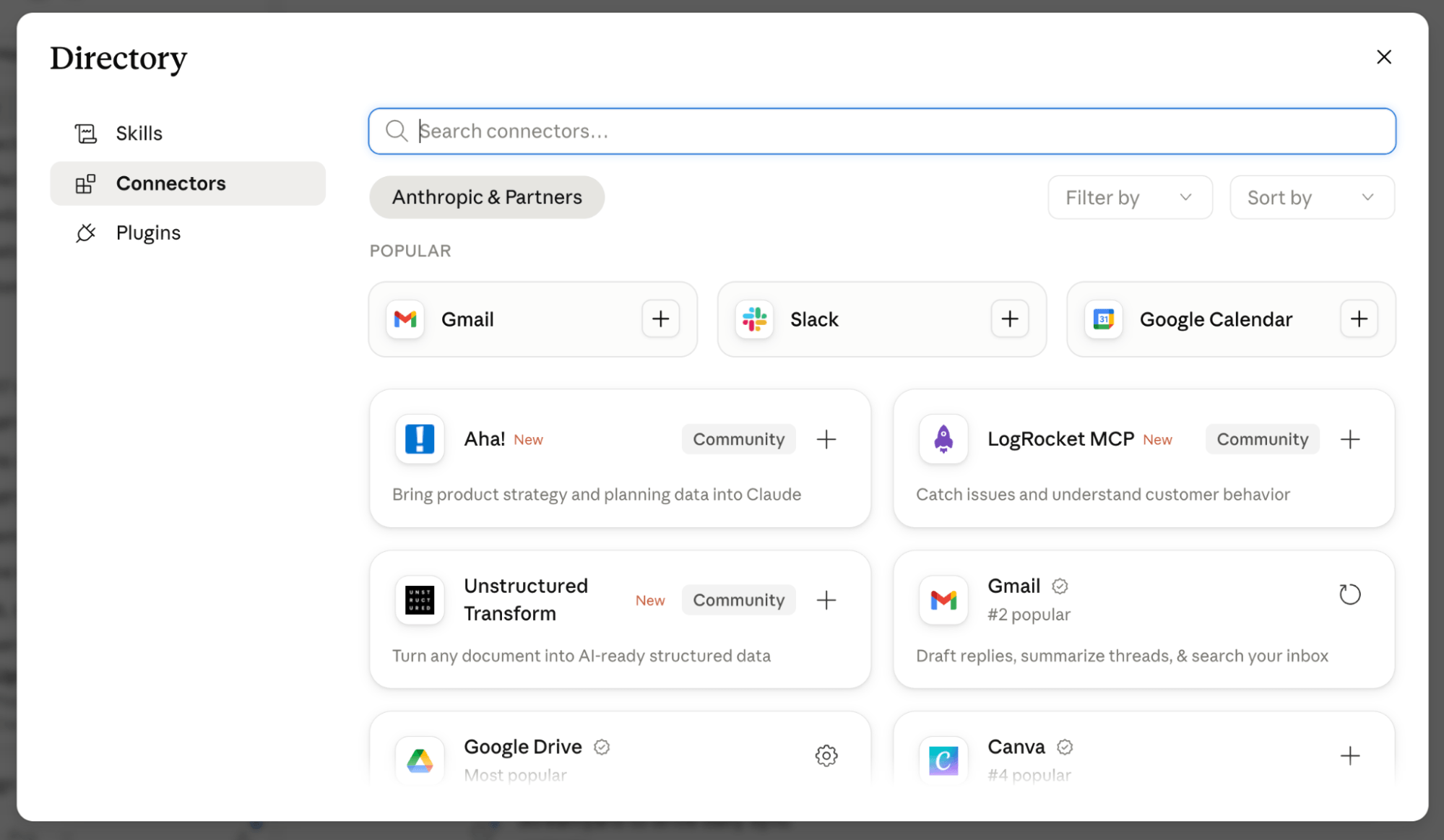
- Native Connectors: Anthropic’s pre-approved, natively supported integrations with major enterprise tools (Google Drive, SharePoint, Notion, ClickUp, Asana, monday.com) offer the highest stability and should always be prioritized.
- Vendor-Published MCPs (Model Context Protocol): Developed by software vendors using Anthropic’s standardized API protocol, these act like universal "USB connectors" for instant, secure software linking.
- Custom MCPs: If no official integration exists, operators can feed API documentation to Claude, which will write a custom MCP script and generate operational markdown documentation. API keys can be stored securely in native keychain storage, keeping credentials shielded from direct AI exposure.
- Chrome Browser Extension: For legacy applications lacking APIs or native support, Claude can operate a secure Chrome browser instance—navigating web pages, clicking buttons, and completing form fields. The agent automatically pauses at authentication screens to let human users securely handle login credentials before resuming autonomous tasks.
Future Outlook: The Maturation of Agentic Workflows
The commercial introduction of Claude Cowork marks an inflection point in how knowledge work is conducted. As agentic platforms evolve, the traditional boundaries separating distinct software applications will continue to dissolve. Businesses will no longer operate as collections of isolated silos requiring manual data entry and human bridge-building; instead, they will function as integrated ecosystems orchestrated by autonomous, human-supervised agents.
For marketers, entrepreneurs, and enterprise leaders, the mandate is clear. Success in the coming years will not depend on mastering clever prompt hacks, but on developing the systems-thinking skills required to design robust Product Requirements Documents, establish secure operational boundaries, and orchestrate multi-layered AI workforces. By embracing platforms like Claude Cowork today, organizations can reclaim hundreds of operational hours, eliminate administrative drag, and position themselves at the forefront of the agentic AI revolution.