

The Modern Retail Nightmare: Why Multi-Channel Inventory Synchronization is the Ultimate Peak-Season Battleground

Executive Overview
For any ecommerce merchant, few scenarios are as psychologically draining as realizing a best-selling product has officially sold out—not because shelves are empty, but because the digital storefront kept taking orders long after physical stock hit zero. When this happens during the high-stakes holiday shopping window encompassing Black Friday and Cyber Monday (BFCM), it transforms into the ultimate retail nightmare.
Peak shopping seasons routinely trigger sleepless nights for ecommerce operations teams, and more often than not, the root cause isn’t a sudden surge in traffic or a broken checkout button. It is a silent, creeping failure in inventory synchronization. Inaccurate stock figures do more than simply cost a business immediate transactions; they trap brands in a cycle of operational firefighting, forcing them to dispatch awkward, brand-damaging oversell apology emails to excited, disappointed shoppers.
While mid-year inventory audits are a widely accepted best practice, an audit is only as valuable as the reliability of the underlying data. As brands expand their footprints across multiple digital marketplaces, brick-and-mortar storefronts, and social commerce apps, establishing a single source of truth becomes non-negotiable. Without unified data pipelines, peak-season preparations risk collapsing under the weight of disconnected systems, leaving merchants vulnerable to massive financial losses and diminished consumer trust.
Detailed Chronology: Anatomy of a Holiday Inventory Disaster
Inventory discrepancies during the holiday shopping season rarely happen overnight. They are systemic failures built upon weeks—or months—of fractured data communication between distinct software environments.
The Multi-Channel Blindspot
Consider a typical omnichannel merchant preparing for BFCM. The company operates a primary ecommerce website, maintains a physical retail presence, and lists products across major online marketplaces like Amazon, Walmart, and TikTok Shop.
Without an integrated architecture, these platforms operate in isolation:

- The Siloed Website: The primary ecommerce platform processes orders based solely on its own database, oblivious to simultaneous purchases happening on external channels.
- The Disconnected POS: Brick-and-mortar cash registers process in-store sales using localized registers that fail to communicate instantly back to the central warehouse.
- The Marketplace Lag: Marketplace feeds update on delayed schedules, creating vulnerable windows where heavy buyer traffic can completely outpace available warehouse stock.
This is the exact operational recipe for a holiday disaster. When a viral social media video drives a sudden influx of thousands of orders, an unintegrated system will gleefully accept capital for inventory that simply does not exist.
Executing a Rigorous SKU Sync Test
To preempt these failures, forward-thinking ecommerce teams are moving beyond basic physical counts and implementing rigorous SKU synchronization stress tests well ahead of peak season.
Industry best practices dictate choosing three specific Stock Keeping Units (SKUs) to trace completely from the initial purchase through to final fulfillment:
- A proven best seller with high velocity and volatile stock levels.
- A low-stock item nearing its safety threshold.
- A cross-channel product sold simultaneously across the website, physical stores, and external marketplaces.
Merchants must record the precise inventory counts displayed across all connected environments—including the core ecommerce CMS, Point of Sale (POS) terminals, Enterprise Resource Planning (ERP) software, Warehouse Management Systems (WMS), and marketplace dashboards.
Next, teams place controlled test orders through every major sales channel. Analysts record the exact time of purchase and identify which specific transactional event triggers a decrease in inventory. Does stock drop upon order placement, payment authorization, or physical fulfillment? Every connected system must be monitored to measure the latency required for updated quantities to populate accurately.
Crucially, this test must be executed in reverse. Operators must cancel or refund a test order to confirm that inventory is automatically restored across every integrated system. Edge cases—such as backorders, product bundles, and partial fulfillments—must also be evaluated under simulated peak conditions.

Any delay in this chain represents an "oversell window." If a core website updates instantly while a marketplace feed takes four hours to refresh, that four-hour lag is precisely where peak-season orders will outrun physical stock.
Supporting Context & Metrics: Bridging the Enterprise Gap
Modern retail operations rely on complex software stacks. At the center of this ecosystem is the relationship between front-end customer experiences and back-end inventory ledgers.
While a growing enterprise website should never act as the ultimate source of truth for physical inventory, it remains a vital connection point. Platforms like WooCommerce utilize robust REST APIs and webhooks to exchange real-time order, product, and stock data with dedicated ERPs, WMS platforms, or POS terminals that hold the master inventory record.
Native Warnings vs. Systemic Integration
Native platform tools provide essential early warnings. For instance, turning on low-stock notifications for high-velocity items alerts merchant teams before inventory reaches zero. However, notifications merely warn of impending failure; they do not fix fundamentally disconnected systems.
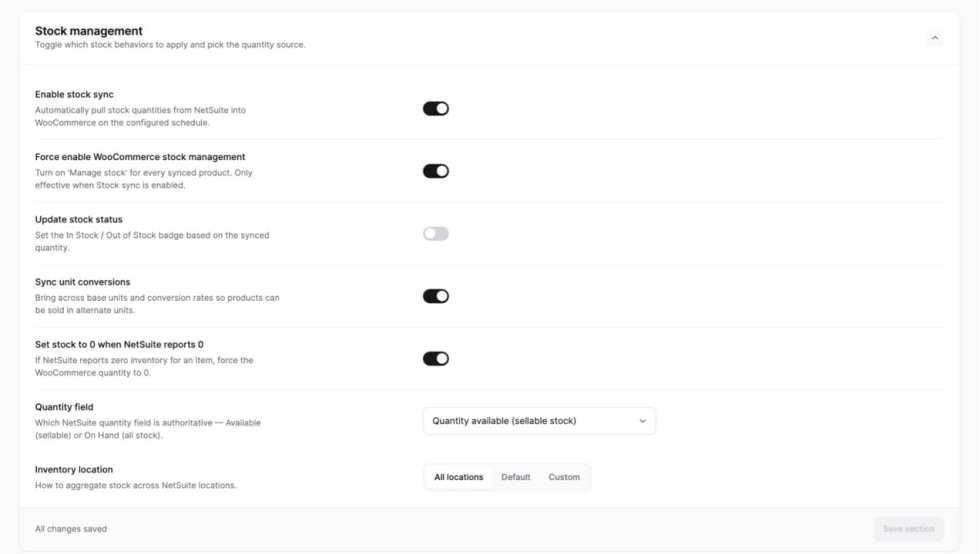
To eliminate manual data entry and error-prone spreadsheets, merchants must implement robust integrations. A prominent example is the enterprise-grade connection between WooCommerce and NetSuite. This two-way synchronization ensures that NetSuite instantly registers every transaction occurring on the website, while WooCommerce maintains access to actual, up-to-the-minute inventory numbers—often refreshed as frequently as hourly.
The Ecosystem Approach to Multichannel Expansion
Different business models require tailored integration strategies. Depending on whether a brand relies on physical registers, automated third-party warehouses, or social media storefronts, the technology stack must adapt accordingly:
- Point-of-Sale Alignment: Tools like Square for WooCommerce seamlessly bridge online and brick-and-mortar sales, ensuring that an in-store cash purchase immediately decrements digital stock pools.
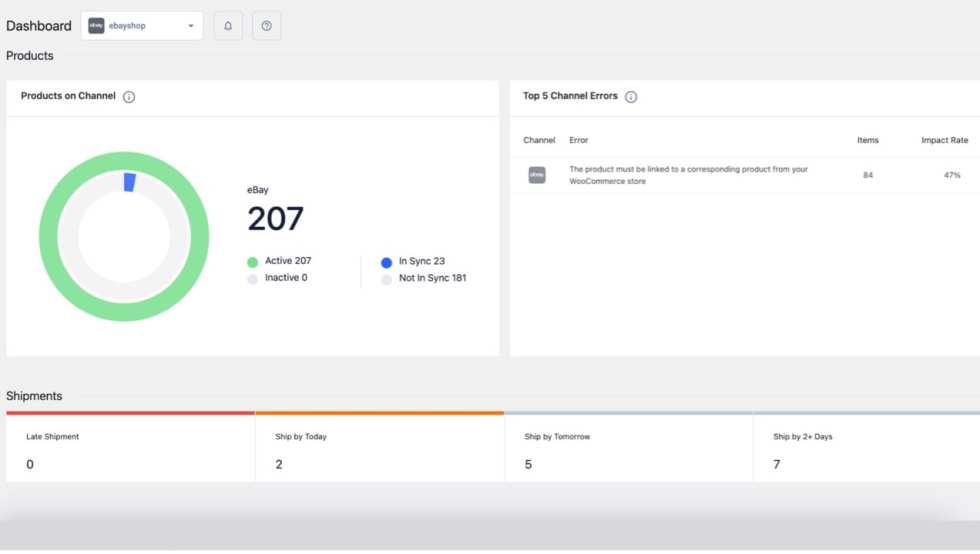
- Omnichannel Marketplace Distribution: Solutions such as M2E Multichannel Connect and Multichannel for WooCommerce by CedCommerce push accurate stock updates outward to retail giants like Amazon, Walmart, and emerging channels like TikTok Shop while channeling resulting orders back into the central operating hub.
- ERP and WMS Centralization: Enterprise integrations ensure that inventory recorded in master databases remains immutable, protecting high-volume sellers from discrepancies caused by disparate data silos.
Because these platforms leverage open-source flexibility, merchants can build modular technical architectures tailored to their exact operational maturity, scaling connections as their enterprise grows.
Official Statements and Industry Case Studies
Real-world deployments demonstrate how automated synchronization protects brands from logistical chaos during high-volume periods.
Scratch Pet Food: Automated Warehouse Fulfillment from Day One
For Australia-based pet food brand Scratch Pet Food, establishing seamless warehouse integration was a foundational priority rather than an afterthought. Co-founder Mike Halligan emphasizes the importance of automated operational loops, particularly for subscription-based business models where predictability is paramount.
"An order comes in and we don’t touch a thing. We have a manufacturer who makes the food to our recipe, orders get sent straight to the warehouse, and they ship it," explains Mike Halligan, Cofounder of Scratch.
By deliberately selecting local warehouse partners capable of integrating directly with their WooCommerce website and order-tracking systems, Scratch eliminated manual handoffs. This strategic decision removed the human error, delays, and inventory discrepancies that plague growing brands, allowing their fulfillment operations to scale effortlessly alongside surging customer demand.
Dan-O’س Seasoning: Surviving Viral Social Media Surges
Few brands understand the sheer velocity of social commerce quite like Dan-O’s Seasoning. Widely available across tens of thousands of traditional retail locations—including major heavyweights like Walmart and Kroger—the brand also maintains a thriving Direct-to-Consumer (DTC) operation powered by WooCommerce.
The brand’s marketing strategy relies heavily on viral social media exposure. A single TikTok video featuring the company’s founder famously surpassed four million views, instantly driving massive, unpredictable spikes in consumer demand. To handle sudden surges without risking stockouts, Dan-O’s routes all online sales channels through Brightpearl, an advanced inventory management system that syncs order information directly back to WooCommerce.
"WooCommerce allowed us to go from something as simple as we needed in the beginning to a full-size, customizable site. It gave us the flexibility that we wouldn’t get with Shopify or another platform," notes Ryan Fertig, Senior Marketing Activation Director at Dan-O’s Seasoning.
By decoupling front-end flexibility from back-end inventory logic, Dan-O’s maintains total synchronization across physical retail shelves, major digital marketplaces, and high-velocity DTC web traffic.
Future Outlook: Preparing for the Next Retail Horizon
As global ecommerce continues to evolve, the complexity of inventory management will only intensify. The rise of social shopping, hyper-fast fulfillment expectations, and borderless digital marketplaces mean that static, siloed inventory tracking is officially obsolete.
Merchants who fail to modernize their data pipelines face an increasingly unforgiving consumer base. In an era where shoppers expect instant order confirmation, accurate delivery estimates, and flawless fulfillment, an overselling incident is no longer viewed as a simple administrative oversight—it is treated as a major brand failure.
Actionable Roadmap for Peak-Season Readiness
Before order volume climbs toward annual peaks, ecommerce leadership must perform a comprehensive diagnostic of their technological infrastructure:

- Identify the Single Source of Truth: Confirm that your entire team explicitly knows which software platform holds master inventory records.
- Audit the Data Handshake: Verify whether inventory updates automatically across all sales channels or if staff members are still manually reconciling spreadsheets or passing messages between departments.
- Stress-Test Failure Points: Evaluate what happens when an integration breaks. If a marketplace API feed stalls or a warehouse sync fails, will your technical team be alerted instantly, or will you only discover the failure after frustrated customers flood customer support?
- Trace a Best Seller: Manually follow a high-velocity SKU through every single integrated touchpoint today to uncover hidden architectural gaps before peak season exposes them.
By identifying and repairing these vulnerabilities proactively, ecommerce teams can transform peak season from a period of high-anxiety crisis management into a smooth, highly profitable celebration of business growth.