
The Democratization of Code: Inside Replit’s Meteoric Rise and the AI-Driven Transformation of Software Development

Executive Overview
The technological landscape of the mid-2020s is defined by a singular, seismic shift: the democratization of software creation through artificial intelligence. For decades, building functional software required rigorous training, deep structural understanding of syntax and logic, and hours of painstaking debugging. Today, the artificial intelligence boom has dissolved these traditional barriers, enabling a significantly wider demographic of individuals to dip into development, architect codebases, and launch fully realized software products for the very first time.
This transformation is not without friction. Established developers face mounting pressures to integrate AI into their daily workflows, with many being pushed to produce code at unprecedented speeds—a dynamic that introduces complex questions regarding technical debt, code quality, and developer dependency. Yet, at the epicentre of this profound evolution sits Replit, a browser-based collaborative development platform that has completely redefined how code is conceptualized, written, and deployed.
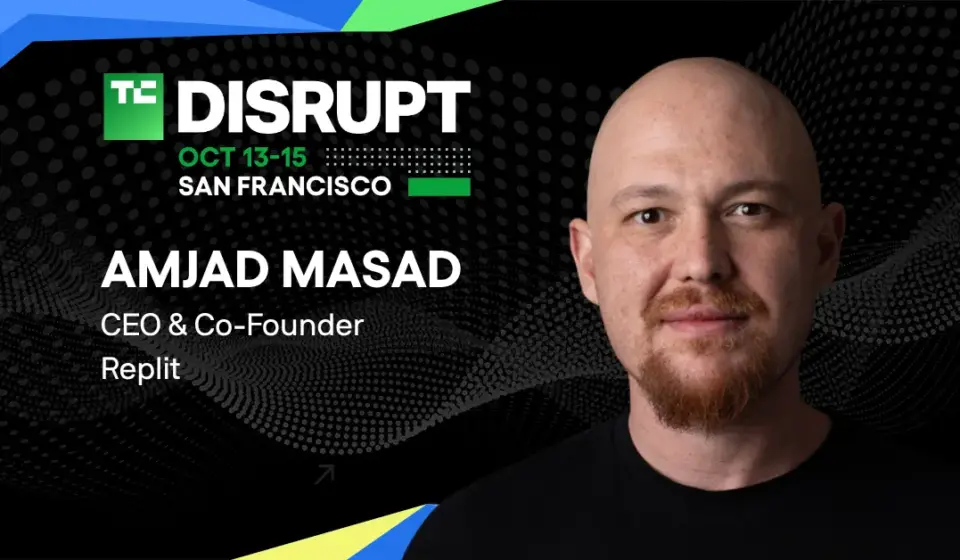
When Amjad Masad, CEO and co-founder of Replit, takes the central stage at TechCrunch Disrupt 2026, his keynote will serve as a definitive waypoint for the software industry. Masad is slated to explore the evolving future of programming, addressing the wide-ranging societal, economic, and operational implications of a world where converting a conceptual idea into a market-ready product is as simple as articulating a prompt.
This comprehensive report examines Replit’s explosive growth trajectory, the broader market dynamics of AI-assisted coding, the implications for professional and amateur developers alike, and what attendees can expect from the upcoming industry summit at San Francisco’s Moscone West from October 13 to 15, 2026.
Detailed Chronology: From Niche IDE to $9 Billion AI Powerhouse
The Genesis and Early Years
Founded a decade ago by Amjad Masad, Faris Masad, and Haya Odeh, Replit began with a relatively straightforward, albeit ambitious, premise: to make coding accessible anywhere, on any device, without the friction of local environment configuration. For years, the platform operated as a beloved browser-based integrated development environment (IDE) primarily utilized by educators, hobbyists, and early-stage developers who appreciated its collaborative "Google Docs for code" functionality.
The Stagnant to Exponential Inflection Point
For much of its early history, Replit’s growth, while steady, reflected the linear scaling typical of developer tooling startups. In 2024, the company reported an annual revenue of $2.8 million—a respectable figure for a niche developer platform, but hardly indicative of the hyper-growth phenomenon that was about to unfold.
The true turning point arrived with the mainstreaming of Large Language Models (LLMs) and generative AI tooling. Over the past 18 months, Replit systematically transformed its core infrastructure into an AI-native workspace. By embedding generative agents capable of generating entire application architectures, debugging errors in real-time, and translating natural language directly into executable software, the platform unlocked an entirely new tier of users.
The Financial Stratosphere of 2026
The market response to Replit’s AI transformation has been nothing short of historic. In early 2026, the company secured a staggering $9 billion valuation, a breathtaking leap from its $3 billion valuation achieved just six months prior. Concurrently, Replit’s financial performance skyrocketed: the company’s current run-rate is tracking aggressively toward $1 billion annually, representing an astronomical multiplier over its 2024 figures.
This trajectory places Replit in an elite echelon of tech enterprises, mirroring the broader market ascent of generative AI infrastructure companies that have successfully bridged the gap between raw foundational models and practical end-user utility.
Supporting Context & Metrics: The Dual-Edged Sword of AI Coding
The rise of Replit and concurrent tools like Cursor and GitHub Copilot points to a broader structural transformation across the global software engineering labor market. To understand the gravity of Amjad Masad’s upcoming Disrupt 2026 address, one must analyze the macroeconomic and operational metrics defining the current development ecosystem.
The Metrics of the AI Code Boom
- Productivity Multipliers: Industry surveys indicate that developers utilizing AI-assisted tooling complete standard coding tasks between 30% and 55% faster than those relying solely on manual programming.
- The Non-Technical Founder Surge: Platforms like Replit report that over 60% of new application deployments originate from users who self-identify as non-technical or semi-technical entrepreneurs, validating the "idea-to-product" pipeline.
- Valuation Velocity: The compression of valuation cycles—exemplified by Replit jumping from $3B to $9B in half a year—underscores venture capital’s insatiable appetite for AI application layers that capture non-traditional user bases.
Pros and Cons for the Modern Developer
While the ability for anyone to spin up a software product is widely celebrated as a triumph of accessibility, the engineering community is actively wrestling with the complex downstream effects of mandatory AI adoption.
The Advantages:
- Elimination of Boilerplate Fatigue: Developers are liberated from writing repetitive structural code, allowing them to focus on high-level system architecture and creative problem-solving.
- Lowered Barriers to Entry: Entrepreneurs without venture backing or technical co-founders can build functional minimum viable products (MVPs) in days rather than months.
- Accelerated Prototyping: Concepts can be tested, iterated, and discarded or validated with unprecedented speed, increasing the overall velocity of market innovation.
The Disadvantages and Risks:
- The Dependency Trap: A growing segment of the developer workforce is becoming overly reliant on automated suggestions, raising concerns about the atrophy of foundational coding skills and algorithmic comprehension.
- Technical Debt and Security Vulnerabilities: AI models frequently prioritize functionality over maintainability or security best practices, leading to codebases riddled with subtle vulnerabilities and architectural blind spots.
- The "Refusal to Work Without AI" Phenomenon: As highlighted in recent tech analyses, a cultural shift is occurring where coders increasingly refuse to work in environments lacking advanced AI scaffolding, creating operational risks for legacy enterprises slow to modernize their tech stacks.
Official Statements and Industry Perspectives
Amjad Masad’s upcoming presence at TechCrunch Disrupt 2026 is expected to tackle these competing realities head-on. Rather than framing AI merely as a mechanism for quick prototyping, Masad’s strategic vision for Replit emphasizes full-lifecycle development—ensuring that the platform assists users not just in sketching out an initial idea, but in scaling, securing, and maintaining production-grade applications.
In previous statements regarding the competitive landscape—including navigating strategic intersections with rivals like Cursor, managing competitive pressures from tech giants like Apple, and addressing acquisition inquiries—Masad has consistently underscored his commitment to independence and platform expansion.
"The goal has never been just to write code faster," industry analysts note of Masad’s recurring thesis. "The true disruption is changing who gets to participate in the digital economy. When an entrepreneur in a remote town can build a global SaaS platform using plain English prompts, the entire economic architecture of software changes."
Furthermore, investors point to Replit’s unique dual-market utility as the primary driver behind its valuation surge. By serving both the seasoned engineer looking to optimize complex cloud deployments and the high school student launching their first application, Replit has captured a vast, multi-tiered total addressable market (TAM).
Future Outlook: Building Sustainable Startups in the AI Era
As the tech industry converges on San Francisco’s Moscone West from October 13 to 15, 2026, for TechCrunch Disrupt, the overarching theme will extend far beyond initial technological novelty. Over 10,000 founders, investors, technologists, and industry leaders will gather across six specialized stages to confront the most pressing question of the current economic cycle: How do you build a sustainable, defensible company in the AI era?
Key Themes for Disrupt 2026
- Defensibility in a Commoditized Code Market: If anyone can generate software using AI, what constitutes a defensible moat for a software startup? The answer increasingly lies in proprietary data loops, distribution channels, and deep workflow integration rather than raw proprietary code.
- The Evolution of the Engineering Team: How startup organizational charts are shifting as foundational developers transition from "writers of code" to "editors and architects of AI-generated systems."
- Financial Sustainability: Navigating burn rates, infrastructure compute costs, and monetization strategies in a market where software margins are under constant pressure from generative competition.
Securing Your Place at the Forefront of Innovation
For those looking to understand the next decade of digital creation, Amjad Masad’s keynote at Disrupt 2026 is unmissable. Attendees will gain direct insight into how Replit plans to navigate the next phase of the AI revolution, alongside deep dives from leaders across Amazon, Tether, and dozens of high-growth startups.
Special promotional pricing for TechCrunch Disrupt 2026 is currently active, with savings of up to $300 available for a limited time. Founders, investors, and technologists looking to secure their spot at the premier tech event of the year are encouraged to act quickly before ticket allocations and promotional windows close.
Disclaimer: When you purchase tickets or products through links in our articles, TechCrunch may earn a small commission. This commercial relationship does not influence our rigorous, independent editorial standards.