
The Speed Race: How Walmart’s Flipkart and Amazon Are Upending India’s Quick-Commerce Ecosystem

Executive Overview
India’s digital retail landscape is undergoing a tectonic shift. For years, domestic startups cultivated an urban consumer base that now treats ultra-fast, minutes-long deliveries of groceries, electronics, and daily essentials not as a luxury, but as a basic utility. Into this high-stakes, fast-moving arena have stepped two sleeping giants: Walmart-backed Flipkart and global e-commerce titan Amazon.
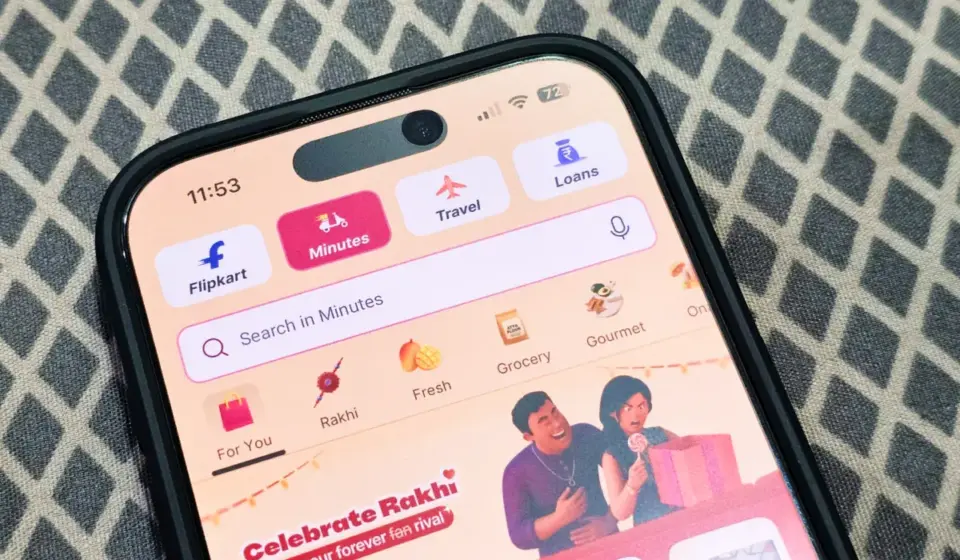
Flipkart’s quick-commerce offering, Flipkart Minutes, has experienced an explosive scaling trajectory since its debut in August 2024. Surpassing initial market skepticism, the platform now handles between 1.1 million and 1.2 million orders daily. This massive volume brings Flipkart within striking distance of Swiggy Instamart, a pioneer of the sector, which currently processes roughly 1.4 million daily orders.
While market leaders Blinkit (backed by Zomato) and Zepto continue to hold the top positions in order volume—handling roughly 3.5 million and 2.5 million daily transactions, respectively—the entry and hyper-growth of deep-pocketed legacy e-commerce players are rewriting the rules of engagement. For Flipkart and Amazon, deploying instant-delivery networks is no longer an optional growth experiment; it is an existential defense of their core customer bases. As consumer behavior shifts permanently toward instant gratification, the giants must adapt or risk losing everyday retail entirely to specialized quick-commerce disruptors.
Detailed Chronology & Market Evolution
From COVID Experiments to Instant Logistics Dominance
The roots of India’s quick-commerce boom trace back to the pandemic era, when lockdowns and safety concerns forced a rapid evolution in how consumers procured daily essentials.
- 2013: Grofers is founded as an online grocery platform, later pivoting and rebranding to become Blinkit in December 2021 with an aggressive focus on hyper-fast deliveries.
- 2020: Food-delivery juggernaut Swiggy launches Instamart, initially promising grocery deliveries within 45 minutes in select neighborhoods before compressing delivery windows to 10–15 minutes.
- 2021: Zepto bursts onto the scene, popularizing the dedicated "10-minute grocery delivery" model and raising massive venture capital to fuel dark-store expansion.
For years, these three homegrown startups—Blinkit, Zepto, and Instamart—ruled the roost, dictating the operational parameters of the industry through dense networks of neighborhood micro-warehouses, commonly known as dark stores.
Flipkart’s Blitz and Amazon’s Counter-Offensive
Recognizing that traditional, scheduled next-day or two-day e-commerce delivery models were losing their grip on grocery and FMCG (Fast-Moving Consumer Goods) categories, legacy players finally mobilized:
- August 2024: Flipkart officially launches Flipkart Minutes, entering a market dominated by entrenched competitors. Initial numbers were modest, hovering around 390,000 to 400,000 orders a day by November 2024.
- June 2025–2026: Propelled by relentless infrastructure investments, Flipkart Minutes breaks past the 1-million-daily-order milestone, catching up rapidly to Swiggy Instamart and challenging the market share of established pioneers.
- Mid-2026: Amazon ramps up Amazon Now, its own answer to instant delivery. During a high-profile visit to India, Amazon CEO Andy Jassy highlights Amazon Now as the company’s fastest-growing business unit in the country, detailing plans to scale the service across more than 300 cities.
Supporting Context & Metrics: Inside the Numbers
The metrics driving India’s quick-commerce race reveal an industry defined by staggering scale, improving unit economics, and shifting consumer habits.
Order Volumes and Market Standings
According to recent estimates from market research firm Datum Intelligence and insider disclosures, the daily order volume hierarchy looks as follows:
- Blinkit: 3.4 million to 3.6 million daily orders (Market Leader)
- Zepto: 2.4 million to 2.6 million daily orders
- Swiggy Instamart: ~1.4 million daily orders
- Flipkart Minutes: 1.1 million to 1.2 million daily orders
While Flipkart entered the race years late, its growth curve is steeper than any seen previously in the sector. Swiggy recently reported that Instamart boasts over 14 million monthly transacting users, powered by more than 1,200 dark stores across 130+ cities. Crucially, Swiggy noted that over 45% of its dark-store network has achieved positive contribution margins, signaling that quick-commerce economics are steadily maturing from cash-burning ventures into sustainable businesses.
Infrastructure Expansion: The Dark Store Race
The engine behind Flipkart Minutes’ meteoric rise is a aggressive capital expenditure program directed toward micro-fulfillment infrastructure.
- A Year Ago: ~340 dark stores.
- January 2025: ~600 micro-fulfillment centers.
- Current Status: 1,020 to 1,050 active facilities.
- Future Target: Flipkart is adding roughly 100 new dark stores every month, with a stated goal of reaching 1,500 facilities by the end of 2026.
Amazon is matching this infrastructural aggression, building out a network designed to scale past 1,000 micro-fulfillment hubs alongside larger distribution centers to widen its catalog breadth.
Consumer Behavior and Basket Economics
Satish Meena, an adviser at Datum Intelligence, highlights that Flipkart’s primary superpower is not merely its capital, but its massive, pre-existing e-commerce customer base. By tapping into millions of shoppers acquired over years of general online retail, Flipkart Minutes bypassed the expensive customer acquisition phase that burdened early startups.
- Retention: Approximately 65% to 70% of monthly shoppers on Flipkart Minutes are repeat buyers.
- Engagement: Transactions per customer have surged by 50% to 60% year-over-year.
- Basket Size: Consumers are spending an average of ₹400 to ₹500 (~$4.20 to $5.20) per order.
- Product Mix: While staples, dairy, fresh fruits and vegetables, and meat remain foundational, Flipkart is actively expanding into higher-margin gourmet, organic, and artisanal goods.
- Speed: Despite scaling order volumes exponentially, average delivery times for Flipkart Minutes have actually dropped to roughly 11 minutes, down from 13 minutes a year prior.
Official Statements and Industry Perspectives
Despite the high-stakes corporate maneuvering, the major stakeholders are maintaining a measured public posture. Representatives for Flipkart, Amazon, Swiggy, Zepto, and Blinkit parent company Eternal declined requests for formal comment on specific operational metrics cited by industry insiders.
However, independent market analysts view the convergence of general e-commerce and quick commerce as an irreversible structural shift. Satish Meena emphasizes the defensive imperative driving both Walmart and Amazon:
"Flipkart is already a serious player. Once you open 1,000 dark stores and [are] doing a million orders per day, it’s serious enough… Can you go back to scheduled delivery now in grocery? No. You will not go back."
This sentiment is echoed by institutional research. Recent reports from Bernstein indicate that while broader discretionary consumption growth in India showed signs of softness, the migration toward digital retail and instant-delivery platforms remained remarkably resilient, sustaining robust growth in monthly active users across the board.
Future Outlook: The Road Ahead for Indian Retail
As India’s quick-commerce market hurtles toward saturation and consolidation, several critical themes will dictate the next phase of competition:
- Category Expansion Beyond Groceries: To improve average order values and unit economics, quick-commerce players are rapidly pushing beyond milk, bread, and vegetables. Electronics, cosmetics, toys, kitchen appliances, and pharmaceutical goods are increasingly finding their way into 10-minute delivery baskets.
- Profitability vs. Market Share: With public markets scrutinizing tech-enabled logistics companies (evidenced by Swiggy’s recent disclosures targeting a ₹10,000 crore adjusted EBITDA by FY31), dark stores must balance blistering expansion with strict supply-chain efficiency and localized inventory forecasting.
- The Duopoly Threat to Startups: The entry of Walmart (Flipkart) and Amazon introduces immense financial muscle into a market previously dominated by venture-backed startups. While Blinkit, Zepto, and Instamart hold first-mover advantages and deeply entrenched consumer habits, the sheer capital and cross-platform synergy of Amazon and Flipkart threaten to alter competitive dynamics fundamentally.
Ultimately, the battle for India’s shoppers has evolved past the point of no return. Instant delivery is no longer a novel feature—it is the baseline expectation of the modern Indian consumer. Whether through Flipkart Minutes, Amazon Now, or established pioneers like Blinkit and Instamart, the race to deliver the entire retail catalog in the time it takes to boil a cup of tea is reshaping global retail history in real time.