
The Ultimate Blueprint for High-Converting Landing Pages: 40 Industry-Defining Examples Analyzed

Executive Overview
In the modern digital marketing landscape, the starting principle remains absolute: a polished, professional landing page can exponentially improve your conversion rates, while a cluttered or uninspired one will quietly bleed your ad spend dry. But what does it truly mean for a landing page to be "polished" and "professional"? More importantly, what is the elusive x-factor that separates elite marketers from the rest of the pack?

To answer these questions, conversion optimization experts Luke Bailey, Colin Loughran, and Paul Park compiled an exhaustive curation of 40 of the world’s best landing page examples. Spanning diverse sectors—from SaaS and e-commerce to healthcare and education—these examples serve as a masterclass in modern digital persuasion. This report provides an authoritative breakdown of these top-tier landing pages, analyzing their core design mechanics, structural frameworks, and strategic brilliance.

What is a Landing Page and Why Does It Matter?
Before evaluating top-tier designs, it is vital to establish a baseline definition. A landing page is a standalone web page created explicitly for a specific marketing or advertising campaign. Unlike a multi-faceted website homepage, which acts as a general digital storefront, a landing page is singular in its focus. It is the destination where visitors "land" after clicking a link in an ad, email, or social media post, engineered with one objective: converting those visitors into leads or customers.
High-converting landing pages share several fundamental qualities:

- Radical Clarity: The value proposition is communicated within seconds of arrival.
- Minimal Friction: Forms, navigation paths, and distractions are minimized to keep the user focused on the primary call-to-action (CTA).
- Targeted Relevance: The copy and visuals seamlessly match the intent generated by the traffic source.
Detailed Breakdown: The 40 Best Landing Page Examples by Industry
The analyzed examples span multiple industries, showcasing how different verticals tackle the challenge of conversion rate optimization (CRO).

1. SaaS, Health, and Wellness
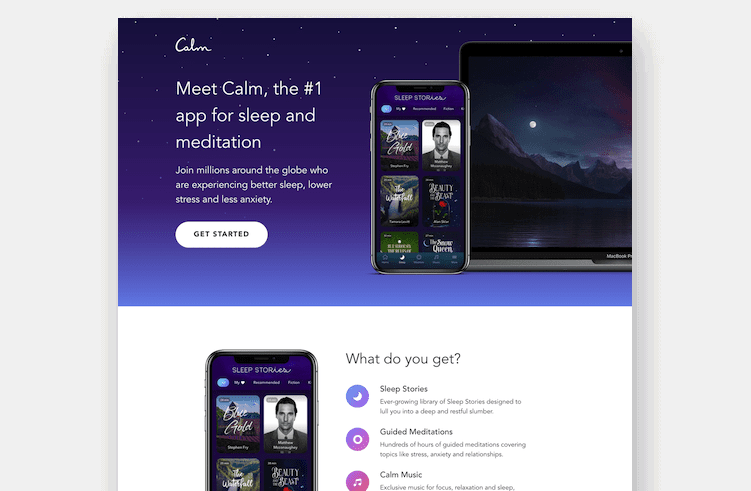
- Calm: By leaning heavily into visual tranquility, the meditation and sleep app uses soothing imagery and a frictionless sign-up flow to invite users into a relaxed state of consideration.
- Netflix: A masterclass in minimalist design. Netflix presents a killer value proposition (unlimited entertainment for a low monthly fee) that propelled them to over 300 million subscribers globally, rendering traditional competitors obsolete.
- LinkedIn Premium: Tailored explicitly for job seekers, this page highlights concrete career-advancement benefits, proving that professional networking requires targeted, high-value appeals.
- SEM RUSH: Rather than overwhelming users with its sprawling all-in-one SEO and marketing toolkit, the landing page hyper-focuses on a singular hook: uncovering competitor insights.
2. E-Commerce and Retail
- Zola: Breaking the mold of wedding planning, Zola acts as a seamless one-stop shop, utilizing clean UI to guide couples from registries to honeymoon bookings.
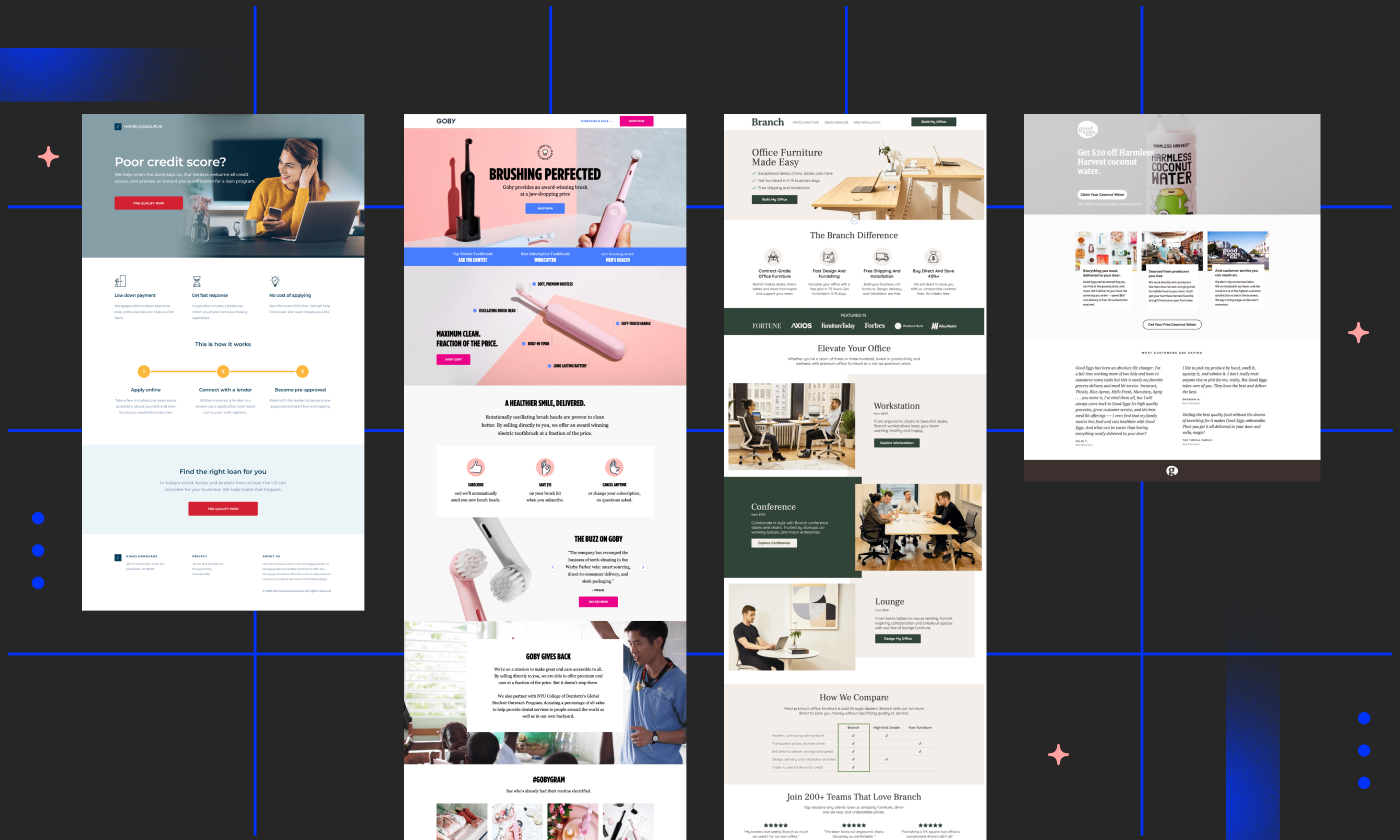
- Goby: Promising "Brushing perfected," this dental brand combines prestigious awards, affordability, and a risk-free money-back guarantee into an irresistible click-through experience.
- Coco Village: Designed by agency J7 Media, this page brilliantly showcases a massive collection of children’s furniture while preserving a singular, conversion-focused path.
- Grass Roots: Produced in partnership with MuteSix, this page takes consumers on an end-to-end customer journey—from problem awareness to consideration and a $30 incentive—driving agricultural e-commerce sales.
- Amazon: An interesting anomaly. Amazon frequently breaks classical CRO rules (disjointed colors, multiple exit links, varied art styles), yet succeeds purely because their undeniable offer outstrips traditional design theory.
- Western Rise & Woolx: Both apparel brands leverage high-resolution photography and video backgrounds to establish the tactile, premium nature of their technical fabrics and merino wool sweaters.
3. Services, Finance, and Professional Operations
- DoorDash & Lyft: These platforms excel at visualizing the end-state for prospective drivers, pairing clear earning potentials with frictionless onboarding flows.
- Border Buddy: By tapping into the acute anxieties of international shipping and customs regulations, this page presents a stress-free, streamlined solution.
- HomeLoanGurus & Panda7: Created alongside conversion agencies like ConversionLab and Webistry, these finance pages demystify complex, tedious processes (like securing a mortgage or comparing auto insurance) into transparent, rapid steps.
- Gusto: A stellar human resources SaaS page that uses exceptional storytelling to make complex payroll and time-tracking tools feel effortless.
Supporting Context & Strategic Metrics
When dissecting high-performing digital campaigns, quantitative benchmarks provide crucial context. According to industry data integrated across these case studies:

- The Power of Video: Landing pages featuring embedded video content can increase conversion rates by up to 86%.
- Specialized Conversion Rates: Targeted vertical-specific pages—such as Bariatric Eating’s nutrition campaign optimized by Sevah Creative—have achieved conversion spikes exceeding 39% by trading clinical sterility for colorful, empathetic design.
- Funnel Alignment: As Cameron Gawley, CEO of BuzzShift, notes regarding their work with Mooala, treating landing pages as consideration-phase tools (e.g., offering soft-conversion coupons for emails) dramatically lowers Customer Acquisition Costs (CAC).
Strategic Framework: How to Build a High-Converting Landing Page
For marketers looking to emulate these successes, building an optimized page requires a disciplined, step-by-step methodology:

- Define a Singular Goal: Determine whether the page exists to capture emails, sell a product, or book a consultation. Never split the focus.
- Understand Your Audience: Align your copy with the exact search intent or ad trigger that brought the user to the page.
- Craft an Irresistible Value Proposition: Put your primary benefit front and center "above the fold" (visible without scrolling).
- Leverage Compelling Visuals: Use high-quality hero shots, product demonstrations, or subtle video backgrounds.
- Write Benefit-Driven Copy: Focus on how your product transforms the user’s life, not just its technical features.
- Design a Standout CTA: Ensure your conversion button uses contrasting colors and action-oriented text.
- Minimize Form Friction: Ask only for the data you absolutely need.
- Incorporate Social Proof: Add customer testimonials, trust badges, or press mentions to build immediate credibility.
- Ensure Mobile Responsiveness: With a significant portion of traffic arriving via smartphones, seamless mobile scaling is non-negotiable.
- Test and Iterate: Implement continuous A/B testing to refine headlines, layouts, and offers over time.
Future Outlook: The Evolution of Conversion Architecture
As we look toward the future of digital marketing, the fundamentals of landing page optimization remain anchored in human psychology, even as technology evolves. Artificial intelligence, dynamic text replacement, and hyper-personalized user experiences are reshaping how pages adapt in real-time to incoming traffic.

However, the core takeaway from analyzing these 40 industry-leading examples is clear: perfection is a myth, but optimization is a continuous mandate. Whether starting from a blank canvas or leveraging drag-and-drop builders like Unbounce, marketers must treat every page as a living hypothesis. By combining psychological insight, aesthetic polish, and rigorous testing, brands can transform casual digital traffic into loyal, lifelong customers.