In the modern digital economy, the difference between a struggling online venture and a seven-figure enterprise rarely boils down to product superiority or capital reserves. More often than not, it is anchored in the precision, psychological resonance, and strategic deployment of the written word. Copywriting has evolved from a traditional advertising art form into a rigorous, data-driven science of customer acquisition.
Industry veterans who have built and exited digital marketing agencies—and who now helm high-yielding educational ecosystems like Copyblogger—recognize that nearly all scalable revenue stems from written marketing channels. Whether through optimized blog posts, high-converting social media distribution, or hyper-targeted email newsletters, the pen remains the primary catalyst for conversion.
This comprehensive analysis examines the foundational shifts required to transition from a decorative writer to a revenue-generating copywriter. By examining real-world mechanics—ranging from deep customer empathy and competitor ad library audits to ethical artificial intelligence integration and ROI attribution—this report outlines the ten definitive maxims required to engineer copy that consistently turns attention into capital.
Detailed Chronology: The Evolution of High-Converting Copy
The trajectory of a successful copywriter rarely begins with innate literary genius; rather, it is forged through systematic trial, iterative refinement, and a fundamental pivot away from eloquence toward economic impact. Understanding how elite copywriters achieve mastery requires tracing the chronological progression of skills they must acquire and implement.
Phase 1: Shifting from Artistry to Economics
Historically, aspiring writers focused on vocabulary, sentence rhythm, and artistic flair. However, top-tier copywriters understand that great copy is clear, concise, and relentlessly focused on conversion. The primary objective is not to win literary awards, but to generate a higher return on investment (ROI) than the market average. When a writer can directly correlate their phrasing to an uptick in enterprise revenue, their professional viability skyrockets.
Phase 2: Immersive Customer Research and Pain Mapping
Great copywriters do not invent desires out of thin air; they excavate existing frustrations. This requires a systematic approach to gathering audience intelligence:
Direct Interviews: Engaging directly with target buyers or, when time is constrained, interviewing sales representatives who field daily objections.
Transcript Mining: Downloading sales call recordings, parsing them through advanced language models, and isolating recurring friction points.
Community Surveillance: Deep-diving into niche-specific Reddit threads and Facebook groups to document the exact terminology, emotional burdens, and tone of voice used by prospective buyers.
Phase 3: Competitive Intelligence and Swipe File Architecture
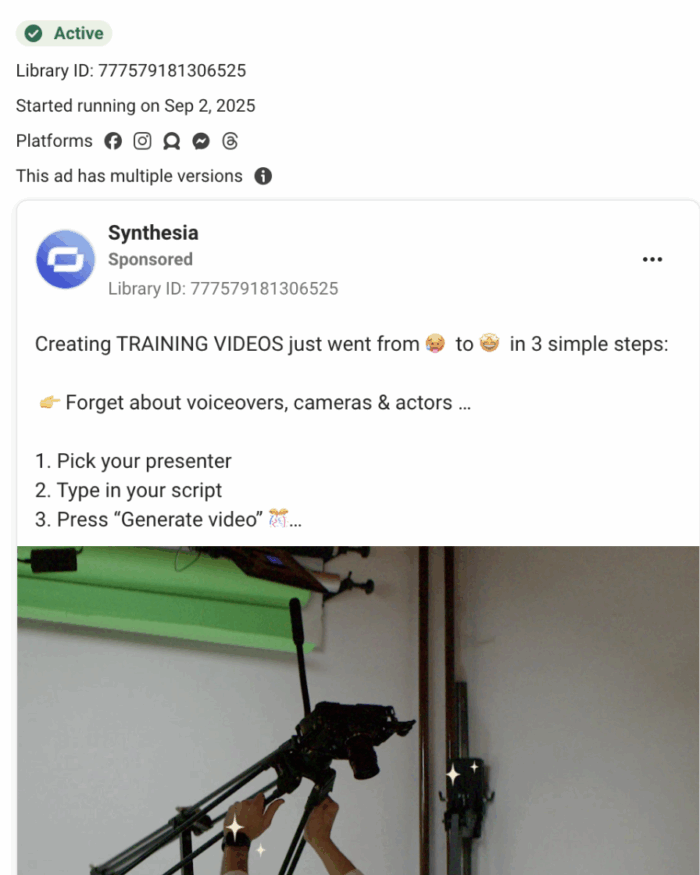
Rather than reinventing the wheel, successful copywriters study the expenditure of market leaders. By auditing platforms like the LinkedIn and Facebook Ads Libraries, analysts can identify ads that have run continuously for months—a definitive indicator of a winning value proposition. Concurrently, building a personal "swipe file" of high-converting headlines, sales letters, and landing pages—supplemented by curated archives like SwipeFile.com—trains the subconscious mind to recognize structural conversion triggers.
Phase 4: Process Optimization and AI Integration
As copywriting matures into a predictable revenue engine, practitioners must establish strict operational workflows. By breaking down projects into modular steps—research, outlining, drafting, and polishing—writers eliminate writer’s block. Furthermore, the integration of artificial intelligence for specific use cases—such as summarizing customer pain points, suggesting structural variations, or identifying expert citations—transforms AI from a generic content generator into an effective tactical partner.
Supporting Context & Metrics: The Mechanics of Modern Conversion
To evaluate the efficacy of copywriting in contemporary digital markets, one must analyze the hard metrics that separate vanity metrics from bottom-line growth.
The Ramit Sethi Case Study: Mirroring Reality
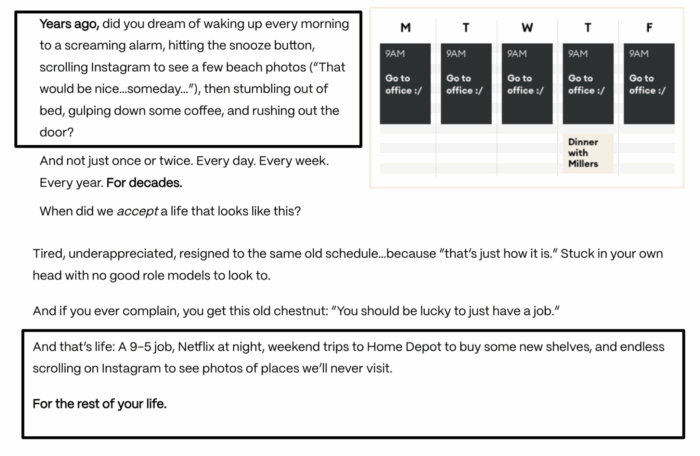
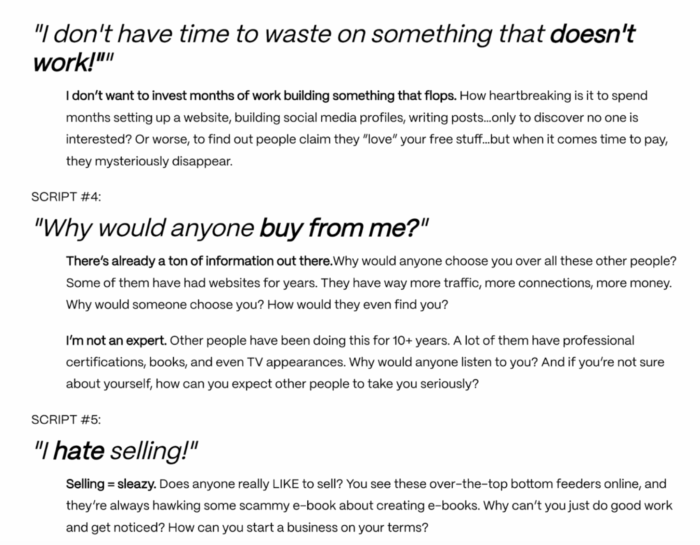
Consider the landing page frameworks utilized by industry leaders like Ramit Sethi for high-ticket offerings such as the "Earnable" course. Amateur copywriters often default to lazy generalizations like "learn how to make more money." In contrast, elite copywriters paint an excruciatingly precise picture of the prospect’s current reality: the monotony of the 9-to-5 grind, evening television routines, weekend trips to home improvement centers, and endless social media scrolling.
By mirroring these exact environmental and psychological frustrations, the copy proves to the reader that the product was engineered specifically for them. Furthermore, preemptively neutralizing objections—often framed as internal mental scripts—removes the final barriers to purchase.
Deconstructing Ad Longevity and Data Hygiene
When analyzing competitor ad performance, data reveals that ads surviving in active rotation for over 30 days have been thoroughly optimized for market resonance. For instance, B2B software companies targeting CRM data hygiene do not focus merely on technical features; they highlight the cascading financial fallout of dirty data, such as lost enterprise deals due to operational noisiness.
Multi-Channel ROI Attribution Frameworks
Measuring the return on investment for written content requires moving beyond superficial metrics like total traffic or raw engagement:
Ghostwriting & Social Media: Engagement must be qualified by audience quality. A post that attracts high-level decision-makers (e.g., Marketing Directors and C-suite executives) holds exponentially more value than viral engagement from junior personnel. Conversion forms should explicitly feature multi-select attribution fields like "How did you hear about us?" to capture organic social impact.
Organic Search & Blog Content: Traffic volume is a vanity metric if it fails to convert. By implementing granular conversion tracking in analytics suites, businesses can trace specific organic blog posts directly to demo requests, product trials, and closed-won revenue.
Email & Sales Funnels: Because transactional steps are tightly metered, tracking immediate conversion rates against email sequence variants provides a direct read on persuasive efficacy.
Official Statements & Expert Perspectives
Industry leaders emphasize that the journey of a copywriter is rarely meant to be undertaken in isolation. The solitary nature of writing often leads to prolonged plateaus unless paired with active mentorship and peer review.
"Be impatient with action and patient with results."
— Naval Ravikant, Investor and Philosopher
This guiding principle underscores the duality required in modern marketing: writers must push themselves to draft, test, and ship copy aggressively every single day, yet maintain the psychological endurance to recognize that compounding results take months to materialize.
Furthermore, veteran marketers highlight the necessity of active community engagement. Receiving feedback from peers who have generated millions in online revenue accelerates the learning curve exponentially. When up-and-coming copywriters submit their drafts to structured communities—where seasoned seven-figure operators evaluate structural flow, hook strength, and call-to-action clarity—they bypass years of costly trial and error.
Future Outlook: The Intersection of AI, Personal Branding, and Community
As artificial intelligence continues to reshape the landscape of digital content creation, the role of the human copywriter is undergoing a profound metamorphosis. The future does not belong to those who use AI to mass-produce generic, low-friction articles; it belongs to strategic operators who leverage AI as a research assistant while doubling down on human empathy, customer interviews, and proprietary data analysis.
The Rise of Multi-Platform Specialization
Future copywriters will increasingly find success by mastering a single ecosystem before expanding horizontally. Whether dominating the nuances of LinkedIn’s professional thought-leadership algorithm, mastering programmatic SEO for enterprise blog growth, or engineering high-converting email sequences, deep platform mastery allows practitioners to command premium pricing.
The Ecosystem Shift: From Client Work to Portfolio Assets
An emerging trend among elite copywriters is the deliberate application of their skills to their own digital assets—such as affiliate websites, niche software-as-a-service (SaaS) tools, or personal newsletters. By treating their own ventures as living case studies, copywriters not only generate diversified revenue streams but also build undeniable social proof that commands higher retainer fees from prospective corporate clients.
Conclusion
Mastering copywriting is an exercise in applied psychology, rigorous research, and relentless consistency. By embracing structured workflows, auditing market competitors, measuring genuine revenue attribution, and surrounding oneself with high-caliber mentors within specialized communities like Copyblogger Academy, aspiring writers can transform words into a predictable, scalable growth asset. The tools are accessible, the frameworks are proven, and the market rewards those who execute with urgency while trusting the long-term compound interest of exceptional writing.