

The Economics of Modern Blogging: Separating Myth from Reality in the Pursuit of Digital Revenue

Executive Overview
In an era dominated by digital content consumption, the question of whether a personal keyboard can serve as a legitimate livelihood remains a focal point for aspiring digital entrepreneurs. The contemporary blogging landscape is heavily polarized: on one end, sensationalized marketing narratives promise overnight millionaires and effortless passive income; on the other, cynics dismiss the entire industry as an unsustainable exercise in futility or outright deception.
The empirical reality, however, occupies a pragmatic middle ground. Establishing a profitable digital publication is entirely viable, extending far beyond the niche of "make-money-online" gurus. Successful bloggers operate across diverse sectors—including lifestyle, culinary arts, travel, health, and specialised craftsmanship—transforming personal passions into robust commercial enterprises. Nevertheless, this evolution is far from an overnight success story. It requires a strategic blend of relentless grit, creative ingenuity, industry savvy, and a clear understanding of market dynamics. This investigative report analyzes the structural realities of blog monetisation, examining income metrics, strategic diversity, historical timelines, and the sheer labor required to build a sustainable digital asset.
Detailed Chronology and Evolution of the Industry
To understand the current economic framework of blogging, one must trace its maturation from a decentralised hobbyist medium into an institutionalized digital media sector.
- The Early Pioneer Phase (Early 2000s): During the inception period of modern blogging platforms, early adopters launched digital journals largely driven by community and personal documentation. Monetisation tools were rudimentary, often restricted to basic banner advertising networks. Publications established during this window benefited from minimal market saturation, allowing pioneers to cultivate loyal audiences through sheer consistency.
- The Commercialization Wave (Late 2000s to Early 2010s): As web infrastructure advanced, content creators began recognising the commercial potential of specialized traffic. This era marked the diversification of revenue streams, moving beyond programmatic ads to encompass early affiliate marketing frameworks, direct brand sponsorships, and self-published digital goods. It was also during this period that industry support systems—such as specialized conferences, workshops, and educational resources—formalized.
- The Diversification and Professional Era (Mid-2010s to Present): Today, successful blogs function less like personal diaries and more like agile media companies. Modern publishers utilize sophisticated revenue mixes, including membership tiers, physical and digital product lines, consultation services, and integrated e-commerce models. Concurrently, the barrier to entry has risen significantly, requiring higher standards of content quality, search engine optimisation (SEO), and audience engagement strategies.
Supporting Context & Metrics: What the Data Reveals
A rigorous examination of financial returns across the blogging ecosystem dispels both the myth of universal wealth and the misconception of total impossibility. Survey data gathered from active publishing communities reveals a distinct stratification of earnings among those actively attempting to monetize their platforms.

The Earnings Distribution Pyramid
Comprehensive reader surveys highlight the following statistical breakdown among aspiring digital publishers:
- The Non-Earners (Approx. 10%): A baseline percentage of individuals attempting to monetise generate zero revenue, often due to abandoned projects, lack of strategic direction, or insufficient audience acquisition.
- The Micro-Earners (Approx. 28% to 63% cumulative): More than half of all aspiring bloggers earn nominal amounts—frequently translating to less than a few dollars per day. These publishers typically utilize basic ad placements without a structured conversion funnel.
- The Part-Time Earners (Approx. 9%): A significant cohort achieves moderate success, securing earnings equivalent to a part-time income or a reliable supplemental revenue stream (typically crossing the $1,000 per month threshold).
- The Full-Time Professionals (Approx. 4%): At the apex of the distribution, a dedicated minority generates upwards of $10,000 per month, operating scalable businesses that frequently employ supporting staff and contractors.
The Longevity Correlation
A deep dive into top-tier earners establishes a direct correlation between revenue generation and operational longevity. Empirical data indicates that approximately 85% of bloggers generating six-figure annual incomes have maintained and consistently optimized their publications for four years or longer. Overnight success in this sector is statistically negligible; brand equity, audience trust, and search authority accumulate incrementally over extended operational periods.
Strategic Diversity: The Anatomy of Monetization
Contrary to public perception, financial sustainability within the blogging ecosystem is not confined to educators teaching others how to build websites. Diverse case studies from global publishing networks demonstrate that traditional everyday niches—such as woodworking, photography, health and wellbeing, and minimalist living—frequently outperform generic business-building blogs.
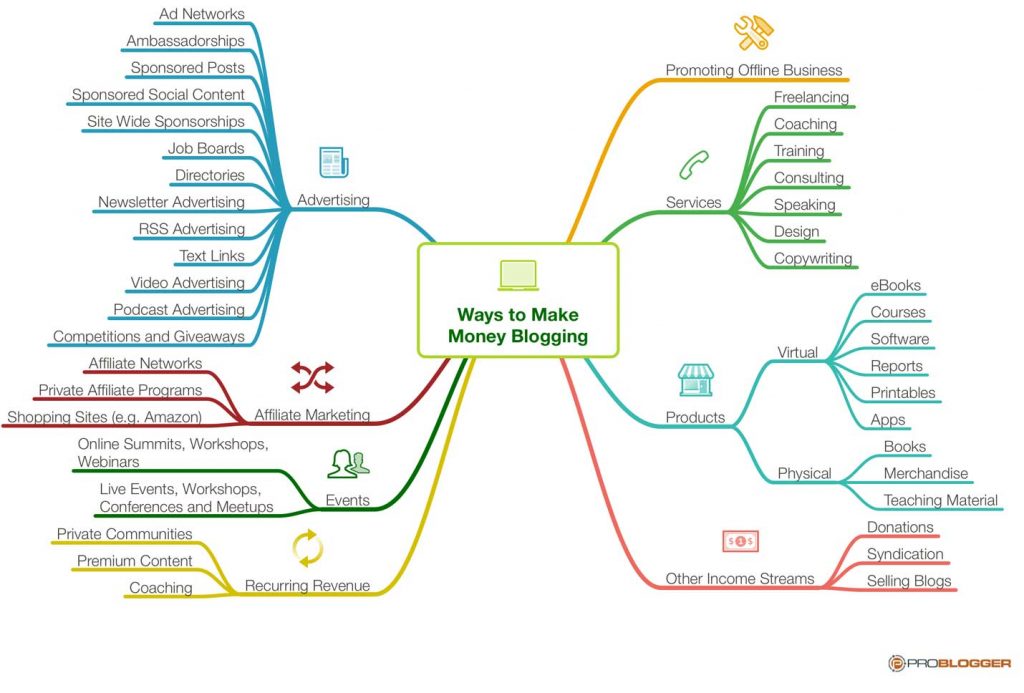
Furthermore, there is no single formulaic blueprint for financial success. Successful digital entrepreneurs forge distinct operational paths tailored to their specific audience demographics and content pillars. Key monetisation vectors include:
- Programmatic and Direct Advertising: Securing revenue through display networks or negotiating direct-placement sponsorships with brands seeking targeted consumer access.
- Affiliate Partnerships: Recommending third-party products and services, earning a commission on resulting transactions without managing inventory or customer service.
- Digital and Physical Product Sales: Developing proprietary assets such as e-books, online courses, software tools, or physical merchandise tailored to niche pain points.
- Membership and Subscription Models: Creating gated communities, premium content archives, or masterclass programs that foster high-value recurring revenue streams.
- Service Integration: Utilizing the blog as a top-of-funnel marketing asset to drive clients toward high-ticket consulting, speaking engagements, or established offline enterprises.
Industry Perspectives: Expert Insights and Operational Realities
Veteran digital publishers consistently emphasize that passive income is a misnomer when applied to the formative years of a publication. While mature businesses may achieve operational efficiencies that reduce day-to-day labor, the initial building phase demands intensive human capital.
The Myth of Passivity
Industry veterans note that the transition from a personal outlet to a commercial enterprise requires unwavering dedication. Core operational responsibilities include:
- Content Generation: Consistently researching, drafting, editing, and publishing original material that provides tangible utility or unique insight to readers.
- Audience Acquisition and SEO: Navigating algorithmic shifts, optimizing technical site architecture, and building authoritative backlink profiles to secure organic search visibility.
- Community Engagement: Fostering active discussions, responding to user inquiries, and cultivating loyalty across multiple digital channels.
- Business Administration: Managing technical infrastructure, analyzing traffic and revenue metrics, negotiating brand contracts, and overseeing product development lifecycles.
As veteran publishers frequently observe, passivity is the reward of prior labor, not its precursor. Those who approach blogging with an expectation of minimal effort rarely sustain operations past the initial eighteen-month hurdle.
Future Outlook: Navigating the Next Era of Digital Publishing
As the digital landscape continues to evolve under the influence of artificial intelligence, shifting search engine algorithms, and changing consumer consumption habits, the future of blogging demands heightened strategic adaptability.
The low-effort, mass-produced content model faces severe viability challenges. Search engines and social media platforms increasingly prioritize authentic expertise, original research, and demonstrated authority (often framed within Google’s E-E-A-T guidelines: Experience, Expertise, Authoritativeness, and Trustworthiness). Consequently, future profitability will favor publishers who build genuine communities, solve complex problems, and diversify their traffic and revenue channels beyond a single reliance on search engine traffic.
For aspiring digital entrepreneurs willing to embrace the long-term investment of time, strategic experimentation, and rigorous work ethic, the blogging ecosystem remains a fertile ground. While the path requires resilience and technical acumen, the opportunity to build a scalable, independent digital asset continues to be a compelling reality for those equipped to execute.